
Sub-Boiling Acid Distillation System 1000 mL – Binzhenghong CH Series
| Brand | Binzhenghong |
|---|---|
| Origin | Jiangsu, China |
| Manufacturer Type | Direct Manufacturer |
| Model | CH |
| Price | USD 2,850 (FOB Jiangsu) |
| Capacity | 1000 mL |
| Construction Material | PTFE (Teflon®-lined chamber, quartz heating element, PFA condenser tubing, PP housing) |
| Operating Principle | Sub-boiling distillation via radiative heating |
| Compatible Acids | HNO₃, HCl, HF, H₃PO₄, H₂O₂, and select organic solvents (e.g., methanol, acetonitrile) |
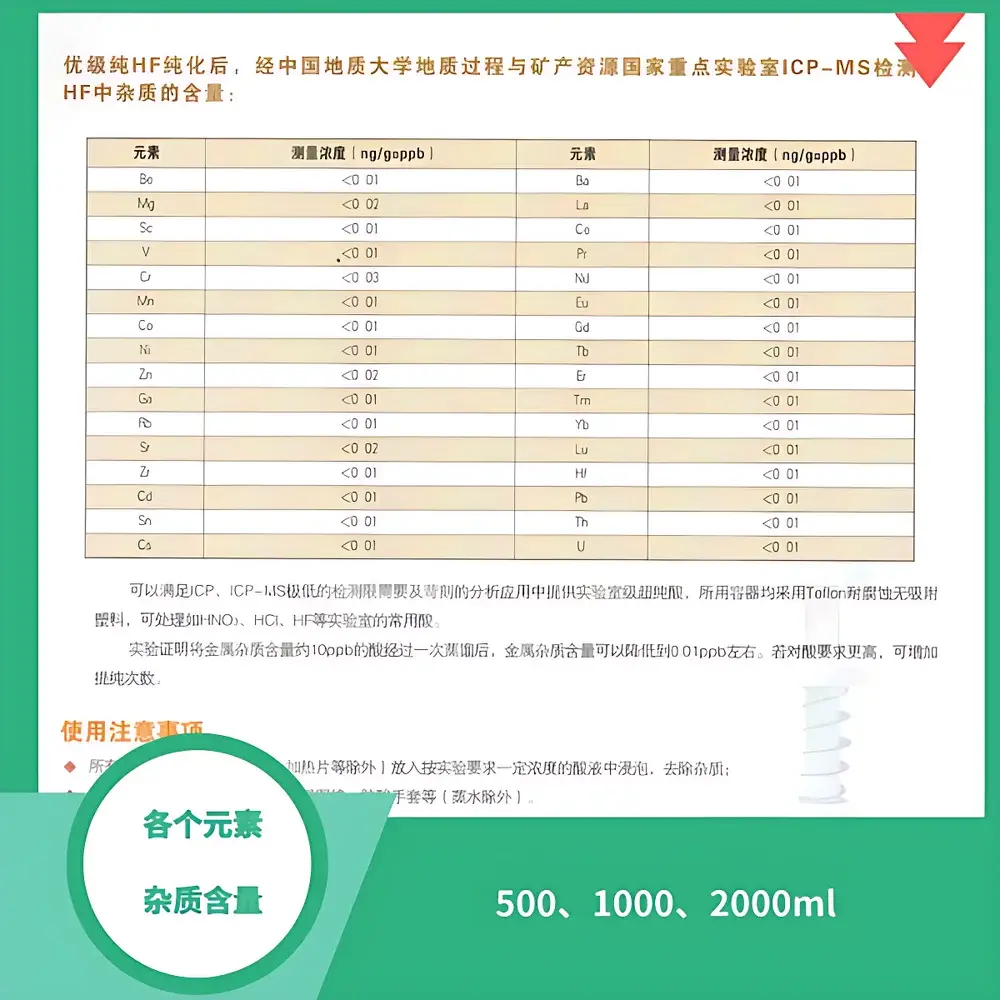
| Typical Metal Impurity Reduction | From ~10 ppb to ≤0.01 ppb (single-pass, verified by ICP-MS) |
| Compliance | Designed for GLP/GMP-aligned trace metal analysis workflows |
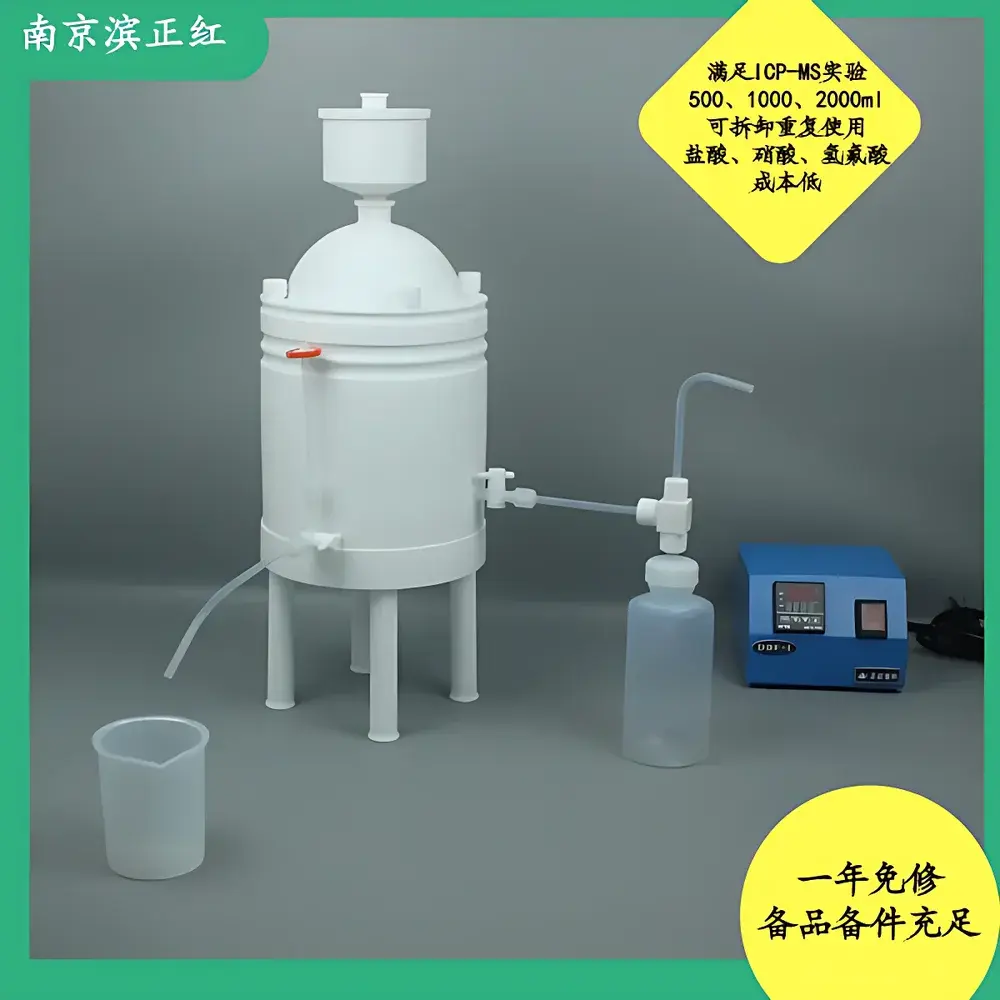
| Software Interface | None (manual analog temperature control with digital display) |
| Safety Features | Overtemperature cutoff, acid vapor containment, leak-tight PTFE gasketing |
Overview
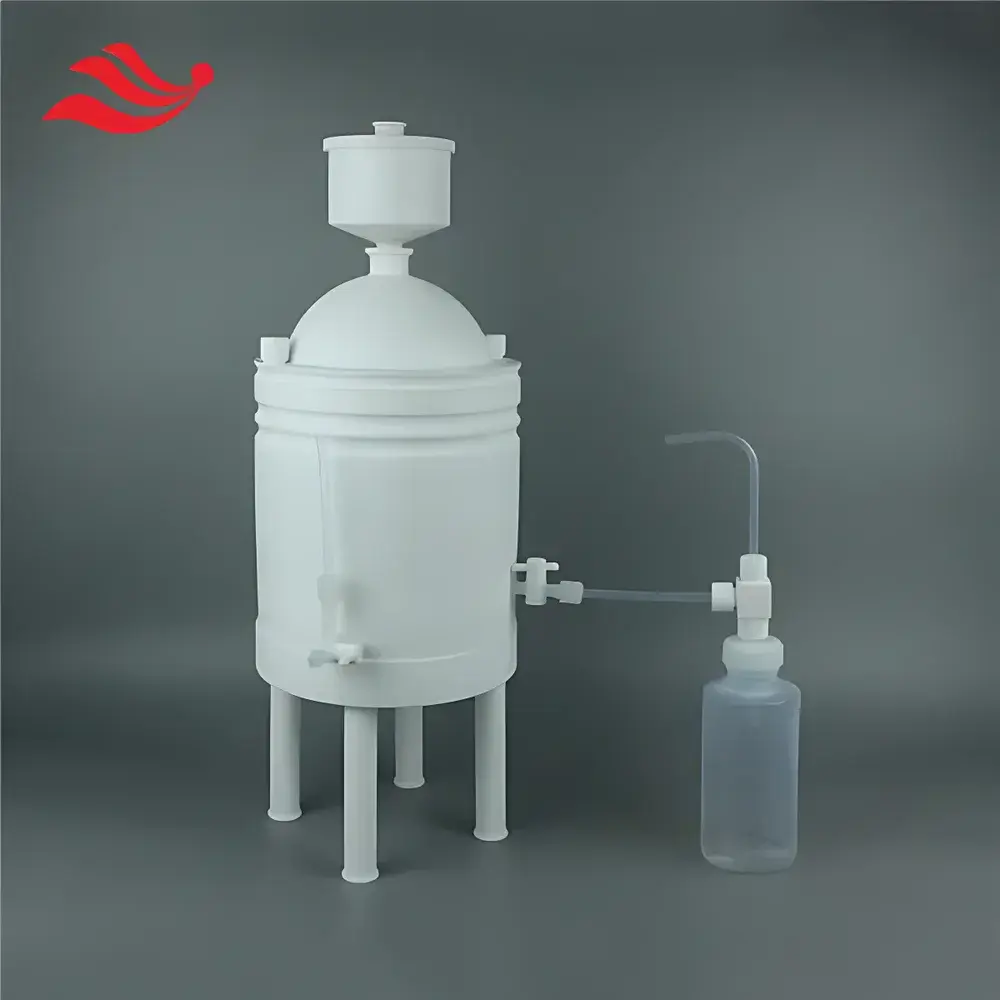
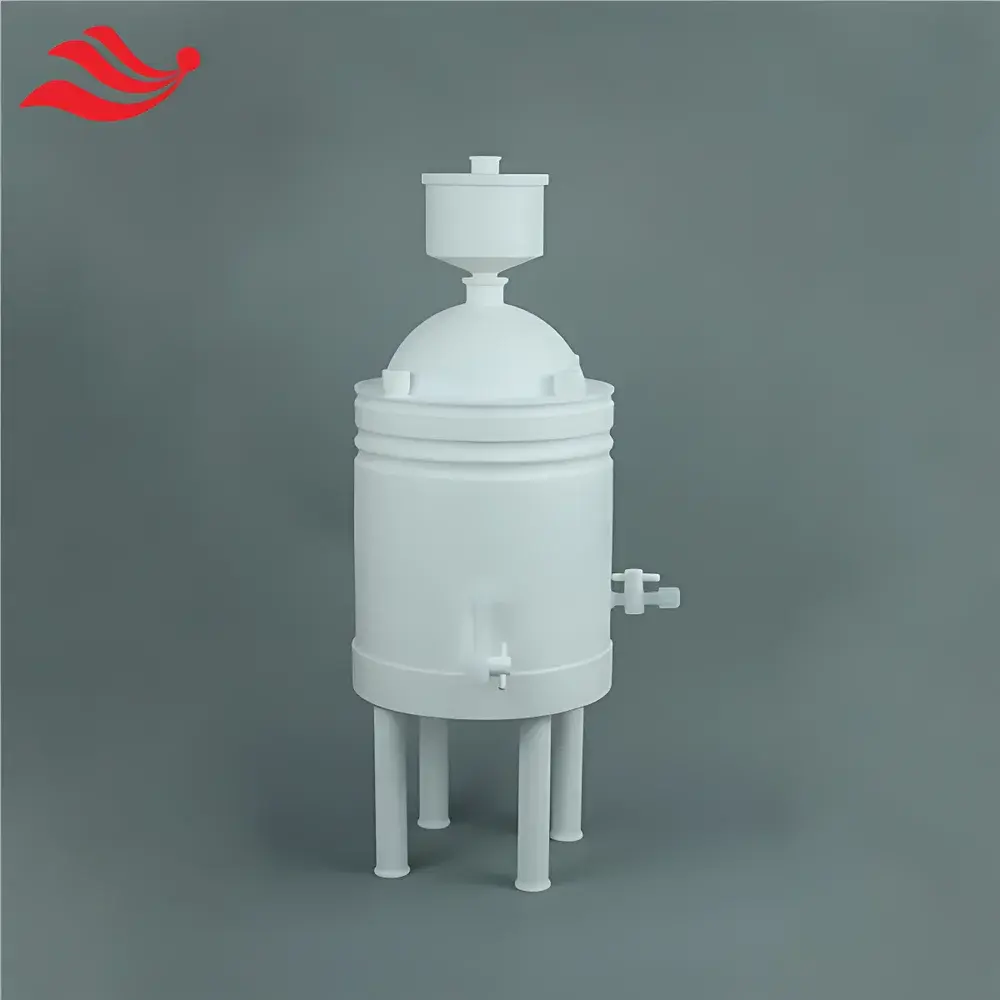
The Binzhenghong CH Sub-Boiling Acid Distillation System is a laboratory-grade purification apparatus engineered for the production of ultra-trace-metal-free acids required in high-sensitivity elemental analysis. Unlike conventional boiling-point distillation, this system operates under sub-boiling conditions—maintaining the liquid phase at temperatures deliberately below its atmospheric boiling point—thereby minimizing thermal decomposition, volatile impurity carryover, and metallic leaching from vessel surfaces. The core principle relies on controlled infrared radiative heating applied to the acid reservoir, generating low-velocity vapor that ascends into a vertically oriented, air-cooled PFA condenser. Condensate is collected in a chemically inert, fluoropolymer-lined receiver, ensuring minimal adsorption or recontamination. This method is widely adopted in laboratories supporting ICP-OES, ICP-MS, HR-ICP-MS, and EPA Method 200.7/6020B applications where background contamination from reagents must be reduced to sub-ppt levels.
Key Features
- PTFE-lined distillation chamber and PFA condenser tubing ensure complete chemical inertness for aggressive media including hydrofluoric acid (HF), aqua regia components, and hot nitric acid.
- Quartz-sheathed heating element provides uniform, non-contact radiative heat transfer—eliminating hot spots and reducing risk of localized degradation or metal ion release.
- Modular, tool-free disassembly enables full access to all wetted surfaces for rigorous cleaning and verification of residue-free operation between batches.
- Digital temperature controller with ±1 °C accuracy and overtemperature safety cutoff (set at 200 °C) ensures repeatable process parameters across operators and shifts.
- No moving parts or vacuum pumps—reducing maintenance burden and long-term operational cost compared to reflux-based or vacuum-assisted systems.
- Compact footprint (320 × 240 × 480 mm) fits standard fume hood interiors; compatible with optional Teflon®-coated collection bottles (sold separately).
Sample Compatibility & Compliance
The CH system is validated for single-pass distillation of concentrated nitric acid (69–70%), hydrochloric acid (37%), hydrofluoric acid (49%), phosphoric acid (85%), and hydrogen peroxide (30%). It is not recommended for sulfuric acid (>95%) or perchloric acid due to thermal instability risks. All wetted materials comply with ASTM D5127 (Standard Guide for Selection of Materials for High-Purity Water Systems) and meet USP Class VI biocompatibility requirements for fluoropolymers. While the unit itself carries no CE or UL certification, its design adheres to ISO/IEC 17025:2017 Annex A.2 guidelines for reference material preparation and supports audit-ready documentation when integrated into GLP-compliant SOPs. Trace metal blank verification per ISO 17294-2 is achievable using certified reference materials (e.g., NIST SRM 3100 series) before and after each distillation cycle.
Software & Data Management
The CH model operates via standalone analog-digital hybrid control—featuring a front-panel LED display and rotary temperature setpoint dial. No embedded software, firmware updates, or computer connectivity are provided. Temperature logging requires external data acquisition (e.g., calibrated thermocouple + USB logger). For regulated environments requiring electronic records, users may integrate the unit into facility-wide LIMS or ELN platforms via manual entry of batch ID, start/end time, setpoint, and post-distillation ICP-MS validation results. Audit trail compliance (per FDA 21 CFR Part 11) is maintained through procedural controls—not device-level functionality—making it suitable for research labs and QC facilities operating under internal quality management systems rather than full GMP manufacturing.
Applications
- Preparation of matrix-matched calibration standards for multi-element ICP-MS quantification in environmental water, soil digestates, and semiconductor rinse solutions.
- Generation of high-purity diluent blanks for ultra-low detection limit methods (e.g., EPA 1638, ISO 15586).
- Purification of acids used in cleanroom wafer etching chemistry qualification and particle-free surface preparation.
- Reconditioning of partially contaminated acid stocks following extended storage or repeated opening—extending usable shelf life without compromising analytical integrity.
- Supporting ISO/IEC 17025 accredited testing laboratories in demonstrating metrological traceability of reagent purity to national standards (e.g., NIST, LGC).
FAQ
What is the typical throughput for one distillation cycle?
A full 1000 mL charge of concentrated HNO₃ yields approximately 850–900 mL of purified distillate in 6–8 hours, depending on ambient lab temperature and setpoint (recommended: 120 °C for HNO₃).
Can the system purify mixed acid solutions such as aqua regia?
No. Aqua regia must be prepared fresh from individually purified HNO₃ and HCl components immediately prior to use. Co-distillation risks uncontrolled exothermic reactions and condenser clogging.
How often should the PTFE chamber be cleaned?
After every 5–10 distillation cycles—or immediately following any visible residue, discoloration, or deviation in blank metal content—as confirmed by routine ICP-MS monitoring.
Is third-party validation support available?
Binzhenghong provides factory test reports (including pre-shipment blank analysis for Fe, Al, Cr, Ni, Cu, Zn, Pb) but does not offer on-site IQ/OQ/PQ services. Users are advised to perform installation and operational qualification per their internal SOPs.
Does the unit include a collection bottle?
No. A 1000 mL PTFE or FEP collection bottle is recommended and sold separately to maintain full inertness throughout the entire fluid path.



