
KEM AT-Win Advanced Automatic Potentiometric Titrator System
| Brand | Kyoto Electronics Manufacturing (KEM) |
|---|---|
| Origin | Japan |
| Manufacturer Type | Original Equipment Manufacturer (OEM) |
| Import Status | Imported |
| Model | AT-Win |
| Instrument Type | Universal Potentiometric Titrator |
| Application Scope | General-purpose quantitative chemical analysis |
| Measurement Range | pH: –20.000 to +20.000 |
| mV | –2000.0 to +2000.0 |
| Temperature | 0 to 100 °C |
| Burette Accuracy (20 mL) | ±0.02 mL |
| Burette Resolution (20 mL) | 0.001 mL |
| Electrode Readout Accuracy | ±0.01 mL (20 mL burette) |
| Digital Resolution | 1/20000 |
Overview
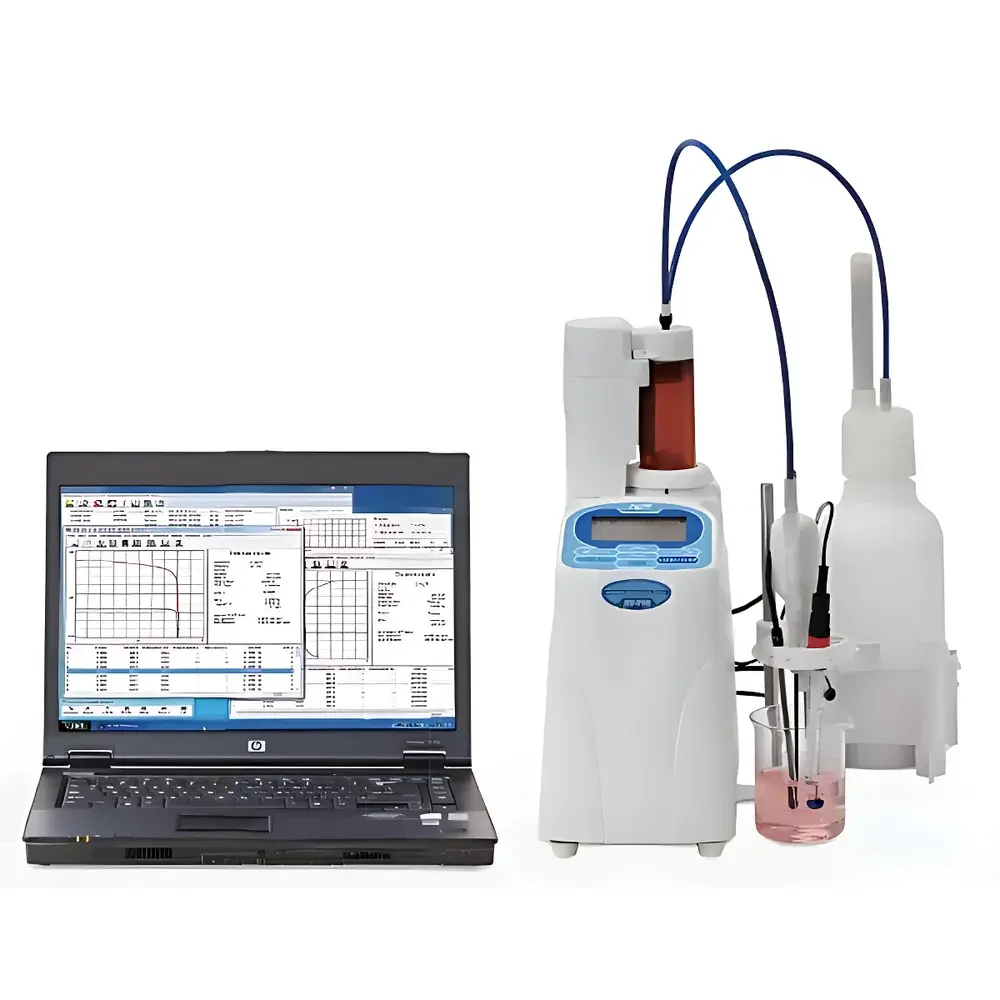
The KEM AT-Win Advanced Automatic Potentiometric Titrator System is a fully integrated, computer-controlled titration platform engineered for high-reproducibility quantitative chemical analysis in regulated laboratory environments. Based on classical potentiometric endpoint detection—measuring potential difference (mV) or hydrogen ion activity (pH) across a defined electrochemical cell—the system supports multiple titration modes including acid-base, redox, precipitation, complexometric, conductometric, photometric, and polarographic titrations. Its architecture centers on the KEM AT-710 titration unit, operated remotely via the AT-Win software suite, enabling centralized control of up to four independent titrators from a single workstation. Designed for compliance-critical workflows, the system incorporates hardware-level traceability, electronic signature support, and audit-ready data handling aligned with GLP, GMP, and FDA 21 CFR Part 11 requirements.
Key Features
- Multi-unit orchestration: One AT-Win software instance controls up to four AT-710 titration units simultaneously, maximizing throughput without compromising method integrity.
- Intelligent burette modules: Each 20 mL glass burette (standard) includes embedded memory chips storing reagent identity, concentration, expiration date, and calibration history—ensuring full reagent traceability and minimizing manual entry errors.
- High-precision fluid handling: 20 mL burettes deliver ±0.02 mL accuracy and 0.001 mL resolution; optional 5 mL and 1 mL burettes extend low-volume precision for micro-titration applications (e.g., pharmaceutical assay validation).
- Automated calibration management: Scheduled prompts for electrode standardization (pH/mV), temperature probe verification, and burette volume calibration—with full execution logging and timestamped records.
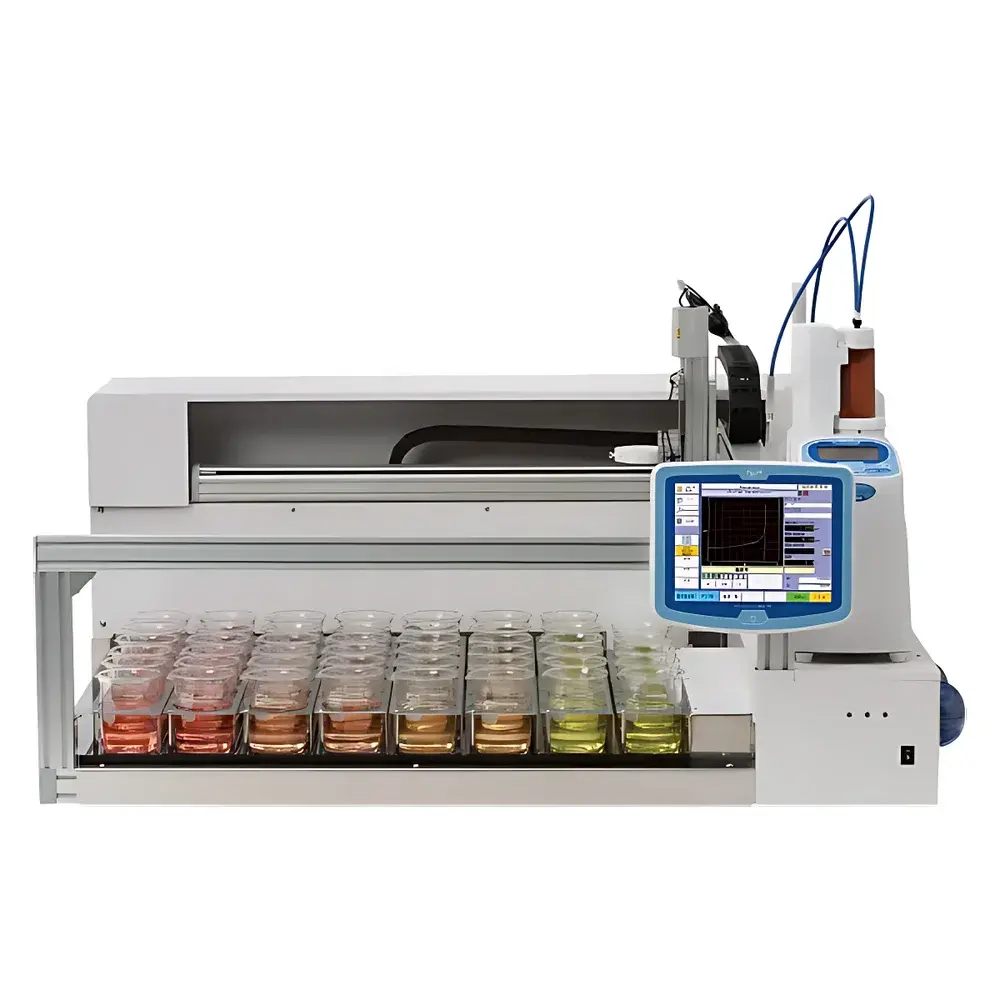
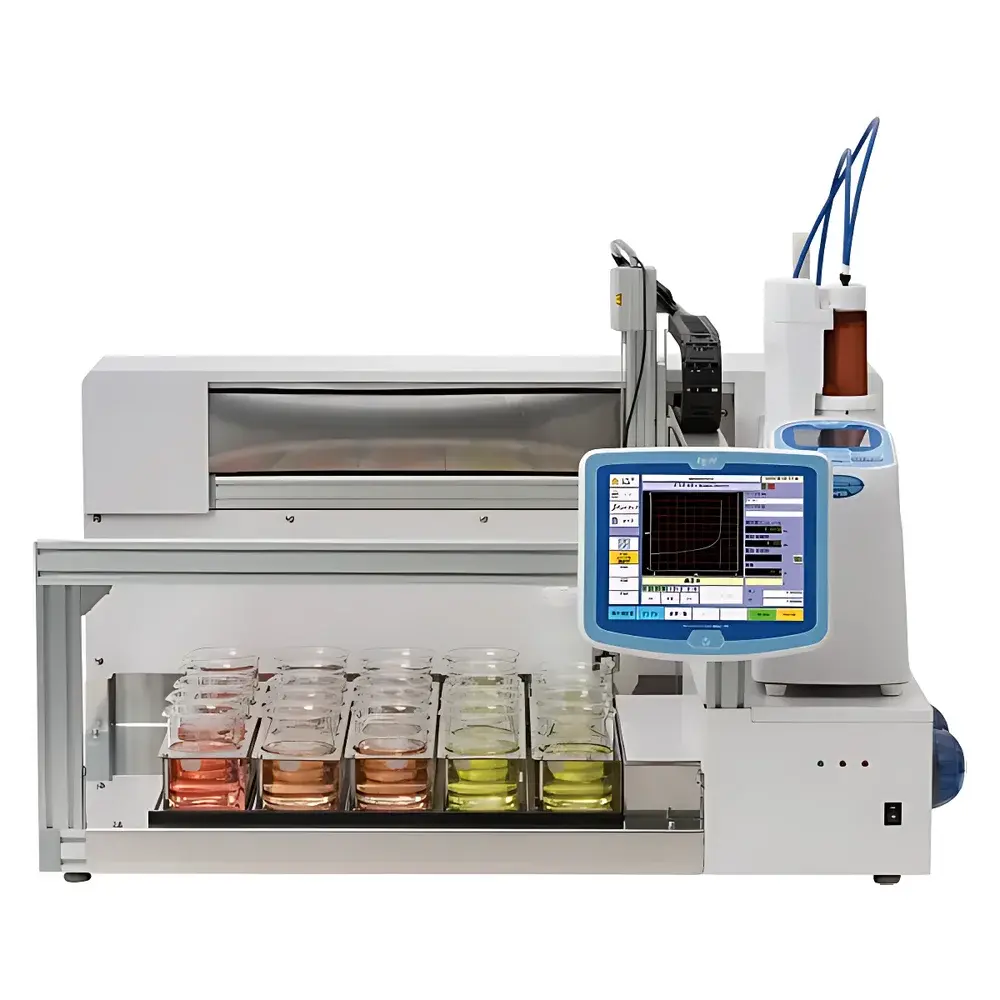
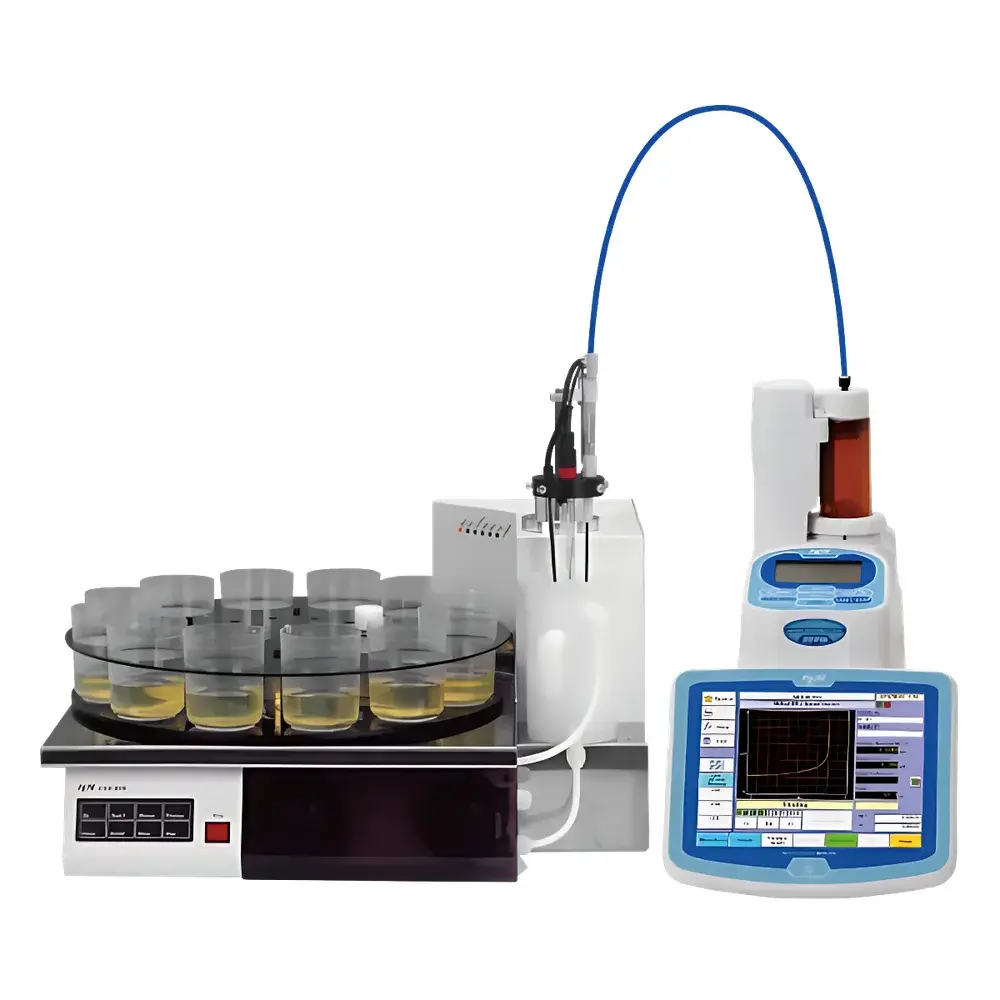
- Four-channel parallel processing: Modular sample rack accommodates up to 188 samples per run; robotic sample handlers (optional) synchronize dispensing, stirring, and endpoint detection across all channels.
- Regulatory-grade data governance: Role-based user authentication, electronic signatures, immutable audit trails, automatic backup to network storage, and encrypted local database archiving.
Sample Compatibility & Compliance
The AT-Win system accepts aqueous, non-aqueous, viscous, and suspended-phase samples across diverse matrices—including pharmaceutical actives, food extracts, petrochemical distillates, wastewater effluents, and polymer additives. It complies with ASTM E2087 (Standard Practice for Potentiometric Titration), ISO 8655-3 (Piston burettes), and USP (Titrimetry). All measurement data—including raw mV/pH/time series, derivative curves, equivalence point calculations, and statistical summaries (mean, SD, RSD)—are stored with full metadata: operator ID, instrument serial number, environmental temperature/humidity, and calibration certificate references. Data export formats include CSV, PDF (with digital signature), and XML for LIMS integration.
Software & Data Management
AT-Win software provides a validated Windows-based interface supporting method development, sequence programming, real-time monitoring, and post-run reporting. Users define sample types, analyte targets, expected concentration ranges, and titrant properties—triggering auto-generation of optimized titration parameters (e.g., incremental step size, delay times, endpoint sensitivity thresholds). The software enforces method version control, prevents unauthorized parameter overrides, and logs every user action (login/logout, method edit, result approval) with ISO/IEC 17025-compliant timestamps. Raw sensor data is retained unprocessed; all calculations (blank subtraction, titer normalization, pKa derivation, dual-channel overlay) are fully traceable and recalculable. Backup routines execute automatically at method completion and daily midnight cycles, with configurable retention policies and SHA-256 hash verification.
Applications
- Pharmaceutical QC: Assay of active ingredients (e.g., ibuprofen, ascorbic acid), residual chloride testing, Karl Fischer water content cross-validation.
- Food & Beverage: Total acidity (TA), free fatty acid (FFA) in oils, sulfur dioxide in wine, chloride in dairy products.
- Environmental: COD determination (closed-reflux dichromate method), alkalinity profiling, cyanide speciation in industrial effluents.
- Chemical Manufacturing: Acid number (ASTM D974), base number (ASTM D2896), saponification value, catalyst residue quantification.
- Academic Research: pKa mapping of polyprotic acids, stability constant determination, kinetic endpoint modeling under controlled temperature gradients.
FAQ
Does AT-Win support multi-parameter titration sequences (e.g., pH followed by mV)?
Yes—dual-channel electrode inputs allow simultaneous acquisition of pH and mV signals, enabling hybrid endpoints such as pH-stat redox titrations or back-titration protocols requiring concurrent parameter monitoring.
Can custom calculation templates be deployed across multiple instruments?
Absolutely. Method files—including user-defined formulas, statistical filters, and report layouts—are centrally managed and pushed to all connected AT-710 units via AT-Win’s deployment module.
Is the system compatible with third-party electrodes and burettes?
While KEM-certified electrodes and burettes ensure full specification compliance and warranty coverage, the AT-710 hardware supports standard BNC and DIN connectors; however, non-KEM components may void calibration traceability and regulatory validation.
How is data integrity maintained during power failure or unexpected shutdown?
All ongoing titrations write intermediate results to non-volatile memory every 2 seconds; upon restart, the system resumes from the last confirmed data point without loss of raw time-series or endpoint fidelity.
What validation documentation is provided for GxP environments?
KEM supplies IQ/OQ protocols, factory calibration certificates (NIST-traceable standards), software validation summary reports, and a complete 21 CFR Part 11 compliance matrix—all delivered with the system and updated annually per KEM’s quality management system (ISO 9001:2015 certified).




