
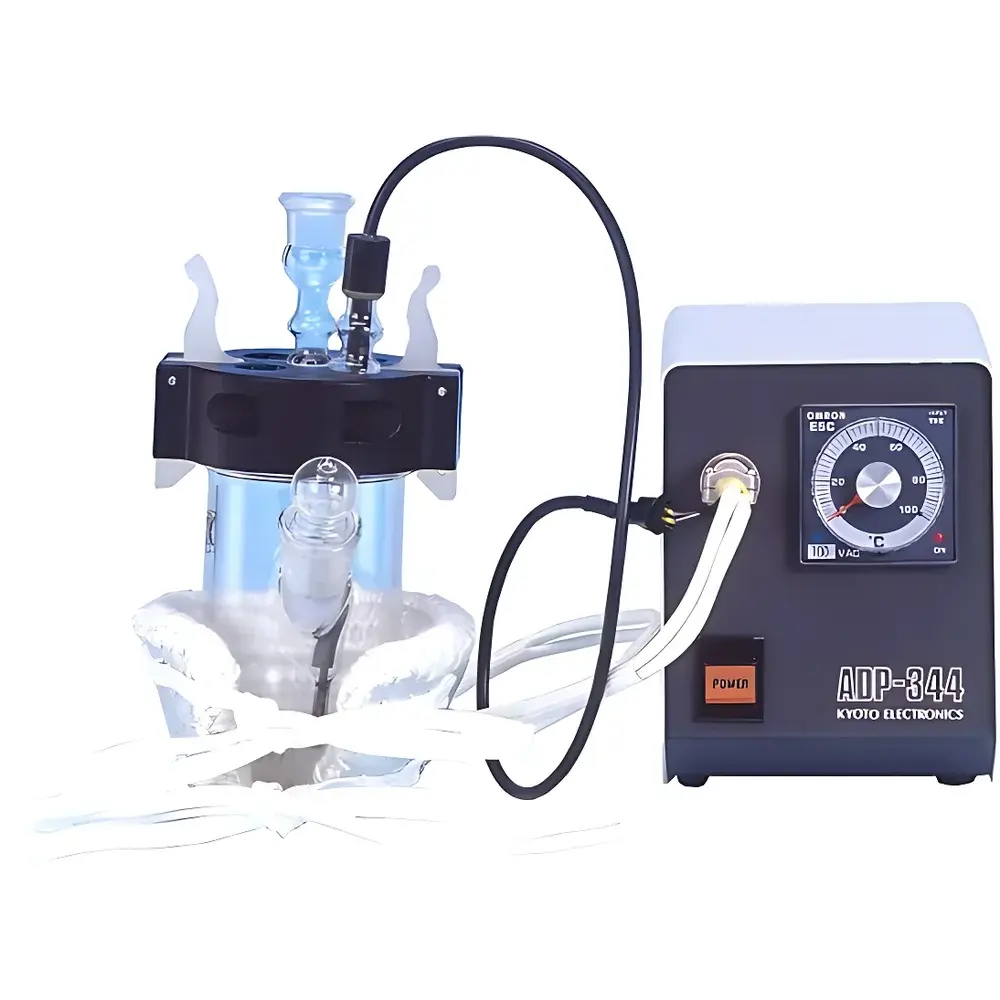
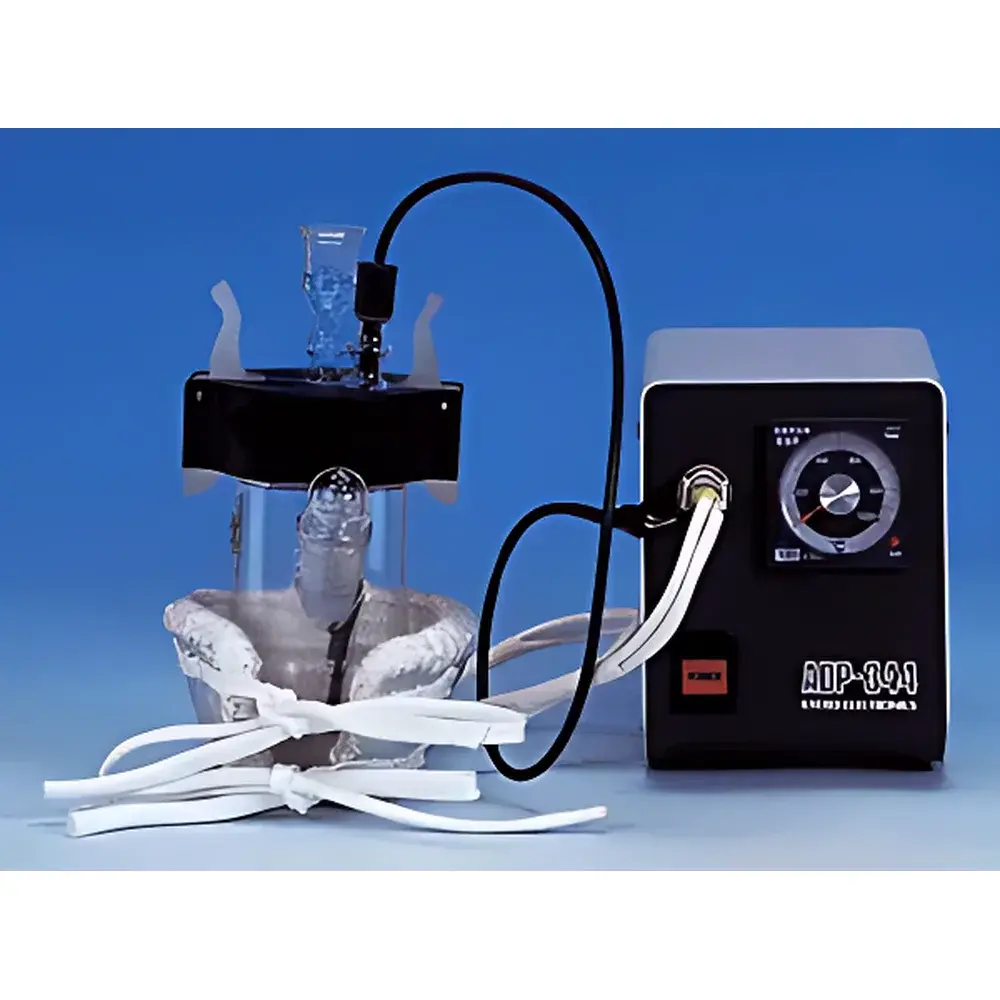
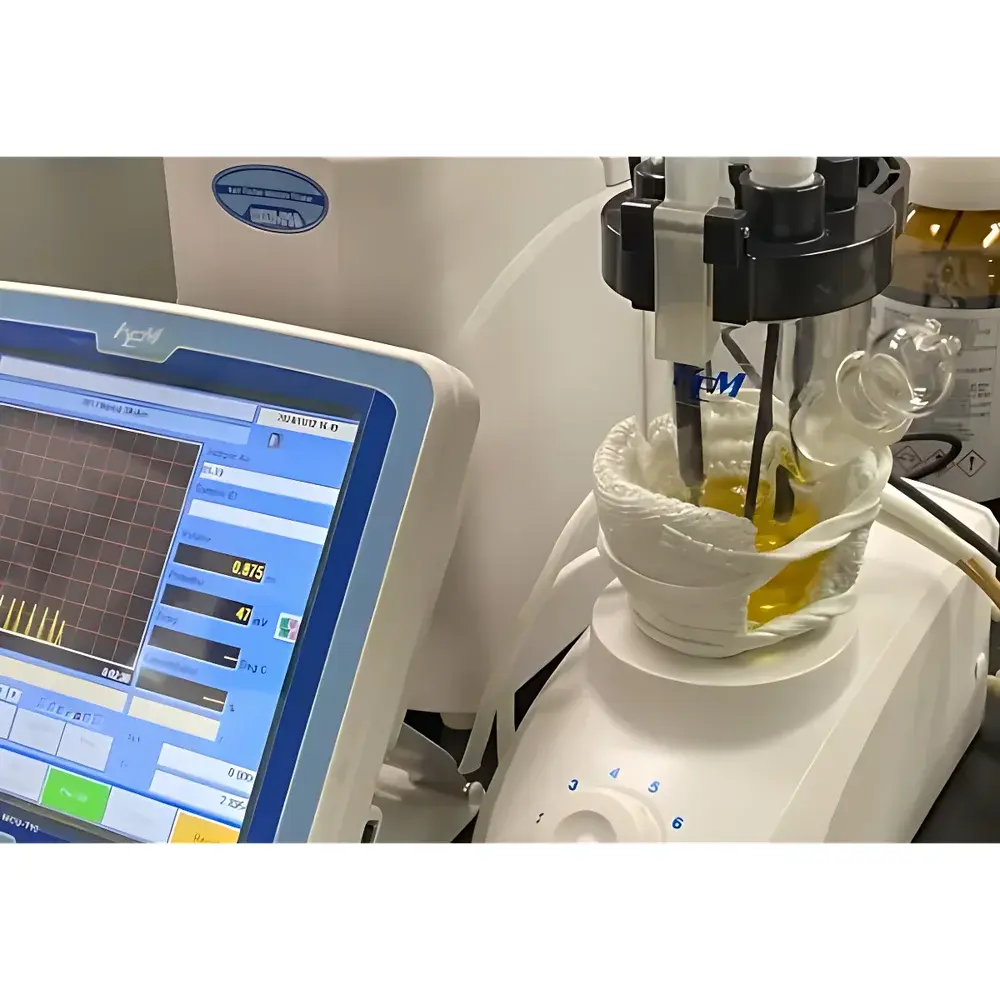
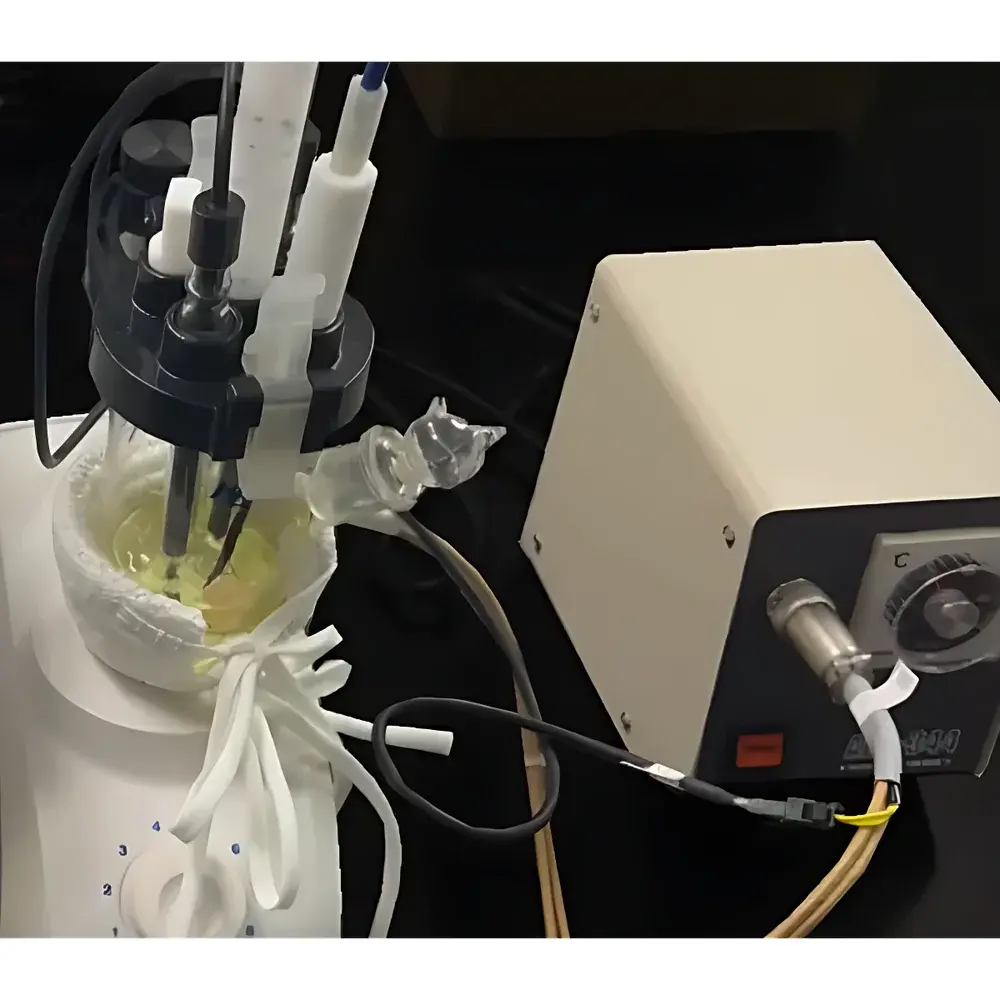
KEM ADP-344 Heat Extractor for Sugar Samples – Dedicated Heating Module for Volumetric Karl Fischer Titration Systems
| Brand | KEM (Kyoto Electronics Manufacturing) |
|---|---|
| Origin | Japan |
| Manufacturer | Yes |
| Import Status | Imported |
| Model | ADP-344 |
| Titration Method | Fully Automated Volumetric Titration |
| Instrument Type | Volumetric Karl Fischer Moisture Analyzer Accessory |
| Measurement Resolution | 0.005 mL |
| Moisture Range | 10 ppm to 100% H₂O |
| Burette Accuracy (10 mL) | ±0.015 mL |
| Minimum Dispensing Increment | 1/20,000 of burette volume |
| Titration Control Precision | ±0.5% |
| Heating Method | Surround-type heating of titration cell |
| Temperature Range | Ambient to 60 °C |
| Temperature Stability | ±3 °C |
| Power Supply | AC 100 V, 50/60 Hz, ~55 W |
| Dimensions (W×D×H) | 100 × 150 × 133 mm |
| Weight | 1.8 kg |
Overview
The KEM ADP-344 Heat Extractor for Sugar Samples is a purpose-engineered thermal accessory designed exclusively for integration with volumetric Karl Fischer (KF) moisture analyzers—particularly the KEM MKV-710 series and other compatible KF titration platforms. Unlike general-purpose heating modules, the ADP-344 addresses a critical analytical challenge in carbohydrate-rich matrices: incomplete sample dissolution and slow water release due to high viscosity, crystallinity, or thermal sensitivity. By applying controlled, uniform circumferential heating directly around the titration vessel, the ADP-344 accelerates solubilization of sugar-based samples—including chocolate, caramel, hard candies, chewing gum, and powdered confectionery—without inducing thermal degradation or side reactions. Its operation adheres to the fundamental electrochemical principle of volumetric KF titration, where iodine generated in situ reacts stoichiometrically with water (I₂ + SO₂ + H₂O → 2HI + SO₃), enabling precise quantification based on titrant consumption. The module does not perform measurement itself but extends the operational envelope of KF systems into low-volatility, high-molecular-weight organic matrices where conventional ambient-temperature titration fails to achieve endpoint reproducibility or complete water extraction.
Key Features
- Surround-type heating architecture ensures uniform thermal distribution across the entire titration cell wall—minimizing localized overheating and promoting consistent solvent-sample interaction.
- Adjustable temperature control from ambient up to 60 °C with ±3 °C stability, optimized to balance water liberation efficiency against risk of Maillard reactions or caramelization in thermolabile sugars.
- Compact footprint (100 × 150 × 133 mm) and lightweight design (1.8 kg) enable seamless integration onto standard laboratory benches without requiring dedicated HVAC or exhaust infrastructure.
- Low-power consumption (~55 W) supports continuous operation during extended batch analyses while maintaining compliance with IEC 61010-1 safety standards for electrical equipment used in laboratory environments.
- Mechanically interlocked mounting interface ensures repeatable alignment with KEM’s proprietary double-wall titration cells, preserving seal integrity and preventing vapor leakage during heated operation.
Sample Compatibility & Compliance
The ADP-344 is validated for use with solid, semi-solid, and viscous sugar-containing materials that exhibit poor solubility in standard KF solvents (e.g., methanol–chloroform mixtures) at room temperature. It enables compliant moisture determination in accordance with ASTM D6304 (Standard Test Method for Determination of Water in Petroleum Products, Bituminous Materials, and Non-Traceable Organic Liquids by Coulometric Karl Fischer Titration), ISO 760 (Determination of Water—Karl Fischer Method), and USP (Water Determination). When paired with KEM’s MKV-710M or MKV-710S analyzers, the system supports 21 CFR Part 11-compliant audit trails and electronic signatures when operated within validated software environments (e.g., KEM Thermosoft v3.x). All thermal parameters are logged synchronously with titration data, fulfilling GLP/GMP documentation requirements for pharmaceutical excipients, nutraceutical ingredients, and food-grade sweeteners.
Software & Data Management
The ADP-344 operates as a hardware-peripheral under full control of KEM’s Thermosoft software suite. Temperature setpoint, ramp rate, and hold duration are programmable per method—allowing users to define multi-stage thermal protocols (e.g., 40 °C for 60 s pre-dissolution, then 55 °C during titration). Real-time temperature feedback is displayed alongside titration curves, enabling correlation between thermal profile and endpoint sharpness. Raw data—including time-stamped temperature readings, burette position, and coulombic charge—is exported in CSV or XML format for traceability and statistical process control (SPC). Software-generated reports include uncertainty budgets aligned with EURACHEM/CITAC Guide CG4, incorporating contributions from burette accuracy (±0.015 mL), temperature drift (±3 °C), and sample homogeneity.
Applications
- Quantitative moisture analysis of hygroscopic confectionery products prior to packaging to prevent bloom formation and shelf-life degradation.
- QC testing of lactose monohydrate and dextrose anhydrous in pharmaceutical dry powder inhalers (DPIs), where residual water content directly impacts aerosol performance.
- Batch release testing of invert sugar syrups and glucose-fructose blends used in beverage manufacturing, ensuring consistency in Maillard reaction kinetics during thermal processing.
- Research-level characterization of water activity (aw) correlates in amorphous carbohydrate matrices, supporting glass transition temperature (Tg) modeling.
- Regulatory submissions for FDA IND/NDA dossiers requiring validated moisture data for sugar-based active pharmaceutical ingredients (APIs) and co-processed excipients.
FAQ
Can the ADP-344 be used with non-KEM Karl Fischer titrators?
No—it is mechanically and electrically engineered for exclusive compatibility with KEM’s MKV-710 series volumetric titrators and requires native firmware handshake for temperature synchronization.
Does the ADP-344 modify the KF reagent chemistry?
No—the module applies only thermal energy to the sample-solvent mixture; it does not introduce catalysts, alter reagent composition, or interfere with the stoichiometric I₂/H₂O reaction.
Is calibration required for the heating function?
Yes—annual verification using a calibrated NIST-traceable PT100 probe is recommended to ensure temperature accuracy remains within ±3 °C specification.
What safety protections are built into the ADP-344?
It includes overtemperature cutoff (65 °C hard limit), short-circuit protected power supply, and thermal insulation rated to UL 94 V-0 to prevent bench surface damage.
Can the ADP-344 be used for non-sugar samples such as polymers or oils?
While technically operable, its thermal profile and mechanical interface are optimized for sugar dissolution kinetics; alternative heating modules (e.g., KEM ADP-324 for polymers) are recommended for non-carbohydrate applications.




