
KEM ADP-512 Karl Fischer Moisture Evaporator for Ore Analysis
| Brand | KEM (Kyoto Electronics Manufacturing) |
|---|---|
| Origin | Japan |
| Manufacturer | Yes |
| Import Status | Imported |
| Model | ADP-512 |
| Titration Mode | Fully Automatic |
| Instrument Type | Volumetric & Coulometric Karl Fischer Moisture Analyzer |
| Measurement Resolution | 0.1 µg |
| Water Content Range | 10 µg – 300 mg H₂O |
| Accuracy | ≤0.3% |
| Minimum Dispensing Increment | 0.1 µg |
| Titration Control Precision | ±0.3% |
Overview
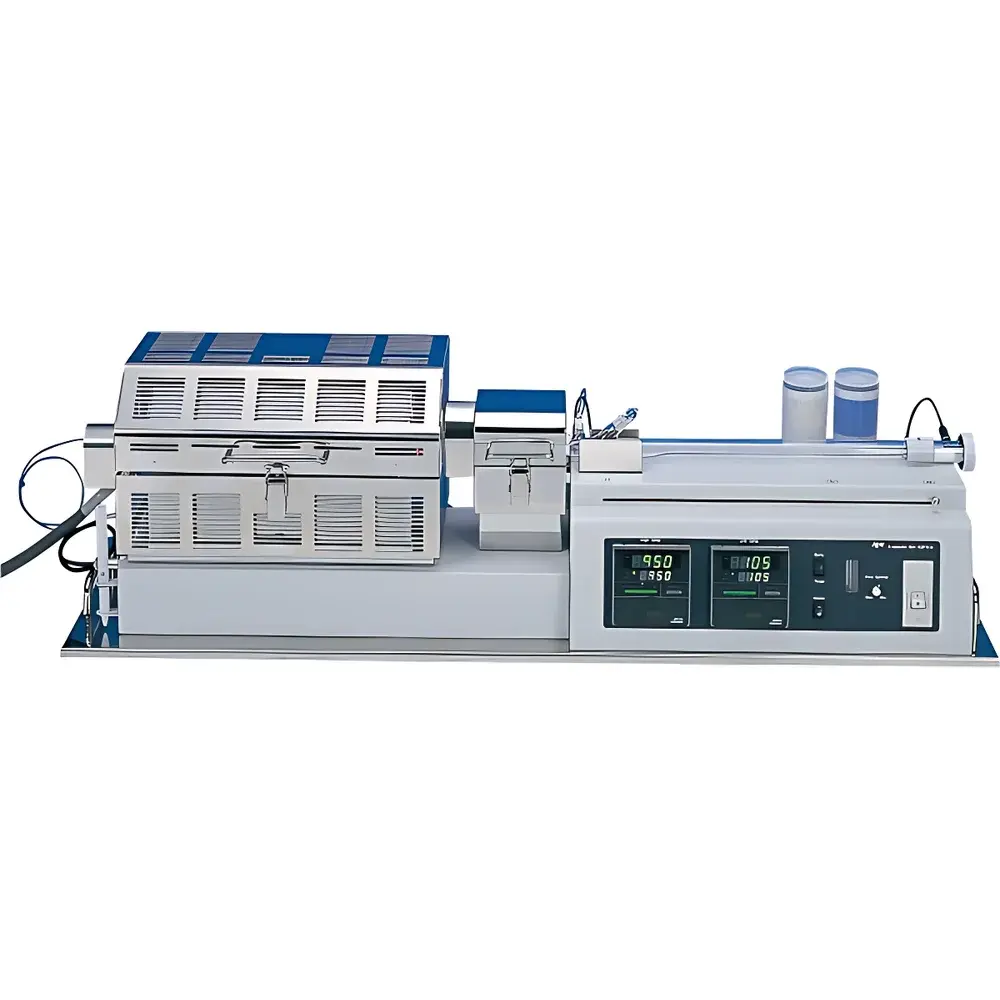
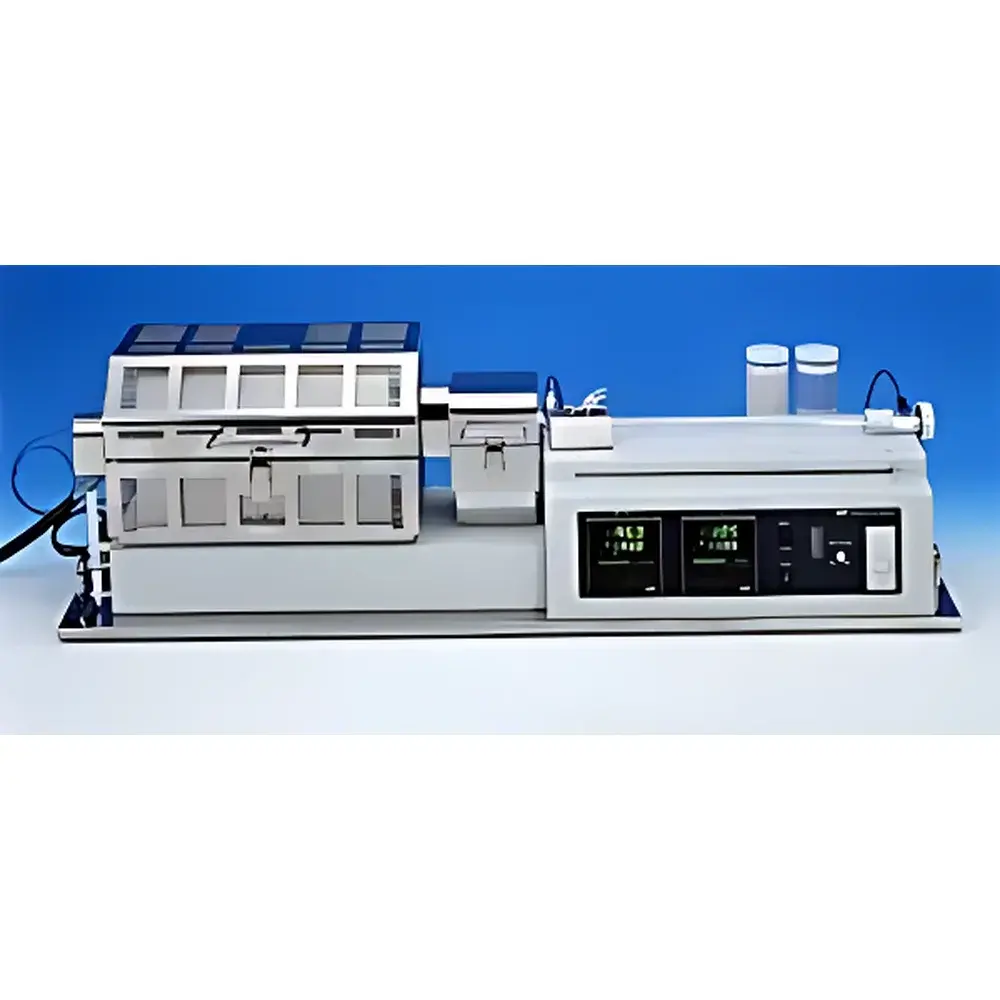
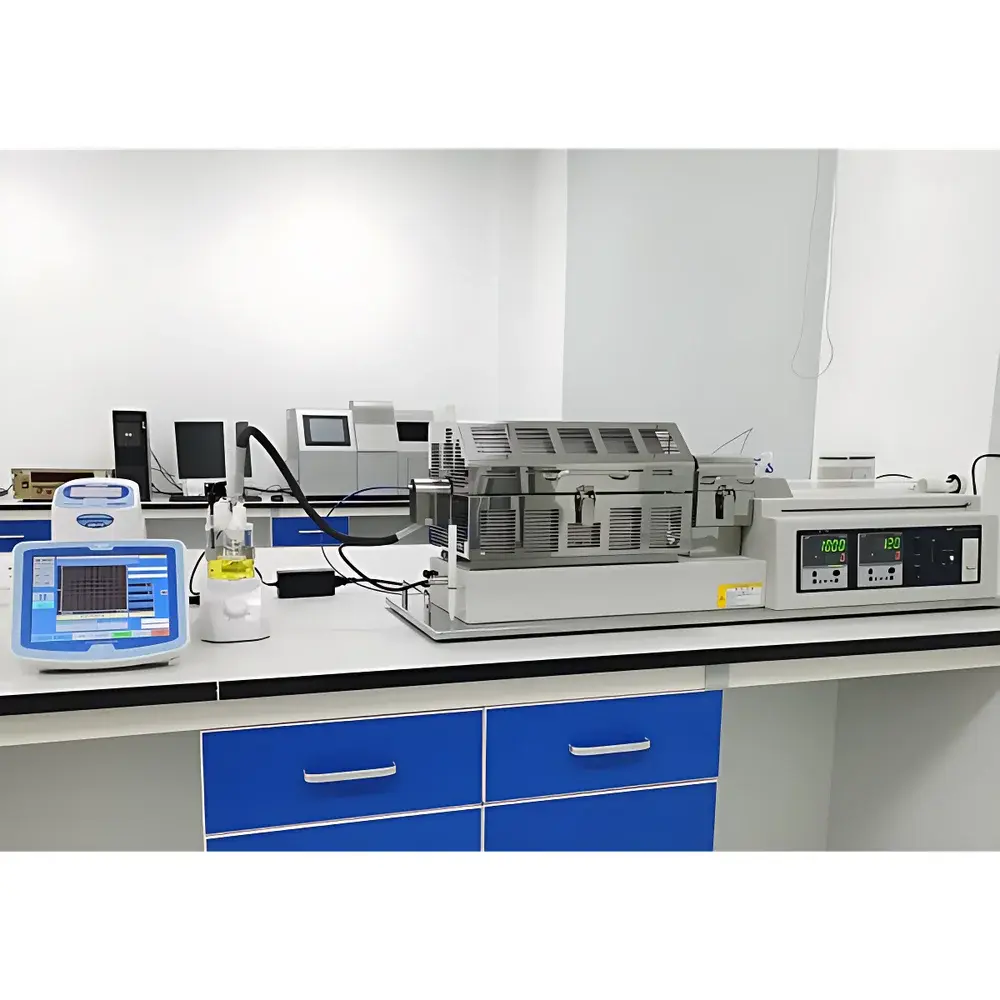
The KEM ADP-512 Karl Fischer Moisture Evaporator for Ore Analysis is a specialized, dual-zone thermal evaporation system engineered to isolate and quantify both hygroscopic and chemically bound water in refractory inorganic materials—particularly iron ores, manganese ores, clays, metal powders, and nuclear-grade uranium dioxide. Unlike conventional single-temperature moisture analyzers, the ADP-512 implements a sequential, atmospherically controlled two-step heating protocol grounded in standardized thermochemical release kinetics. First, samples are pre-dried in a low-temperature zone (50–200 °C) under dry nitrogen to volatilize surface-adsorbed (hygroscopic) moisture. Subsequently, the same sample is transferred—without exposure to ambient air—to a high-temperature zone (up to 1,000 °C) where thermally stable bound water (e.g., hydroxyl groups in goethite or structural water in kaolinite) is quantitatively liberated. Released water vapor is swept by inert gas into a sealed KF titration cell, where coulometric or volumetric Karl Fischer reagent reacts stoichiometrically with H₂O; endpoint detection is performed via bipotentiometric (dual-platinum electrode) titration. This architecture ensures strict separation of moisture fractions and eliminates cross-contamination or reabsorption artifacts common in batch oven–KF coupling setups.
Key Features
- Dual independent heating zones with precise PID-controlled temperature regulation (low zone: 50–200 °C; high zone: 50–1,000 °C), enabling sequential, fraction-specific water evolution.
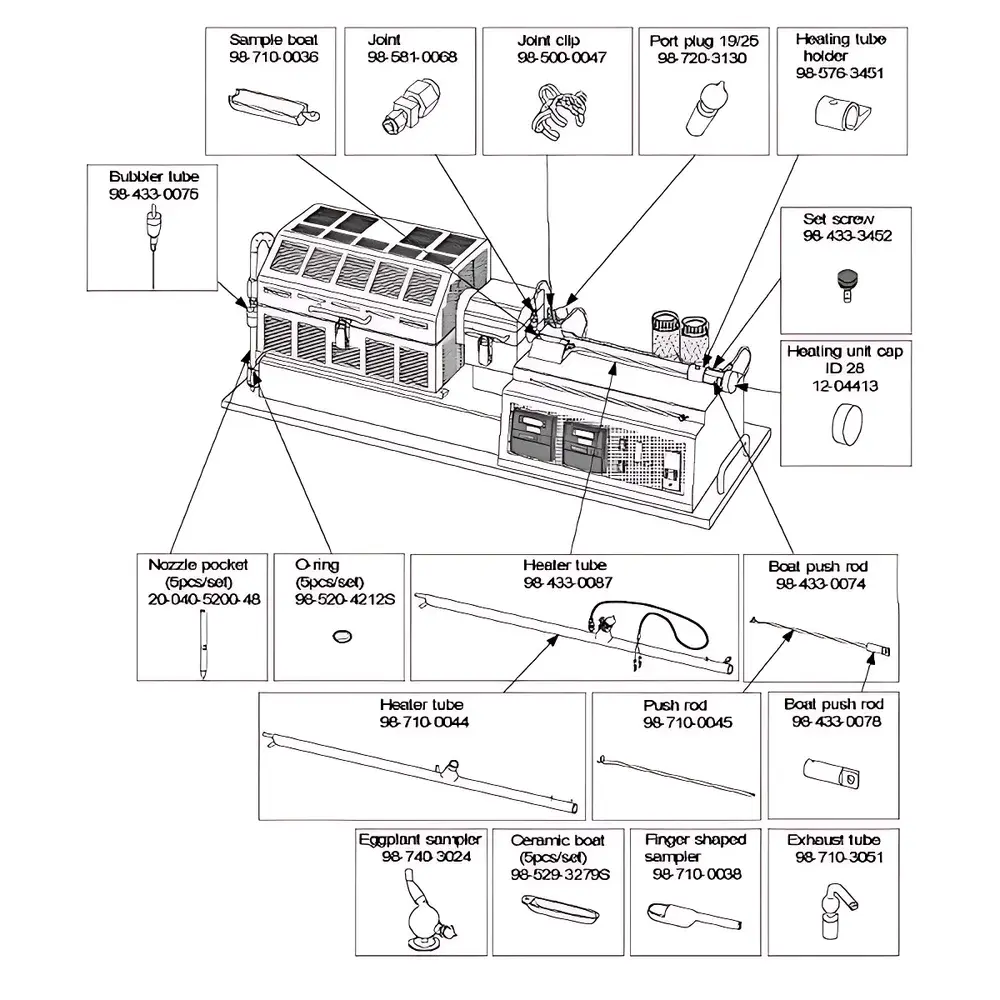
- Quartz glass heating tube (Ø25 × 1000 mm) offering high thermal stability, chemical inertness, and optical clarity for visual process monitoring.
- Integrated dry nitrogen purge system with flow control to maintain an anhydrous transfer path between zones and prevent atmospheric moisture ingress.
- Fully automated titration interface compatible with KEM’s MKV-710/MKV-710S volumetric titrators or MKC-710 coulometric titrators, supporting both ASTM E203 and ISO 8539 workflows.
- Robust mechanical design (30 kg mass, 1150 × 340 × 345 mm footprint) optimized for continuous operation in QC laboratories handling abrasive ore powders.
- Compliance-ready architecture: supports audit trails, user access levels, and electronic signature capability when paired with KEM’s dedicated Titration Software (Tiamo™-compatible export).
Sample Compatibility & Compliance
The ADP-512 is validated for use with heterogeneous, high-density mineral matrices including hematite, magnetite, limonite, pyrolusite, bentonite, and sintered UO₂ pellets. Its thermal profile aligns directly with multiple international standards governing moisture speciation in metallurgical feedstocks and nuclear fuel intermediates: GB/T 24190–2009 (combined water in iron ores), GB/T 6730.3–2017 (hygroscopic moisture), GB/T 4164–2008 / GB/T 5158.3–2011 (oxygen/water interconversion in metal powders), GB 11840–1989 (UO₂ moisture), ISO 2596:2006, ISO 7335:1987, and JIS M 8211–1995. The system meets GLP requirements for traceable calibration, method validation records, and raw data retention. When operated with KEM’s certified KF reagents and calibrated micro-syringes, it satisfies ISO/IEC 17025 criteria for uncertainty budgeting in accredited testing laboratories.
Software & Data Management
The ADP-512 operates as a peripheral module within KEM’s unified titration platform. All temperature ramps, gas flow rates, transfer timing, and titration parameters are programmable via KEM’s proprietary PC-based software (v4.2+), which logs timestamped metadata—including furnace zone temperatures, N₂ flow rate, titrant consumption, drift correction values, and endpoint stability metrics—for each analysis. Data export adheres to ASTM E1382-compliant CSV and PDF report formats. Audit trail functionality complies with FDA 21 CFR Part 11 requirements when deployed with Windows domain authentication and digital certificate signing. Raw sensor data (electrode potential, current, temperature) is retained at 10 Hz sampling resolution for retrospective troubleshooting and method optimization.
Applications
- Quantification of hygroscopic vs. combined water fractions in iron ore concentrates prior to blast furnace charging.
- Moisture speciation in manganese nodules and lateritic nickel ores to assess drying energy requirements and transport stability.
- Verification of dehydration completeness in clay-based catalyst supports and ceramic precursors.
- Oxygen balance determination in reduced metal powders (Fe, Cu, Ni) where residual hydroxides contribute to oxide reformation during sintering.
- Quality control of nuclear fuel fabrication batches (UO₂, MOX) per IAEA safeguards protocols requiring sub-100 µg H₂O precision.
FAQ
Can the ADP-512 distinguish between adsorbed water and lattice-bound water in layered silicates?
Yes—via programmed dual-zone heating and selective condensation trapping, it isolates volatile surface moisture (500 °C), enabling speciation consistent with TGA-FTIR correlation studies.
Is the quartz tube replaceable, and what is its typical service life under daily ore analysis?
The Ø25 × 1000 mm quartz tube is field-replaceable and rated for >5,000 thermal cycles when operated within specified temperature gradients and protected from mechanical shock or rapid quenching.
Does the system support unattended overnight operation for high-throughput labs?
Yes—equipped with auto-shutdown on completion, overtemperature cutoff, and N₂ depletion alarm; validated for up to 24-hr continuous runs with scheduled sample carousel integration (optional).
How is calibration verified for trace-level water measurements below 50 µg?
Using certified KF standard solutions (e.g., 1.00 ± 0.02 mg H₂O/g) and gravimetric water standards (e.g., sodium tartrate dihydrate), with linearity verification across 10–300 mg range per ISO 8539 Annex B.
What maintenance intervals are recommended for the gas delivery and titration interfaces?
N₂ filter replacement every 6 months; electrode polishing and reference electrolyte refill every 200 analyses; full system performance verification per ISO/IEC 17025 annually or after 1,000 test cycles.



