
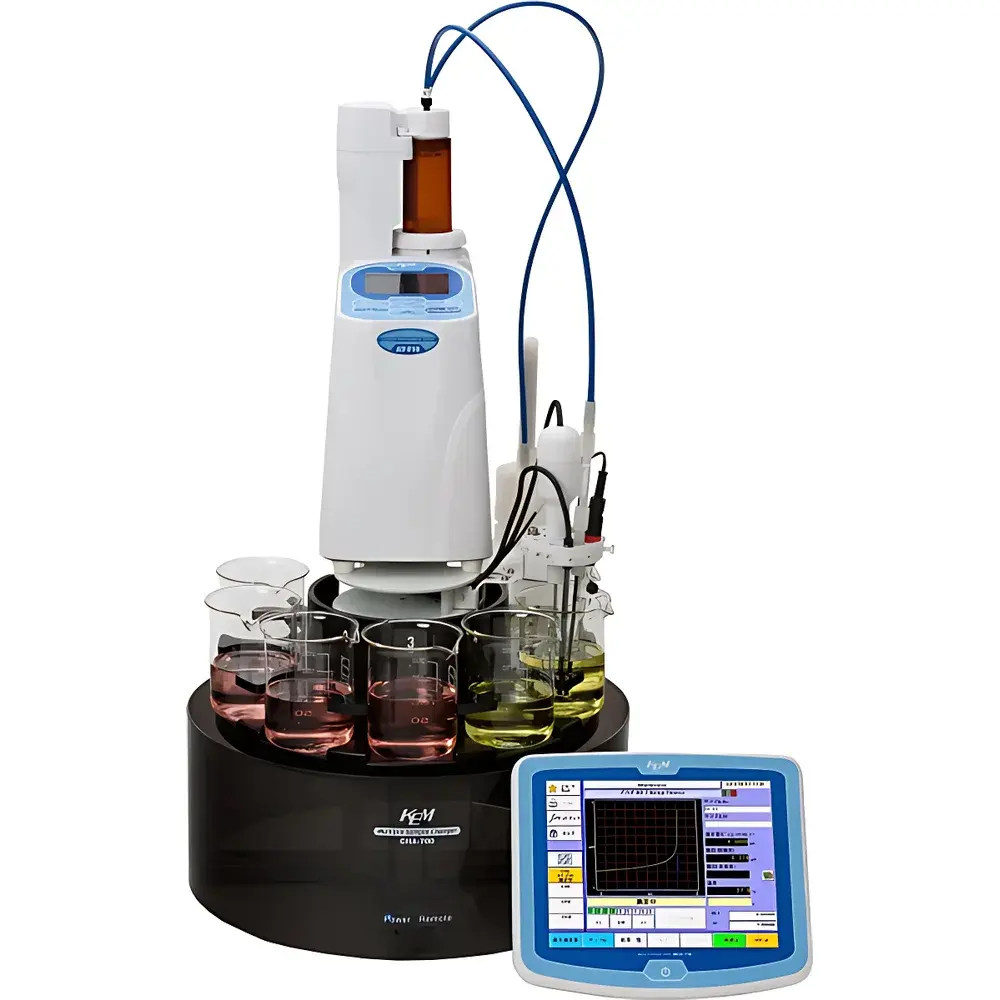
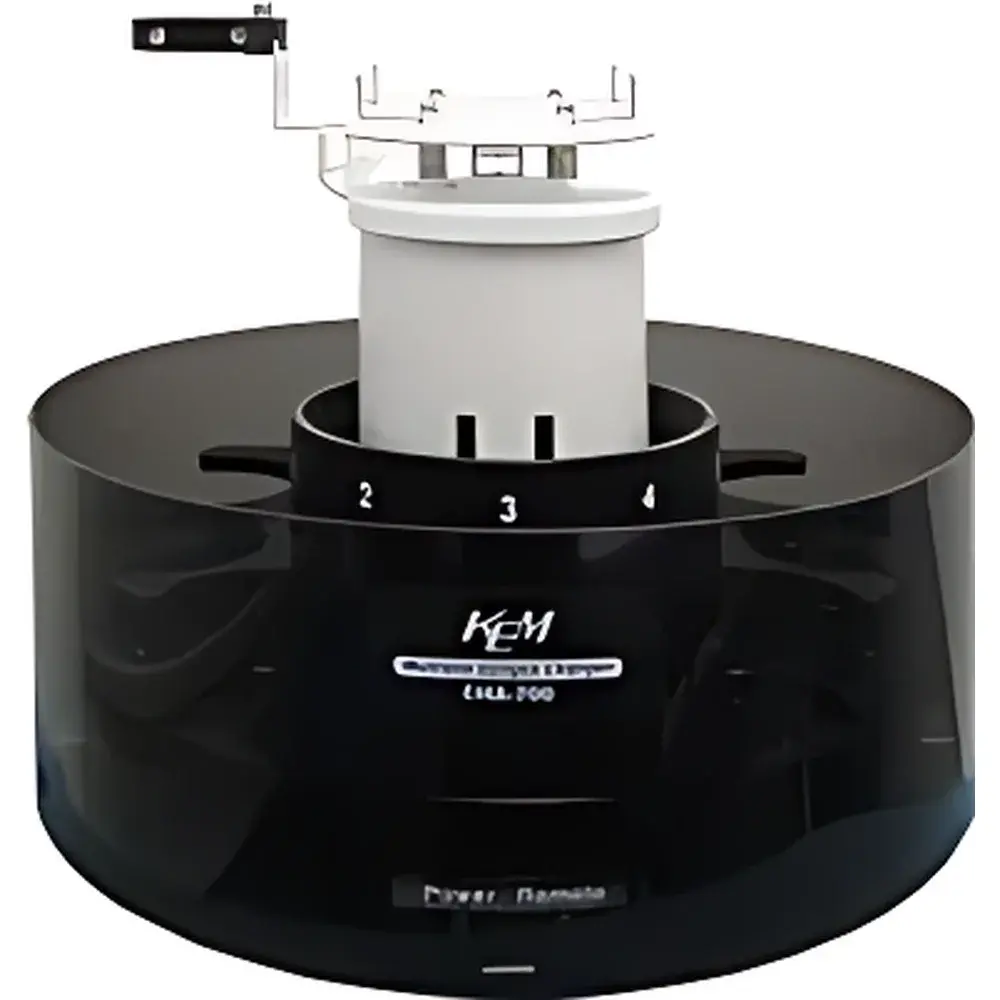
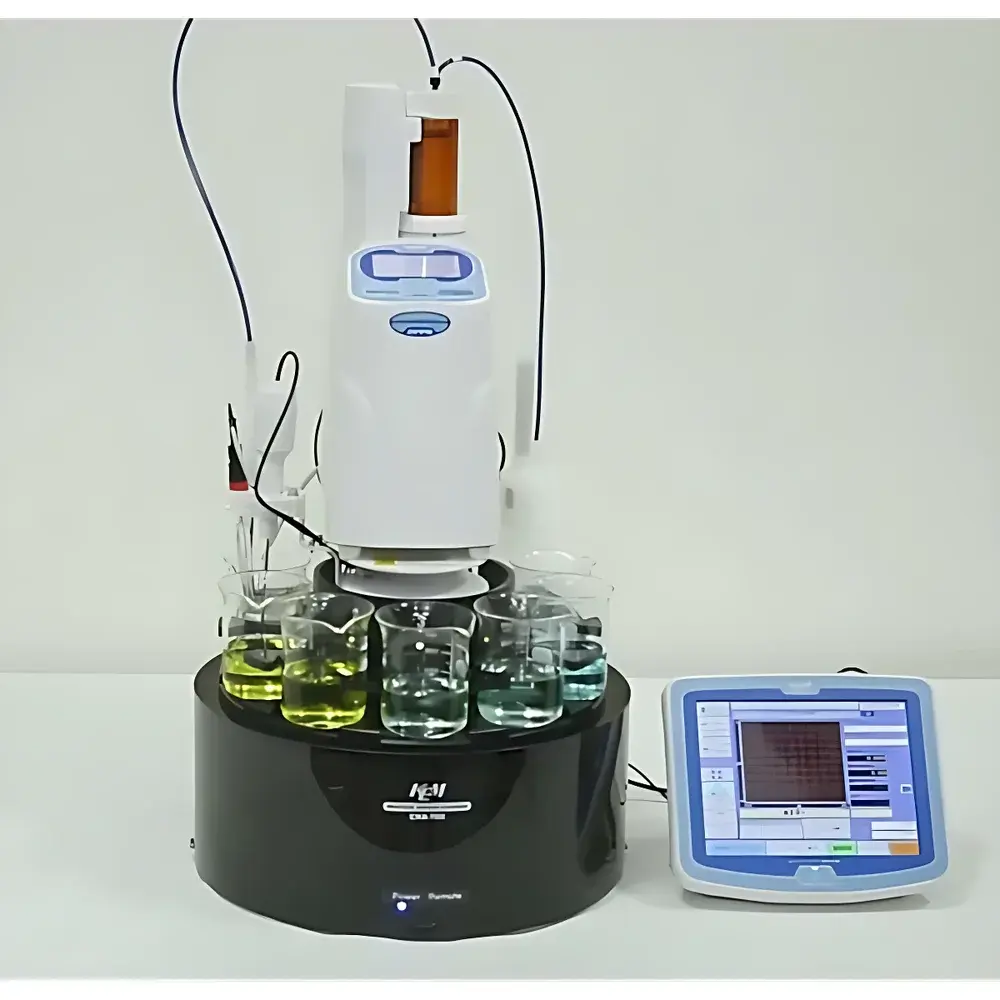
KEM AT-710 + CHA-700 Fully Automated Potentiometric Titration System
| Brand | Kyoto Electronics Manufacturing (KEM) |
|---|---|
| Origin | Japan |
| Manufacturer Type | Original Equipment Manufacturer (OEM) |
| Product Category | Imported Instrument |
| Model | AT-710 + CHA-700 |
| Instrument Type | General-purpose Potentiometric Titrator |
| Application Scope | Universal |
| Measurement Range | pH: −20.000 to +20.000 |
| mV | −2000.0 to +2000.0 |
| Temperature | 0 to 100 °C |
| Meter Accuracy | ±0.2% of full scale |
| Meter Resolution | pH: 0.001 pH |
| mV | 0.1 mV |
| Temperature | 0.1 °C |
| Titration Endpoint Precision | ±0.3 mV |
Overview
The KEM AT-710 + CHA-700 Fully Automated Potentiometric Titration System is an integrated, GLP-compliant analytical platform engineered for high-throughput, traceable, and reproducible potentiometric titrations in regulated laboratory environments. Combining the AT-710 series automatic titrator with the CHA-700 multi-sample autosampler, this system implements classical potentiometric endpoint detection based on Nernstian response—measuring potential shifts across indicator/reference electrode pairs to determine stoichiometric equivalence points in acid-base, redox, precipitation, complexometric, and non-aqueous titrations. Designed for routine QC, R&D, and method validation workflows, it supports dual-channel simultaneous monitoring (e.g., pH + photometric signal), enabling hybrid titration modes such as photometric-potentiometric endpoint confirmation. Its architecture adheres to fundamental electrochemical measurement principles while incorporating hardware-level safeguards—including intelligent electrode cables with embedded EEPROM for calibration history logging and chip-encoded reagent cartridges—to ensure data integrity and audit readiness.
Key Features
- 8.4-inch full-color capacitive touchscreen interface with eight-language support (English, Japanese, Chinese, Korean, Russian, Spanish, German, French) and Bluetooth-enabled remote operation for enhanced operator safety in hazardous or fume-hood environments.
- Smart burette module with 20 mL Class A glass burette (±0.02 mL accuracy, ±0.01 mL repeatability, 0.001 mL resolution) and optional 1/20,000-step motorized drive; reduced dead volume design minimizes reagent consumption and carryover risk.
- Dual-channel potentiometric amplifier supporting simultaneous pH/mV, mV/mV, or pH/photometric acquisition—critical for verifying endpoints via orthogonal detection methods.
- User access control with role-based permissions (administrator, analyst, reviewer) and electronic signature capability compliant with FDA 21 CFR Part 11 requirements for regulated laboratories.
- Onboard data storage for up to 500 sample results; direct export to USB flash drives in PDF report format with embedded metadata (operator ID, timestamp, method name, electrode lot, titrant batch, environmental conditions).
- Expandable architecture: supports up to 10 independent burette modules and integration with CHA-600 or CHA-700 autosamplers via SS-BUS protocol.
Sample Compatibility & Compliance
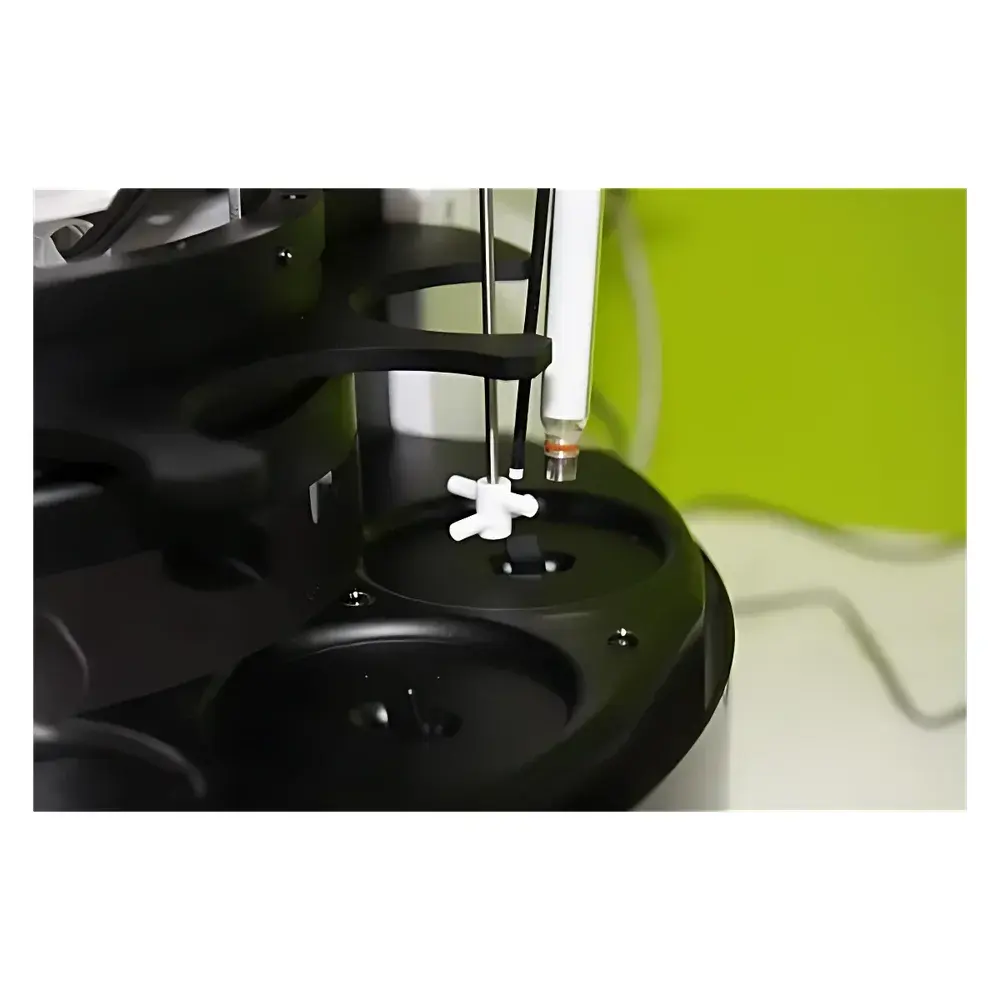
The system accommodates standard laboratory vessels including 50 mL, 100 mL, 200 mL, and 250 mL beakers, compatible with both magnetic stir bars and KEM’s proprietary propeller stirrer for viscous or heterogeneous samples. The CHA-700 autosampler features optical cup presence detection, programmable wash cycles using deionized water or ethanol, and optional peristaltic rinse/pump-out modules to prevent cross-contamination and ensure residue-free electrode conditioning between runs. All firmware and hardware configurations meet ISO/IEC 17025 general requirements for testing and calibration laboratories, and the system supports full GLP documentation—including operator logbooks, titrant standardization records, electrode performance logs, and method versioning—required for pharmaceutical, food, and environmental compliance audits.
Software & Data Management
Control and analysis are managed through KEM’s proprietary TitraWin software (v5.x), which provides method-driven workflow automation: users define titration type (e.g., “acid number per ASTM D974”, “chloride by Mohr”, “peroxide value per AOAC 965.33”), endpoint criteria (inflection point, fixed potential, derivative threshold), and post-run calculations (concentration, titer correction, blank subtraction, statistical summary). Audit trails record all parameter changes, manual overrides, and calibration events with timestamps and user IDs. Data export options include CSV for LIMS integration, XML for ELN ingestion, and PDF reports with digital signatures and embedded QR codes linking to raw data files. The system supports automated backup to network drives and scheduled database archiving aligned with internal SOPs and regulatory retention policies.
Applications
This platform delivers validated performance across diverse sectors: in pharmaceutical manufacturing, it quantifies active pharmaceutical ingredient (API) purity via non-aqueous acidimetry (USP ) and determines residual chloride in excipients; in petrochemical QA, it measures total acid number (TAN) and base number (TBN) per ASTM D664 and D2896; in food and beverage labs, it determines free fatty acids in oils (AOAC 940.28), sulfite content in wines (AOAC 990.28), and total alkalinity in dairy products; in environmental testing, it performs COD determination (ISO 6060), fluoride ion concentration (ISE mode), and hardness titration (EDTA complexometry). Its flexibility extends to research applications such as pKa determination via Gran plot analysis and kinetic endpoint modeling under controlled temperature conditions.
FAQ
What titration methods are pre-programmed in the AT-710 firmware?
The instrument includes 120 built-in standard methods covering acid-base, redox, precipitation, and complexometric reactions, plus 10 customizable method-combination templates allowing sequential execution of up to five distinct titration steps within a single assay.
Can the CHA-700 handle samples requiring inert-atmosphere titration?
While the CHA-700 itself does not provide sealed glove-box integration, its open-beaker design permits use with nitrogen-purged sample cups and custom-fit lids; method parameters can be adjusted to compensate for atmospheric CO₂ interference in low-buffered systems.
Is temperature compensation available for titrant concentration drift?
Yes—the system supports real-time titrant temperature compensation via optional TEMP.COMP. module, applying density/viscosity corrections per ISO 3696 Grade 2 water specifications and NIST-traceable calibration curves.
How is electrode calibration traceability maintained?
Intelligent electrode cables store serial numbers, calibration dates, slope values, and offset data in onboard memory; all entries are time-stamped and linked to operator IDs during calibration routines, satisfying ISO 17025 clause 6.4.10 and USP analytical instrument qualification requirements.
Does the system support 21 CFR Part 11-compliant electronic signatures?
Yes—TitraWin software implements role-based authentication, biometric-ready login (via external USB fingerprint reader), and cryptographic hashing of all critical data fields to ensure non-repudiation and tamper-evident audit logs.



