
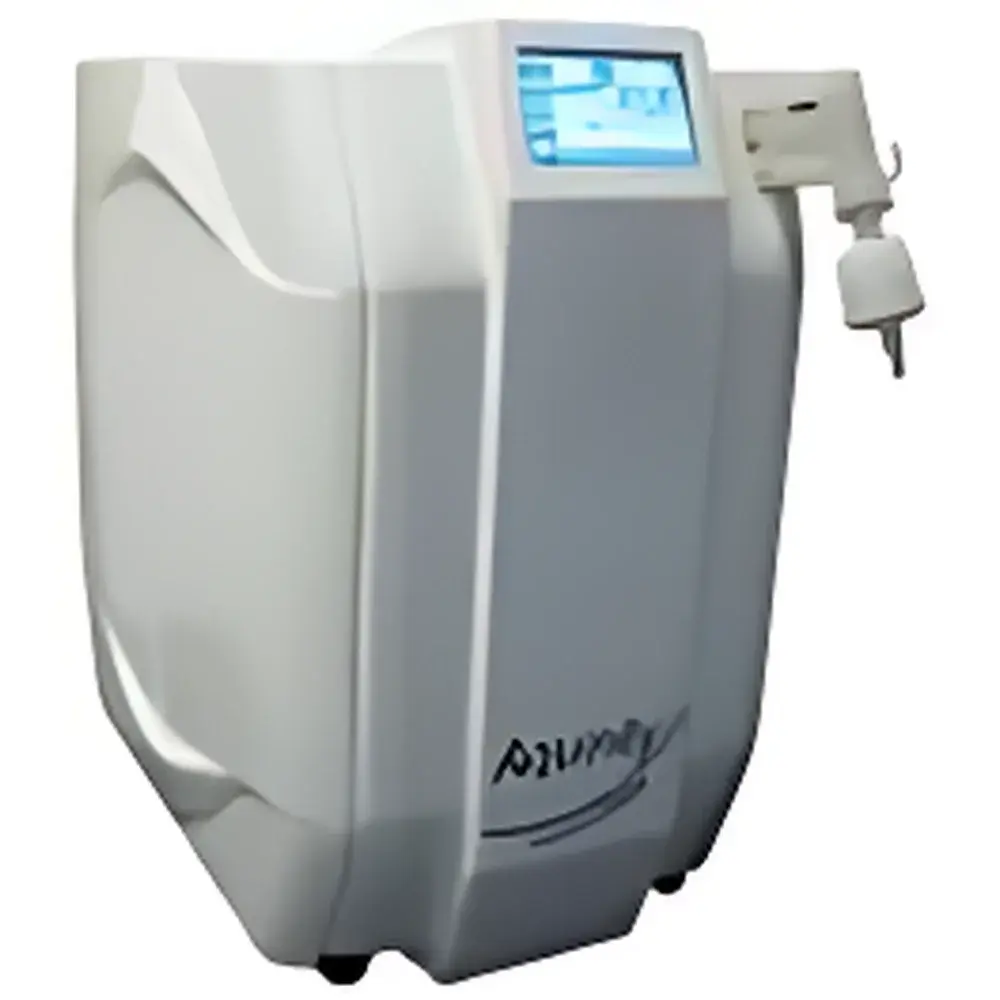
membraPure Aquintus Mid-Size Ultra Pure Water System
| Brand | membraPure |
|---|---|
| Origin | Germany |
| Manufacturer Type | Original Equipment Manufacturer (OEM) |
| Origin Category | Imported |
| Model | Aquintus Mid-Size |
| Purified Water Grade | Type I (ASTM D1193-20) |
| Resistivity | 18.2 MΩ·cm @ 25 °C |
| Heavy Metals & Soluble Silica | < 0.1 ppb |
| Total Organic Carbon (TOC) | < 3 ppb |
| Microbial Count | < 1 CFU/mL |
| Endotoxin | < 0.001 EU/mL |
| Particles (> 0.1 µm) | < 1 particle/mL |
| Daily Output Capacity | 100 L/day |
| Feed Water Compatibility | Secondary RO water, deionized water, or EDI-produced high-purity water |
| Flow Rate (Standard/Analytical) | 1.5 L/min |
| Flow Rate (Life Science Variant) | 1.0 L/min |
| Feed Conductivity Monitoring | Integrated real-time conductivity sensor with alarm threshold control |
Overview
The membraPure Aquintus Mid-Size Ultra Pure Water System is an engineered solution for laboratories requiring consistent, on-demand production of ASTM Type I ultrapure water. Designed and manufactured in Germany, this system employs a multi-stage purification architecture—comprising dual-stage reverse osmosis (RO), electrodeionization (EDI), ultrafiltration (UF), and integrated 254/185 nm UV photooxidation—to achieve trace-level removal of ions, organics, particles, microorganisms, and endotoxins. Its core function is to further polish pre-treated feed water (e.g., secondary RO, DI, or EDI effluent) into water meeting stringent international specifications for critical applications including HPLC mobile phase preparation, cell culture media formulation, molecular biology assays, and trace elemental analysis. The system’s closed-loop distribution design minimizes recontamination risk, while its modular footprint supports flexible installation—on benchtop, under counter, or wall-mounted—making it suitable for centralized supply across multiple adjacent laboratories.
Key Features
- Real-time feed water conductivity monitoring with programmable alarm thresholds to prevent system overload and ensure consistent inlet quality compliance
- Dual UV oxidation stages (254 nm for microbial inactivation; 185 nm for TOC photolysis) delivering stable TOC < 3 ppb in final product water
- Integrated 0.1 µm final ultrafiltration cartridge with certified endotoxin retention (LRV ≥ 6), validated for < 0.001 EU/mL output
- Resistivity sensor calibrated to NIST-traceable standards, continuously reporting 18.2 MΩ·cm at 25 °C with temperature compensation
- Automated recirculation loop with sanitary-grade diaphragm pump and low-shear flow path to maintain microbial integrity during standby
- Modular consumables architecture enabling rapid replacement of RO membranes, EDI stacks, and polishing cartridges without tools or downtime
Sample Compatibility & Compliance
The Aquintus Mid-Size system accepts feed water with conductivity ≤ 5 µS/cm (typical EDI or double-pass RO output), ensuring compatibility with existing central purification infrastructure. Final water meets or exceeds ASTM D1193-20 Type I specifications, CLSI EP23 guidelines for clinical laboratory water, and ISO 3696:1987 Class 1 requirements. It is routinely validated for GLP and GMP environments where audit-ready documentation—including IQ/OQ/PQ protocols, calibration certificates, and consumables traceability—is required. Endotoxin levels comply with USP and EP 2.6.14, supporting applications in injectable formulation development and primary cell isolation. All wetted materials conform to USP Class VI biocompatibility and FDA 21 CFR 177.2600 for food-contact polymers.
Software & Data Management
Equipped with a touchscreen HMI controller running embedded Linux firmware, the system logs all operational parameters—including resistivity, TOC, pressure differentials, UV intensity, and cartridge service intervals—with timestamped records stored onboard for ≥12 months. Data export is supported via USB and optional Ethernet interface compliant with IEEE 802.3. Audit trail functionality satisfies FDA 21 CFR Part 11 requirements through user authentication (role-based access), electronic signatures, and immutable event logging. Optional integration with Laboratory Information Management Systems (LIMS) is available via Modbus TCP or OPC UA protocols for centralized water quality dashboards and predictive maintenance alerts.
Applications
- HPLC, UHPLC, and LC-MS mobile phase and blank preparation where low TOC and ion leaching are critical
- Preparation of electrophysiology buffers, patch-clamp solutions, and stem cell culture media requiring endotoxin-free water
- ICP-MS and GF-AAS trace metal analysis where sub-ppt heavy metal contamination must be excluded
- Next-generation sequencing library prep, CRISPR editing workflows, and qPCR master mix dilution
- Calibration of reference standards in metrology labs and proficiency testing programs
- Pharmaceutical stability studies and cleaning validation rinse water analysis per ICH Q5C
FAQ
What feed water quality is required to operate the Aquintus Mid-Size system?
Feed water must be pre-purified to ≤ 5 µS/cm conductivity (e.g., from double-pass RO or EDI), with silica < 0.1 mg/L and total bacteria < 10 CFU/mL.
Can the system be integrated into an existing lab water network?
Yes—it supports both point-of-use and looped distribution configurations, with optional stainless-steel 316L piping kits and pressure-regulated dispensing valves.
How often do consumables require replacement?
RO membranes: 2–3 years; EDI stack: 3–5 years; UF cartridge: 12 months or 10,000 L; polishing cartridge: 6–12 months depending on usage profile.
Is remote monitoring supported?
Standard Ethernet connectivity enables SNMP-based status polling and email/SMS alerts for parameter deviations or maintenance events.
Does the system support regulatory audits?
Yes—full electronic records, calibration history, user activity logs, and change control documentation are retained and exportable in PDF or CSV format per ALCOA+ principles.



