
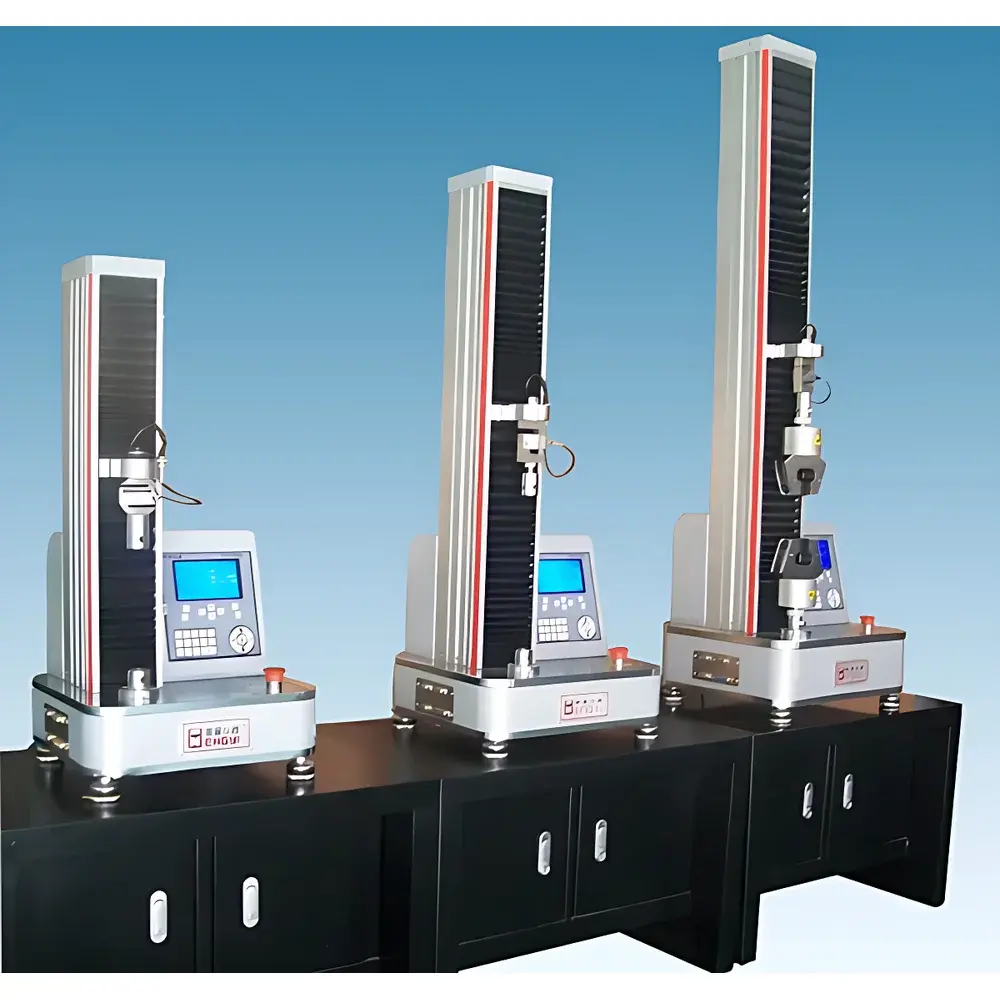
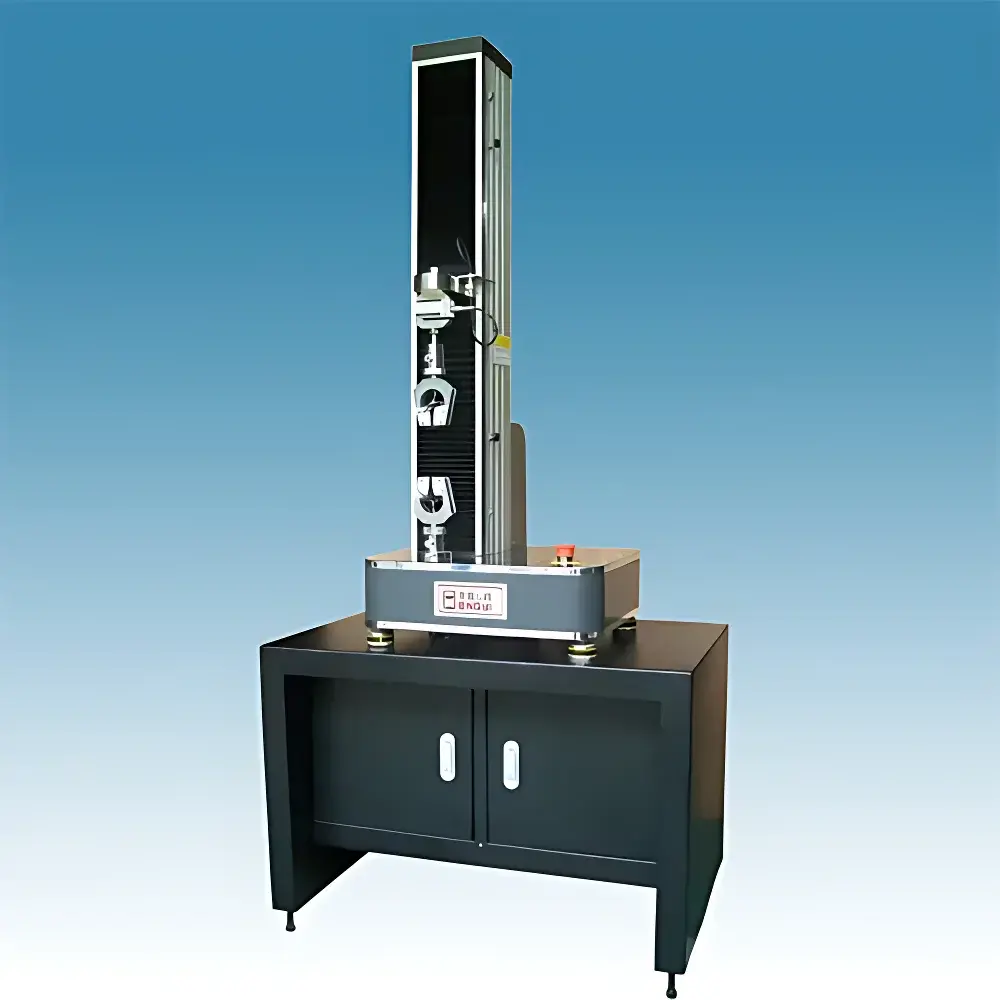
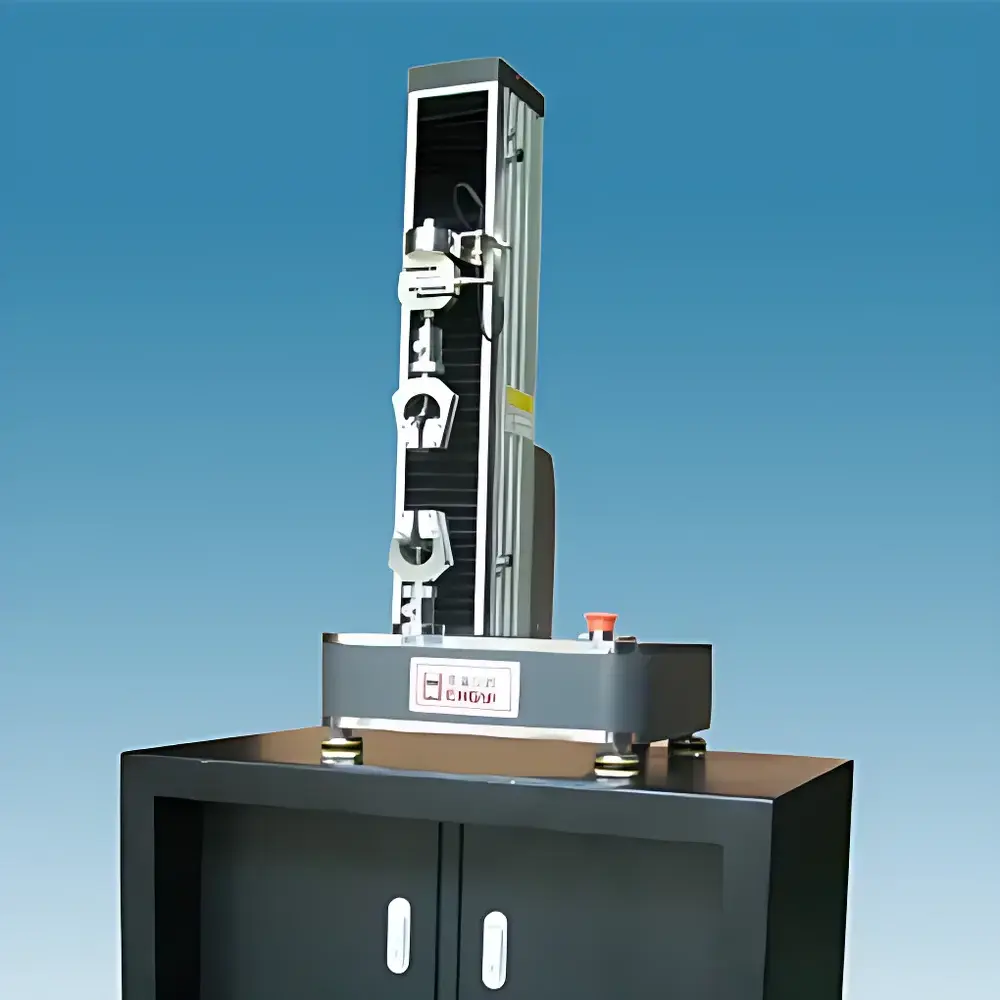
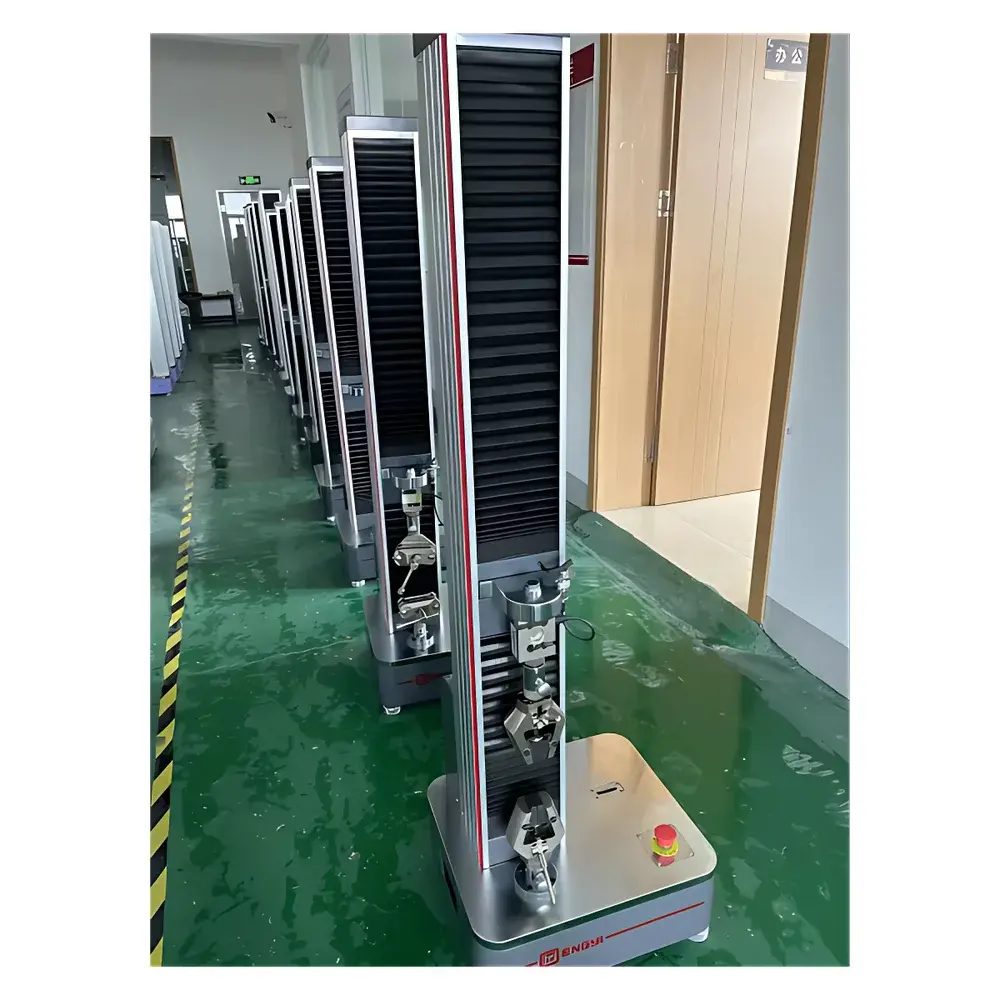
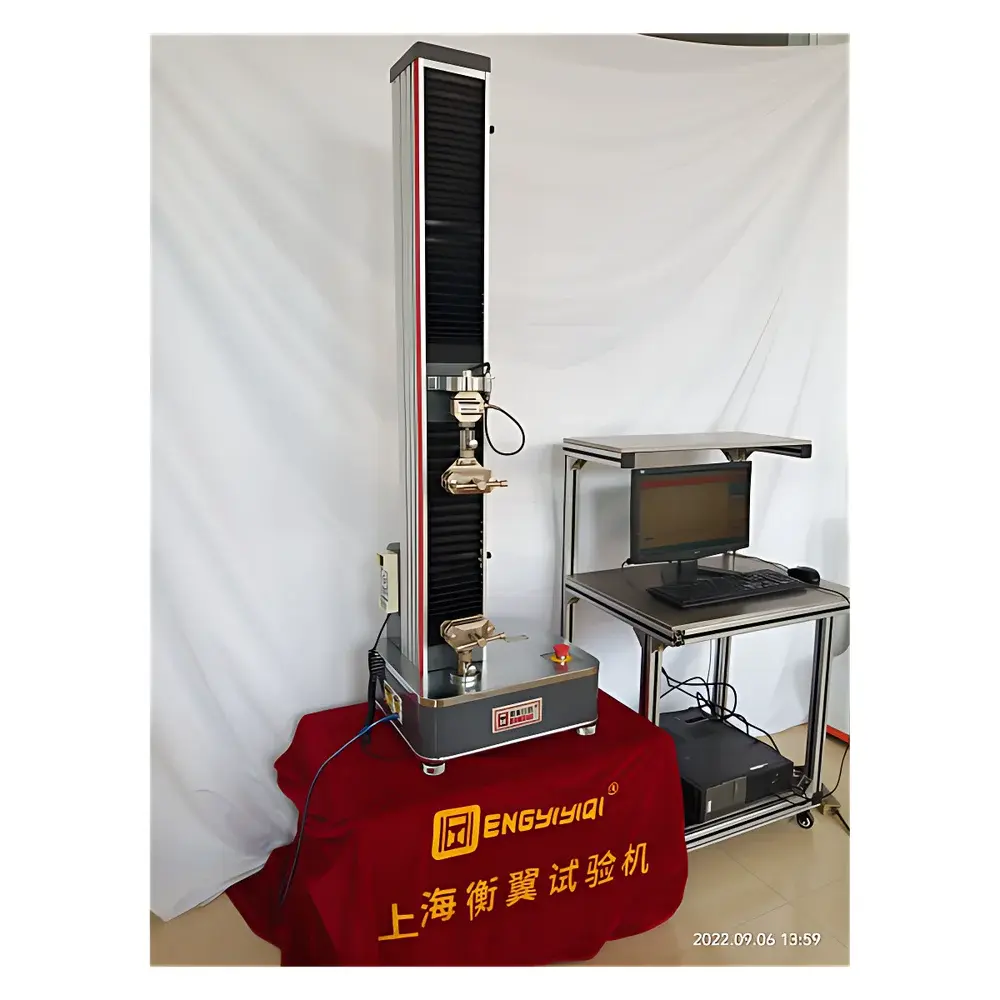
Hengyi HY-035022 Electronic Universal Testing Machine
| Brand | Hengyi |
|---|---|
| Origin | Shanghai, China |
| Manufacturer Type | Direct Manufacturer |
| Product Category | Domestic |
| Model | HY-035022 |
| Instrument Type | Electronic Universal Testing Machine |
| Load Capacity | 3000 N |
| Accuracy Class | 0.5 |
| Effective Test Width | 120 mm |
| Effective Test Height | 500 mm |
| Speed Range | 0.001–500 mm/min |
| Speed Accuracy | ±0.5% of indicated value |
| Force Resolution | ±500000 counts (full-scale, no range switching) |
| Force Measurement Range | 0.1–99.99% of full scale |
| Displacement Accuracy | ±0.5% of indicated value |
| Strain Measurement Accuracy | ±0.5% of indicated value |
| Stress Control Rate Range | 0.005–6% FS/s |
| Strain Control Rate Range | 0.002–6% FS/s |
| Constant Load/Displacement/Strain Range | 0.5–99.99% FS |
| Protection Features | Electronic limit switch, overload protection (10% over full scale), auto-diagnostic system |
| Power Supply | 220 V AC, single-phase, 400 W |
| Host Dimensions | 440 × 380 × 1100 mm |
| Net Weight | 75 kg |
Overview
The Hengyi HY-035022 Electronic Universal Testing Machine is a precision-engineered electromechanical system designed for static mechanical property characterization of materials under uniaxial tensile, compressive, flexural, shear, peel, and tear loading conditions. It operates on the principle of closed-loop servo control, integrating high-resolution force transduction, displacement feedback via precision ball screw actuation, and real-time strain acquisition through extensometry or crosshead displacement correlation. With a maximum load capacity of 3000 N and a certified accuracy class of 0.5 per ISO 7500-1 and ASTM E4, the system delivers traceable, reproducible results across a broad spectrum of material classes—including thin metallic foils, polymer films, elastomeric sheets, fiber-reinforced composites, biomedical sutures, and micro-electromechanical components. Its wide speed range (0.001–500 mm/min), ultra-fine force resolution (±500,000 counts full-scale), and dual-mode control architecture (force, displacement, and strain) enable compliance with dynamic test protocols such as low-cycle fatigue and controlled-rate stress relaxation—making it suitable for both R&D validation and routine QC verification in regulated environments.
Key Features
- Triple-closed-loop control system supporting simultaneous force, displacement, and strain regulation for high-fidelity test execution and repeatability.
- Precision ground ball-screw-driven crosshead with dual-speed manual/automatic positioning and electronic end-limit protection to prevent mechanical overtravel.
- Auto-diagnostic subsystem continuously monitors drive voltage, current, thermal load, and sensor integrity; triggers immediate safety shutdown upon detection of overpressure, overcurrent, or signal anomaly.
- Modular fixture interface accommodating standardized grips (pneumatic, wedge, vise), bending fixtures (3-point/4-point), peel fixtures (T-peel, 90° peel), and custom-designed tooling per ASTM D638, ISO 527, ISO 178, ASTM D1876, and GB/T 2567.
- Full-range force measurement without range switching—maintaining constant resolution (0.0002% FS) from 0.1% to 99.99% of 3000 N capacity.
- Integrated safety logic including programmable stop conditions: preset time, target load, defined deformation, or automatic fracture detection based on slope discontinuity in force-displacement curves.
Sample Compatibility & Compliance
The HY-035022 accommodates specimens up to 120 mm wide and 500 mm tall, enabling testing of miniature coupons, thin films (≥10 µm thickness), micro-wires, adhesively bonded joints, and layered laminates. Its mechanical design conforms to ISO 2041 (testing machine terminology), ISO 7500-1 (static calibration), and ASTM E4 (verification of force-measuring systems). Software-configurable test methods support full alignment with GB/T 228.1, ISO 6892-1, ASTM D638, ASTM D790, ISO 178, JIS K7113, and DIN 53455. The system supports audit-ready data capture required for GLP-compliant laboratories and satisfies foundational requirements for FDA 21 CFR Part 11 when deployed with validated software configurations and user access controls.
Software & Data Management
Control and analysis are performed via Hengyi’s proprietary Windows-based software suite, built on VB.NET and SQL Server Compact Engine for deterministic I/O handling and relational data integrity. Real-time plotting features include auto-scaling axes, multi-curve overlay, parameter point marking (yield onset, elastic modulus, break point), and interactive zoom/pan functionality. All raw data—including time-stamped force, displacement, and strain arrays—are stored in encrypted binary + CSV dual format with metadata tagging (operator ID, sample ID, environmental conditions, calibration timestamp). Custom method templates can be created, versioned, and exported for inter-laboratory harmonization. Export modules support direct integration with LIMS platforms via ODBC and generate PDF reports compliant with ISO/IEC 17025 documentation standards.
Applications
- Quality assurance of medical device components (e.g., suture tensile strength per ISO 10993-12, catheter shaft stiffness).
- Mechanical validation of packaging films (peel strength per ASTM F904, seal integrity per ASTM F88).
- Research-grade characterization of nanocomposites and hydrogels under small-strain regimes.
- Educational use in university materials science labs for stress–strain curve derivation and modulus calculation.
- Supplier qualification testing for automotive gaskets, battery separator membranes, and flexible printed circuit substrates.
- Regulatory submission support for CE-marked products requiring mechanical performance dossiers per MDR Annex I.
FAQ
What international standards does the HY-035022 comply with for force calibration?
It meets ISO 7500-1 Class 0.5 requirements and is verifiable per ASTM E4 using certified reference load cells traceable to NIST or NMIs.
Can the system perform cyclic loading tests?
Yes—the triple-closed-loop architecture enables programmed low-cycle fatigue tests with user-defined waveforms (sine, triangle, trapezoidal), dwell periods, and reversal criteria.
Is the software compatible with networked lab environments?
The software supports domain-authenticated login, role-based permissions, and centralized database deployment on Windows Server for multi-user concurrent access.
What is the minimum measurable force at full resolution?
At 3000 N full scale and ±500,000-count resolution, the theoretical minimum discernible increment is 0.006 N—enabling sub-mN-level sensitivity for ultra-thin specimen testing.
Does the system support third-party extensometers?
Yes—standard analog (±10 V) and digital (LVDT, video-based) extensometer inputs are provided, with configurable gain and offset compensation in software.



