
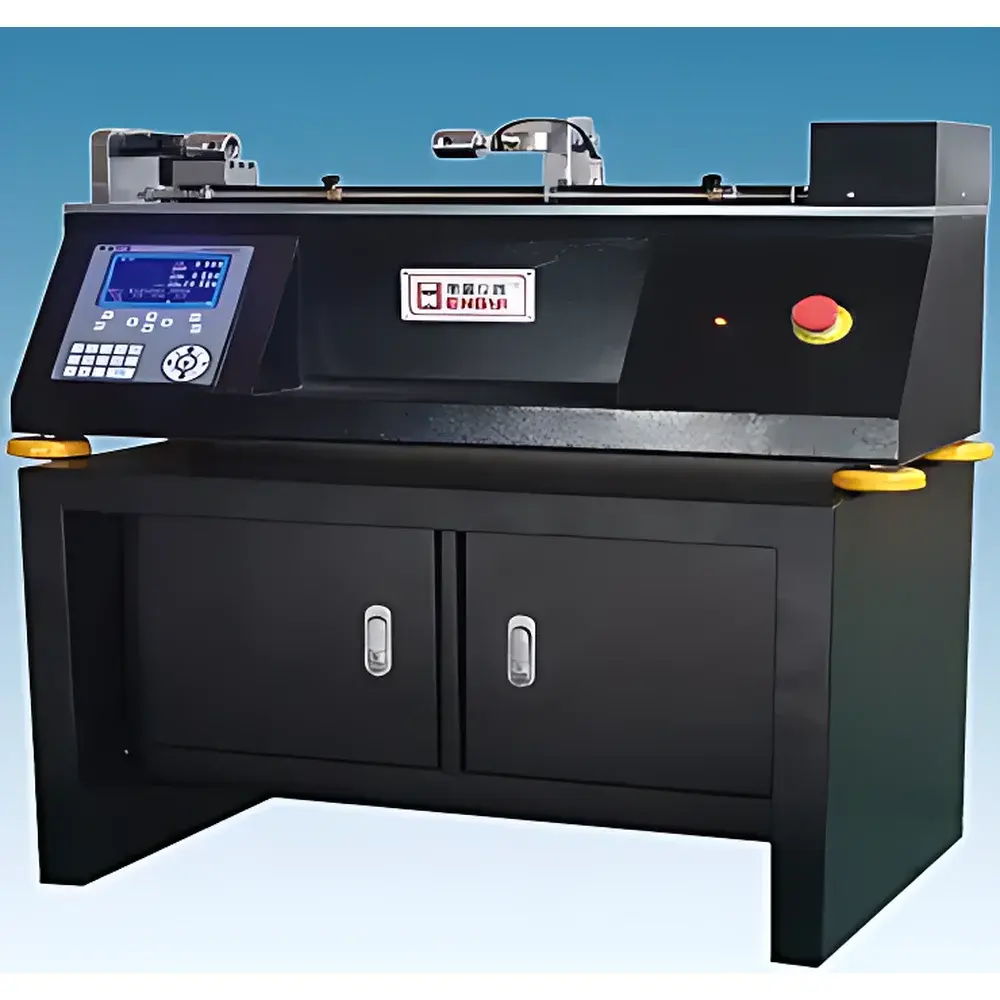
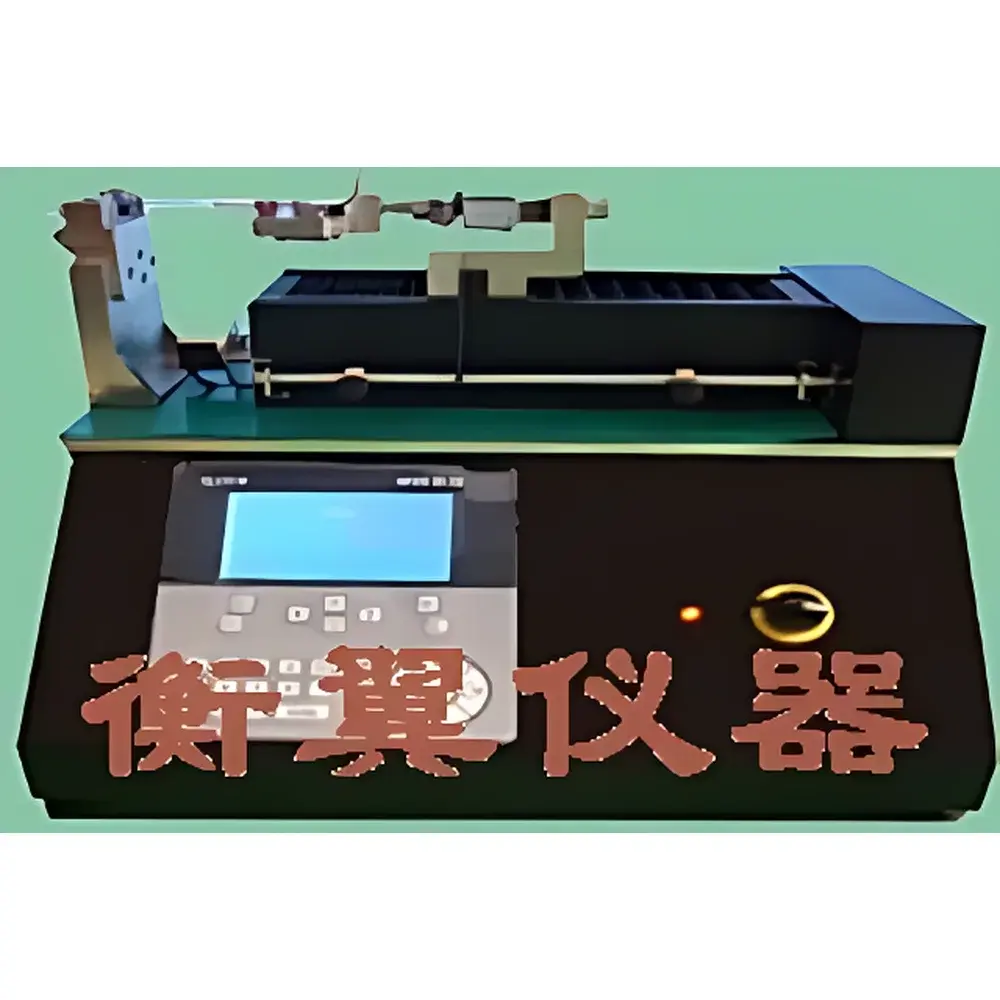
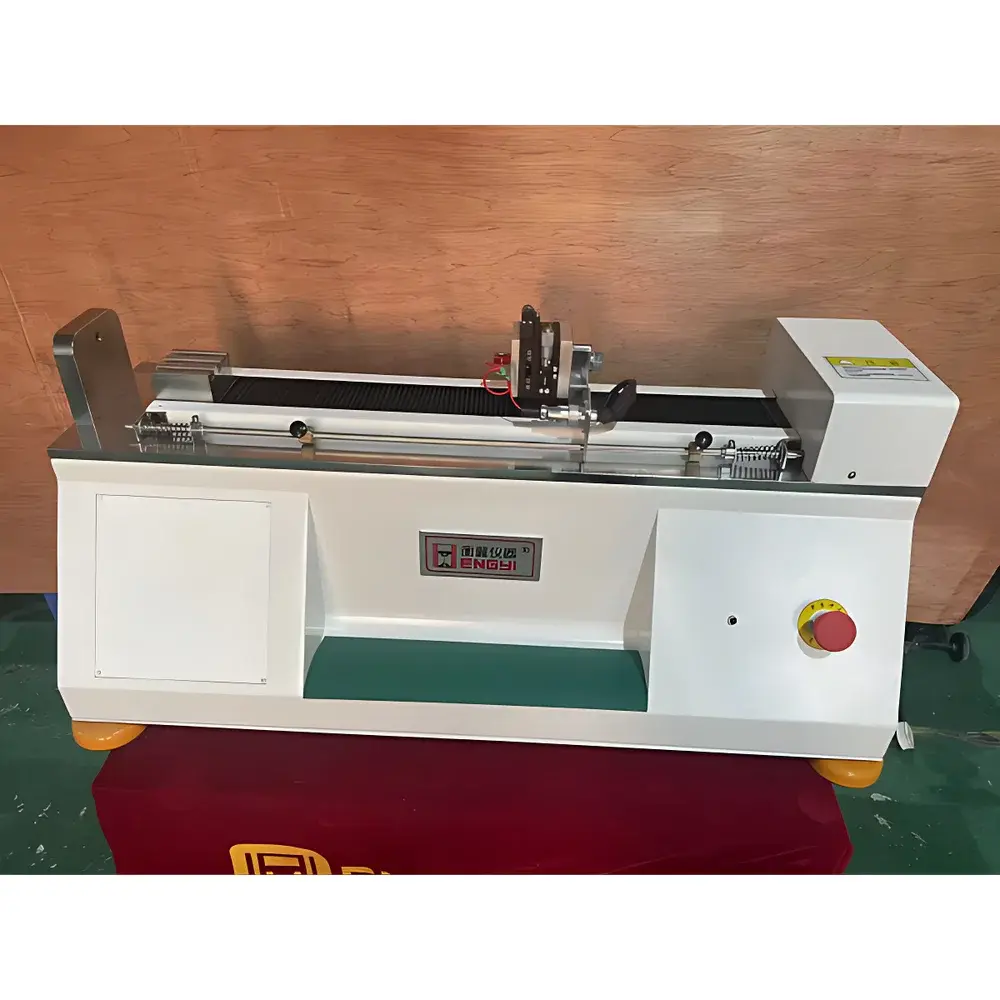
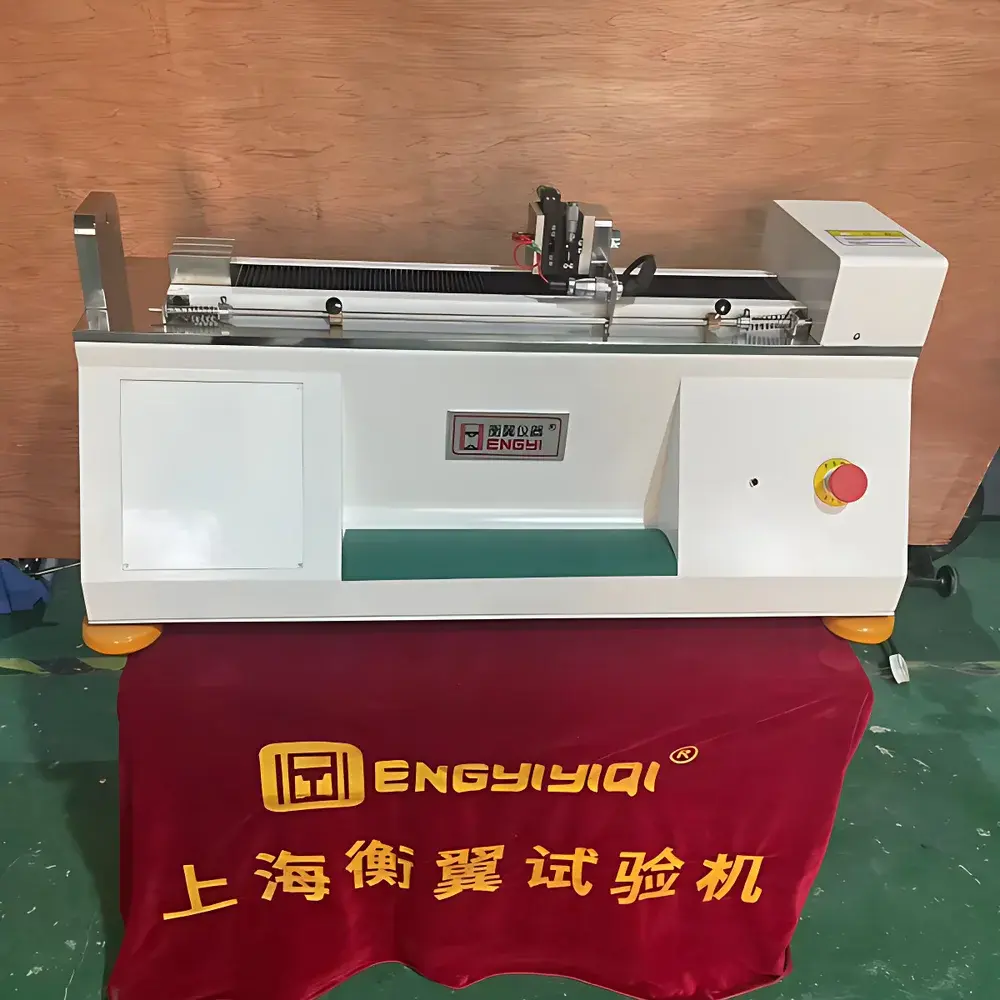
Hengyi HY-0530X Horizontal Tensile Testing Machine
| Brand | Hengyi |
|---|---|
| Origin | Shanghai, China |
| Manufacturer Type | Direct Manufacturer |
| Product Category | Domestic |
| Model | HY-0530X |
| Price | USD 7,350 (approx.) |
| Instrument Type | Electromechanical Universal Testing Machine |
| Load Cell | 1000 N (Transducer Tech, USA), Accuracy ±0.02% FS |
| Actuation System | Panasonic Full-Digital AC Servo Motor |
| Drive Mechanism | Precision Ball Screw |
| Reduction System | Taiwan-Made Precision Gearbox |
| Control Architecture | 32-bit ARM Microprocessor, 56 MIPS Processing Speed |
| Force Resolution | ≤0.01% FS |
| Displacement Resolution | 0.001 mm |
| Test Speed Range | 0.001–300 mm/min (adjustable in real time) |
| Effective Travel (excluding grips) | 300 mm |
| Grip Type | Dedicated Multi-Configuration Tensile Fixture for Terminals, Wire Harnesses, Connectors, and Adhesive Joints |
| Dimensions (W×D×H) | 420 × 470 × 800 mm |
| Weight | ~45 kg |
| Software | Hengyi Custom TestMaster™ v4.2 with Real-Time Curve Plotting, Data Export (CSV, PDF, XML), Audit Trail, and GLP-Compliant Reporting |
Overview
The Hengyi HY-0530X Horizontal Tensile Testing Machine is an electromechanical universal testing system engineered specifically for high-reproducibility mechanical characterization of low-to-medium force interfacial assemblies—particularly wire harness terminations, electrical connectors (plugs/sockets), adhesive bonds, lamp bases, and miniature electronic components. Unlike vertical UTM configurations, its horizontal orientation eliminates gravitational bias during peel, pull-out, and tensile detachment tests, ensuring consistent load alignment along the specimen’s longitudinal axis. The system operates on a closed-loop servo-controlled displacement principle, where force is measured via a traceable 1000 N load cell (Transducer Tech, USA) and position is resolved through a calibrated ball screw coupled to a high-resolution encoder. All signal acquisition, control logic, and real-time visualization are managed by a dedicated 32-bit ARM microcontroller running at 56 MIPS—enabling sub-millisecond sampling synchronization between force, displacement, and time domains.
Key Features
- Horizontal test frame architecture optimized for axial alignment of small-scale interconnects and flexible assemblies
- High-precision 1000 N load cell with ±0.02% full-scale accuracy, NIST-traceable calibration certificate included
- Panasonic full-digital AC servo motor with integrated regenerative braking for smooth, noise-free motion control across the full speed range (0.001–300 mm/min)
- Taiwan-sourced planetary gearbox and ground ball screw assembly delivering <0.01 mm positioning repeatability
- Integrated 7-inch industrial LCD touchscreen with dynamic real-time plotting of stress–strain, force–displacement, and peel-load curves
- Hengyi TestMaster™ v4.2 software compliant with ISO 17025 documentation requirements, supporting 21 CFR Part 11–ready audit trails, user-level permissions, and electronic signature capture
- Dedicated multi-profile grip system accommodating terminals from 0.5 mm² to 6 mm² cross-section, crimped connectors up to 25 mm width, and adhesive lap joints up to 20 mm bond length
Sample Compatibility & Compliance
The HY-0530X supports standardized mechanical evaluation of specimens conforming to ASTM D903 (peel strength), ASTM D1876 (T-peel), IEC 60512-2 (electrical connector mechanical testing), and GB/T 228.1–2021 (metallic materials tensile testing). Its horizontal configuration ensures minimal bending moment during pull-off tests on PCB-mounted components or ribbon cables—critical for avoiding premature failure modes unrelated to interface integrity. All hardware and firmware comply with CE Machinery Directive 2006/42/EC and EMC Directive 2014/30/EU. Calibration intervals and verification protocols align with ISO/IEC 17025:2017 Clause 6.5 (Equipment) and support GLP/GMP laboratory accreditation workflows.
Software & Data Management
TestMaster™ v4.2 provides deterministic test sequencing, programmable hold steps, automatic yield point detection (using ISO 6892-1 Annex B method), and customizable pass/fail criteria based on peak load, elongation at break, or energy absorption thresholds. Raw data streams are timestamped and stored in encrypted binary format; export options include CSV (for Excel/Python analysis), PDF (with embedded digital signature and lab header), and XML (compatible with LIMS integration via HL7 or ASTM E1384). The software maintains immutable audit logs recording operator ID, test parameters, calibration status, and any manual overrides—fully satisfying FDA 21 CFR Part 11 Subpart B requirements for electronic records and signatures.
Applications
- Quantitative pull-out force measurement of automotive wiring harness terminals per SAE J2044
- Peel resistance evaluation of pressure-sensitive adhesives used in medical device assembly
- Retention force validation of USB-C and HDMI connector interfaces under thermal cycling preconditioning
- Tensile strength and elongation testing of silicone-insulated leads in implantable electronics
- Interfacial shear strength assessment of soldered joints on flex-rigid PCBs
- Quality control screening of LED lamp base crimp integrity in lighting manufacturing lines
FAQ
Is the HY-0530X suitable for testing brittle materials such as ceramic substrates or glass-fiber composites?
Yes—the machine’s low-speed capability (down to 0.001 mm/min) and high-force resolution enable quasi-static fracture testing. However, specialized fixtures with controlled gripping pressure are recommended to prevent edge chipping.
Does the system support third-party calibration services outside China?
Yes—load cell and displacement sensor calibration certificates reference ISO/IEC 17025-accredited labs globally. Hengyi provides detailed metrology documentation for local recalibration at customer-designated facilities.
Can test methods be exported and shared across multiple instruments in a multi-site facility?
Yes—TestMaster™ supports .tmx method files with embedded tolerances, units, and reporting templates. These files are portable across all HY-05xx-series machines and retain full version history and change logs.
What maintenance is required during the first year of operation?
Routine maintenance includes monthly lubrication of the ball screw, quarterly verification of zero-load drift (<±0.05% FS), and annual full-system calibration. No consumables are required beyond standard industrial grease and backup fuses.



