
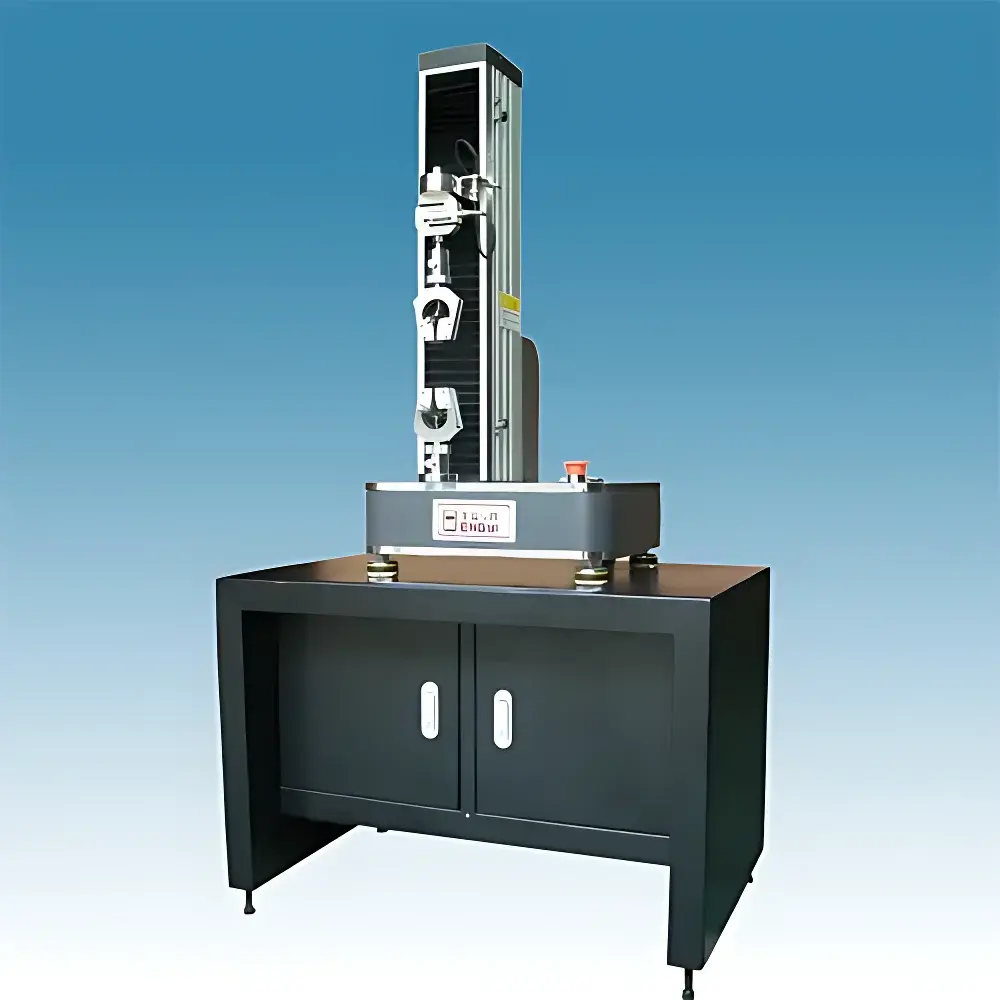
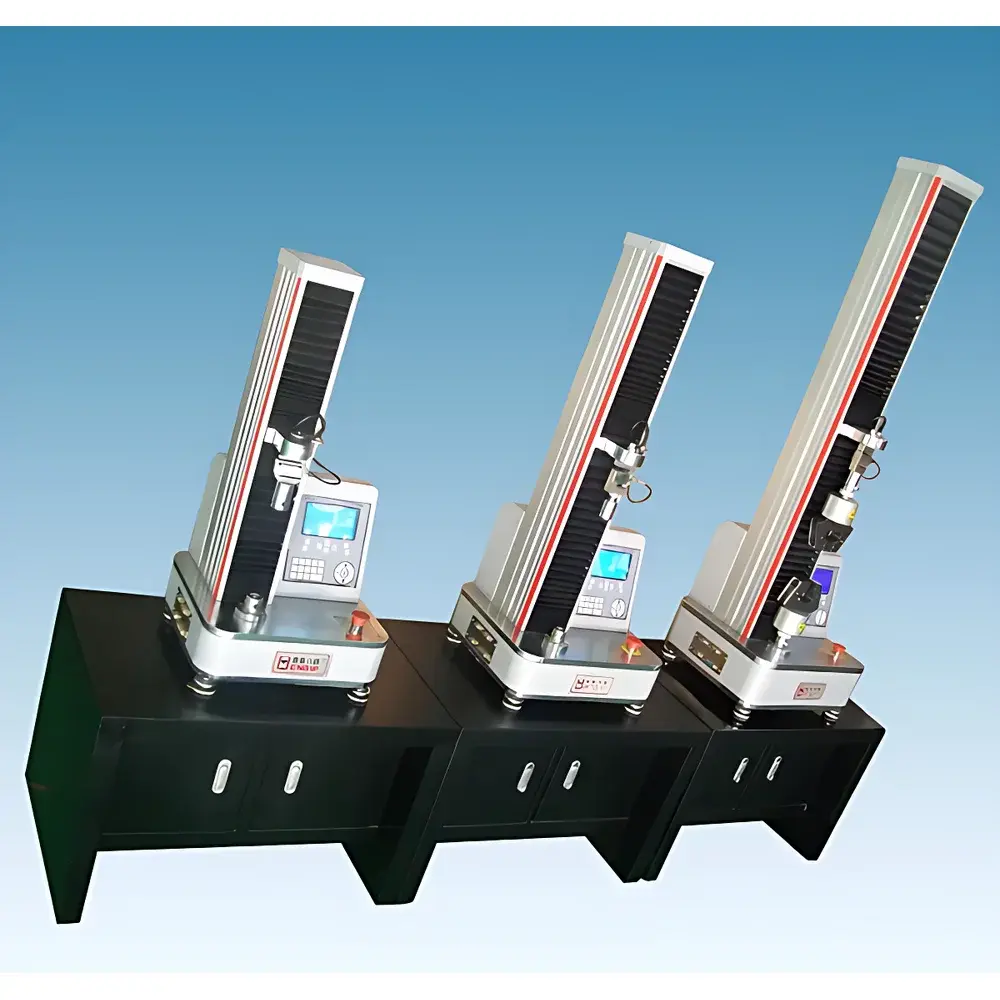
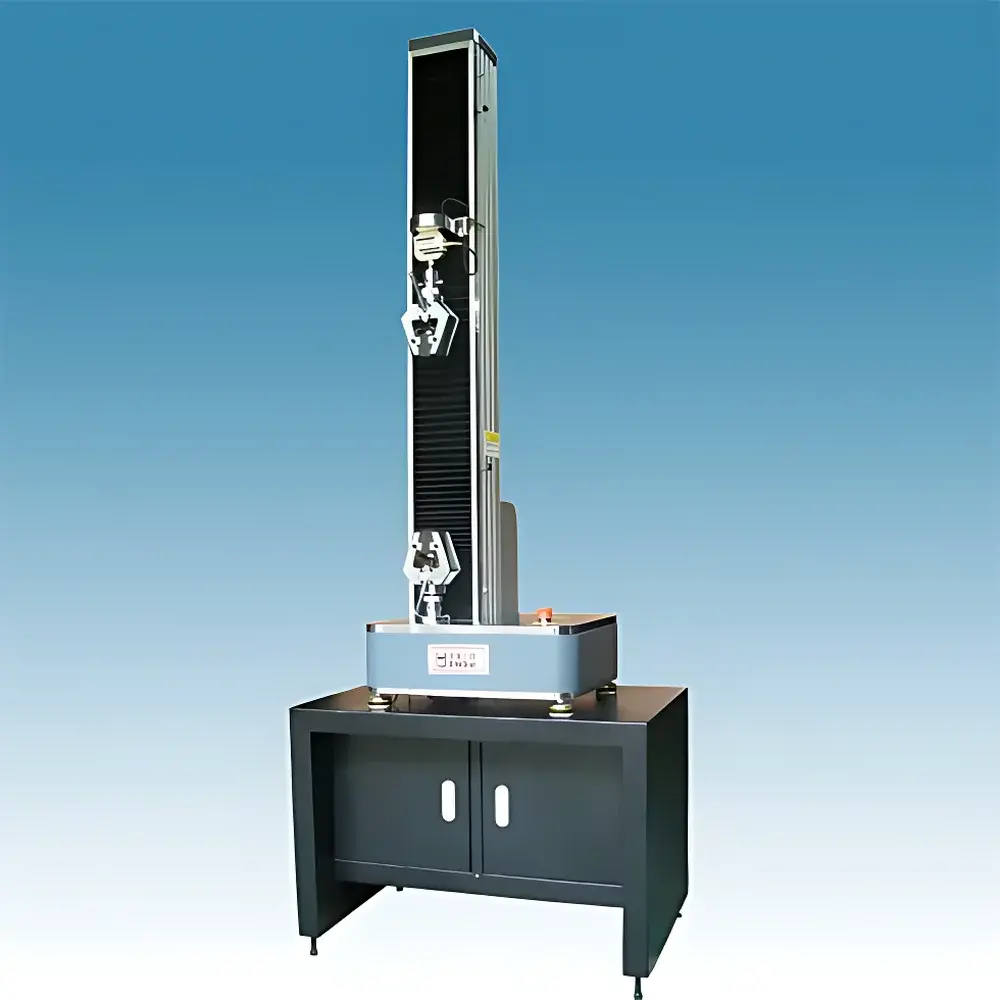
Hengyi HY-0580UJMNB Miniature Dynamic High-Frequency Fatigue Testing Machine for Biomaterials
| Brand | Hengyi / Hengyitest |
|---|---|
| Origin | Shanghai, China |
| Manufacturer Type | Direct Manufacturer |
| Country of Origin | China |
| Model | HY-0580UJMNB |
| Instrument Type | Electromechanical Tensile Testing Machine |
| Maximum Test Load | 1 N |
| Force Measurement Range | 0.1–100% of Full Scale |
| Force Accuracy Class | 0.5 |
| Test Stroke | 800 mm |
| Displacement Resolution | 0.001 mm |
| Dynamic Frequency Range | 1–3 Hz |
| Waveform Options | Sine, Square, Ramp, Triangle |
| Data Acquisition Rate | 10,000 Hz |
| Speed Range | 1–500 mm/min |
| Position Accuracy | ±0.5% of reading |
| Load Cell Resolution | ±30,000 counts (no internal range switching) |
| Effective Test Width | 380 mm |
| Power Supply | 220 V AC, 50 Hz, 1500 W |
| Net Weight | 180 kg |
| Dimensions (W×D×H) | 680 × 400 × 1420 mm |
Overview
The Hengyi HY-0580UJMNB Miniature Dynamic High-Frequency Fatigue Testing Machine is a precision electromechanical system engineered for cyclic mechanical characterization of biomaterials and miniature specimens under controlled dynamic loading conditions. Based on servo-controlled linear actuation and high-fidelity closed-loop feedback architecture, the instrument implements ASTM E466-compliant constant-amplitude sinusoidal fatigue protocols, while supporting non-sinusoidal waveforms—including square, ramp, and triangular—for advanced material response analysis. Its core design targets low-force, high-resolution fatigue testing in the sub-newton to 5 N range, making it particularly suitable for evaluating hydrogels, electrospun nanofibers, tissue-engineered scaffolds, suture materials, thin polymer films, and micro-scale composite laminates. The dual-column rigid frame ensures minimal deflection during high-frequency cycling (up to 3 Hz), while integrated electronic limit protection and real-time overload monitoring (≥110% FS) maintain structural integrity and operator safety. All mechanical and control subsystems comply with ISO 7500-1 (static force calibration) and ISO 5893 (tensile testing machine requirements), and the system is fully compatible with GLP/GMP-aligned test documentation workflows.
Key Features
- Dual-column structural design with high-rigidity aluminum alloy frame and precision-ground linear guide rails for minimal lateral deflection during dynamic operation
- Micro-force load cell with 0.5-class accuracy (per ISO 376), offering full-scale resolution down to 1 N and stable linearity across 0.1–100% FS without range switching
- High-speed data acquisition at 10 kHz sampling rate, enabling accurate capture of transient strain responses and cycle-by-cycle hysteresis loop analysis
- Programmable waveform generator supporting sine, square, ramp, and triangle profiles—critical for simulating physiological loading patterns or failure-mode-specific stress histories
- Motorized crosshead with dual-speed control (fast jog + fine positioning) and automatic return-to-start functionality post-test
- Comprehensive safety architecture including electronic travel limits, over-travel cut-off, real-time system diagnostics, and auto-shutdown on overload (>110% FS), overvoltage, or overcurrent events
- Modular fixture interface compliant with ISO 2041 and ASTM D3330 standards, facilitating rapid interchange of tensile grips, peel fixtures, bend jigs, and custom-designed biomaterial holders
Sample Compatibility & Compliance
The HY-0580UJMNB accommodates a broad spectrum of specimen geometries and mechanical behaviors typical in biomaterial research and regulatory testing. It supports standard tensile bars (ASTM D638 Type V), film strips (ASTM D882), adhesive lap-shear coupons (ASTM D1002), 90°/180° peel configurations (ASTM D903), and customized miniaturized constructs such as 3D-bioprinted microbeams or collagen hydrogel cylinders. The 380 mm effective test width and 800 mm vertical stroke allow integration of environmental chambers or in situ imaging accessories. Regulatory compliance includes alignment with ISO 527 (plastics), ISO 13934-1 (textiles), ISO 11925-2 (fire reaction), and USP (mechanical testing of pharmaceutical packaging). All force, displacement, and time measurements are traceable to national metrological standards via factory calibration certificates issued per ISO/IEC 17025 requirements.
Software & Data Management
The embedded Windows-based control software provides full test sequence scripting, real-time parameter monitoring, and automated report generation in PDF and Excel formats. Users may define multi-step fatigue protocols—including block loading, step-stress, and strain-controlled cycling—with programmable termination criteria (e.g., cycle count, crack initiation, stiffness degradation >15%, or displacement drift >0.1 mm). Raw data streams (force, position, time) are logged at native 10 kHz resolution and stored in HDF5 format for long-term archival and third-party post-processing (MATLAB, Python, Origin). Audit trail functionality meets FDA 21 CFR Part 11 requirements for electronic records, including user authentication, change logging, and immutable timestamping. Optional API integration enables synchronization with LIMS platforms and automated data ingestion into enterprise quality management systems (QMS).
Applications
- Accelerated fatigue life assessment of resorbable sutures and vascular stent polymers under pulsatile loading
- Cyclic tensile evaluation of decellularized extracellular matrix scaffolds to quantify viscoelastic recovery and damage accumulation
- Dynamic peel strength testing of medical device adhesive layers subjected to repeated flexion cycles
- High-frequency bending fatigue of orthopedic implant coatings (e.g., HA-PCL composites) under simulated joint articulation
- Mechanical screening of bioink formulations during and after 3D bioprinting to correlate print fidelity with post-cure fatigue resistance
- Standardized ISO 14801-compliant fatigue testing of dental implant abutment connections using miniature test fixtures
FAQ
What is the minimum detectable force resolution of the HY-0580UJMNB system?
The load cell delivers ±30,000 digital counts across its full 1 N range, yielding a theoretical force resolution of approximately 33 µN with no internal range switching.
Can this system perform strain-controlled fatigue tests?
Yes—the closed-loop control architecture supports displacement- and strain-controlled modes using optional extensometers or video-based DIC systems integrated via analog/digital I/O ports.
Is the software compliant with 21 CFR Part 11 for regulated laboratories?
Yes—audit trail, electronic signatures, and data integrity safeguards are implemented per FDA guidance, with optional IQ/OQ documentation packages available upon request.
What environmental conditions are required for optimal performance?
Ambient temperature must be maintained between 10–35 °C with fluctuations ≤2 °C/h; relative humidity 1 Hz.
Does the system support third-party transducers (e.g., extensometers or acoustic emission sensors)?
Yes—four configurable analog input channels (±10 V, 16-bit) and two digital trigger outputs enable seamless integration with external measurement hardware.



