
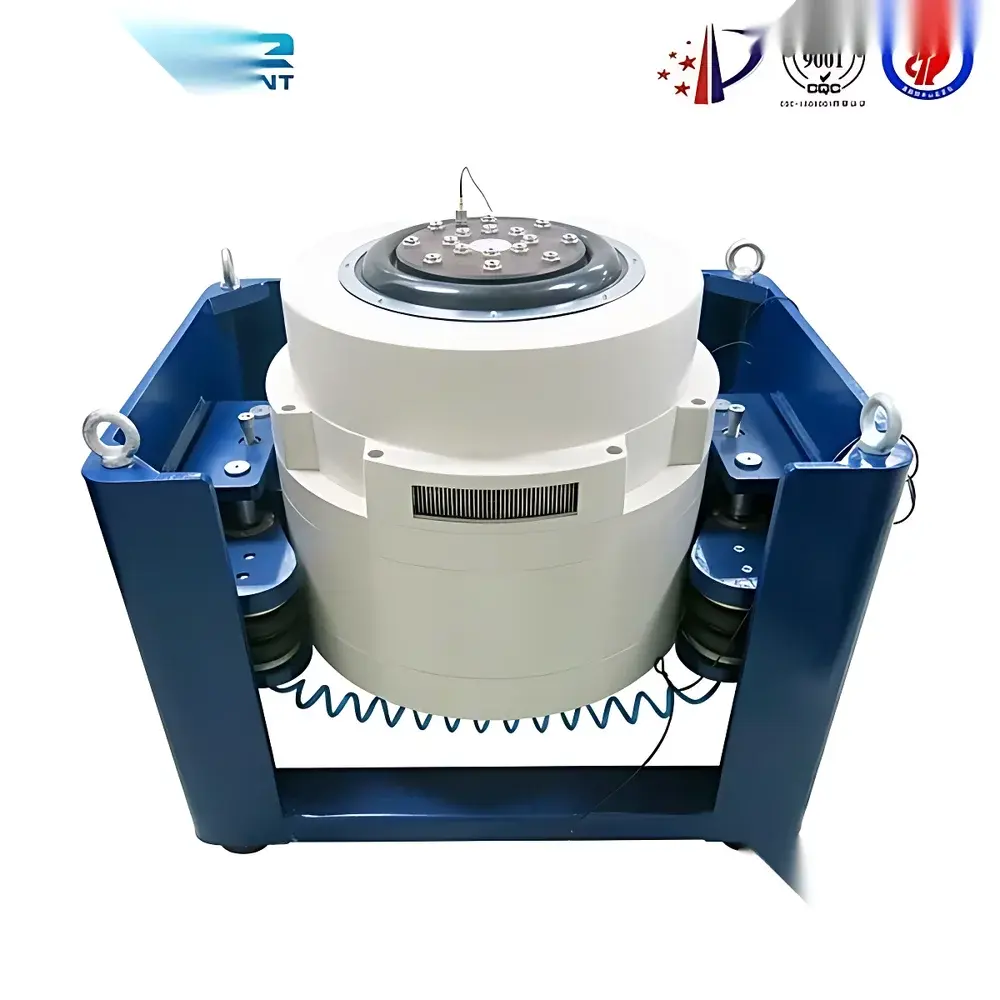
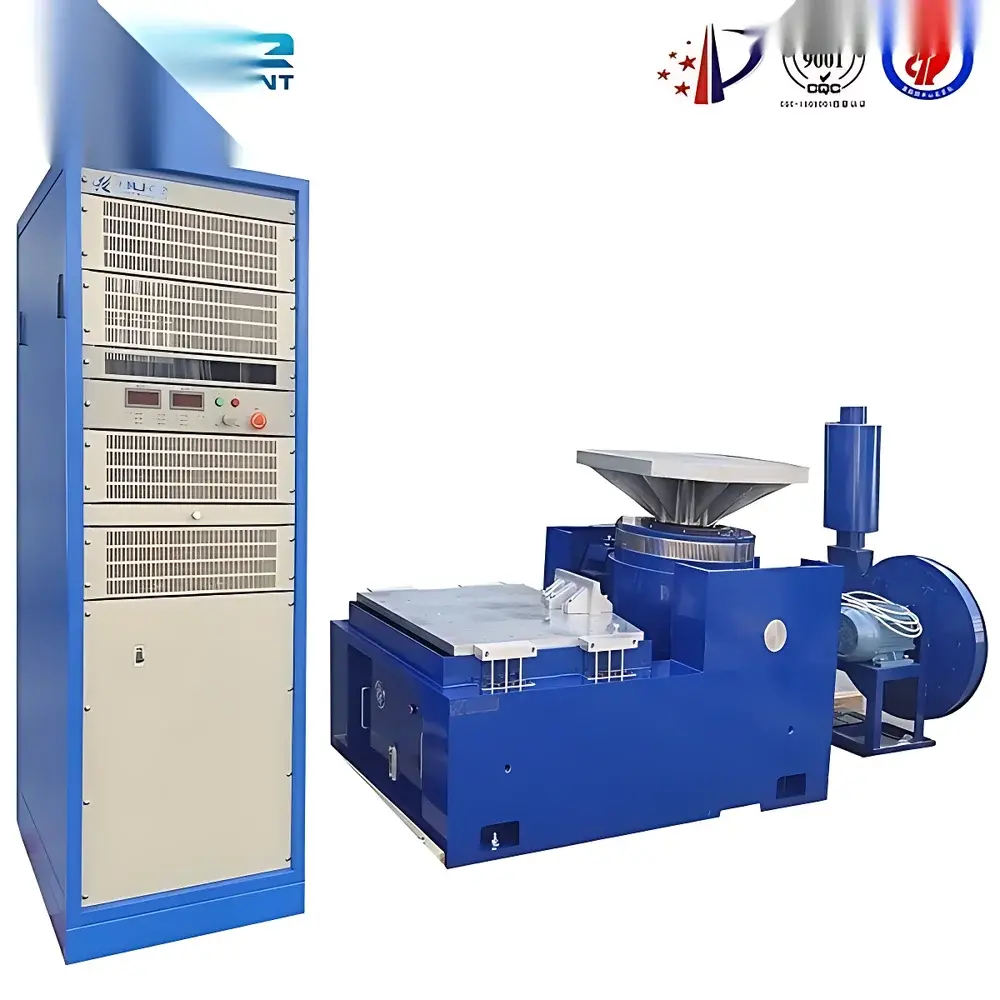
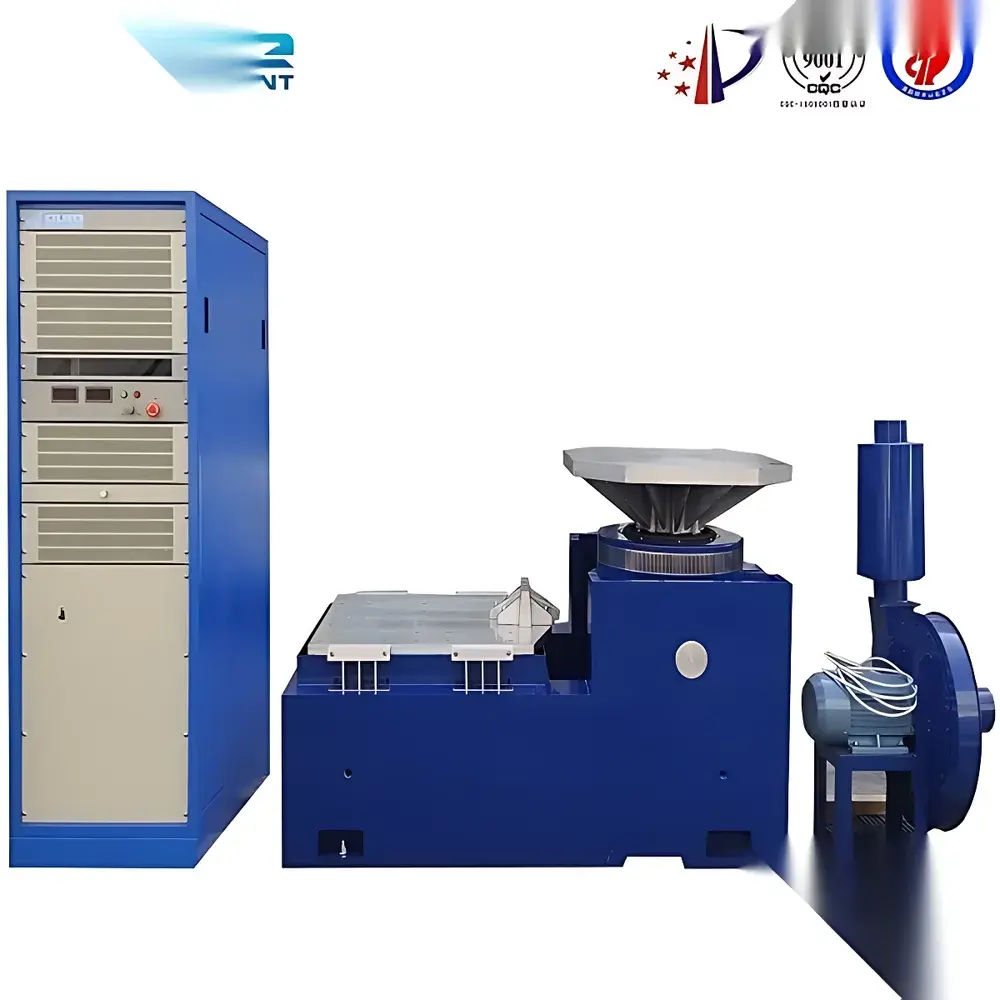
OK-ES Series High-Frequency Vibration Testing System
| Brand | Other Brands |
|---|---|
| Origin | Imported |
| Manufacturer Type | General Distributor |
| Speed Range | 60–300 rpm |
| Speed Resolution | ±1 rpm |
| Vibration Mode | Reciprocating |
| Peak-to-Peak Amplitude | 25.4 mm |
| Load Capacity | 70 kg |
| Effective Table Area | 1200 mm × 1100 mm |
| Timer Range | 0 s to 99 h |
| Motor Power | 1 HP (746 W) |
| Drive System | DC motor with synchronous silent belt transmission |
| Table Surface | Stainless steel |
| Base Structure | Heavy-duty channel steel frame with vibration-damping rubber mounts |
| Weight | 230 kg |
| Power Supply | 220 V, 50 Hz |
| Compliance | ASTM D999, ISO 2247, EN 71-1 |
Overview
The OK-ES Series High-Frequency Vibration Testing System is an electromechanical shaker engineered for controlled simulation of transportation-induced vibrational stress on packaged goods. It operates on a reciprocating motion principle—generating sinusoidal or pseudo-random displacement profiles through a robust DC-motor-driven eccentric mechanism—enabling reproducible acceleration spectra within the low-to-mid frequency range (1–5 Hz fundamental, corresponding to 60–300 rpm). Unlike broadband electrodynamic shakers, this system prioritizes high-force, low-frequency endurance testing aligned with standardized road, rail, and maritime logistics profiles. Its design targets functional validation of packaging integrity, structural resilience of finished products, and verification of cushioning performance under sustained harmonic excitation—critical for pre-shipment qualification in regulated supply chains.
Key Features
- Heavy-duty channel steel base integrated with high-compliance natural rubber isolation mounts ensures mechanical stability and minimizes energy coupling into facility structures during operation.
- Stainless steel test table (1200 mm × 1100 mm) provides corrosion resistance, dimensional stability, and uniform load distribution across the full active surface.
- Adjustable aluminum fixture system with dual-handwheel clamping enables rapid, tool-free securing of irregularly shaped samples—including assembled electronics, furniture subassemblies, and fragile ceramic shipments—without surface marring.
- Synchronous silent timing belt drive eliminates gear backlash and reduces acoustic emissions below 65 dB(A) at 1 m distance, supporting operation in shared laboratory or quality control environments.
- DC motor with soft-start ramp control prevents torque shock during initiation, extending bearing life and preserving sample mounting integrity during startup transients.
- Digital timer with 1-second resolution supports exposure durations from single-cycle evaluation (e.g., 30 s diagnostic shake) to extended fatigue protocols up to 99 hours—fully compliant with cumulative vibration exposure requirements in ASTM D4169 and ISO 13355.
Sample Compatibility & Compliance
The system accommodates packaged units weighing up to 70 kg, including retail-ready consumer electronics, automotive interior modules, domestic appliances, children’s toys in carton-shipping configurations, and ceramic tableware palletized in corrugated enclosures. Its fixed 25.4 mm peak-to-peak amplitude and adjustable rotational speed (60–300 rpm) replicate the dominant vertical and horizontal excitations observed in Class I–III freight vehicles per ASTM D999 Method A (sine sweep) and ISO 2247 Clause 6.2 (fixed-frequency endurance). Test reports generated using this system satisfy documentation requirements for EN 71-1 mechanical safety assessments and support ISO/IEC 17025 accredited laboratories in delivering auditable vibration test records. While not certified to MIL-STD-810 or IEC 60068-2-64, its operational envelope aligns with commercial logistics validation tiers defined in ISTA 3A and 3E protocols.
Software & Data Management
This analog-controlled system does not incorporate embedded data acquisition or PC-based waveform generation. However, it is fully compatible with external instrumentation—including piezoelectric accelerometers (e.g., PCB 352C33), charge amplifiers, and USB DAQ systems—for real-time acceleration profiling and spectral analysis. Users may integrate third-party software such as MATLAB, LabVIEW, or Dewesoft X to log time-domain acceleration, compute RMS values, and generate PSD plots per ISO 10816-1. All operational parameters—including elapsed time, set speed, and run status—are displayed via front-panel LED indicators. For GLP/GMP-regulated environments, manual test logs must be maintained per SOP; no electronic audit trail or 21 CFR Part 11 compliance is natively provided.
Applications
- Pre-shipment validation of corrugated shipping containers per ASTM D6344 and ISTA 1A.
- Structural durability assessment of handheld consumer devices subjected to parcel delivery vibration spectra.
- Cushioning efficacy verification for molded pulp or foam-in-place packaging used in medical device transit.
- Verification of fastener retention and solder joint integrity in automotive ECUs after simulated cross-country transport.
- EN 71-1 compliance testing for toy packaging drop-and-vibration sequences prior to CE marking.
- Root cause analysis of field failures linked to resonant modes excited during ground transport.
FAQ
What standards does this system directly support?
It is mechanically configured to execute test profiles specified in ASTM D999 (Method A), ISO 2247, EN 71-1 Section 8.11, and ISO 13355 Annex B.
Can the vibration frequency be varied during a test cycle?
No—this is a fixed-frequency reciprocating shaker; speed is manually set prior to initiation and remains constant throughout the programmed duration.
Is calibration certification included with purchase?
Calibration of speed accuracy (±1 rpm) and timer function is traceable to national standards; a manufacturer’s calibration report is supplied, but NIST-traceable third-party certification requires separate arrangement.
What maintenance intervals are recommended?
Belt tension and motor brush wear should be inspected every 500 operational hours; rubber isolation mounts require visual inspection quarterly for cracking or compression set.
Does the system support multi-axis vibration?
No—it generates uniaxial vertical reciprocation only; lateral or oblique excitation requires orthogonal repositioning of the test article or use of a triaxial shaker system.



