
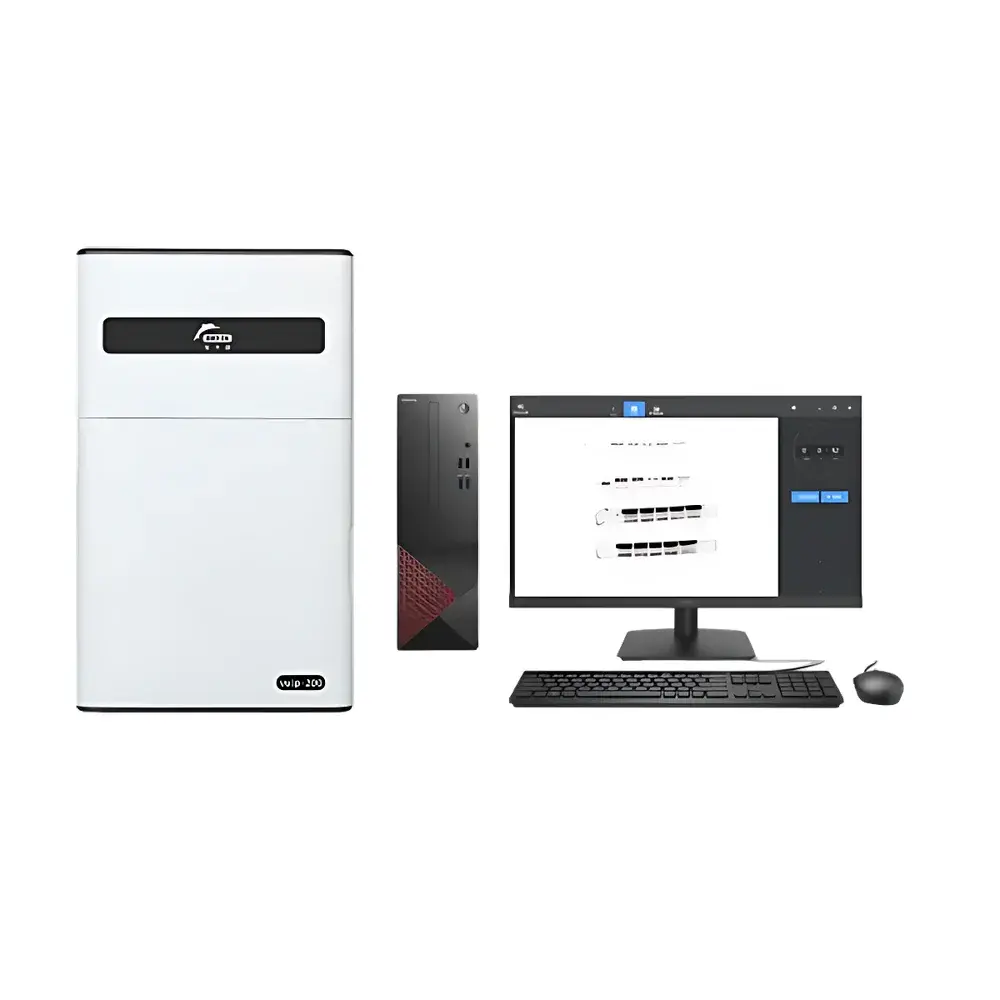
BIO-DL ChemiDoc Gel Imaging System
| Brand | BIO-DL |
|---|---|
| Origin | Shanghai, China |
| Model | ChemiDoc Gel Imaging System |
| Camera | Scientific-grade deep-cooled CCD (−60 °C typical operating temperature) |
| Lens | High-aperture f/0.95 lens |
| Light Sources | UV (254 nm & 365 nm), White LED, RGB Epi-Fluorescence (470/525/630 nm excitation), Near-Infrared (NIR, 740/850 nm) |
| Optional Accessories | Temperature-controlled sample stage (4–40 °C), Anesthesia module for in vivo imaging |
| Software | Modular acquisition & analysis suite with guided workflow, non-destructive image enhancement, batch processing, and audit-trail-enabled data management |
Overview
The BIO-DL ChemiDoc Gel Imaging System is a fully automated, multi-modal optical detection platform engineered for quantitative molecular imaging across life science research laboratories. It operates on the principle of photon capture via a thermoelectrically cooled scientific CCD sensor, optimized for low-noise, high-dynamic-range detection of chemiluminescent, fluorescent, and transmitted-light signals. Unlike conventional gel documentation systems limited to UV transillumination, this platform integrates orthogonal illumination modalities—including dual-wavelength UV, tunable RGB epi-fluorescence, near-infrared excitation/emission, and uniform white-light reflectance—enabling concurrent detection of diverse reporter chemistries (e.g., HRP- and AP-conjugated antibodies, quantum dots, Cy dyes, IRDye® conjugates, and GFP/RFP variants) without hardware reconfiguration. Its deep-cooled CCD (typical operating temperature: −60 °C) achieves sub-electron read noise and >95% quantum efficiency at peak wavelengths, ensuring reliable quantification of weak chemiluminescent signals from Western blots and low-abundance nucleic acid stains.
Key Features
- Scientific-grade deep-cooled CCD camera with 16-bit digitization and programmable exposure (0.1 ms to 60 min), supporting linear dynamic range exceeding 4.8 OD
- Fixed f/0.95 wide-aperture lens with motorized focus and zoom, eliminating manual alignment drift during multi-channel acquisitions
- Integrated multi-spectral illumination: dual-band UV (254 nm and 365 nm), high-intensity white LED for Coomassie/SYBR-safe imaging, RGB epi-fluorescence (470 nm, 525 nm, 630 nm), and NIR (740 nm excitation / 850 nm emission) for in vivo and multiplexed assays
- Motorized filter wheel with eight positions, pre-aligned for common fluorophores and chemiluminescent substrates (e.g., Luminol, CSPD, DuraLight)
- Automated shutter control, stage positioning, and light-source sequencing synchronized within acquisition protocols
- Optional temperature-regulated sample stage (4–40 °C ±0.5 °C) for kinetic imaging of enzymatic reactions or thermal-sensitive gels
- Optional small-animal anesthesia module (isoflurane delivery with scavenging) compliant with IACUC-recommended practices for longitudinal bioluminescent/fluorescent imaging
Sample Compatibility & Compliance
The system accommodates standard electrophoretic formats including mini-gels (up to 15 × 15 cm), large-format slab gels (up to 25 × 20 cm), microplates (6–96-well), tissue sections, plant leaves, and live rodents (up to 35 g). All UV components meet IEC 61000-4-3 electromagnetic compatibility standards and are housed in interlocked safety enclosures with automatic lamp shutoff upon door opening. The software architecture supports ALCOA+ data integrity principles and includes optional 21 CFR Part 11 compliance modules—electronic signatures, role-based access control, immutable audit trails, and secure user authentication—validated for GLP and GMP environments. Instrument qualification documentation (IQ/OQ/PQ templates) and traceable calibration certificates (NIST-traceable intensity standards) are provided.
Software & Data Management
Acquisition and analysis are managed through BIO-DL ImageStudio Pro—a modular, ISO/IEC 17025-aligned software suite. Its guided workflow engine walks users through experiment setup (light source selection, exposure optimization, background subtraction), ensuring reproducibility across operators. Image processing tools include non-linear histogram stretching, rolling-ball background correction, band/spot detection with adjustable sensitivity thresholds, and integrated densitometry with internal reference normalization. Raw data (TIFF 16-bit) and processed results (CSV, PDF reports) are stored in a hierarchical project structure with embedded metadata (exposure time, gain, lens aperture, light source ID). Version-controlled analysis pipelines can be exported and shared across instruments, facilitating cross-laboratory method transfer.
Applications
- Quantitative Western blotting using HRP- or AP-mediated chemiluminescence (ECL, CDP-Star, Lumi-Phos)
- Multi-color fluorescence imaging of SDS-PAGE gels stained with SYPRO Ruby, Deep Purple, or Krypton
- Nucleic acid visualization: ethidium bromide, GelRed, SYBR Gold, and silver-stained gels under UV or blue-light excitation
- In-gel zymography and activity-based protein profiling using fluorescent activity probes
- Plant phenotyping: chlorophyll fluorescence (Fv/Fm), root architecture analysis under white/NIR illumination
- Small-animal bioluminescence and fluorescence tomography (BLT/FLT) for oncology and immunology studies
- Colony counting and viability assessment in microbial assays using resazurin or CFDA-SE staining
FAQ
What is the minimum detectable signal for chemiluminescence imaging?
Detection limit is defined by signal-to-noise ratio ≥3:1; under optimal conditions (HRP–anti-rabbit IgG, ECL Prime substrate, 5-min exposure), the system resolves bands containing ≤5 pg of target protein on PVDF membranes.
Can the system perform time-lapse chemiluminescent imaging?
Yes—software supports scheduled sequential acquisitions with variable exposure times and auto-gain adjustment to accommodate signal decay kinetics.
Is third-party software integration supported?
Raw TIFF exports comply with MIAME and MIAPE standards; APIs enable bidirectional communication with LabArchives ELN and Thermo Fisher Cloud for automated metadata ingestion.
How is calibration maintained over time?
An annual recalibration service includes CCD dark-current profiling, lens MTF verification, and photometric validation using NIST-traceable neutral-density filters and fluorescent intensity standards.
Does the system support remote operation and monitoring?
Yes—secure HTTPS-based web interface enables real-time status monitoring, queue management, and diagnostic logging from any networked workstation, with TLS 1.2 encryption and session timeout enforcement.




