
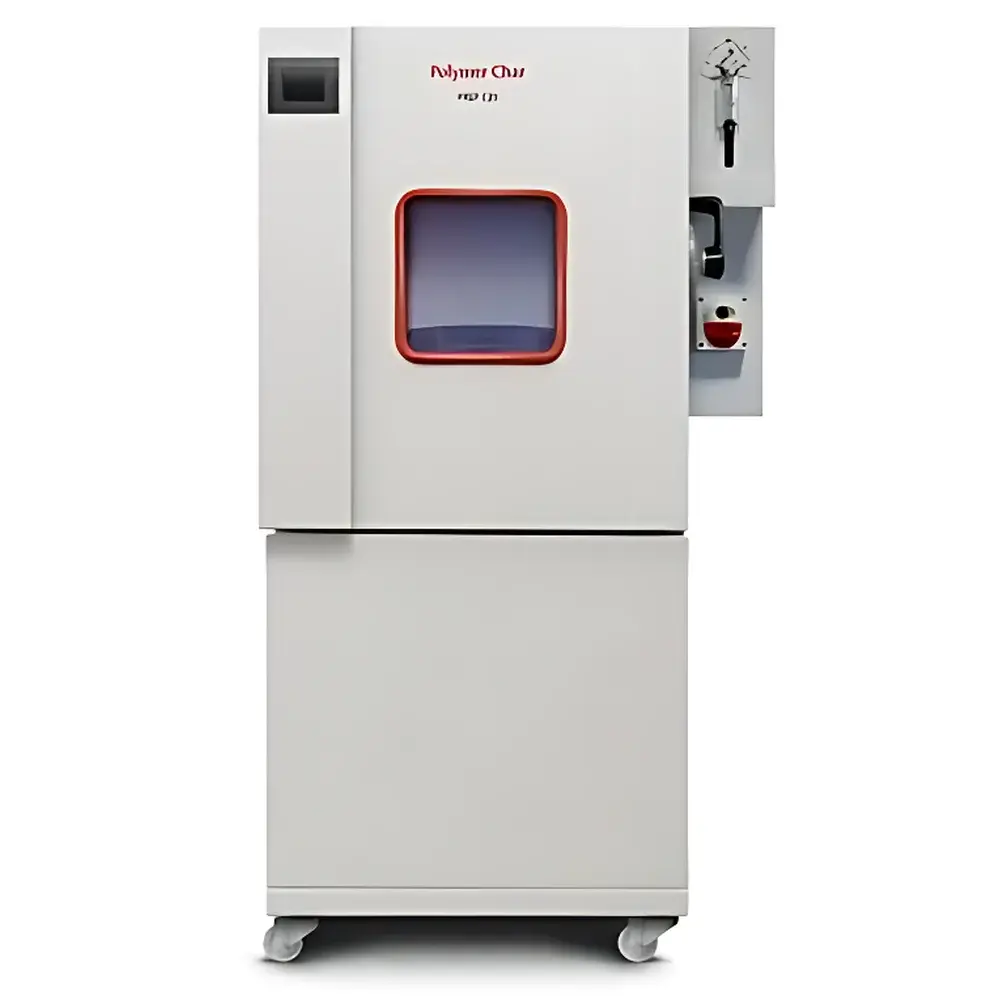
Polymer Char PREP C20 Automated Large-Scale Polymer Fractionation System
| Brand | Polymer Char |
|---|---|
| Origin | Spain |
| Model | C20 |
| Fractionation Capacity | 10–20 g per run |
| Operating Modes | TREF (Temperature Rising Elution Fractionation) and Molar Mass Fractionation |
| Cycle Time | ≤48 h including dissolution |
| Fraction Collection | Up to 9 fractions per run |
| Detection | Integrated IR detector for real-time fraction monitoring |
| Control | Remote operation and interactive diagnostics enabled |
| Compliance | Designed for GLP-compliant laboratories |
| Software | Fully automated method sequencing with audit trail capability |
Overview
The Polymer Char PREP C20 Automated Large-Scale Polymer Fractionation System is an engineered solution for high-throughput, reproducible separation of polyolefin samples based on chemical composition distribution (CCD) or molar mass distribution (MMD). It implements the Temperature Rising Elution Fractionation (TREF) principle—where polymer chains are selectively eluted from a crystalline support as temperature increases in a controlled solvent gradient—or alternatively performs crystallization-based molar mass fractionation under precisely regulated thermal and flow conditions. Unlike analytical-scale TREF instruments limited to milligram-level samples, the PREP C20 is uniquely designed for preparative-scale isolation, enabling isolation of discrete fractions (typically 5–9 cuts) from 10–20 g of raw polyolefin feedstock. This capacity bridges the gap between laboratory-scale catalyst screening and industrial process development, supporting rigorous structure–property correlation studies in LLDPE, HDPE, and advanced copolymer systems.
Key Features
- Fully automated workflow—from sample dissolution and column conditioning to fraction collection and system rinse—eliminates manual solvent handling and minimizes operator exposure.
- Dual-mode operation: Selectable TREF mode for compositional heterogeneity analysis or molar mass fractionation mode for molecular weight–based separation, configurable per sample via method editor.
- Integrated Fourier-transform infrared (FTIR) detector enables real-time, non-destructive monitoring of eluate composition during fractionation, facilitating rapid method optimization and endpoint determination.
- Compact benchtop architecture with modular solvent management (including inert gas purging and temperature-controlled reservoirs) ensures stable operation across extended runs (up to 48 h).
- Remote control interface supports secure access via Ethernet or Wi-Fi; embedded diagnostics provide actionable alerts for pump pressure anomalies, temperature deviations, or valve actuation failures.
- Software includes full audit trail functionality compliant with FDA 21 CFR Part 11 requirements, including user authentication, electronic signatures, and immutable event logging.
Sample Compatibility & Compliance
The PREP C20 is validated for use with common polyolefins—including ethylene/α-olefin copolymers (LLDPE, VLDPE), homopolymers (HDPE, PP), and functionalized derivatives—dissolved in standard high-boiling solvents such as 1,2,4-trichlorobenzene (TCB) or o-dichlorobenzene (ODCB). All fluidic pathways are constructed from chemically resistant materials (e.g., Hastelloy, PEEK, sapphire) compatible with elevated temperatures (up to 160 °C) and aggressive solvents. The system meets CE marking requirements and is designed to operate within ISO/IEC 17025-accredited laboratories. Its operational protocols align with ASTM D6964 (Standard Test Method for Determination of Chemical Composition Distribution of Polyolefins by TREF) and support traceability in GMP environments where batch release testing demands documented fractionation repeatability.
Software & Data Management
The PREP C20 is operated via Polymer Char’s proprietary Fractionator Control Software (v5.x), a Windows-based platform featuring intuitive drag-and-drop method building, multi-user role assignment, and scheduled run queuing. Each method stores complete thermal ramp profiles, solvent flow rates, fraction cut points, and IR spectral baselines. Raw data—including time-stamped IR absorbance traces, temperature logs, and pump pressure histories—are saved in vendor-neutral HDF5 format. Export modules support direct integration with third-party analytics tools (e.g., MATLAB, Python pandas) and chromatography data systems (CDS). All changes to methods or instrument parameters are recorded with timestamp, user ID, and reason-for-change fields, satisfying GLP documentation standards.
Applications
- Catalyst evaluation: Isolate and quantify comonomer-rich vs. comonomer-poor fractions from single-reactor polymer batches to correlate active site distribution with microstructure.
- Process troubleshooting: Resolve inconsistencies in film clarity or melt strength by mapping compositional drift across reactor zones using TREF-fractionated samples.
- Reference material preparation: Generate certified primary fractions for calibrating analytical SEC/TREF hybrid systems or validating new NMR quantification models.
- Recycled polymer analysis: Deconvolute blended waste streams (e.g., PE/PP mixtures) through sequential TREF and crystallinity-guided fractionation.
- Regulatory submission support: Provide fraction-specific DSC, FTIR, and rheological data packages required for FDA or EMA dossier submissions on novel polyolefin medical device resins.
FAQ
What solvents are compatible with the PREP C20 system?
The system is optimized for high-boiling aromatic solvents including 1,2,4-trichlorobenzene (TCB), o-dichlorobenzene (ODCB), and trichloroethylene, all handled under inert atmosphere at temperatures up to 160 °C.
Can the PREP C20 be integrated into an existing laboratory LIMS or ELN?
Yes—via optional API module supporting RESTful web services and CSV/JSON data export; validated interfaces exist for LabVantage, Thermo Fisher SampleManager, and Benchling.
Is method validation support available from Polymer Char?
Polymer Char provides IQ/OQ documentation templates and on-site PQ assistance aligned with ISO/IEC 17025 and ASTM D6964, including precision studies across ≥3 operators and ≥3 days.
How is carryover minimized between sequential runs?
The system executes a multi-stage cleaning protocol: hot solvent flush, nitrogen purge, cold solvent rinse, and vacuum drying—programmable per method with adjustable dwell times.
Does the IR detector require periodic recalibration?
The integrated FTIR module uses sealed, alignment-free optics and reference-based intensity normalization; calibration verification is performed automatically before each run using built-in polystyrene film standard.




