
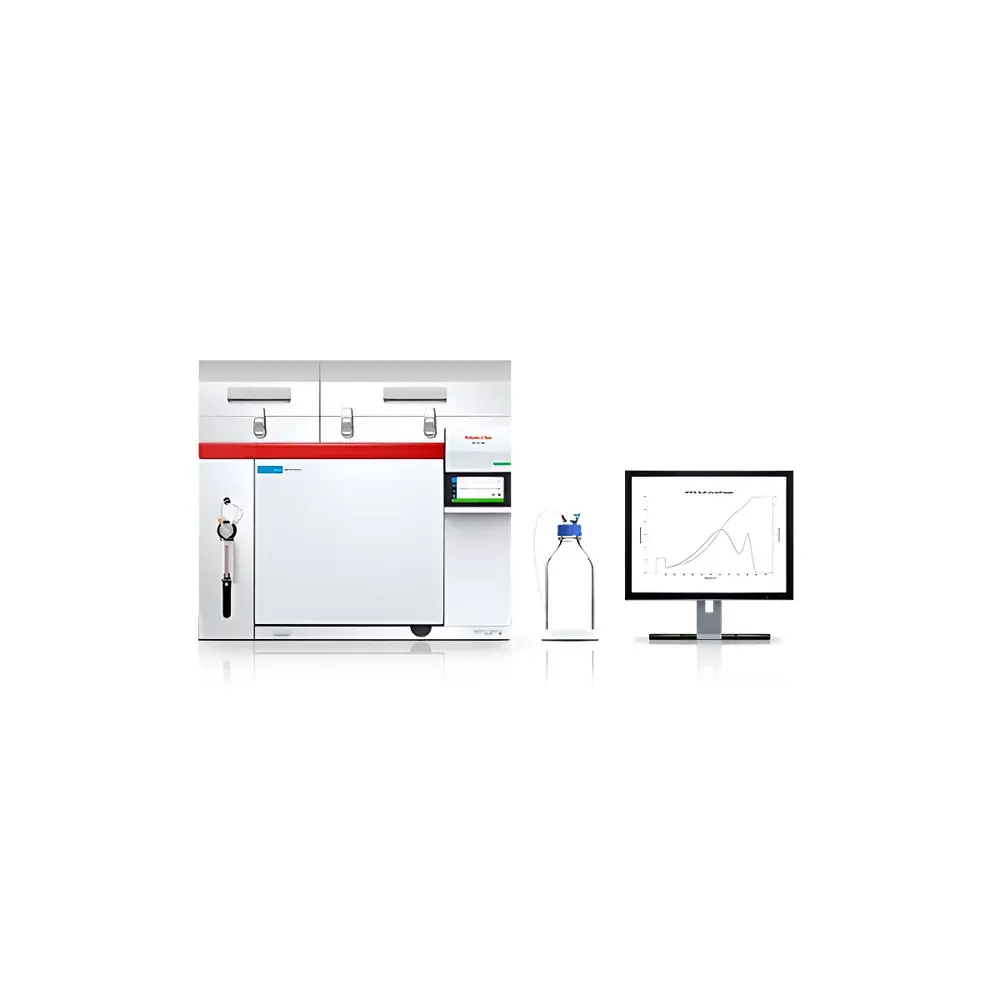
Polymer Char CRYSTAF Automated Crystallization Analysis System for Polyolefin Chemical Composition Distribution
| Brand | Polymer Char |
|---|---|
| Origin | Spain |
| Model | CRYSTAF |
| Sample Capacity | 5 samples per run |
| Cycle Time | ~6 hours |
| Minimum Operating Temperature | −20 °C |
| Detection | IR4 Infrared Detector |
| Configuration | Benchtop, Fully Automated |
| Solvent Handling | Closed-loop, Minimal Consumption |
| Software Interface | Intuitive GUI with Remote Monitoring & Diagnostics |
| Upgrade Path | Compatible with CRYSTAF-TREF dual-technique configuration |
| Compliance | Designed to support GLP/GMP workflows and ASTM D7283 (Standard Test Method for Determination of Comonomer Content in Polyolefins by Crystallization Analysis) |
Overview
The Polymer Char CRYSTAF is a benchtop, fully automated crystallization analysis system engineered for the precise quantification and distribution profiling of comonomer content in polyolefins—including ethylene–α-olefin copolymers (e.g., LLDPE, HDPE, plastomers) and propylene-based random or impact copolymers. It operates on the principle of Temperature Rising Elution Fractionation (TREF)–compatible crystallization fractionation: polymer chains are dissolved in hot solvent (typically 1,2,4-trichlorobenzene), then gradually cooled under controlled conditions to induce selective crystallization based on differences in crystallizability—directly correlated to comonomer incorporation and sequence distribution. As temperature decreases, fractions with higher crystallinity precipitate first; those with lower crystallinity (higher comonomer content) remain soluble longer. The IR4 infrared detector continuously monitors eluent concentration during the temperature-programmed elution phase, generating high-resolution chemical composition distribution (CCD) curves expressed as weight fraction versus elution temperature. This provides quantitative insight into short-chain branching (SCB) heterogeneity—critical for predicting mechanical performance, processability, and end-use behavior.
Key Features
- Fully automated batch operation supports up to five samples per unattended run, completing full CCD analysis in approximately six hours.
- Benchtop footprint minimizes laboratory space requirements while maintaining robust thermal control architecture for reproducible crystallization kinetics.
- Integrated IR4 infrared detector enables real-time, solvent-compatible concentration measurement with high signal-to-noise ratio and long-term baseline stability.
- Single, programmable temperature cycle eliminates multi-step manual interventions—reducing operator dependency and inter-run variability.
- Closed-solvent handling system significantly reduces solvent consumption (typical usage < 150 mL per sample) and eliminates direct operator exposure to hazardous solvents.
- Remote monitoring and diagnostic capabilities allow secure web-based access to instrument status, method execution logs, and error diagnostics—supporting distributed lab operations and preventive maintenance scheduling.
- Modular design permits seamless future upgrade to CRYSTAF-TREF configuration, enabling hybrid crystallization/fractionation analysis for extended molecular heterogeneity characterization.
Sample Compatibility & Compliance
The CRYSTAF accommodates standard polyolefin samples ranging from 5–25 mg, dissolved in 1,2,4-trichlorobenzene at concentrations of 0.5–2.0 mg/mL. It supports routine analysis of industrial-grade resins, reactor samples, and quality control specimens without pre-fractionation. The system’s thermal range extends from −20 °C to +140 °C, enabling reliable CCD profiling of low-crystallinity materials such as very-low-density polyethylene (VLDPE) and ethylene–octene elastomers. Instrument firmware and software architecture are structured to facilitate audit-ready data integrity: all method parameters, raw detector signals, temperature profiles, and user actions are time-stamped and stored with immutable metadata. While not certified as 21 CFR Part 11 compliant out-of-the-box, the system supports implementation of electronic signature protocols and audit trail generation when deployed within validated laboratory environments aligned with ISO/IEC 17025, ASTM D7283, and internal GLP/GMP procedures.
Software & Data Management
CRYSTAF Control Software provides an intuitive graphical user interface for method setup, real-time monitoring, and post-run analysis. Users define cooling/heating rates, hold times, solvent flow profiles, and IR calibration parameters via drag-and-drop workflow templates. Raw chromatograms are processed using built-in baseline correction, peak integration, and temperature-to-composition conversion algorithms traceable to NIST-standard reference materials. Export options include ASCII, CSV, and PDF formats compatible with LIMS integration and statistical process control (SPC) platforms. All data files contain embedded metadata (instrument ID, operator, timestamp, versioned software build), ensuring full traceability across analytical campaigns. Software updates are delivered via secure HTTPS channel with SHA-256 verification.
Applications
- QC/QA release testing of polyolefin grades against specification limits for comonomer content and distribution breadth (e.g., CDBI, Mw/Mn).
- R&D support for catalyst development—correlating metal center structure with SCB distribution and crystallinity profile.
- Root cause analysis of processing defects (e.g., melt fracture, poor film clarity) linked to compositional heterogeneity.
- Batch-to-batch consistency assessment in production environments subject to ISO 9001 or API Q1 requirements.
- Supporting regulatory submissions requiring compositional characterization per ASTM D7283 or equivalent regional standards.
FAQ
What polymer types can be analyzed on the CRYSTAF?
The system is optimized for polyolefins including ethylene homopolymers and copolymers (LLDPE, VLDPE, ULDPE), propylene homopolymers and copolymers (random, impact), and ethylene–propylene diene monomer (EPDM) rubbers.
Is method validation required before routine use?
Yes—users must perform initial system suitability testing using certified reference materials (e.g., NIST SRM 1475a) and establish in-house precision, accuracy, and repeatability metrics per ICH Q2(R2) guidelines.
Can the CRYSTAF operate without dedicated HVAC or solvent exhaust?
While the instrument itself does not require external fume hood integration due to its sealed solvent delivery and recovery system, local safety regulations may still mandate placement in ventilated enclosures depending on facility policy and solvent handling volume thresholds.
How is calibration maintained over time?
IR4 detector response is verified daily using standardized solvent blank and reference polymer solutions; full calibration curves are re-established monthly or after major maintenance events using traceable polyolefin standards.
Does the software support multi-user role-based access control?
Base software includes operator and administrator accounts; enterprise deployments may integrate with LDAP/Active Directory for centralized identity management and permission tiering.




