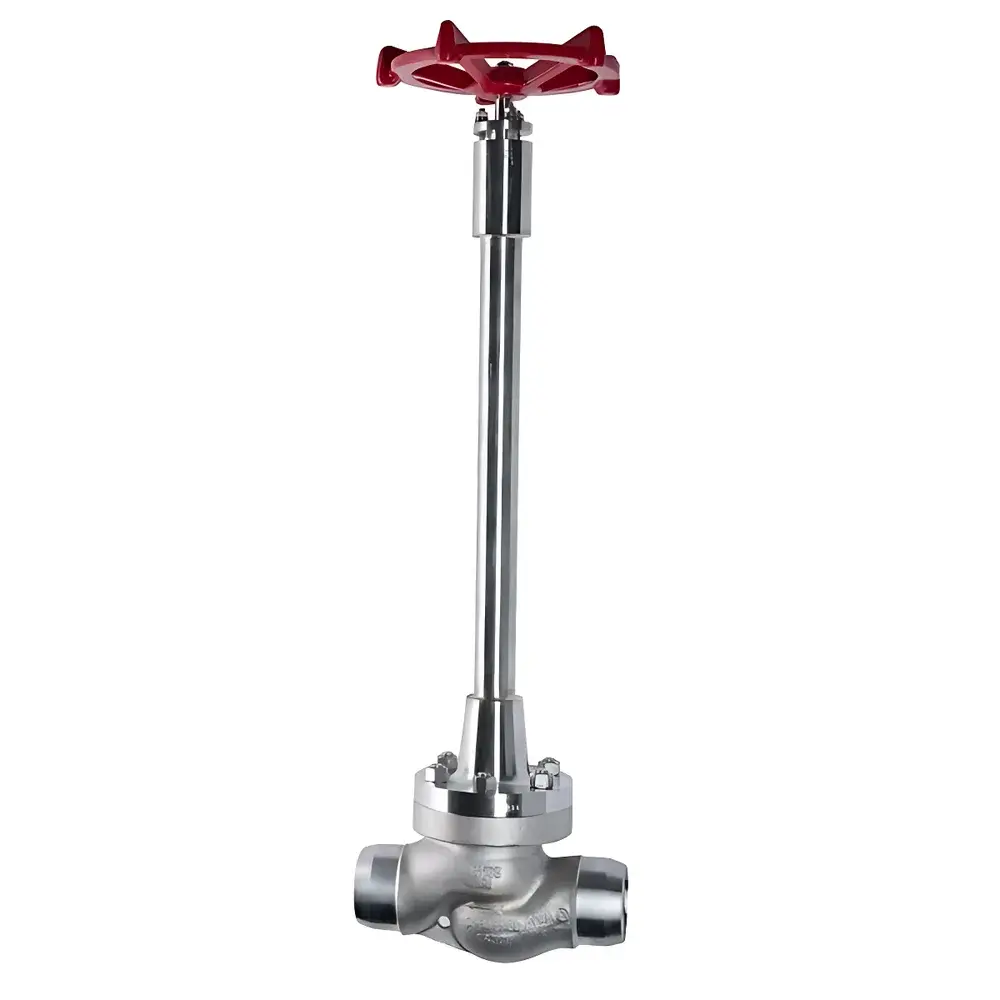
IRELAND 180700 Stainless Steel Cryogenic Globe Valve for Cold Box Installation
| Brand | IRELAND |
|---|---|
| Origin | France |
| Manufacturer Type | Authorized Distributor |
| Origin Category | Imported |
| Model | 180700 |
| Pricing | Upon Request |
| Material | ASTM A351 CF3M (304L) Body & Bonnet |
| End Connections | Butt-Weld (BW) Standard |
| Seat | Integral Seat with Reusable Soft Seal |
| Leakage Class | ISO 5208 Class A (Bubble-Tight) |
| Packing Box | Cryo-Optimized, Direct-Through Configuration |
| Temperature Range | −220 °C to +200 °C |
| Pressure Rating | PN16 to PN100 |
| Nominal Size Range | DN15 to DN200 |
| Compliance | EN 1515-1, EN 10222-4, PED 2014/68/EU, ISO 15848-1 (Low Emission) |
Overview
The IRELAND 180700 Stainless Steel Cryogenic Globe Valve is an engineered solution designed specifically for integration into cold box assemblies within air separation units (ASUs), liquefied natural gas (LNG) facilities, and low-temperature chemical processing systems. Its operational principle relies on linear stem motion to control flow via a disc-to-seat sealing interface—optimized for high-integrity shut-off under extreme thermal gradients. Constructed from ASTM A351 CF3M (304L) stainless steel, the valve features an extended bolted bonnet that thermally isolates the packing chamber from cryogenic process media, minimizing heat leak and preserving packing integrity at temperatures as low as −220 °C. The integral seat design, combined with a reusable soft-seal insert, enables repeatable bubble-tight shutoff performance per ISO 5208 Class A requirements—critical for oxygen service and other high-purity or hazardous fluid applications.
Key Features
- Extended bonnet and stem assembly fabricated from low-carbon austenitic stainless steel (304L), engineered to reduce conductive heat transfer between cryogenic fluid and stem packing.
- Butt-weld (BW) end connections per ASME B16.25 and EN 10222-4 standards ensure leak-tight, high-integrity piping integration in cold box manifolds.
- Cryo-optimized packing box with direct-through geometry enhances thermal stability and accommodates industry-standard graphite or PTFE-based packing materials compliant with ISO 15848-1 low-emission criteria.
- Integral seat construction eliminates field-installed seat rings, reducing potential leak paths and supporting long-term repeatability in cyclic thermal environments.
- Copper-free design across all external surfaces and wetted components—certified per CGA G-4.1 for oxygen service compatibility and essential for oxidizer-handling systems.
- Robust mechanical architecture validated for pressure–temperature combinations across PN16 to PN100 and DN15 to DN200, meeting PED 2014/68/EU Category IV requirements for critical safety applications.
Sample Compatibility & Compliance
The 180700 valve is qualified for use with liquid nitrogen, liquid oxygen, liquid argon, hydrogen, helium, and other ASU-derived process streams. Its material selection and dimensional conformity align with EN 1515-1 (flange bolting), EN 10222-4 (cryogenic steel specifications), and ISO 2852 (sanitary clamp variants not applicable; referenced here for seal interface precedent). For regulated industries, the valve supports GLP/GMP-aligned documentation packages—including material test reports (MTRs), hydrostatic test certificates, and non-destructive examination (NDE) records per EN ISO 17636-2 (radiographic testing). Fire-safe configuration (API RP 2510-compliant) and fugitive emission certification (ISO 15848-1, Type A) are available upon specification.
Software & Data Management
As a manually operated mechanical device, the 180700 does not incorporate embedded electronics or digital interfaces. However, its design facilitates seamless integration into distributed control systems (DCS) and safety instrumented systems (SIS) when equipped with optional actuation packages (pneumatic or electric, fail-open/fail-closed). Valve position feedback signals (4–20 mA or HART® 7) and diagnostic logs—such as stem travel deviation or torque monitoring—are supported through compatible actuators meeting IEC 61508 SIL2 requirements. All configuration data, maintenance history, and calibration records may be managed via asset integrity platforms compliant with ISA-84.01 and IEC 61511 lifecycle protocols.
Applications
- Air separation plant cold boxes: isolation of main condenser, high-pressure column, and waste heat exchanger circuits.
- LNG liquefaction trains: LNG feed, boil-off gas (BOG) recirculation, and emergency shutdown loops.
- Hazardous material transport: cryogenic tank truck and railcar loading/unloading manifolds requiring fire-safe and copper-free compliance.
- Hydrogen infrastructure: liquid hydrogen (LH₂) storage, transfer, and fueling station skids operating below −253 °C.
- Pharmaceutical and semiconductor gas supply systems: ultra-high-purity nitrogen and argon distribution where particle generation and metallic contamination must be minimized.
FAQ
What temperature range is certified for continuous operation?
The valve is rated for sustained service from −220 °C to +200 °C, with full mechanical and sealing performance validated per EN 10222-4 Annex C cryogenic testing protocols.
Is the valve suitable for oxygen service above 21% O₂ concentration?
Yes—provided the copper-free construction is verified and cleaning is performed per CGA G-4.1 and ASTM G93 Level A standards prior to commissioning.
Can this valve be supplied with flanged or socket-weld ends instead of butt-weld?
Yes—DN15–DN200 variants support optional EN 1092-1 PN16–PN100 flanged ends or ASME B16.11 socket-weld configurations upon request.
What documentation accompanies each unit for regulatory audits?
Standard delivery includes EN 10204 3.1 material certification, hydrostatic test report, dimensional inspection record, and ISO 5208 leakage test certificate.
Is third-party type testing available for SIL or API Q1 compliance?
Yes—certification to IEC 61508 SIL2 (for actuated versions) and API Q1 manufacturing system audit reports can be arranged through authorized IRELAND representatives.