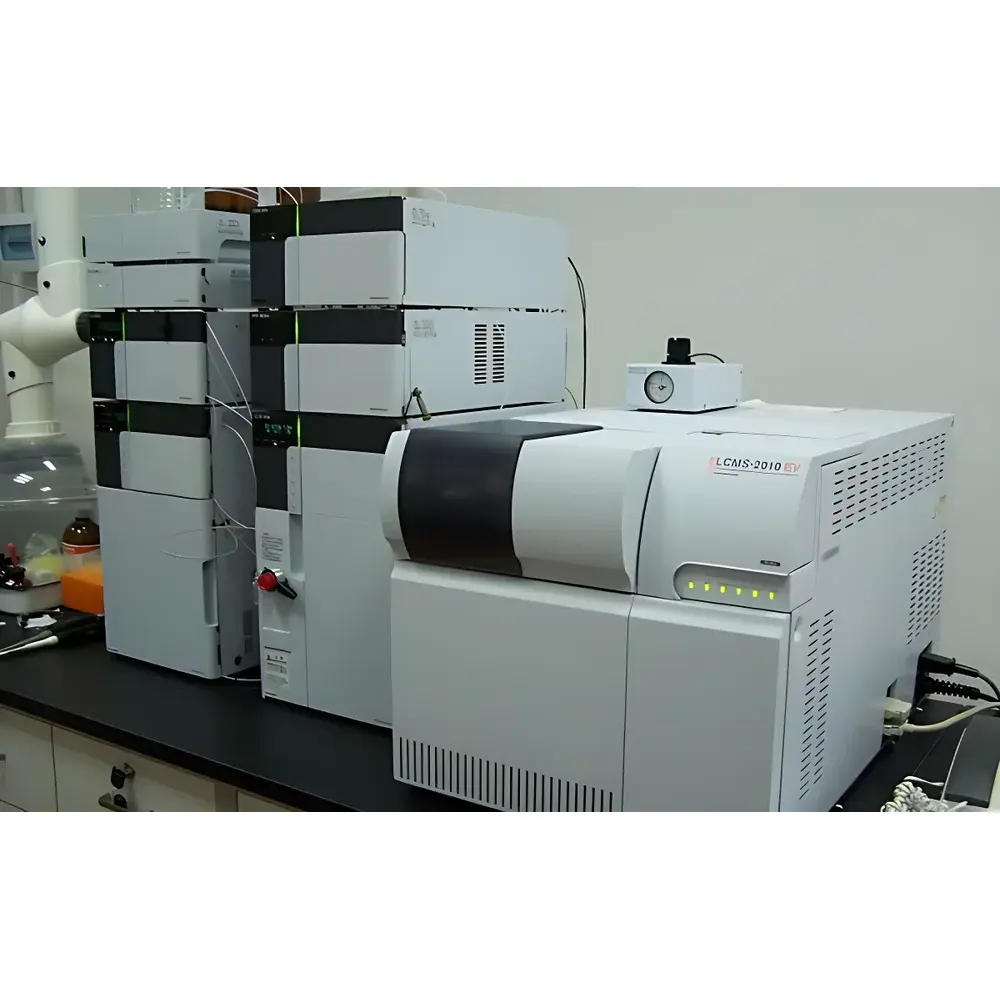
Shimadzu LCMS-2010EV Liquid Chromatography-Mass Spectrometry System Maintenance, Repair & Rental Service
| Brand | Kyocera |
|---|---|
| Origin | Beijing, China |
| Business Type | Authorized Distributor |
| Regional Classification | Domestic (PRC) |
| Model | WX-LCMS-2010EV |
| Service Fee | USD 700–1,400 per incident (excl. parts) |
| Technician Experience | 10 years on Shimadzu LC/MS platforms |
| Instrument Category | Analytical Instrumentation |
| Response Time | ≤12 hours (business days) |
| Service Scope | On-site repair, remote diagnostics, preventive maintenance, system refurbishment, short- to mid-term instrument leasing |
| Service Location | Beijing Metropolitan Area |
Overview
The Shimadzu LCMS-2010EV is a high-performance liquid chromatography–mass spectrometry (LC-MS) system engineered for robust quantitative and qualitative analysis in regulated and research laboratory environments. Its design integrates an electrospray ionization (ESI) source with a quadrupole mass analyzer, optimized for sensitivity, reproducibility, and operational stability. Key hardware innovations include an angled spray interface that enhances desolvation efficiency, a heated curved desolvation line (CDL), and a redesigned ion optics assembly that maximizes ion transmission—critical for low-abundance analyte detection in complex matrices such as biological fluids, environmental extracts, or pharmaceutical formulations. While originally introduced as a production-grade platform for routine QC and method development, the LCMS-2010EV remains widely deployed in academic, clinical, and industrial labs due to its proven reliability and compatibility with established LC-MS workflows.
Key Features
- Angled atmospheric pressure ionization (API) source geometry improves droplet desolvation and ion yield under variable flow rates and solvent compositions.
- Modular heater assembly maintains precise temperature control of the CDL and ion transfer region, reducing signal drift and enhancing long-term baseline stability.
- Optimized ion optics path increases transmission efficiency across the m/z range 10–1,000, supporting both full-scan and selected ion monitoring (SIM) acquisition modes.
- Integrated observation window enables real-time visual assessment of nebulization and spray stability—facilitating rapid troubleshooting of source-related performance issues.
- Fully compatible with Shimadzu’s Class VP™ software suite for instrument control, data acquisition, and basic quantitation; supports export to third-party processing tools (e.g., MassHunter, Compound Discoverer) via standard .qgd and .txt formats.
Sample Compatibility & Compliance
The LCMS-2010EV accommodates standard reversed-phase, HILIC, and ion-pairing LC methods using 2.1–4.6 mm ID columns and typical flow rates (0.2–1.0 mL/min). It is routinely validated for use in accordance with ISO/IEC 17025:2017 requirements for testing laboratories, and its operational logs and calibration records support GLP-compliant documentation practices. While the original system predates FDA 21 CFR Part 11 electronic record requirements, our maintenance service includes optional audit-trail configuration for instrument control software, enabling traceable user actions, parameter changes, and calibration events—essential for GMP-aligned quality control laboratories.
Software & Data Management
Maintenance contracts include firmware verification, software version validation, and diagnostic log review using Shimadzu’s proprietary LCMS Solution utilities. All repair interventions are documented with pre- and post-service performance reports, including tuning report summaries (e.g., resolution, mass accuracy, sensitivity at m/z 556.277), detector voltage stability, and vacuum integrity metrics. Refurbished units undergo full functional testing against Shimadzu’s factory acceptance criteria, and rental instruments ship with validated software configurations and pre-installed method templates for common applications (e.g., residual solvent analysis, pesticide screening, metabolite identification).
Applications
This platform is routinely applied in pharmaceutical impurity profiling, environmental contaminant screening (e.g., PAHs, PCBs, pharmaceutical residues in wastewater), food safety testing (mycotoxins, veterinary drug residues), and natural product characterization. Its multi-sequence acquisition capability allows concurrent optimization of collision energy, dwell time, and polarity switching within a single run—reducing method development time without compromising data fidelity. The system’s compatibility with photodiode array (PDA) detection further enables hybrid LC-PDA-MS workflows where UV spectral confirmation complements mass-based identification.
FAQ
What is included in the preventive maintenance service?
Comprehensive PM includes source cleaning and alignment, lens and quadrupole cleaning, vacuum system inspection (turbomolecular pump oil level, foreline trap integrity), detector gain calibration, and full-system leak check using helium mass spectrometry.
Do you provide remote diagnostics prior to dispatching a technician?
Yes—our engineers conduct preliminary triage via secure remote desktop connection to review error logs, tune reports, chromatographic performance metrics, and system configuration files before scheduling on-site intervention.
Is instrument leasing available outside Beijing?
Leasing services are currently limited to clients headquartered or operating within the Beijing-Tianjin-Hebei metropolitan region due to logistical constraints for installation, training, and emergency response.
Can refurbished LCMS-2010EV units be qualified for GMP use?
Yes—upon request, we deliver IQ/OQ documentation packages aligned with Annex 15 and USP guidelines, including equipment specifications, test protocols, raw data, and signed acceptance certificates.
What is the typical turnaround time for repair of a faulty detector or vacuum system?
Critical component repairs (e.g., electron multiplier replacement, turbomolecular pump rebuild) typically require 3–5 business days after receipt of approved quotation and parts authorization. Non-stock components may extend lead time by 7–10 days.
Related Products