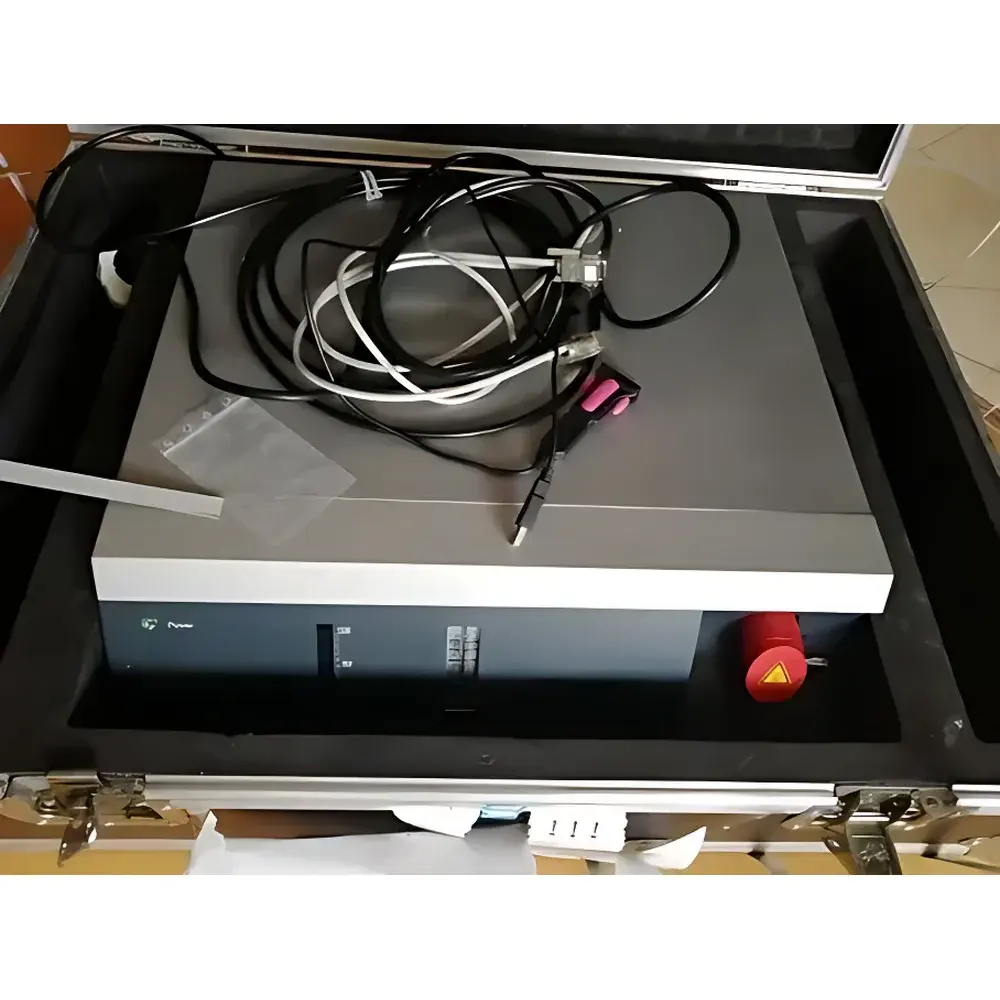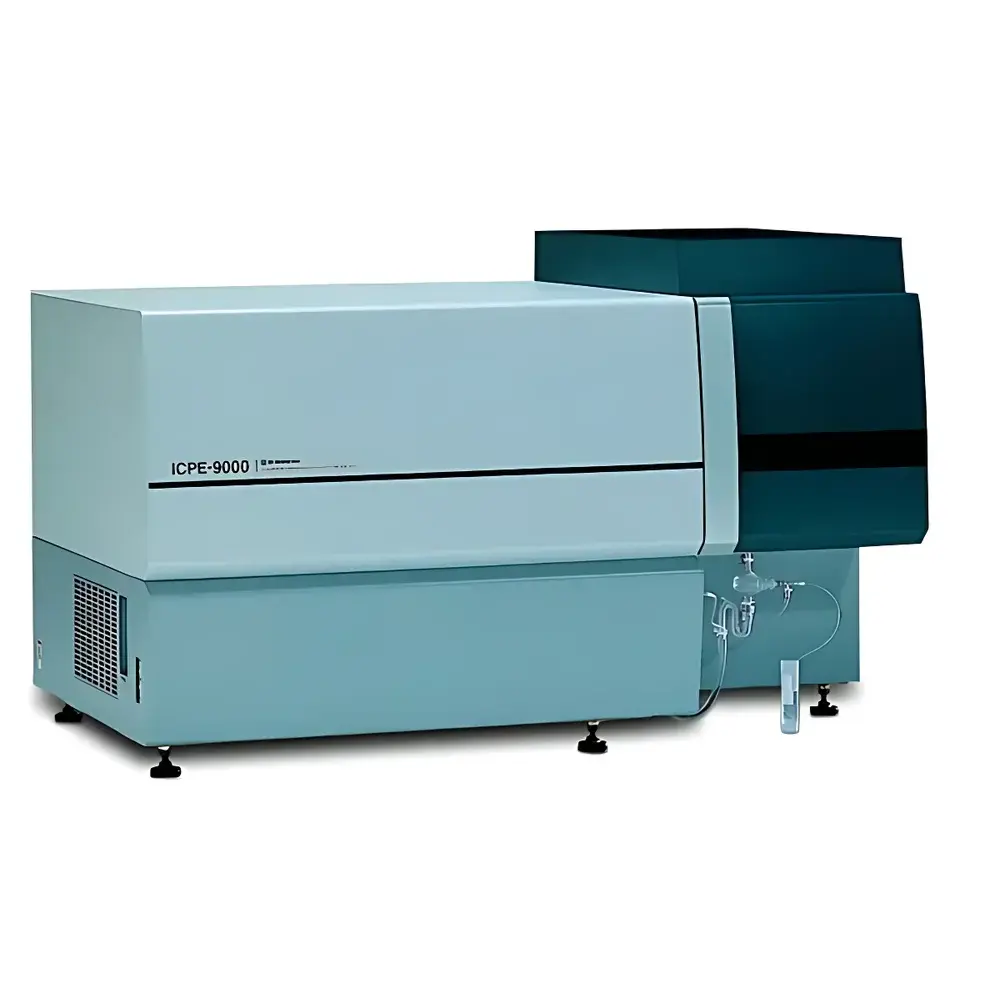
Shimadzu ICPE-9000 Used Full-Spectrum ICP Optical Emission Spectrometer
| Brand | Shimadzu |
|---|---|
| Origin | Japan |
| Model | ICPE-9000 |
| Wavelength Range | 167–800 nm |
| Optical System | Echelle spectrometer with vacuum UV capability |
| Detector | 1-inch CCD (1 MPixel) |
| RF Generator | Crystal-oscillator-based, 27.12 MHz |
| Plasma Torch | Vertical orientation, micro-torch standard (standard torch optional) |
| Viewing Direction | Axial and radial viewing (switchable, optional) |
| Nebulizer | Concentric type |
| Spray Chamber | Cyclonic spray chamber |
| Spectrometer Environment | Vacuum optical chamber |
| Temperature Control Stability | ±0.1 °C |
| Argon Consumption | Reduced by ~50% vs. conventional torches |
| Software Features | Automatic wavelength selection, coexisting element library generation, qualitative & quantitative analysis, full-spectrum data archiving |
| Warranty | 12 months post-commissioning |
Overview
The Shimadzu ICPE-9000 is a high-performance, full-spectrum inductively coupled plasma optical emission spectrometer (ICP-OES) engineered for precision multi-element analysis across environmental, geological, metallurgical, and regulatory laboratories. Unlike sequential scanning instruments, the ICPE-9000 employs a robust echelle optical system coupled with a 1-inch, 1-megapixel CCD detector to capture the entire spectral range (167–800 nm) simultaneously — enabling true simultaneous multi-element quantification without mechanical wavelength scanning. Its vacuum-sealed optical chamber eliminates the need for continuous purge gas (e.g., argon or nitrogen), significantly reducing operational overhead while ensuring long-term spectral stability and minimizing contamination risk in the VUV region (<190 nm). The instrument utilizes a crystal-controlled 27.12 MHz RF generator and vertically oriented plasma torch configuration, supporting both axial and radial observation modes (the latter available as an optional configuration). This architecture delivers high sensitivity, excellent signal-to-noise ratio, and exceptional reproducibility — critical for compliance-driven workflows aligned with ASTM D1976, ISO 11885, EPA Method 200.7/200.9, and USP /.
Key Features
- Full-spectrum acquisition: Simultaneous detection of all elements and wavelengths within a single exposure — eliminating sequential dwell time and enabling retrospective re-analysis without re-running samples.
- Vacuum optical chamber: Maintains stable vacuum conditions without continuous gas purge; ensures consistent transmission down to 167 nm and prevents hydrocarbon deposition on optics.
- Micro-torch configuration: Standard low-flow plasma torch reduces argon consumption by approximately 50% versus conventional torches, with no compromise in detection limits or calibration linearity.
- Precision thermal management: Echelle spectrometer housed in a temperature-stabilized enclosure maintained at ±0.1 °C — independent of ambient fluctuations and unaffected by purge gas thermal variability.
- Intelligent software-assisted evaluation: Built-in “Assistant” function automates spectral interference correction, background subtraction, and calibration validation based on coexisting element libraries.
- Modular hardware design: Supports field-upgradable components including dual-view optics, autosampler integration, and hydride generation accessories — facilitating future method expansion.
Sample Compatibility & Compliance
The ICPE-9000 accommodates liquid samples across a broad concentration range (sub-pptr to % w/v), including aqueous digests (EPA SW-846 Methods 3015A, 3050B, 3051A), organic solvents (with appropriate torch and nebulizer configurations), and high-salt matrices (via matrix-matched calibration or internal standardization). Its axial/radial viewing flexibility allows optimization for both high-sensitivity trace analysis (axial) and high-concentration robustness (radial). The system meets essential regulatory requirements for data integrity: audit trails, electronic signatures, and user-access controls are fully supported in compliance with FDA 21 CFR Part 11 when deployed with validated Shimadzu LabSolutions ICP software. Routine operation aligns with GLP and GMP documentation standards, and performance verification follows ISO/IEC 17025 guidelines for analytical instrument qualification.
Software & Data Management
Controlled via Shimadzu’s LabSolutions ICP platform, the ICPE-9000 provides comprehensive method development, acquisition, processing, and reporting tools. Key capabilities include automatic wavelength selection based on element-specific optimal lines, real-time spectral interference mapping, and dynamic background correction using adjacent pixel interpolation. All raw spectral data — including full 2D echelle images — are archived in vendor-neutral formats (e.g., .csv, .txt) alongside metadata (instrument parameters, calibration history, QC results). Data export supports LIMS integration via ASTM E1384-compliant interfaces. Software validation packages, IQ/OQ documentation templates, and electronic record retention protocols are available to support regulated environments.
Applications
- Environmental testing: Quantification of regulated metals (As, Cd, Cr, Pb, Hg, Se, etc.) in drinking water, wastewater, soil extracts, and air particulates per EPA and EU WFD directives.
- Geochemical analysis: Multi-element profiling of rock digests, sediments, and exploration core samples for exploration geochemistry and provenance studies.
- Metallurgy & alloys: Rapid grade identification, inclusion analysis, and impurity screening in stainless steels, aluminum alloys, and rare-earth magnets.
- Pharmaceutical excipients: Elemental impurity testing per ICH Q3D and USP /, including catalyst residue monitoring (Pd, Pt, Ni, Ru).
- Food safety: Monitoring toxic elements (Cd, Pb, As) in infant formula, rice, seafood, and dietary supplements under FDA and EFSA guidance.
FAQ
Is the ICPE-9000 compatible with hydride generation or cold vapor techniques?
Yes — the instrument supports external hydride generation (HG-AFS mode) and cold vapor atomic fluorescence (CV-AFS) accessories via optional gas-phase introduction modules, extending detection capability for As, Se, Sb, Bi, Hg, and Pb.
What level of preventive maintenance is required for sustained vacuum integrity?
The vacuum chamber is sealed and oil-free; routine maintenance includes quarterly inspection of O-rings and annual calibration of the vacuum gauge. No pump oil changes are required.
Can the system be validated for GxP use out-of-the-box?
While the base hardware and software meet key GxP design principles, formal validation (IQ/OQ/PQ) requires site-specific protocol execution, traceable standards, and documented evidence — services available through Shimadzu-certified partners.
Does the 1-year warranty cover RF generator and detector replacement?
Yes — the comprehensive 12-month post-commissioning warranty covers all major subsystems, including RF generator, CCD detector, vacuum pump, and optical alignment components, subject to standard exclusions (e.g., consumables, misuse, unauthorized modification).
Is remote diagnostics supported?
LabSolutions ICP includes secure remote access capability (with customer-configured firewall permissions), enabling Shimadzu service engineers to perform real-time troubleshooting, firmware updates, and spectral diagnostics without on-site visits.