
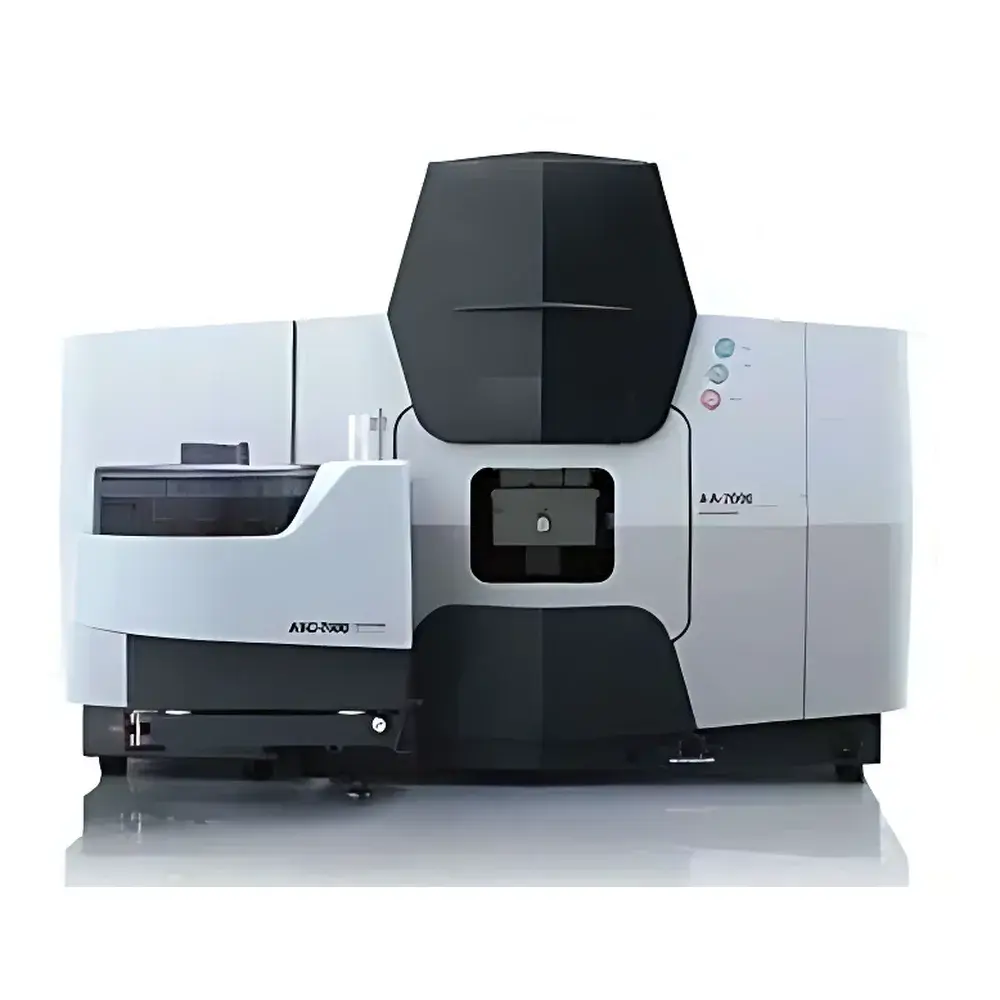
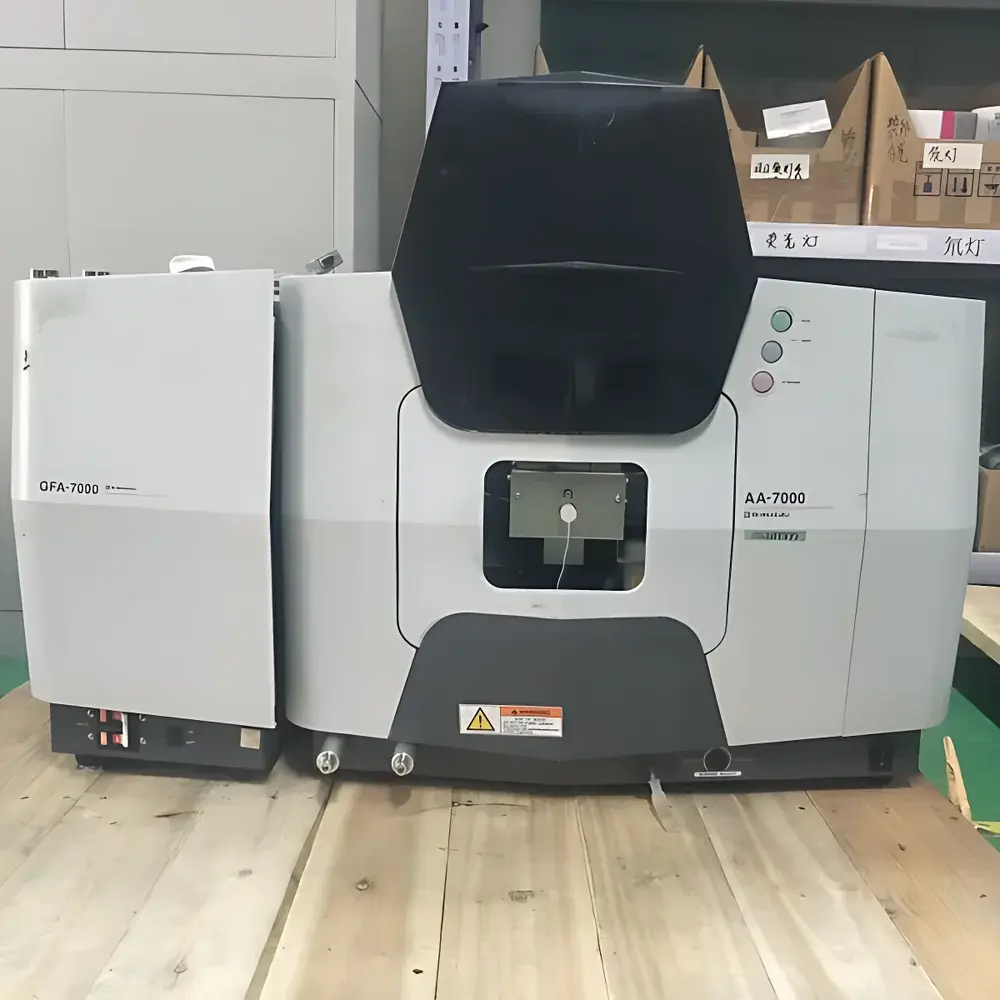
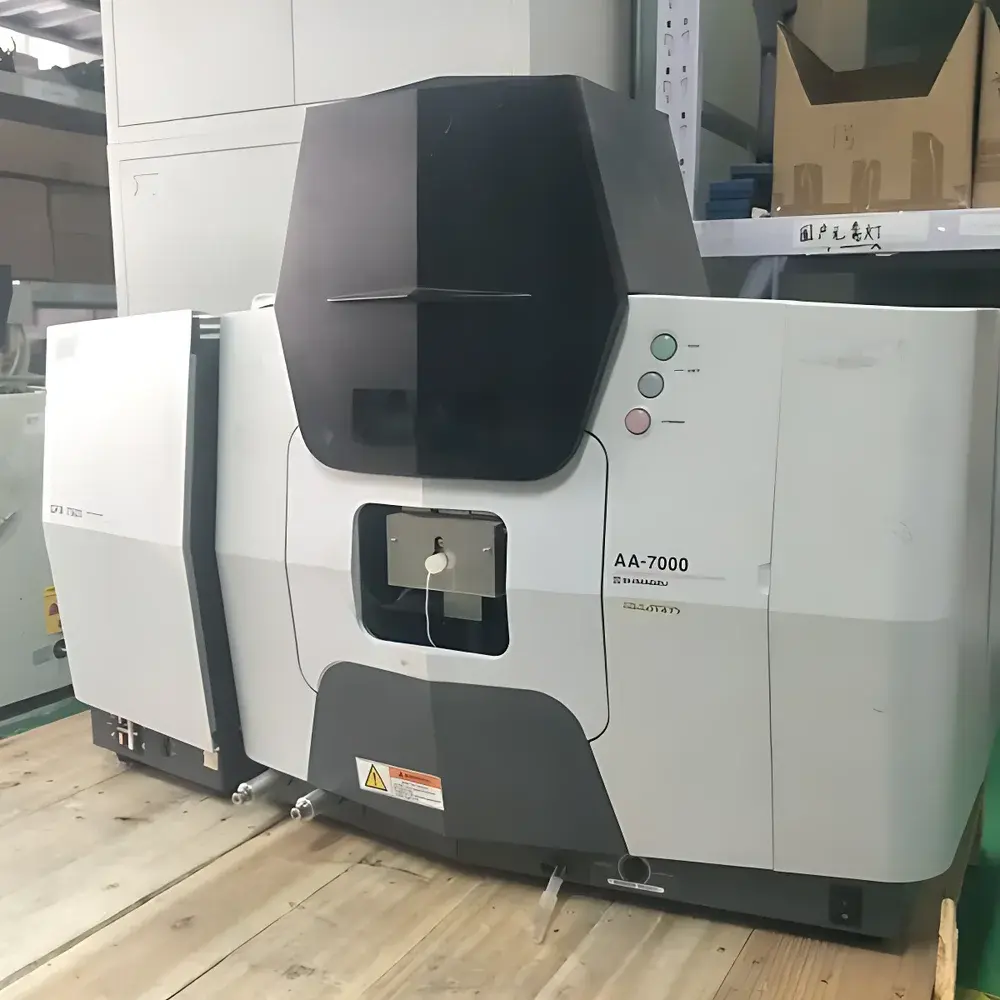
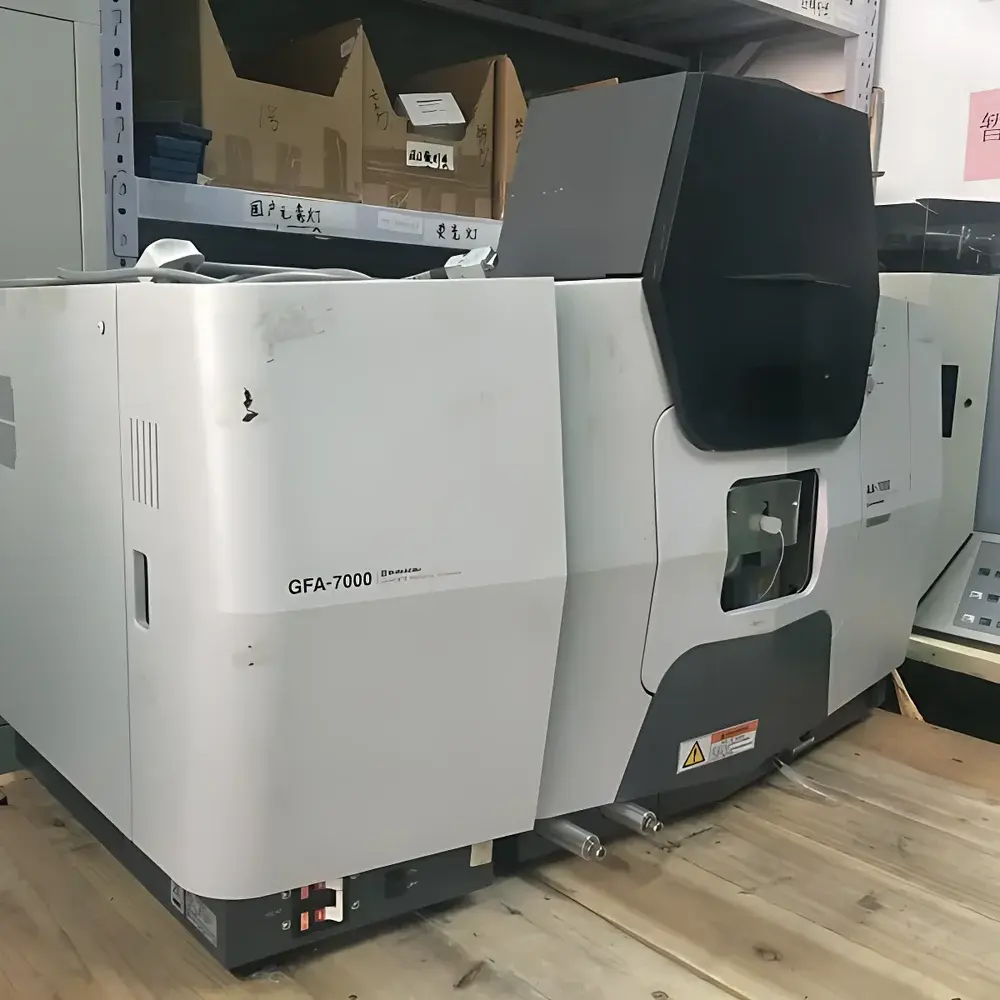
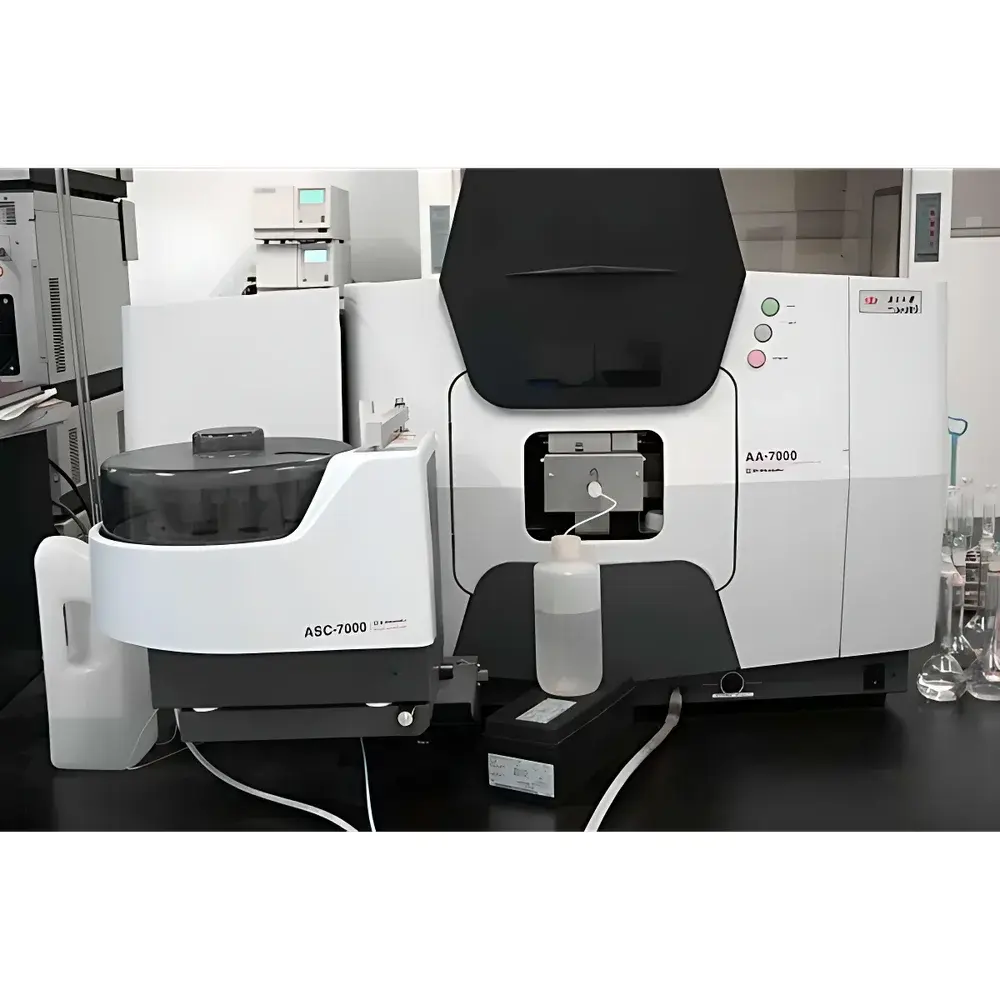
Shimadzu AA-7000 Flame and Graphite Furnace Atomic Absorption Spectrometer
| Brand | Shimadzu |
|---|---|
| Origin | Japan |
| Model | AA-7000 |
| Instrument Type | Flame and Graphite Furnace AAS |
| Monochromator | Concave Grating |
| Optical System | Double-Beam |
| Detector | Solid-State Detector |
| Background Correction | Deuterium Lamp + Zeeman Effect |
Overview
The Shimadzu AA-7000 is a dual-mode atomic absorption spectrometer engineered for high-sensitivity elemental quantification in trace metal analysis. It integrates flame atomization (FAAS) and electrothermal graphite furnace (GFAAS) techniques within a single, modular platform—enabling routine ppm-level detection in liquid samples via flame mode, and sub-pg detection limits in complex or low-volume matrices using graphite furnace atomization. The instrument operates on the fundamental principle of atomic absorption spectroscopy: ground-state free atoms in the gaseous phase absorb characteristic wavelengths of light emitted by hollow cathode lamps; the degree of absorption is quantitatively proportional to analyte concentration per the Beer–Lambert law. Its double-beam optical architecture compensates for source intensity drift and lamp aging, ensuring long-term photometric stability. The concave grating monochromator delivers high spectral resolution with minimal stray light, while the solid-state detector provides rapid signal acquisition and excellent signal-to-noise ratio across the 190–900 nm wavelength range.
Key Features
- Dual-atomization capability: Seamless switching between air-acetylene flame and graphite furnace modes without hardware reconfiguration
- Advanced background correction: Simultaneous deuterium lamp and Zeeman-effect correction for accurate compensation of structured and non-structured background absorption—critical for high-salt or organic-rich samples
- High-efficiency nebulization system: Precision concentric glass nebulizer with adjustable gas flow control for optimized aerosol generation and transport efficiency
- Graphite furnace autosampler compatibility: Supports programmable temperature ramping (up to 3000 °C), integrated platform heating, and real-time furnace temperature monitoring
- Robust optical design: Sealed, purged optical bench minimizes ozone interference below 200 nm; thermally stabilized monochromator housing ensures wavelength reproducibility
- Modular lamp turret: Accommodates up to eight hollow cathode lamps with automatic lamp selection and alignment verification
Sample Compatibility & Compliance
The AA-7000 accommodates aqueous solutions, digested environmental samples (e.g., EPA Method 200.7/200.9), biological fluids (serum, urine), food extracts, and pharmaceutical excipients. Flame mode supports direct aspiration of clarified samples with total dissolved solids ≤0.2%; graphite furnace mode enables analysis of viscous, particulate-laden, or highly diluted samples following matrix-matched calibration or standard addition. The system complies with ISO/IEC 17025 requirements for testing laboratories and supports audit-ready operation under GLP and GMP environments. Background correction performance meets ASTM E1718–22 criteria for multi-component interference correction. Data integrity features—including user access levels, electronic signatures, and audit trail logging—align with FDA 21 CFR Part 11 expectations when paired with compliant software configurations.
Software & Data Management
Operation is managed via Shimadzu’s dedicated AA solution software (version-dependent on instrument configuration), offering method development wizards, automated calibration curve generation (linear/non-linear), QC sample scheduling, and real-time peak integration with baseline correction algorithms. Raw data files are stored in vendor-neutral formats (e.g., .csv, .txt) alongside metadata (lamp current, slit width, integration time, furnace program steps). The software supports LIMS integration via ASTM E1384-compliant export protocols and includes built-in reporting templates aligned with ISO/IEC 17025 clause 7.8.2 for result validation and uncertainty estimation. All instrument parameters, measurement logs, and user actions are timestamped and archived with tamper-evident digital signatures where enabled.
Applications
- Environmental monitoring: Quantification of Pb, Cd, As, Cr, Ni, and Cu in wastewater, soil leachates, and airborne particulate filters per EPA and ISO standards
- Clinical toxicology: Trace element profiling (e.g., Zn, Se, Mn) in serum and whole blood for nutritional assessment and heavy metal poisoning diagnostics
- Pharmaceutical quality control: Residual catalyst metal screening (Pd, Pt, Rh) in active pharmaceutical ingredients per ICH Q2(R2)
- Food safety compliance: Detection of toxic elements (As, Hg, Cd) in infant formula, seafood, and fortified cereals against EU Commission Regulation (EC) No 1881/2006
- Geological research: Multi-element analysis of rock digests and mineral concentrates using matrix-matched calibration strategies
FAQ
Is the AA-7000 compatible with modern LIMS systems?
Yes—the instrument supports ASTM E1384-compliant data export and can interface with LIMS platforms via TCP/IP or file-based transfer protocols when configured with appropriate middleware.
What maintenance is required for the graphite furnace system?
Routine maintenance includes periodic cleaning of the graphite tube and platform, replacement of pyrolytic graphite coatings every 100–200 firings, and verification of furnace temperature calibration using reference materials such as Ni or Co standards.
Does the system support hydride generation for As, Se, Sb, and Bi analysis?
No—the AA-7000 does not include an integrated hydride generation accessory; however, it is mechanically and electronically compatible with third-party HG modules that provide analog voltage output for synchronization.
Can the instrument be validated for regulated environments?
Yes—full IQ/OQ/PQ documentation packages are available from authorized Shimadzu service partners, and the system supports 21 CFR Part 11 compliance when deployed with validated software and procedural controls.
What is the typical detection limit for Cd using graphite furnace mode?
Under optimized conditions (e.g., Pd-Mg modifier, platform atomization, integrated absorbance measurement), the characteristic mass for Cd is approximately 0.8 pg, corresponding to a practical detection limit of ~0.5 pg in a 20 µL injection volume.
Related Products





