
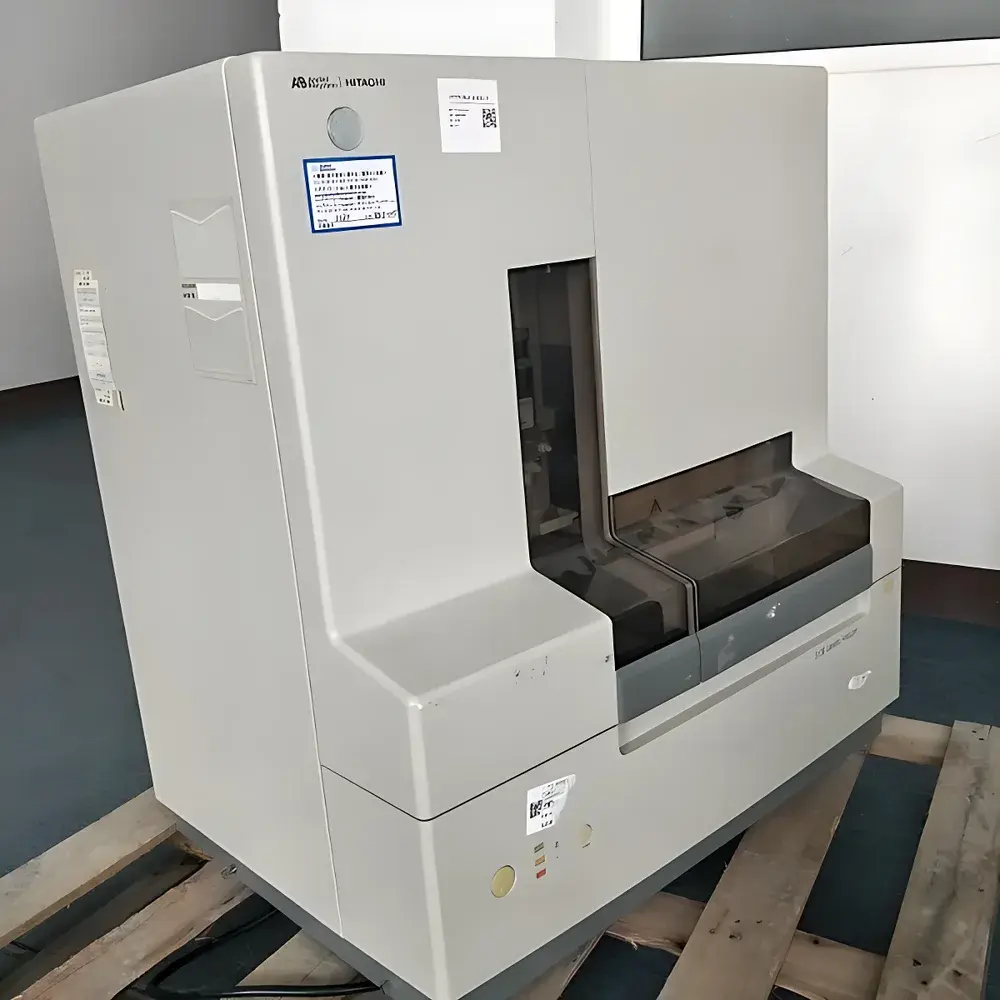
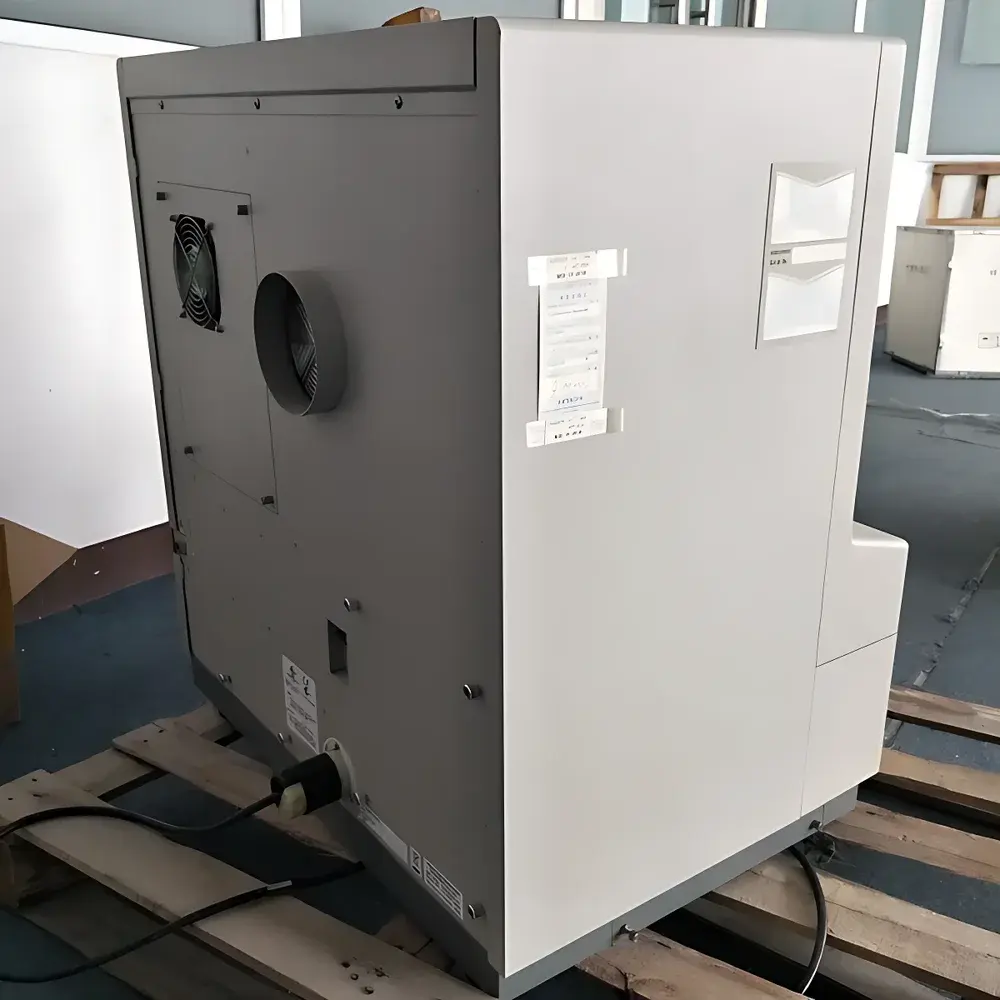
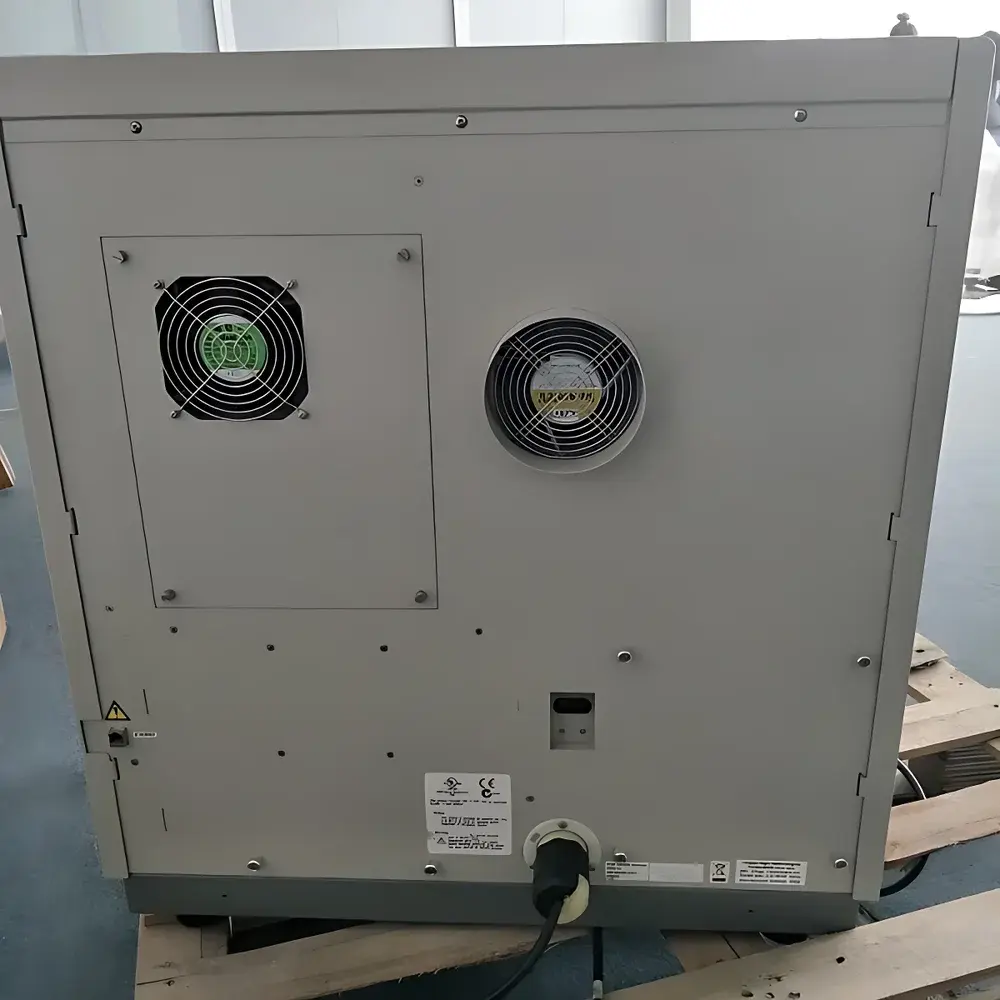
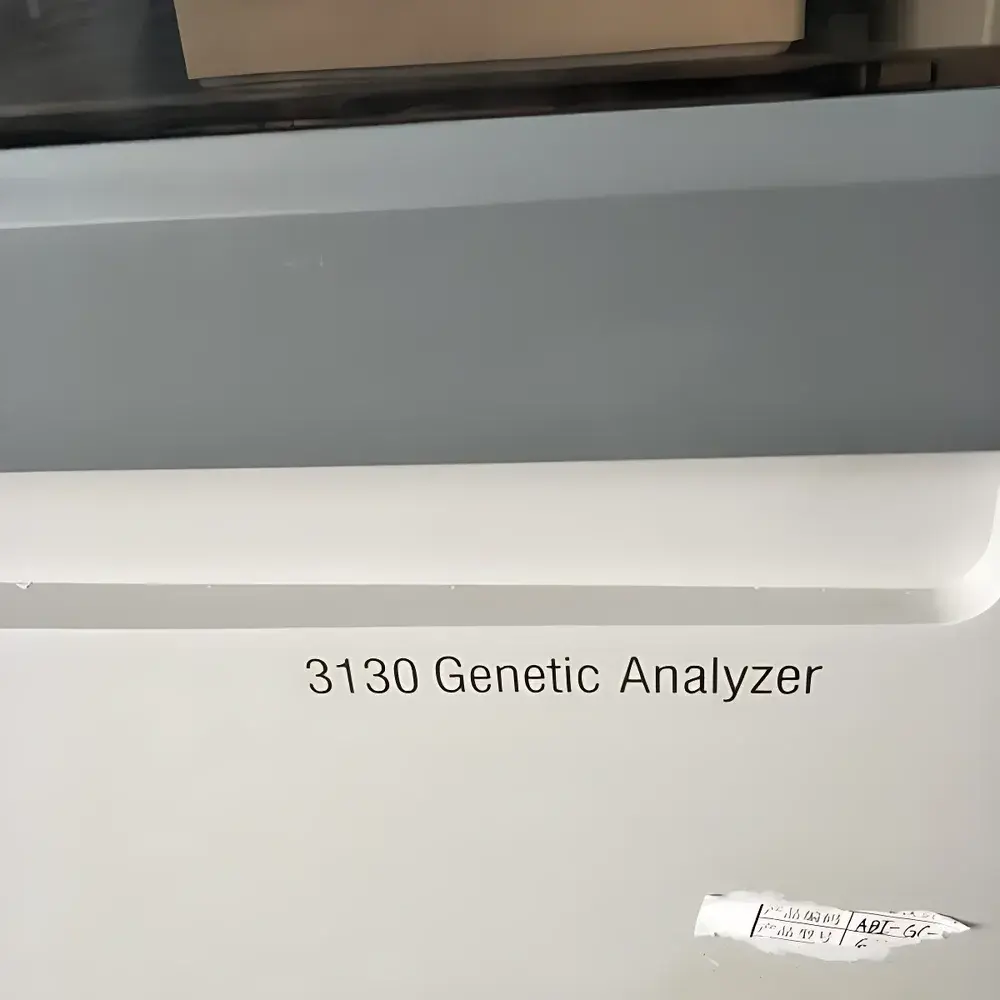
Thermo Fisher ABI 3130 Genetic Analyzer (Refurbished)
| Brand | Thermo Fisher |
|---|---|
| Origin | USA |
| Model | ABI 3130 |
| Instrument Type | Capillary Electrophoresis-Based DNA Sequencer |
| Sample Format | 96-well or 384-well plates |
| Detection Method | Laser-Induced Fluorescence (LIF) with CCD imaging |
| Separation Chemistry | POP-7 polymer |
| Excitation Source | Solid-state 488 nm and 532 nm lasers |
| Data Output | .fsa, .ab1, .txt |
| Software Platform | Data Collection v3.0 / Sequence Analysis v5.4 / GeneMapper v4.1 |
| Regulatory Compliance | Designed to support GLP/GMP workflows |
| Calibration Standard | Internal size standards (e.g., GS500-LIZ, ROX) |
| Run Time | ~45–60 min per 96-capillary run (standard sequencing protocol) |
| Read Length | Up to 800–1000 bases (Sanger sequencing, depending on template quality and chemistry) |
| Throughput | 384 samples per 24-hour period (with automated plate handling and dual-injection capability) |
| Accuracy | ≥99.99% base call accuracy under optimal conditions (per manufacturer specifications for Sanger chemistry) |
| Reproducibility | CV < 2% for fragment sizing across runs (validated with STR and SNP panels) |
| Resolution | ≤1 bp for fragments 50–500 bp (using GS500-LIZ standard) |
Overview
The Thermo Fisher ABI 3130 Genetic Analyzer is a capillary electrophoresis (CE)-based platform engineered for high-fidelity Sanger sequencing, fragment analysis, and microsatellite genotyping. It employs laser-induced fluorescence detection coupled with charge-coupled device (CCD) imaging to resolve DNA fragments labeled with fluorescent dyes. The system utilizes a 16-capillary array filled with POP-7 polymer matrix, enabling simultaneous electrophoretic separation of amplified DNA products under controlled thermal and voltage conditions. As a mature, widely adopted instrument in core genomics facilities and clinical research laboratories, the ABI 3130 delivers robust performance in applications requiring precise fragment sizing and reliable base calling—particularly where long-read accuracy and low error rates are critical. Though superseded by next-generation platforms for large-scale de novo sequencing, its operational stability, well-documented protocols, and extensive user community make it a cost-effective solution for targeted sequencing, validation studies, and routine forensic or diagnostic fragment analysis.
Key Features
- 16-capillary array architecture supporting parallel sample injection and real-time data acquisition
- Dual-laser excitation (488 nm and 532 nm) optimized for FAM, VIC, NED, PET, and ROX dye sets
- Integrated thermal control (45–60 °C) ensuring consistent polymer viscosity and migration reproducibility
- Automated capillary conditioning, sample loading, and polymer replenishment via cartridge-based fluidics
- High-sensitivity CCD detector with dynamic range >4 orders of magnitude and pixel-level resolution
- Pre-configured run modules for common applications: DNA sequencing, STR profiling, SNP scoring, and AFLP
- Modular design facilitating field-serviceable components including laser assemblies, capillary arrays, and buffer reservoirs
Sample Compatibility & Compliance
The ABI 3130 accepts standard 96-well or 384-well plates containing PCR-amplified templates prepared using BigDye Terminator v3.1 or earlier chemistries. Sample volume requirements range from 0.5–2.0 µL per well, depending on concentration and labeling efficiency. The platform complies with analytical method validation principles outlined in ICH Q2(R2) and supports documentation practices aligned with ISO/IEC 17025 for testing laboratories. When operated with validated software versions and electronic signature-enabled configurations, it meets foundational requirements for audit trails and data integrity as referenced in FDA 21 CFR Part 11 Annex A guidance. Routine maintenance logs, calibration records, and run reports can be archived in accordance with GLP and CAP-accredited laboratory policies.
Software & Data Management
Data collection and analysis rely on Thermo Fisher’s legacy suite: Data Collection v3.0 (acquisition), Sequence Analysis v5.4 (base calling and chromatogram review), and GeneMapper v4.1 (fragment binning and allele assignment). All software packages generate standardized output formats (.fsa, .ab1, .txt) compatible with third-party tools such as FinchTV, BioEdit, and custom Python/R pipelines. Raw data files include embedded metadata (instrument ID, run date, polymer lot, voltage profile), enabling traceability across multi-user environments. Exported results integrate seamlessly into LIMS systems via delimited text or XML schemas. While native cloud connectivity is not supported, local network deployment allows centralized storage on NAS or SAN infrastructure with role-based access controls.
Applications
- Confirmatory Sanger sequencing of CRISPR edits, plasmid constructs, and cloned inserts
- Microsatellite instability (MSI) screening in oncology diagnostics using multiplex STR panels
- HLA typing and pharmacogenomic variant verification (e.g., CYP2C19, TPMT)
- Forensic DNA profiling with CODIS-compatible loci (e.g., D3S1358, TH01, vWA)
- Validation of NGS variants identified in clinical exome or panel sequencing workflows
- Quality control of synthetic oligonucleotides and gene synthesis products
- Teaching laboratories conducting hands-on molecular biology and bioinformatics training
FAQ
Is the ABI 3130 compatible with current BigDye chemistry versions?
Yes—it supports BigDye Terminator v1.1 through v3.1. v3.1 offers improved signal-to-noise ratio and extended read lengths; v1.1 remains suitable for short amplicons (<300 bp).
What maintenance is required to sustain optimal performance?
Daily capillary flushes with deionized water and 0.1 N NaOH, weekly polymer replacement, quarterly laser power calibration, and annual alignment verification using GS500-LIZ standard.
Can raw .fsa files be processed without proprietary software?
Yes—open-source libraries such as PySanger and ABIFtools enable parsing of binary .fsa headers and trace data extraction for downstream analysis.
Does refurbished hardware include warranty and service support?
Reconditioned units typically include a 12-month parts-and-labor warranty and optional extended service contracts covering preventive maintenance, remote diagnostics, and on-site engineering support.
How does the ABI 3130 compare to newer CE platforms like the Applied Biosystems 3500 series?
The 3130 offers lower throughput and reduced automation but maintains superior per-base accuracy for long reads (>700 bp) and greater tolerance for suboptimal template quality due to its mature polymer formulation and detection optics.




