
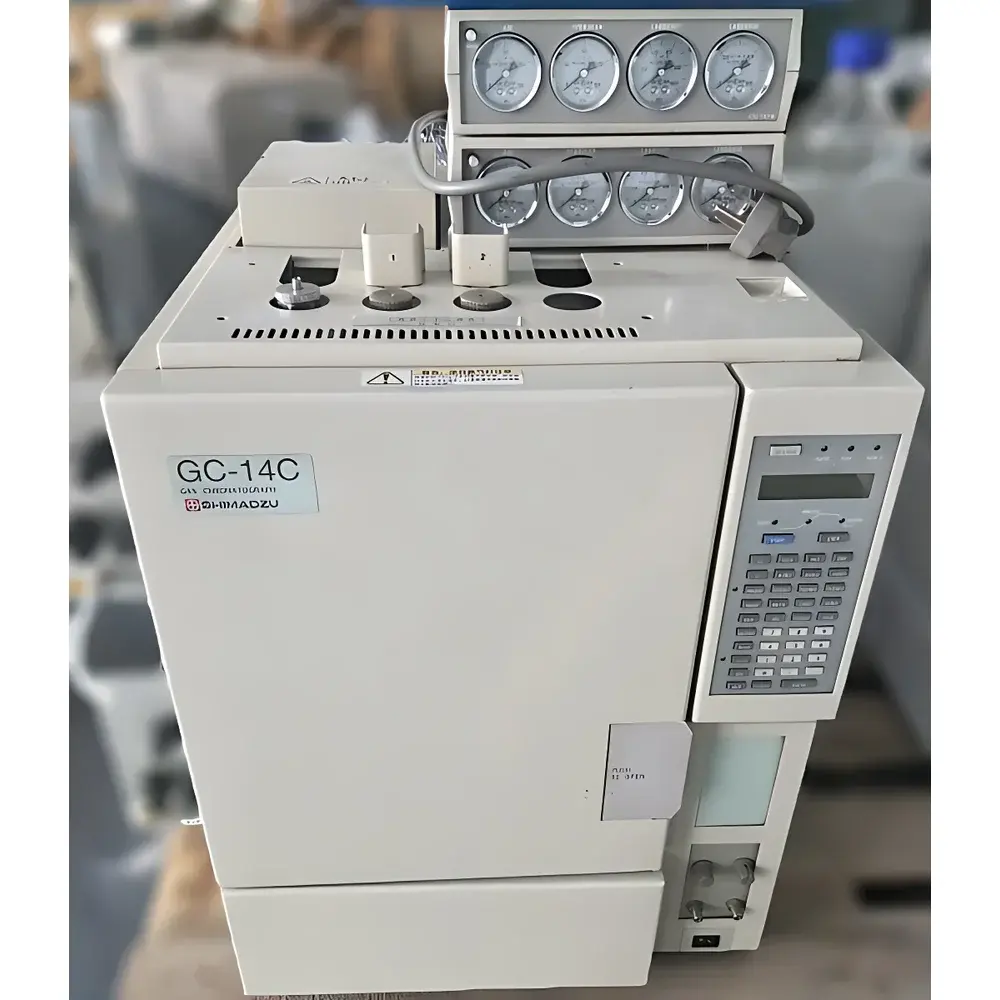
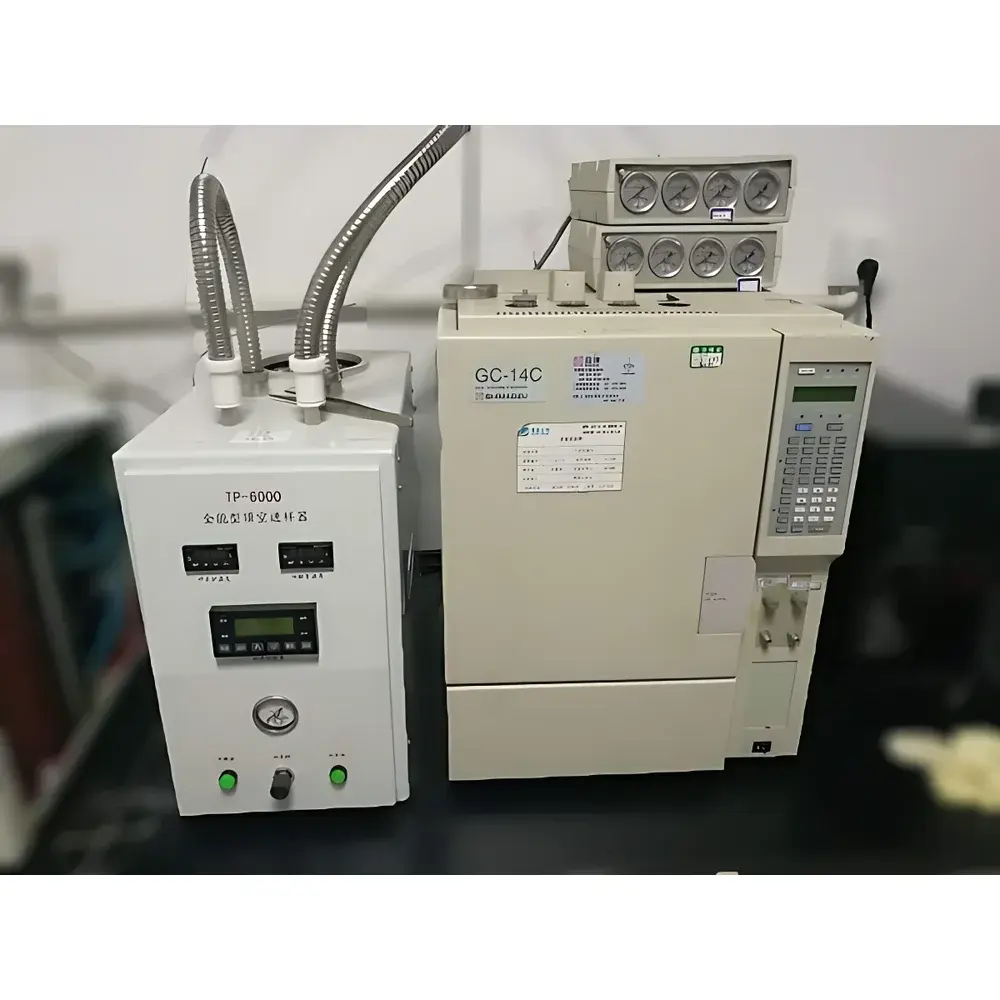
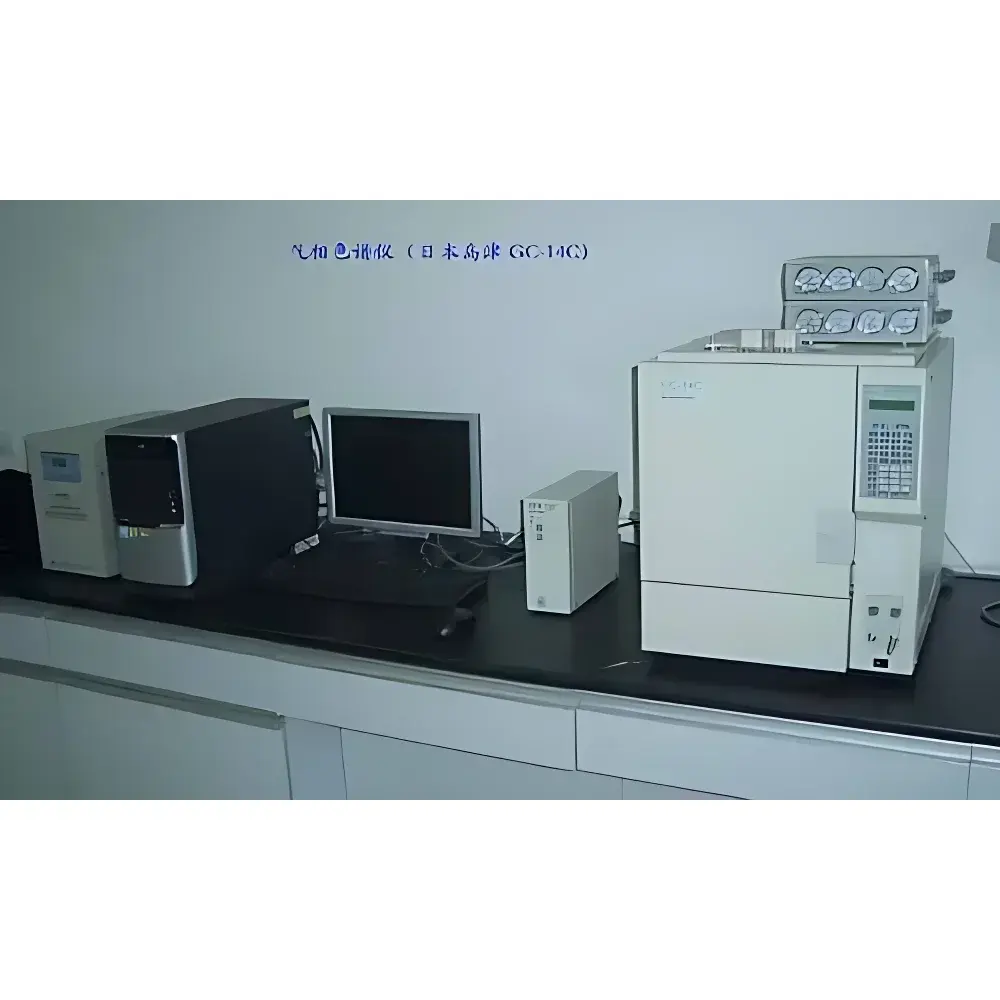
Shimadzu GC-14C Used Gas Chromatograph
| Brand | Shimadzu |
|---|---|
| Origin | Japan |
| Model | GC-14C |
| Instrument Type | Laboratory Gas Chromatograph |
| Import Status | Imported |
| Distributor Type | Authorized Reseller |
Overview
The Shimadzu GC-14C is a robust, benchtop gas chromatograph originally engineered for routine qualitative and quantitative analysis of volatile and semi-volatile organic compounds in research, quality control, and regulatory testing laboratories. Built on Shimadzu’s proven dual-beam thermal conductivity detector (TCD) and flame ionization detector (FID) architecture, the GC-14C operates on the fundamental principle of differential partitioning—separating analytes based on their relative volatility and affinity for the stationary phase within a heated capillary or packed column. Its analog electronics-based control system, mechanical oven design, and manual injection interface reflect the instrument’s era of design (late 1980s–early 1990s), offering exceptional long-term stability, mechanical durability, and operational transparency for method development and training applications. While not equipped with modern digital data systems out-of-the-box, the GC-14C is fully compatible with third-party analog-to-digital conversion interfaces and legacy chromatography data systems (CDS) compliant with IEEE-488 (GPIB) or RS-232 protocols.
Key Features
- Thermally stable column oven with precise ±0.1 °C isothermal control and programmable ramp rates (0.1–40 °C/min)
- Dual-detector configuration supporting simultaneous or sequential operation of FID and TCD
- Manual split/splitless injector with adjustable temperature range up to 350 °C
- Robust stainless-steel pneumatic gas control system with calibrated flow meters for carrier (N₂, He, H₂), fuel (H₂), and makeup gases
- Integrated analog signal outputs (0–1 V or 0–5 V) for direct connection to strip-chart recorders or modern ADC modules
- Modular design facilitating field service, component-level replacement, and extended lifecycle support
Sample Compatibility & Compliance
The GC-14C accommodates a broad range of sample matrices—including solvents, environmental extracts (e.g., EPA Method 8021B hydrocarbons), pharmaceutical intermediates, petrochemical fractions, and food volatiles—when paired with appropriate column chemistries (e.g., SE-30, OV-101, Carbowax 20M). It supports packed columns (2–4 mm ID, up to 3 m) and early-generation fused-silica capillaries (0.25–0.53 mm ID) via standard ferrule-based inlet adapters. Although the original firmware does not support 21 CFR Part 11-compliant audit trails or electronic signatures, validated operation under GLP and ISO/IEC 17025 frameworks is achievable through documented procedural controls, manual logbooks, and integration with compliant CDS platforms. The system meets baseline performance criteria outlined in ASTM D3606 (benzene/toluene in gasoline) and USP (chromatographic separations) when properly calibrated and maintained.
Software & Data Management
The GC-14C operates without embedded software; data acquisition relies on external hardware. Modern laboratory integration is enabled via analog output coupling to commercial ADC devices (e.g., Agilent ChemStation analog input modules, Empower 3 analog interface kits) or open-source solutions such as OpenChrom or Chromeleon Legacy Edition. All acquired chromatograms are stored in vendor-neutral formats (e.g., .cdf, .dx) supporting peak integration, retention time alignment, and calibration curve generation. System suitability testing—including resolution (Rs ≥ 1.5), tailing factor (Tf ≤ 2.0), and %RSD of replicate injections (<5%)—can be performed using standard validation templates aligned with ICH Q2(R2) guidelines. Full traceability is maintained through instrument logbooks, maintenance records, and manually annotated run sequences.
Applications
- Residual solvent analysis in APIs per ICH Q3C guidelines
- VOC profiling in indoor air and soil headspace per EPA TO-17
- Fatty acid methyl ester (FAME) quantification in biodiesel per ASTM D6584
- Hydrocarbon group-type analysis (PIONA) in refinery streams
- Educational chromatography training in university analytical chemistry labs
- Backup or redundancy platform for mission-critical QC labs requiring proven reliability over decades
FAQ
Is the GC-14C compatible with modern data systems?
Yes—via its analog voltage outputs and GPIB/RS-232 ports, it integrates with current CDS platforms when configured with appropriate interface hardware.
Does it support capillary columns?
Yes, with proper inlet adapters and pressure control modifications; typical applications use 0.32 mm ID columns with N₂ carrier gas.
What maintenance is required to ensure long-term performance?
Routine tasks include septum and liner replacement, detector cleaning (FID jet polishing, TCD filament inspection), oven seal integrity checks, and gas line leak verification using helium sniffer tests.
Can it be qualified for GMP environments?
Yes—IQ/OQ/PQ protocols can be executed using standardized test mixtures (e.g., n-alkanes, benzene/toluene/ethylbenzene/xylene), with documentation aligned to Annex 11 and EU GMP Chapter 4 requirements.
Is technical support available for this legacy model?
Yes—Shimadzu maintains archived schematics and parts lists, and certified third-party service providers offer calibration, repair, and preventive maintenance contracts globally.
Related Products






