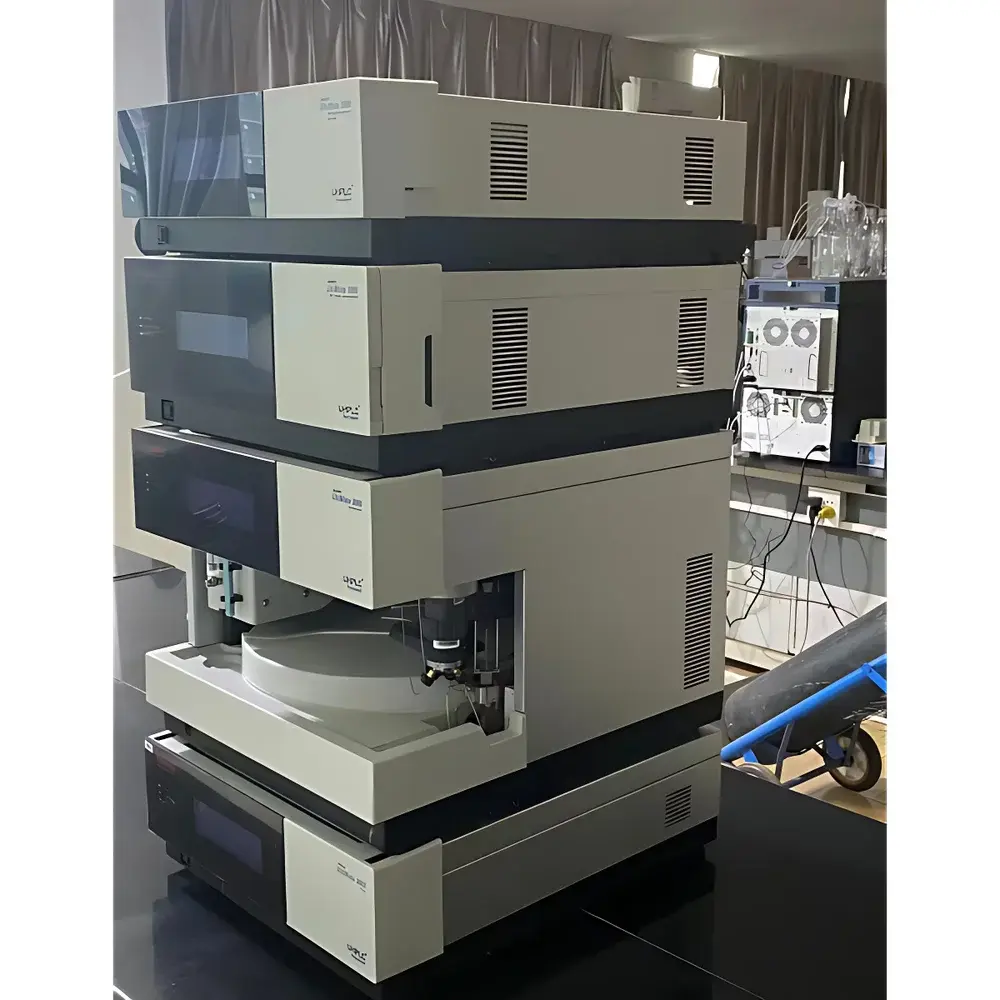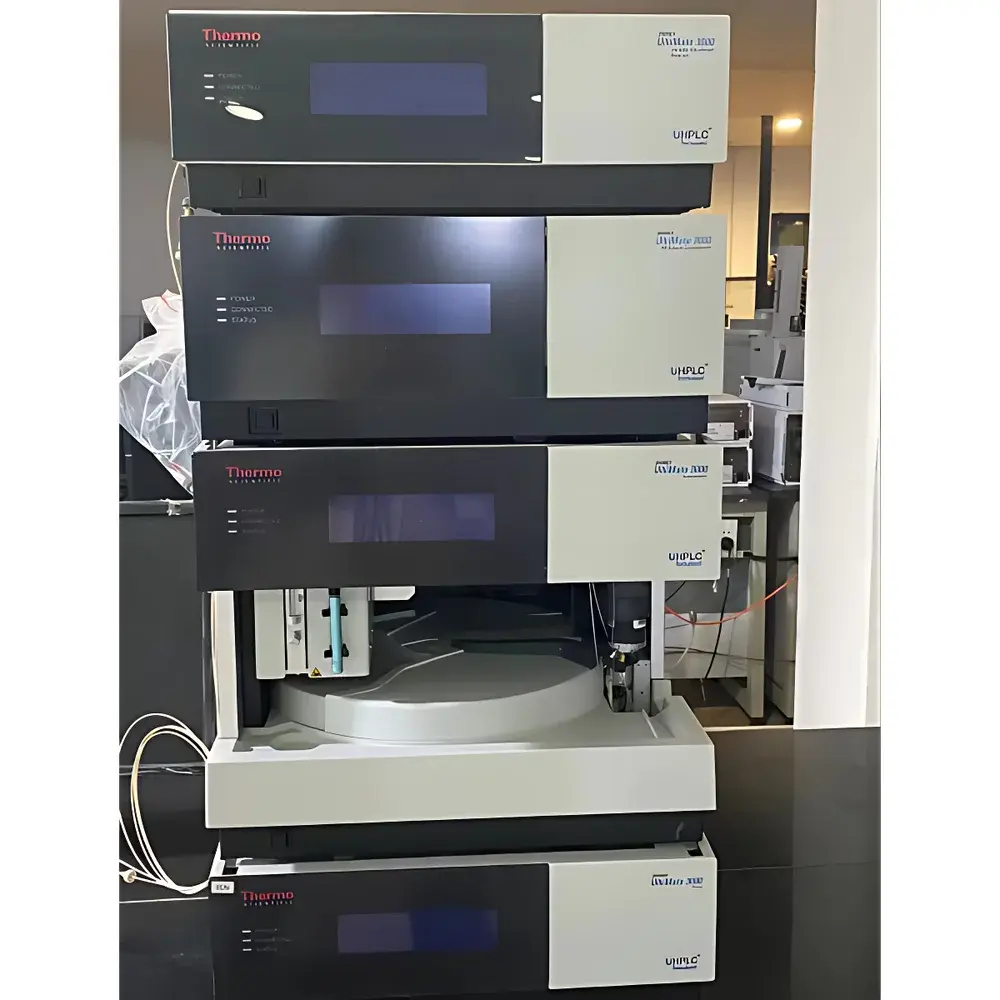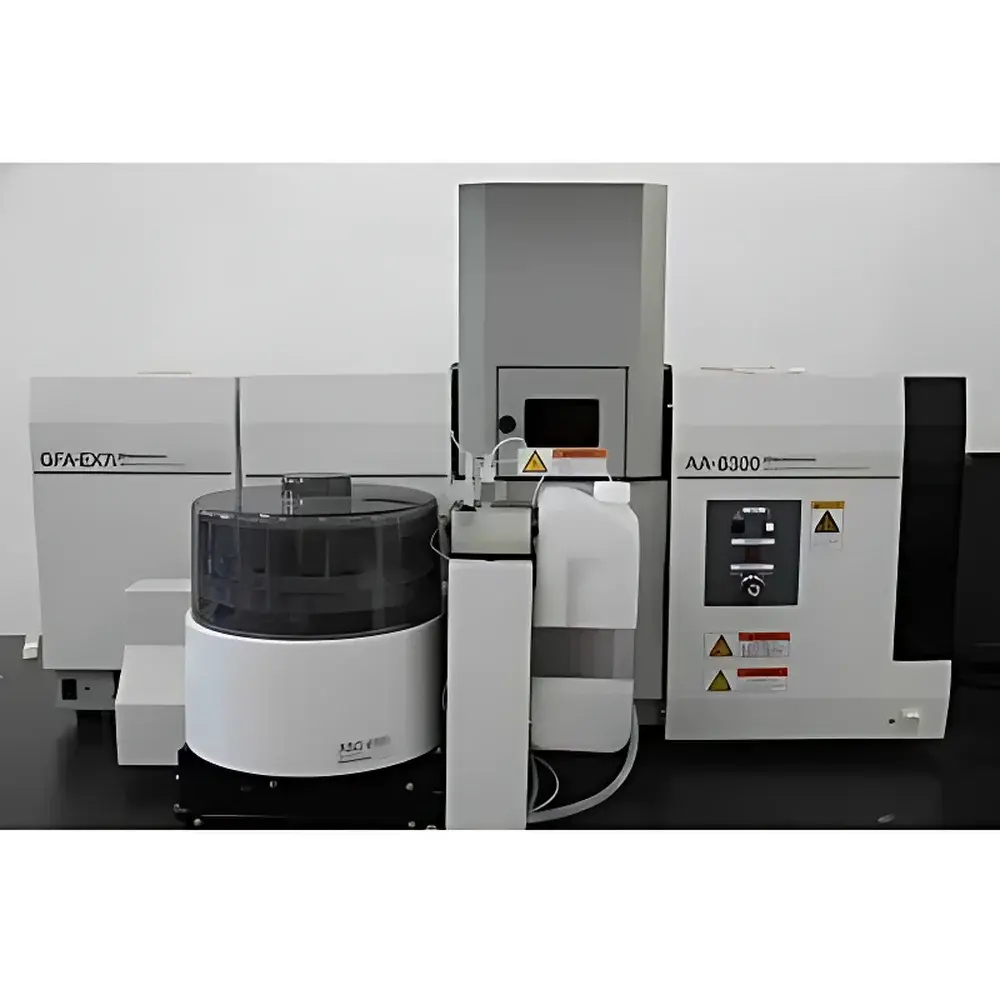
Shimadzu AA-6300 Used Atomic Absorption Spectrophotometer
| Brand | Shimadzu |
|---|---|
| Origin | Japan |
| Model | AA-6300 |
| Wavelength Range | 185–900 nm |
| Monochromator | Aberration-Corrected Czerny-Turner |
| Slit Widths | 0.2, 0.7, 0.7L, 2.0L nm (4-position auto-switching) |
| Detector | Photomultiplier Tube (PMT, short-wavelength optimized) |
| Optical System | Flame mode — dual-beam optics |
| Background Correction | High-speed Self-Reversal (BGC-SR) |
| Lamp Holders | 6-position turret with simultaneous 2-lamp operation (1 preheat) |
| Lamp Modes | Emission, NON-BGC, BGC-SR, BGC-D₂ |
| Software Platform | Microsoft Windows 2000™ compatible acquisition and quantitation software |
| Warranty | 6 months limited parts and labor |
Overview
The Shimadzu AA-6300 is a benchtop atomic absorption spectrophotometer engineered for precise elemental quantification in environmental, clinical, pharmaceutical, and industrial quality control laboratories. Based on the fundamental principle of atomic absorption spectroscopy (AAS), the instrument measures ground-state atom concentration in a gaseous state—generated either by flame atomization or electrothermal (graphite furnace) vaporization—and quantifies analyte-specific absorbance at characteristic wavelengths (185–900 nm). Its optical architecture integrates flame and graphite furnace modules within a single platform, supporting both high-throughput routine analysis and ultra-trace detection down to sub-ppt levels. The AA-6300 employs a high-resolution aberration-corrected Czerny-Turner monochromator and a low-noise photomultiplier tube detector optimized for UV–Vis spectral sensitivity. Dual-beam optical compensation (flame mode) and electronic beam balancing (graphite furnace mode) ensure baseline stability and minimize drift during extended measurement sequences.
Key Features
- Multi-mode atomization: Supports flame AAS (continuous and micro-sampling), graphite furnace AAS (GFAAS), and hydride generation-compatible configurations via optional accessories.
- Precision wavelength selection: 185–900 nm spectral range with four slit width options (0.2, 0.7, 0.7L, 2.0L nm) automatically selected based on analytical requirements and line intensity.
- Advanced background correction: High-speed self-reversal (BGC-SR) technique enables real-time correction of structured molecular absorption and light scattering—critical for complex matrices such as soil digests or biological fluids.
- 6-lamp turret with dual-lamp operation: Allows seamless switching between elements and concurrent preheating of secondary lamps—reducing method changeover time without manual lamp replacement.
- Robust safety architecture: Integrated optical flame monitor with ambient light interference mitigation; operational compliance requires ambient illumination ≤400 lx at the burner head to prevent false flame-out detection.
- Quantitative flexibility: Linear, quadratic, and cubic calibration curves; standard addition and simplified standard addition protocols; up to 20 replicate measurements per sample with automated SD/RSD calculation and outlier rejection based on statistical deviation thresholds.
Sample Compatibility & Compliance
The AA-6300 accommodates aqueous solutions, acid-digested environmental samples (e.g., EPA Method 200.7/200.9), biological tissues, and metallurgical extracts. Flame mode supports concentrations from ppm to low-ppb; graphite furnace extends detection limits to sub-ppt (fg absolute mass) for elements including Cd, Pb, As, and Se. While the instrument predates current FDA 21 CFR Part 11 enforcement timelines, its data acquisition software supports audit-trail-capable operation when deployed with compliant IT infrastructure and procedural controls. Routine use aligns with ISO/IEC 17025 method validation principles, ASTM D1688 (copper in water), and USP for elemental impurity testing—subject to laboratory-specific qualification and documentation.
Software & Data Management
Controlled via Shimadzu’s native Windows 2000™-compatible software, the system provides full instrument parameter configuration, sequence programming, real-time spectral display, and quantitative report generation. Data files are stored in proprietary binary format with embedded metadata (lamp ID, slit width, integration time, background correction mode). Export to CSV or ASCII enables downstream processing in LIMS or statistical packages. Though not natively 21 CFR Part 11-compliant, the platform supports electronic signature implementation through third-party validated middleware when integrated into GxP-aligned workflows.
Applications
- Environmental monitoring: Quantification of heavy metals (Pb, Cr, Ni, Zn) in wastewater, drinking water, and leachates per ISO 11885 and EPA 7000 series methods.
- Clinical toxicology: Blood lead (Pb-B) and urinary cadmium (Cd-U) analysis using graphite furnace methodology.
- Pharmaceutical quality control: Elemental impurity screening in active pharmaceutical ingredients (APIs) per ICH Q3D guidelines.
- Food safety: Determination of arsenic in rice, mercury in fish tissue, and copper in fortified beverages.
- Geochemical analysis: Multi-element profiling of rock and sediment digestions following ASTM D5686 protocols.
FAQ
Is the AA-6300 compatible with modern Windows operating systems?
The original software was developed for Windows 2000; compatibility with Windows 10/11 requires virtualization (e.g., Windows XP Mode or VMware) or hardware abstraction layer (HAL) emulation—verified configurations available upon request.
What maintenance is included in the 6-month warranty?
Warranty covers functional defects in core optical, electronic, and mechanical subsystems—including monochromator drive, lamp power supply, and flame/gas control valves—but excludes consumables (graphite tubes, nebulizers, lamps) and user-induced damage.
Can this unit be upgraded to support deuterium background correction (BGC-D₂)?
Yes—the AA-6300’s optical path and lamp turret support retrofit installation of a deuterium arc lamp and associated electronics, provided firmware version 2.3 or higher is installed.
Does the system meet current GLP or GMP documentation requirements?
As supplied, it lacks built-in electronic audit trails; however, full GLP/GMP compliance is achievable through documented procedural controls, external data logging, and validated third-party software extensions.
Are original service manuals and spare parts still available?
Shimadzu maintains archival technical documentation for the AA-6300 series; critical spares—including burner heads, graphite furnace autosampler components, and PMT housings—are available through authorized legacy instrument distributors.