
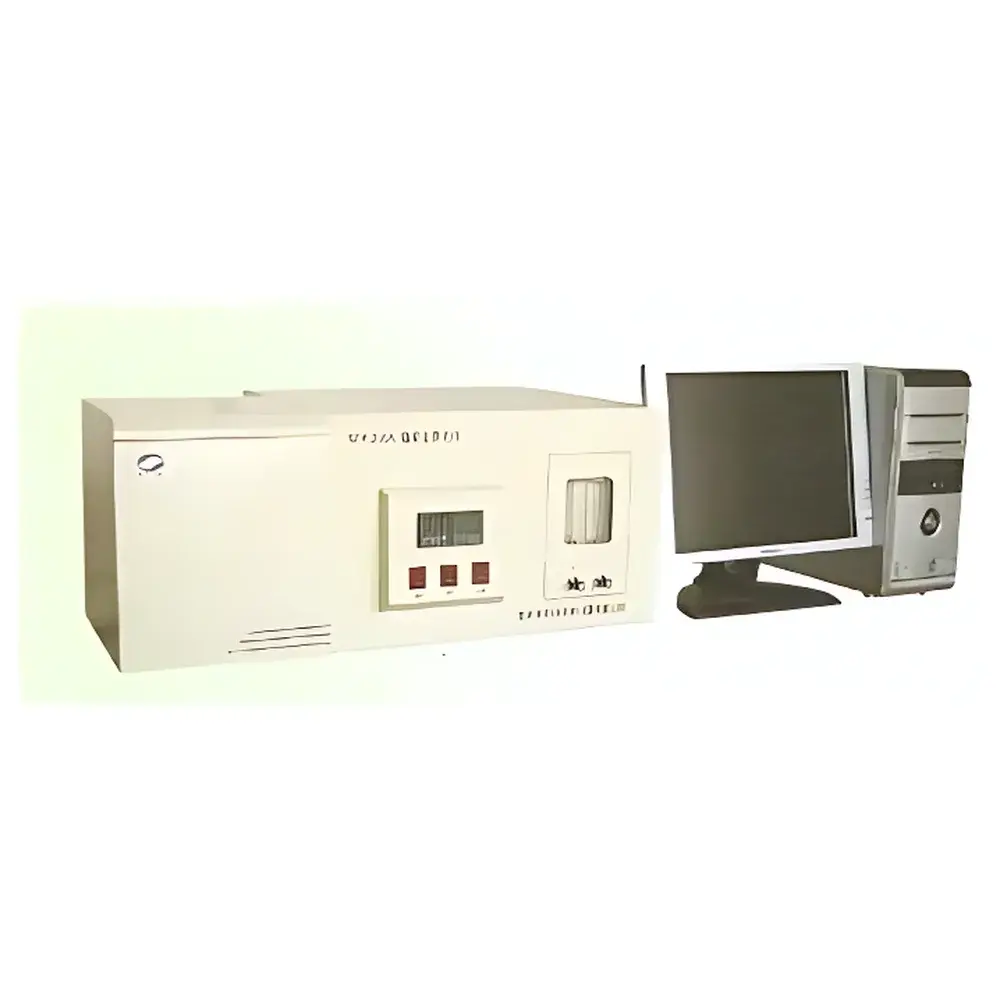
Jianghuan RPP-200A Microcoulometric Total Sulfur and Chlorine Analyzer
| Brand | Jianghuan |
|---|---|
| Origin | Beijing, China |
| Model | RPP-200A |
| Measurement Principle | Microcoulometric Titration (ASTM D3227, D5808, D7042 |
| Analyte Range | S: 0.02–10,000 mg/L (up to wt%) / Cl: 0.1–10,000 mg/L (up to wt%) |
| Sample Forms | Liquid, Solid, Gas (with optional injectors) |
| Combustion Temp | Ambient to 1000 °C ±3 °C |
| Repeatability | CV ≤ ±0.1 mg/L (X < 1.0 mg/L) |
| Compliance | ASTM, ISO, IP, GB/T 11141, GB/T 17040, SH/T 0253, SH/T 0254 |
Overview
The Jianghuan RPP-200A Microcoulometric Total Sulfur and Chlorine Analyzer is a dual-mode benchtop instrument engineered for precise quantification of total sulfur and total chlorine in petroleum products, lubricants, feedstocks, and refinery intermediates. It operates on the fundamental principle of microcoulometric titration—where analytes are thermally oxidized in a high-temperature quartz combustion furnace (up to 1000 °C), converted into SO2 or HCl, carried by ultrapure carrier gas into an electrolytic titration cell, and quantitatively determined via real-time measurement of the charge consumed during electrochemical regeneration of the titrant (I3− for sulfur; Ag+ for chlorine). This method delivers trace-level sensitivity, inherent linearity across five orders of magnitude, and direct compliance with globally recognized test methods including ASTM D3227 (chlorine in gasoline), ASTM D5808 (sulfur in aromatic hydrocarbons), ASTM D7042 (sulfur in middle distillates), ISO 14596 (petroleum products), and Chinese national standards GB/T 11141, GB/T 17040, SH/T 0253, and SH/T 0254.
Key Features
- High-sensitivity dual-channel detection architecture optimized for sub-ppm sulfur (0.02 mg/L LOD) and low-ppm chlorine (0.1 mg/L LOD), enabling accurate analysis of ultra-low-sulfur diesel (ULSD), jet fuels, and catalyst poisons.
- Programmable temperature-controlled combustion system (ambient to 1000 °C ±3 °C) with integrated oxygen flow regulation and quartz pyrolysis tube—ensuring complete sample conversion and minimal memory effect.
- Self-calibrating microcoulometric titration cell with Pt indicator electrodes and Ag/Ag2S or I3−/I− redox couple chemistry, delivering high reproducibility and long-term stability without daily standardization.
- Modular sample introduction system supporting liquid autosampler (standard), solid sample boat (optional), and gas loop injector (optional)—enabling seamless transition between gasoline, crude oil, polymer pellets, and natural gas condensates.
- Rugged industrial-grade electronics with embedded PID temperature control, real-time current integration, and Faraday’s law-based calculation engine—minimizing drift and ensuring traceable mass balance.
Sample Compatibility & Compliance
The RPP-200A accommodates heterogeneous sample matrices without derivatization: volatile liquids (e.g., naphtha, LPG), viscous oils (e.g., bunker fuel, base stocks), solids (e.g., catalysts, additives), and compressed gases (via heated sampling loop). All operational parameters—including combustion temperature ramp profiles, oxygen partial pressure, and titration gain—are configurable to meet matrix-specific requirements defined in ASTM D3120 (sulfur in light distillates), ASTM D4294 (XRF reference correlation), and ISO 8754 (crude oil sulfur). The system supports full audit trail generation and electronic signature capability, aligning with GLP and GMP documentation expectations per FDA 21 CFR Part 11 when deployed in regulated QC laboratories.
Software & Data Management
Controlled via Windows-based Jianghuan Analytical Workstation (v4.2+), the instrument provides intuitive method setup, real-time amperometric signal visualization, automatic peak integration, and batch report generation compliant with ISO/IEC 17025 data integrity requirements. Raw current-time curves, calibration curves (linear/ratio), and QC check logs are stored in encrypted .jhw binary format with timestamped metadata. Export options include CSV, PDF, and XML for LIMS integration. Software validation packages—including IQ/OQ documentation templates and electronic record retention protocols—are available upon request for pharmaceutical or refinery QA departments.
Applications
- Refinery process monitoring: sulfur removal efficiency in hydrotreaters, FCC feedstock screening, and sour water analysis.
- Fuel certification: ULSD (≤15 ppm S), marine gas oil (IMO 2020), aviation turbine fuel (ASTM D1655 Annex A1), and ethanol-blended gasoline (E10/E85).
- Lubricant formulation: additive sulfur contribution (ZDDP, detergents), chlorine contamination from cleaning agents or packaging.
- Environmental compliance: sulfur content in heating oils (EN 590), coal-derived liquids, and waste-derived fuels (RDF/SRF).
- Research & development: catalyst deactivation studies, reaction pathway analysis in oxidative desulfurization, and speciation correlation via coupling with GC-SCD (sulfur chemiluminescence detection).
FAQ
What sample preparation is required prior to analysis?
Minimal preparation: liquids require homogenization and filtration (0.45 µm); solids are weighed directly into quartz boats; gases require pressure regulation and moisture removal. No chemical derivatization or extraction is needed.
How often must the titration cell be maintained?
Electrolyte replenishment is recommended every 200–300 injections; electrode polishing and cell cleaning are performed quarterly or after high-salt/high-metal samples. Full maintenance kits and OEM-certified consumables are supplied.
Can the RPP-200A quantify both sulfur and chlorine in a single run?
No—sulfur and chlorine analyses require separate runs using dedicated electrolyte systems (I−/I3− vs. Ag+) and optimized combustion conditions. However, method switching is software-controlled and completed within 5 minutes.
Is third-party certification available for regulatory submissions?
Yes—Jianghuan provides factory-issued calibration certificates traceable to NIST SRMs (e.g., NIST 2723c for sulfur), along with installation qualification (IQ) and operational qualification (OQ) reports meeting ISO/IEC 17025 and ASTM E2655 guidelines.
Related Products





