
Shimadzu LC-20A Used High-Performance Liquid Chromatograph for Aflatoxin Analysis in Edible Oils
| Brand | Shimadzu |
|---|---|
| Origin | Japan |
| Model | LC-20A |
| Instrument Type | Conventional HPLC System |
| Flow Rate Range | 0.001–10.000 mL/min |
| Maximum Pressure | 40 MPa |
| Sample Injection Volume | 1–50 µL |
| Injection Vial Capacity | 1.5 mL |
| Column Oven Temperature Range | Ambient +10°C to 60°C |
| UV-Vis Wavelength Range | 190–700 nm |
| Data Acquisition Rate | 100 Hz |
Overview
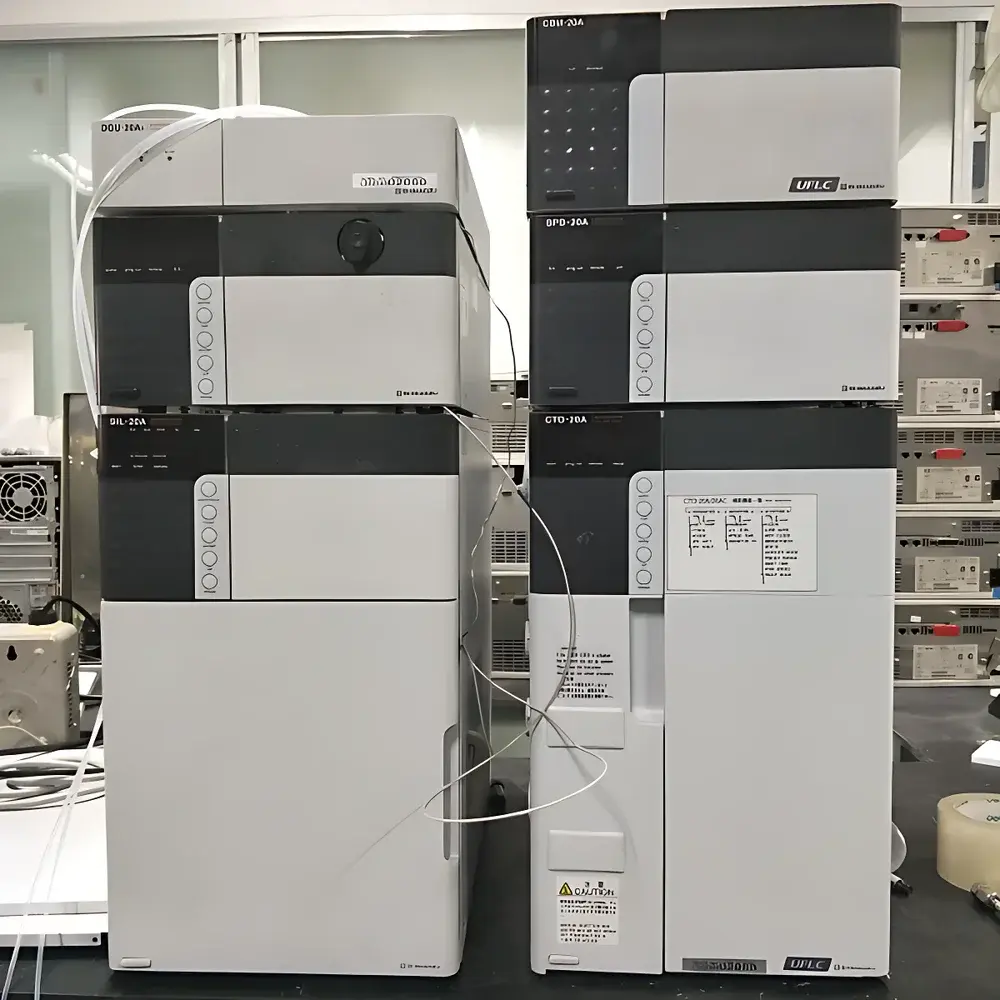
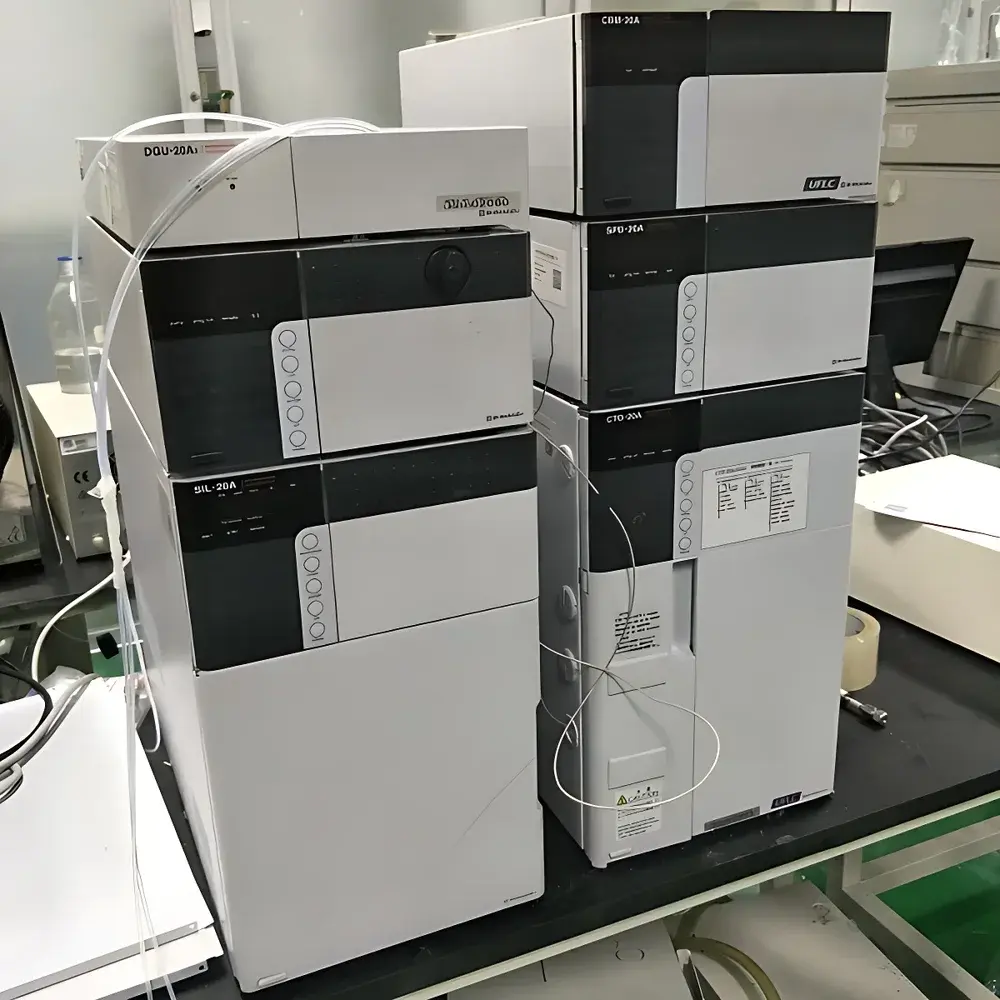
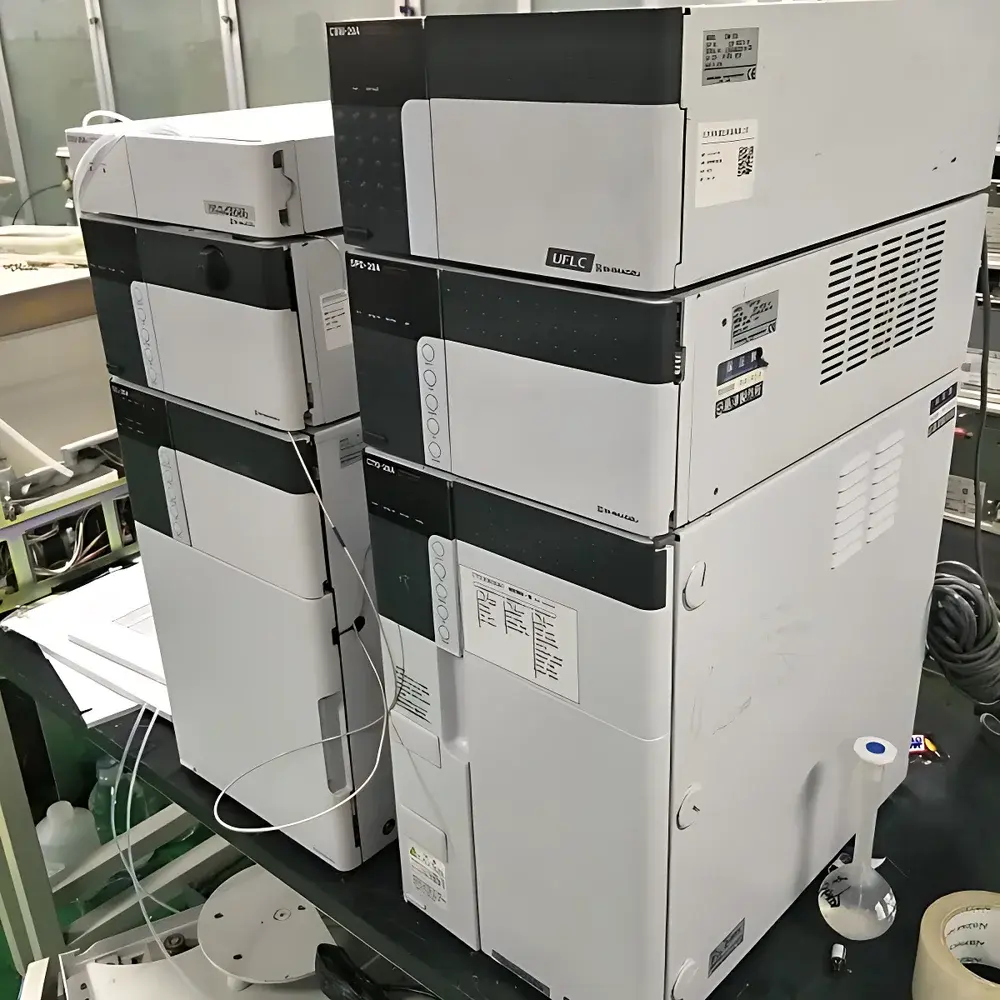
The Shimadzu LC-20A is a robust, network-ready high-performance liquid chromatography (HPLC) system engineered for precision quantification of mycotoxins—including aflatoxin B₁, B₂, G₁, and G₂—in complex lipid matrices such as edible oils and refined fats. Designed around classical reversed-phase HPLC separation coupled with post-column derivatization or direct UV/fluorescence detection (with optional fluorescence detector upgrade), the LC-20A delivers reproducible retention time stability and peak resolution critical for regulatory compliance testing. Its modular architecture integrates a quaternary solvent delivery unit (LC-20AD), autosampler (SIL-20A), column oven (CTO-20A), and UV-Vis photodiode array detector (SPD-20A), all synchronized via Shimadzu’s LabSolutions software platform. The system operates within ISO/IEC 17025-aligned workflows and supports method validation per GB 5009.22–2016, AOAC Official Method 2005.08, and EU Commission Regulation (EC) No. 401/2006.
Key Features
- Quaternary gradient pump with pulse-free flow delivery across 0.001–10.000 mL/min, enabling precise elution profile control for polar-to-nonpolar toxin separation
- High-pressure tolerance up to 40 MPa (5800 psi), compatible with sub-2 µm particle columns for enhanced resolution and throughput
- Autosampler with 1.5 mL vial capacity and 1–50 µL programmable injection volume, supporting unattended batch analysis of fortified and native oil extracts
- Column oven with temperature stabilization from ambient +10°C to 60°C (±0.1°C), minimizing retention time drift during extended runs
- UV-Vis detector covering 190–700 nm spectral range at 100 Hz data acquisition rate, sufficient for multi-wavelength quantitation of aflatoxins (e.g., B₁ at 360 nm, G₁ at 365 nm)
- Integrated Ethernet interface and LabSolutions CS software for centralized instrument control, audit-trail-enabled data handling, and 21 CFR Part 11-compliant user authentication
Sample Compatibility & Compliance
The LC-20A is routinely deployed in food safety laboratories for the analysis of aflatoxins in vegetable oils (soybean, peanut, corn, sunflower), crude and refined fats, and oilseed meals. Sample preparation typically involves liquid–liquid extraction (e.g., chloroform/methanol), followed by cleanup using immunoaffinity columns (IACs) specific to aflatoxins—ensuring >85% recovery and removal of triglyceride interference. The system meets performance criteria defined in GB 5009.22–2016, including linearity (r² ≥ 0.999 over 0.05–40 ng/mL), limit of detection (LOD ≤ 0.1 ng/g in oil matrix, S/N = 3), and limit of quantification (LOQ ≤ 0.3 ng/g, S/N = 10). All calibration curves are traceable to NIST SRM 2370a (Aflatoxin Standard Solution), and system suitability tests verify resolution (Rs ≥ 2.0 between B₁/G₁), tailing factor (Tf ≤ 2.0), and %RSD of replicate injections (<2.0%).
Software & Data Management
LabSolutions CS provides full lifecycle data governance—from method development and sequence definition to raw data archiving and report generation. It supports electronic signatures, role-based access control, and immutable audit trails compliant with GLP and GMP requirements. Chromatograms are stored in vendor-neutral .cdf format; integration with LIMS platforms (e.g., Thermo Fisher SampleManager, LabWare) is achieved via ASTM E1384-compliant interfaces. All analytical records—including instrument parameters, calibration logs, and QC results—are retained for minimum 7 years per ISO/IEC 17025:2017 Clause 7.5.3.
Applications
- Quantitative determination of aflatoxin B₁, B₂, G₁, G₂ in edible oils per GB 5009.22–2016 and EU Regulation (EC) No. 1881/2006
- Method validation studies including specificity, accuracy (spike recovery), precision (intra-day/inter-day RSD), and ruggedness assessment
- Stability-indicating analysis of aflatoxins under thermal and oxidative stress conditions
- Support for ISO/IEC 17025 accreditation audits in third-party food testing laboratories
- Multi-residue screening when coupled with tandem mass spectrometry (requires LC-MS/MS interface upgrade)
FAQ
Is this LC-20A unit refurbished and certified to original Shimadzu specifications?
Yes. Each unit undergoes comprehensive functional verification—including pressure leak testing, gradient accuracy validation, detector linearity assessment, and autosampler precision evaluation—per Shimadzu Service Manual Rev. 4.2. A full calibration certificate traceable to JCSS standards is provided.
Can the system be configured for fluorescence detection required for low-level aflatoxin quantitation?
The base configuration includes the SPD-20A UV-Vis detector. For enhanced sensitivity (sub-0.05 ng/g LOD), an RF-20Axs fluorescence detector can be integrated with excitation/emission filters optimized for aflatoxin derivatives (e.g., 365/425 nm).
Does the system support 21 CFR Part 11 compliance out-of-the-box?
LabSolutions CS v5.95 or later supports electronic signatures, audit trail review, and user permission management—meeting core technical requirements. Full implementation requires site-specific SOPs and administrator training.
What maintenance documentation accompanies the instrument?
Included are original Shimadzu operation manuals (English), preventive maintenance logs for the past 24 months, and service history reports detailing pump seal replacements, lamp usage hours, and detector cell cleaning cycles.




