
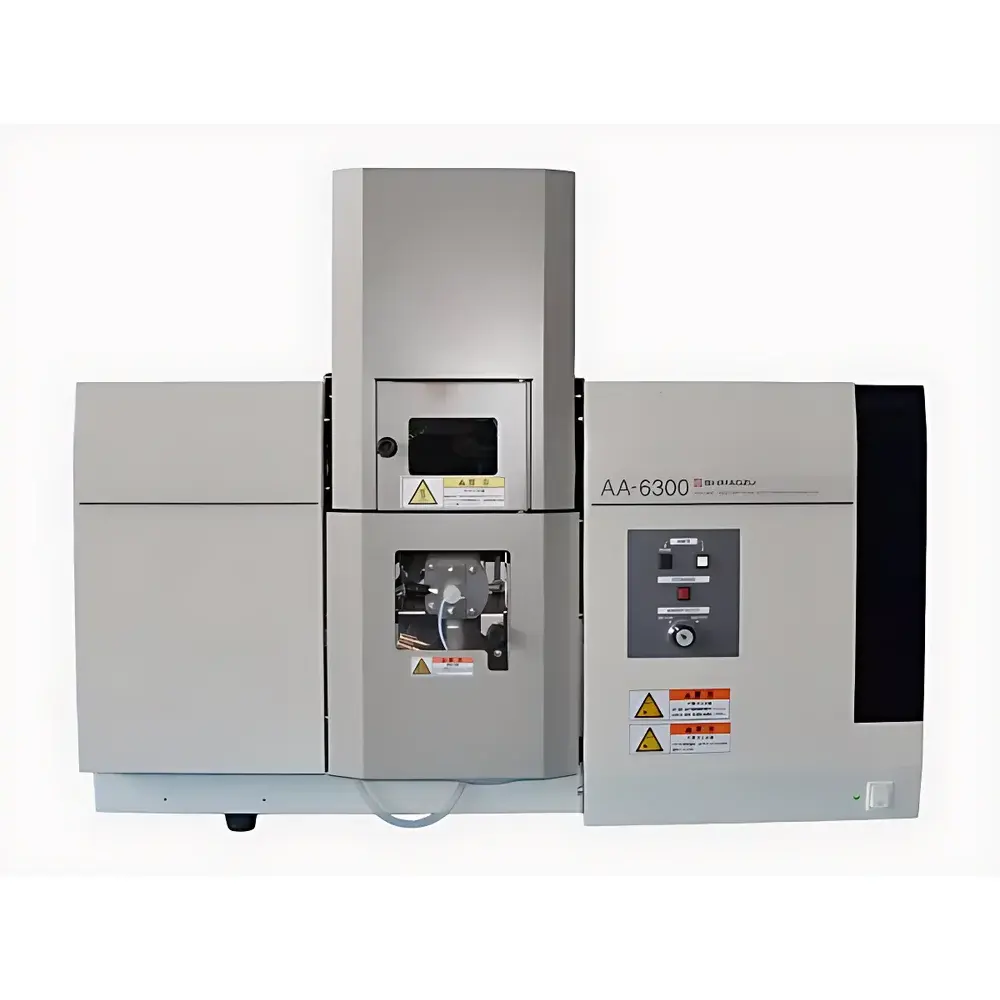
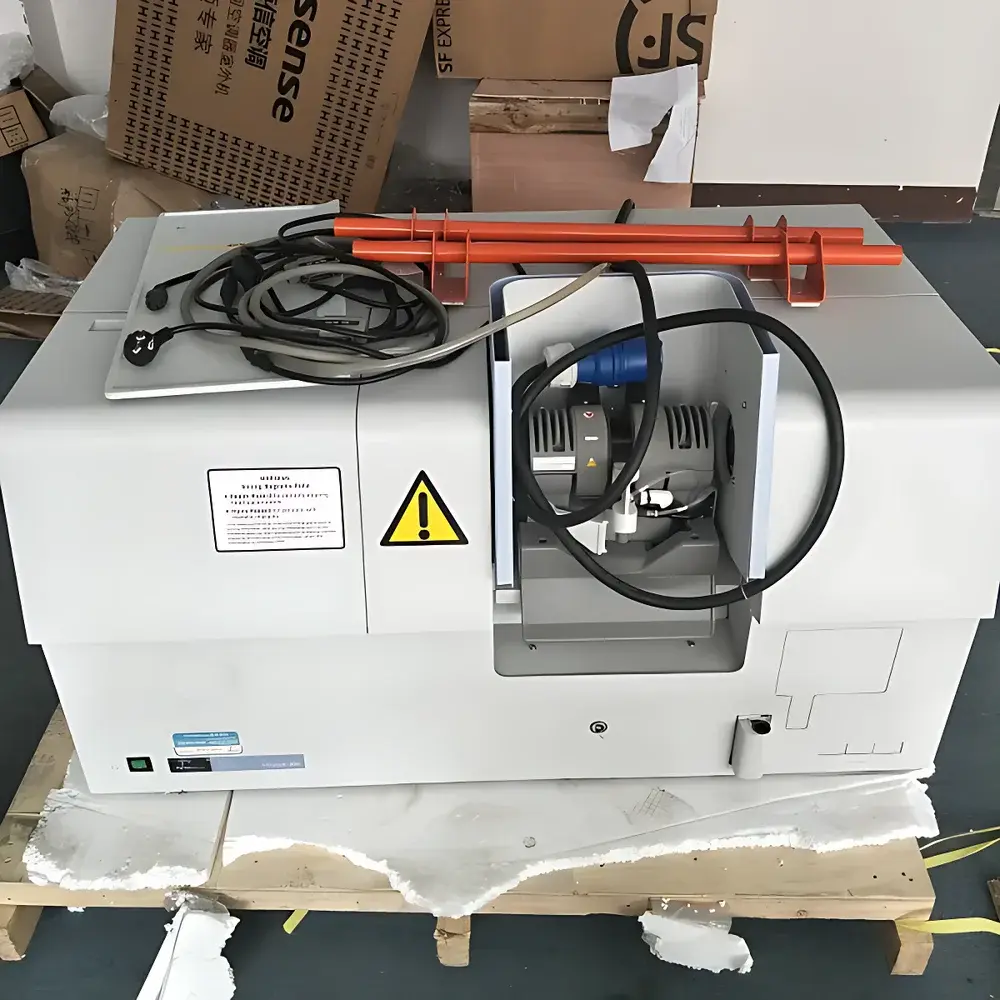
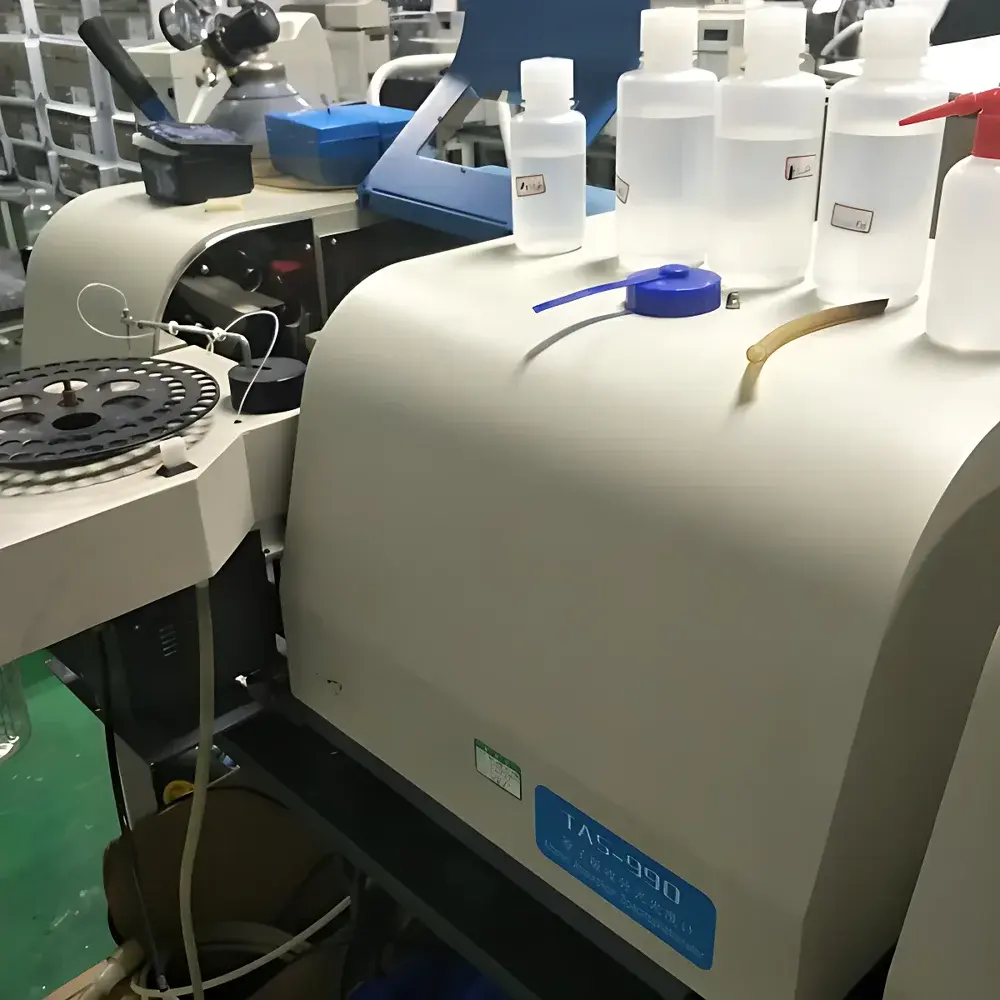
Shimadzu AA-6300 Flame and Graphite Furnace Atomic Absorption Spectrometer
| Brand | Shimadzu |
|---|---|
| Origin | Japan |
| Instrument Type | Flame/Graphite Furnace AAS |
| Monochromator | Not Specified (Grating-based) |
| Optical System | Double-beam |
| Detector | Photomultiplier Tube (PMT) |
| Background Correction | Deuterium Lamp |
| Resolution | 0.3 nm |
| Sensitivity | 5 µg/mL Cu |
| Repeatability (RSD) | ≤0.3% |
| Detection Limit (Cu) | 0.006 mg/L |
| Compliance | ASTM D4294, ISO 11885, USP <231>, FDA Guidance for Elemental Impurities in Food |
Overview
The Shimadzu AA-6300 is a dual-mode atomic absorption spectrometer engineered for precise quantification of trace metal elements—including cadmium (Cd)—in complex organic matrices such as edible oils and fats. Operating on the principle of atomic absorption spectroscopy (AAS), the instrument measures ground-state atom absorption at element-specific wavelengths following thermal atomization in either an air-acetylene flame or a graphite furnace. For Cd analysis in oils—where concentrations typically range from sub-ppb to low-ppb levels—the graphite furnace mode (GF-AAS) is essential due to its superior sensitivity and minimal sample consumption. The AA-6300 integrates a double-beam optical path to compensate for lamp drift and source fluctuations, ensuring high photometric stability during extended analyses. Its deuterium-lamp background correction system effectively compensates for non-specific absorption arising from molecular species and smoke particulates generated during oil pyrolysis—critical for maintaining accuracy in high-carbon-content samples.
Key Features
- Flexible dual-atomization platform: seamless switching between flame and graphite furnace modes without hardware reconfiguration
- Automated burner height adjustment for optimal flame alignment and signal-to-noise ratio
- High-throughput graphite furnace with programmable temperature ramping (drying, ashing, atomization, cleaning) to accommodate thermally labile Cd compounds in lipid matrices
- Photomultiplier tube detector with low dark current and wide dynamic range for linear calibration across 3–4 orders of magnitude
- Integrated autosampler compatibility (e.g., ASC-6100) enabling unattended analysis of up to 60 samples per run with precise micro-volume delivery (1–50 µL)
- Robust mechanical design compliant with IEC 61000-4 electromagnetic immunity standards for laboratory environments
Sample Compatibility & Compliance
The AA-6300 supports direct analysis of edible oils—including soybean, palm, sunflower, and olive oils—without mandatory acid digestion, provided appropriate matrix modifiers (e.g., Pd-Mg nitrate) and optimized pyrolysis protocols are applied. This minimizes contamination risk and improves recovery of volatile Cd species. Method validation adheres to internationally recognized frameworks: detection limit verification follows ISO 11885 Annex B; precision assessment aligns with AOAC Official Method 2017.03 for Cd in fats; and regulatory reporting satisfies FDA’s Elemental Impurities Guidance (ICH Q3D) and EU Commission Regulation (EC) No 1881/2006 for Cd in foodstuffs. Instrument software supports audit trails, electronic signatures, and 21 CFR Part 11–compliant data integrity controls when configured with LabSolutions Gx software.
Software & Data Management
Controlled via Shimadzu’s LabSolutions AAS software, the AA-6300 provides method development wizards for GF-AAS temperature programming, automatic wavelength selection, and multi-point calibration with forced zero and outlier rejection. All raw absorbance signals, peak area/height integrations, and background-corrected results are stored in secure, timestamped .csv and .xml formats. Built-in QC tools include bracketing standard checks, continuing calibration verification (CCV), and spike recovery calculations—automatically flagged if exceeding ±10% deviation. Data export modules support LIMS integration through ASTM E1384-compliant interfaces, and raw spectral files retain full metadata (lamp current, slit width, integration time) for retrospective reprocessing.
Applications
Primary application focus includes routine monitoring of Cd in refined and crude edible oils per national surveillance programs (e.g., China’s GB 2762-2022, U.S. FDA Total Diet Study). The system is equally applicable to quality control in oilseed processing facilities, regulatory testing laboratories accredited to ISO/IEC 17025, and research into Cd migration from packaging materials or refining catalysts. Additional validated use cases encompass Pb and As determination in the same sample batch using sequential wavelength scanning, and method transfer to high-throughput screening workflows where cost-per-analysis and operator training time are critical constraints compared to ICP-MS platforms.
FAQ
Can the AA-6300 analyze undiluted edible oil directly in graphite furnace mode?
Yes—when combined with palladium-matrix modifiers and optimized pyrolysis at 1200°C, direct injection of 10–20 µL oil is feasible. However, rigorous procedural blanks and certified reference materials (e.g., NIST SRM 1577c) must be included to confirm absence of memory effects.
What is the typical detection limit for Cd in oil using this configuration?
Under optimized conditions, the characteristic mass (m₀) for Cd is approximately 0.8 pg, translating to a practical method detection limit of 0.012 µg/kg in oil (based on 10 µL injection and 1 g equivalent sample weight).
Is the deuterium background correction sufficient for high-fat matrices?
For most refined oils, yes—but for crude or oxidized oils exhibiting strong broadband absorption, Zeeman correction (available on higher-tier AA models) is recommended for improved specificity.
Does the AA-6300 meet GLP/GMP documentation requirements?
When deployed with LabSolutions Gx and configured with user access levels, electronic signatures, and automated audit logs, it fulfills core ALCOA+ principles for regulated environments.
What maintenance intervals are recommended for routine oil analysis?
Graphite tubes require replacement after ~200–300 firings under oil analysis protocols; quartz atomizers should be inspected weekly for carbon buildup; and hollow cathode lamps should be conditioned for 15 minutes prior to Cd analysis to ensure stable emission intensity.
Related Products





