
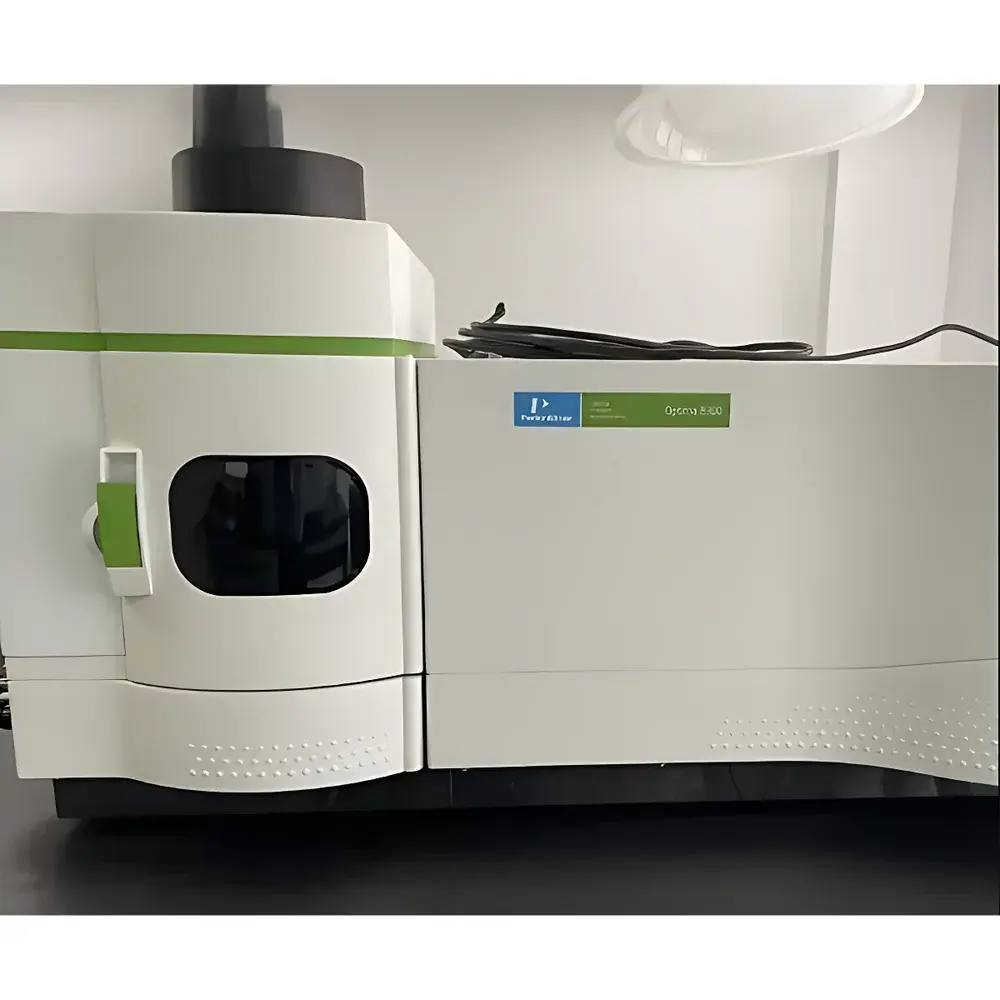
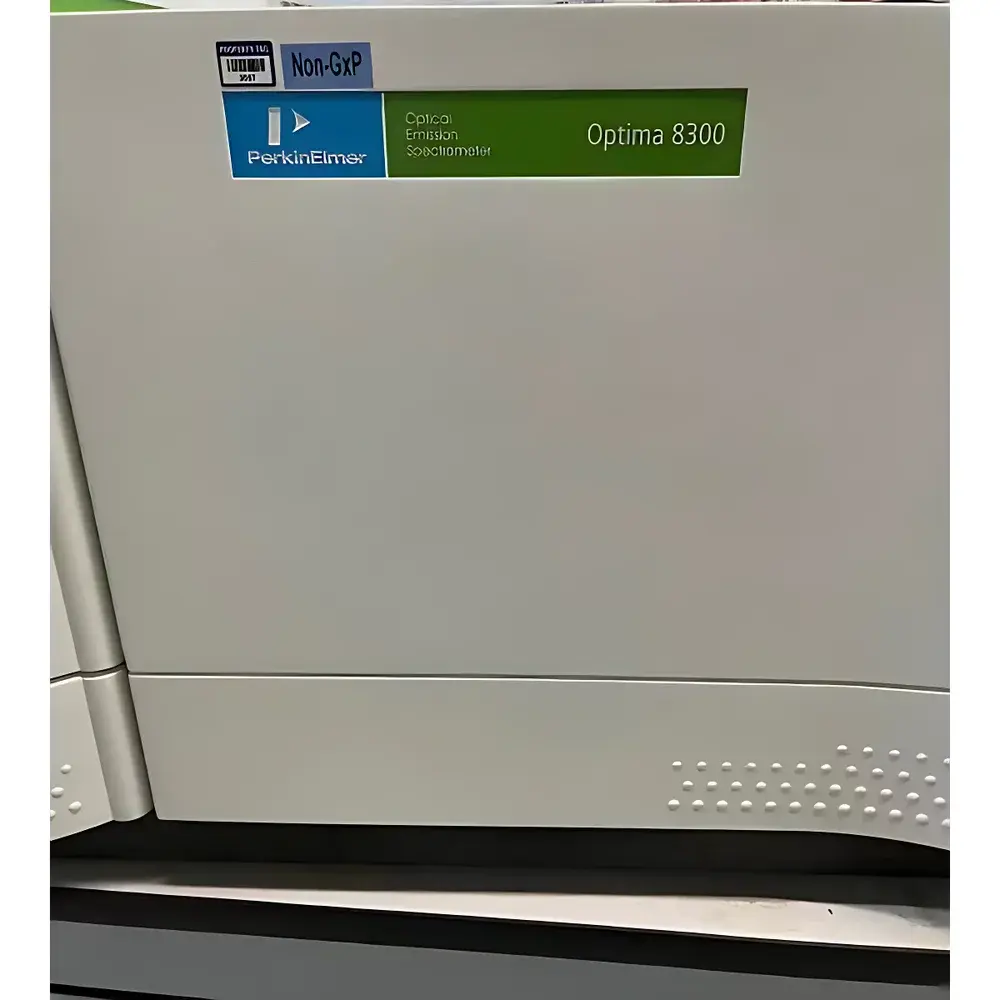
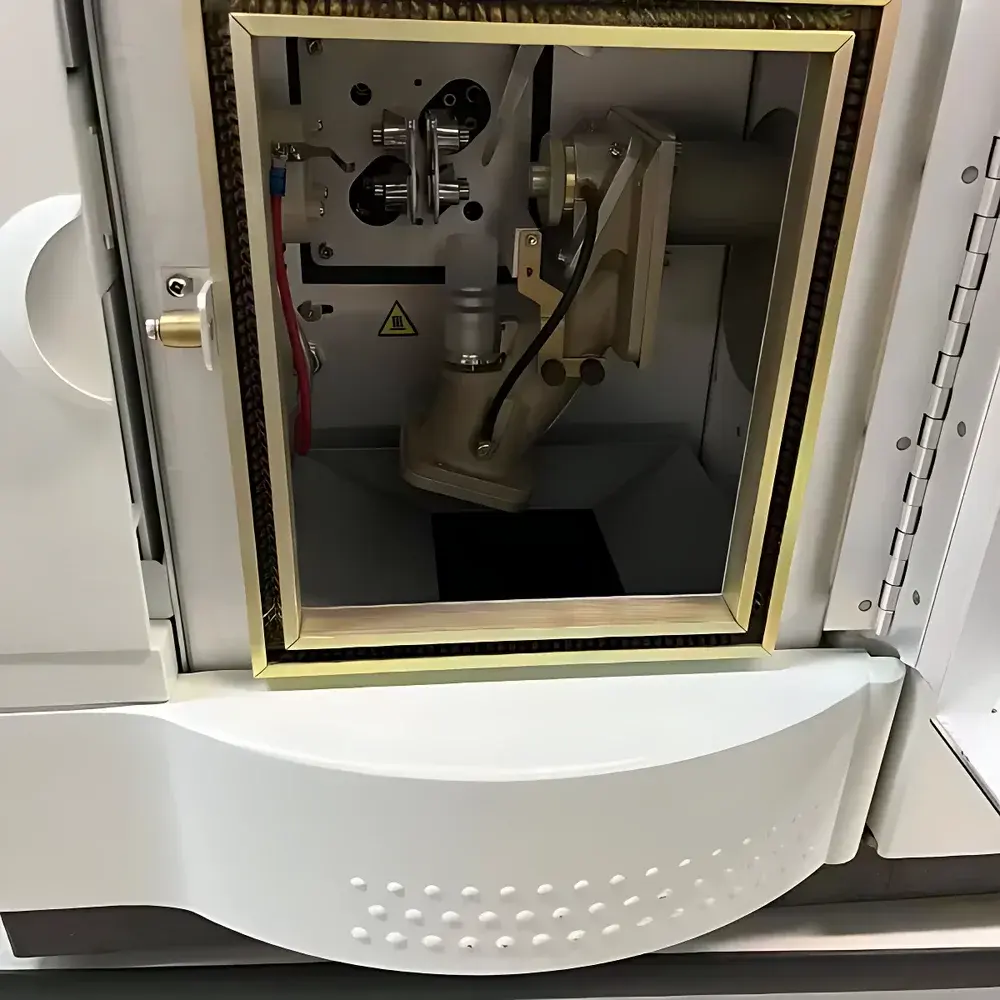
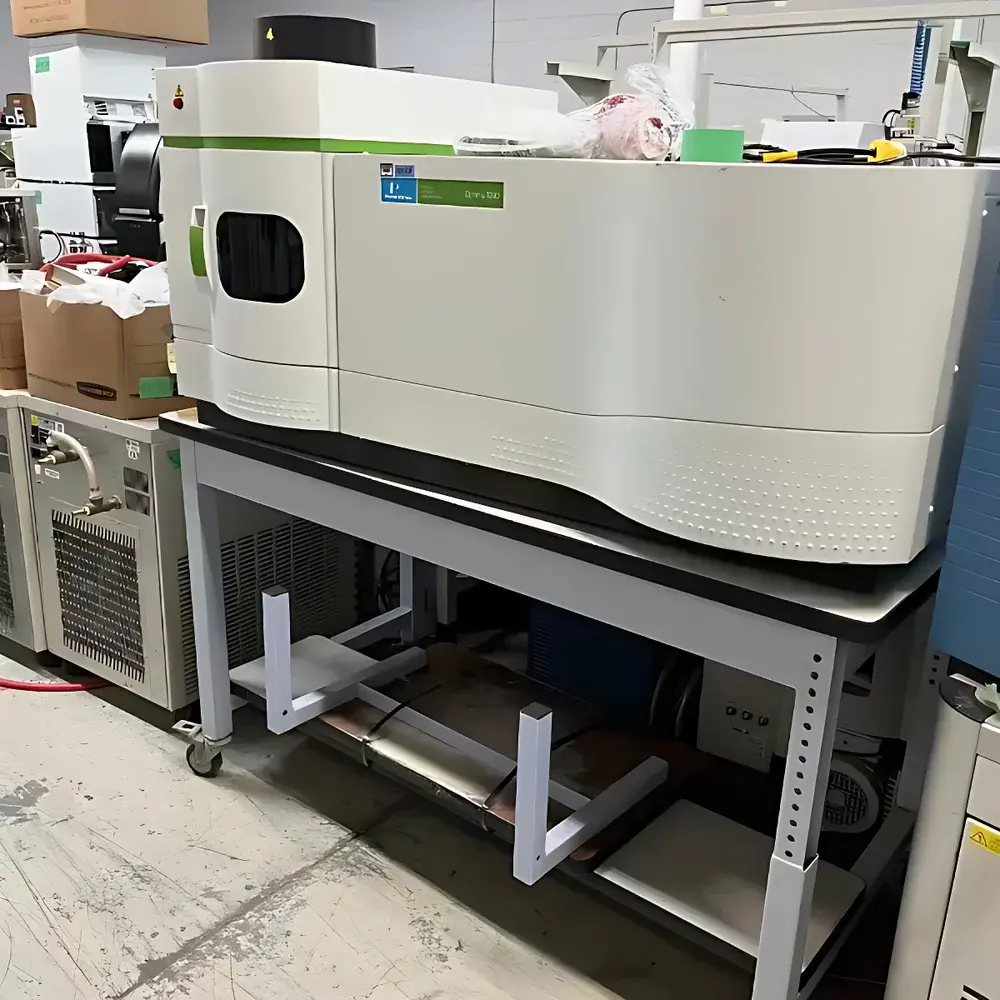
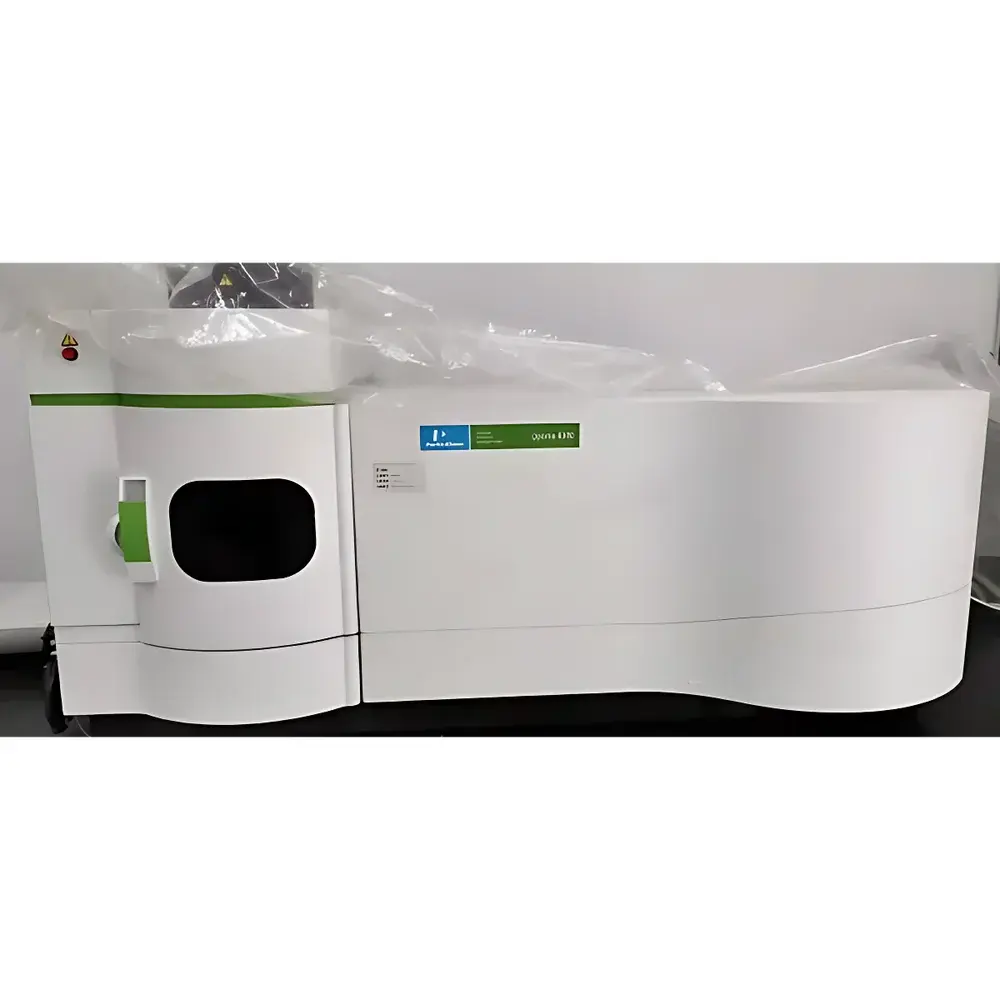
PerkinElmer Optima 8300 ICP-OES Spectrometer
| Brand | PerkinElmer |
|---|---|
| Origin | USA |
| Model | Optima 8300 |
| Instrument Type | Full-Spectrum Direct-Reading ICP-OES |
| Wavelength Range | 167–782 nm |
| Optical Resolution | 0.006 nm at 200 nm |
| Configuration | Used (Refurbished & Verified) |
Overview
The PerkinElmer Optima 8300 is a full-spectrum direct-reading inductively coupled plasma optical emission spectrometer (ICP-OES) engineered for high-throughput, multi-element trace metal analysis in demanding laboratory environments. It operates on the fundamental principle of atomic emission spectroscopy: liquid samples are nebulized into an argon plasma (~6,000–10,000 K), where analyte elements are atomized and excited; emitted photons are dispersed via a high-efficiency echelle grating and detected simultaneously across the full UV-Vis spectral range (167–782 nm) using a solid-state charge-coupled device (CCD) detector. This simultaneous acquisition architecture enables rapid qualitative and quantitative analysis of up to 70+ elements—including Na, Mg, Al, Ca, Fe, Cu, Zn, Pb, Cd, As, and rare earths—at sub-pptr detection limits, with excellent linearity (R² > 0.9999 over 6 orders of magnitude) and high reproducibility (RSD < 1.5% for 10 replicate measurements).
Key Features
- Full-spectrum echelle optical system with optimized signal-to-noise ratio and minimal stray light interference
- Simultaneous CCD detection enabling true multi-element analysis without sequential wavelength scanning
- Optical resolution of 0.006 nm at 200 nm—sufficient to resolve critical spectral interferences (e.g., V 292.402 nm vs. Fe 292.397 nm)
- Robust RF generator (27.12 MHz or 40.68 MHz options) with automatic impedance matching and plasma stabilization
- Integrated peristaltic pump with programmable flow control and integrated rinse cycle management
- Modular design supporting interchangeable sample introduction systems: glass concentric nebulizer, cyclonic spray chamber, and optional micro-flow or desolvation accessories
- Comprehensive internal diagnostics including plasma status monitoring, torch alignment verification, and detector temperature stability logging
Sample Compatibility & Compliance
The Optima 8300 accommodates aqueous solutions, acid-digested environmental and biological matrices (EPA Methods 200.7, 200.8, 6020B), organic solvents (with oxygen ashing or micro-emulsion preparation), and solid suspensions (via laser ablation coupling). Its hardware and firmware architecture supports compliance with internationally recognized analytical standards, including ISO/IEC 17025:2017 method validation requirements, ASTM D5191/D5192 for petroleum metals, and USP / for elemental impurities in pharmaceuticals. All instrument control and data handling workflows are designed to support GLP/GMP audit readiness, with configurable user access levels and electronic signature capability.
Software & Data Management
The system runs on PerkinElmer’s Syngistix™ for ICP-OES software (v4.x or later), a validated platform compliant with FDA 21 CFR Part 11 requirements. Key capabilities include automated calibration curve generation (linear, quadratic, or weighted least-squares), interference correction algorithms (e.g., background correction, inter-element correction tables), real-time spectral viewing, and customizable report templates aligned with LIMS export formats (ASTM E1382-compliant XML, CSV, PDF). Audit trails record all method changes, result modifications, and user logins with timestamps and IP metadata. Raw spectral data (.spc) and processed results (.xls/.pdf) are stored in a structured database with version-controlled backups and retention policy enforcement.
Applications
- Environmental testing: quantification of regulated metals (As, Cd, Cr, Pb, Hg) in drinking water (EPA 200.7), wastewater (EPA 200.8), soils (EPA 6010D), and airborne particulates
- Pharmaceutical quality control: elemental impurity screening per ICH Q3D guidelines, catalyst residue analysis in API synthesis
- Geological and mining labs: multi-element geochemical profiling of ores, leachates, and exploration core samples
- Food safety laboratories: detection of toxic metals (Pb, Cd, Sn) in infant formula, spices, and seafood per EU Commission Regulation (EC) No 1881/2006
- Materials science: alloy composition verification, coating thickness validation via dissolution analysis, and catalyst characterization
FAQ
Is this a factory-refurbished unit or a field-used instrument?
This Optima 8300 system has undergone comprehensive refurbishment by an authorized PerkinElmer service partner, including full optical alignment, plasma source recalibration, detector dark-current characterization, and replacement of consumables (torch, injector, nebulizer, spray chamber). A full performance verification report (PVR) documenting detection limits, precision, and wavelength accuracy is provided.
Does the system include original software licenses and maintenance history?
Yes—the instrument ships with a valid, transferable Syngistix™ software license and complete service history documentation, including all prior PM logs, calibration certificates, and hardware modification records.
Can it be integrated into an existing LIMS environment?
Absolutely—the system supports standard LIMS interfaces via ASTM E1382-compliant data export protocols, ODBC connectivity, and configurable FTP/SFTP upload paths for automated result transmission.
What warranty and post-purchase support options are available?
A 12-month limited hardware warranty is included, covering all major components except consumables. Extended service contracts with remote diagnostics, on-site preventive maintenance, and priority technical support are available upon request.





