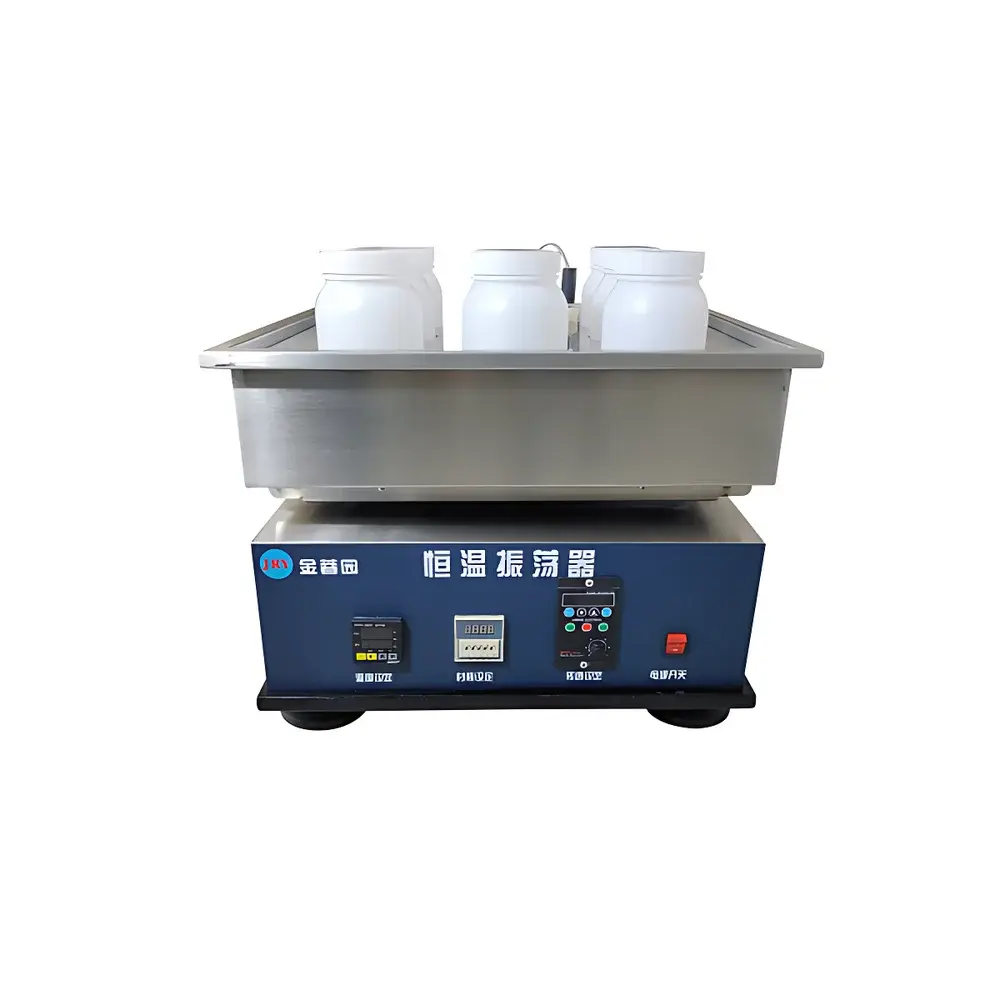
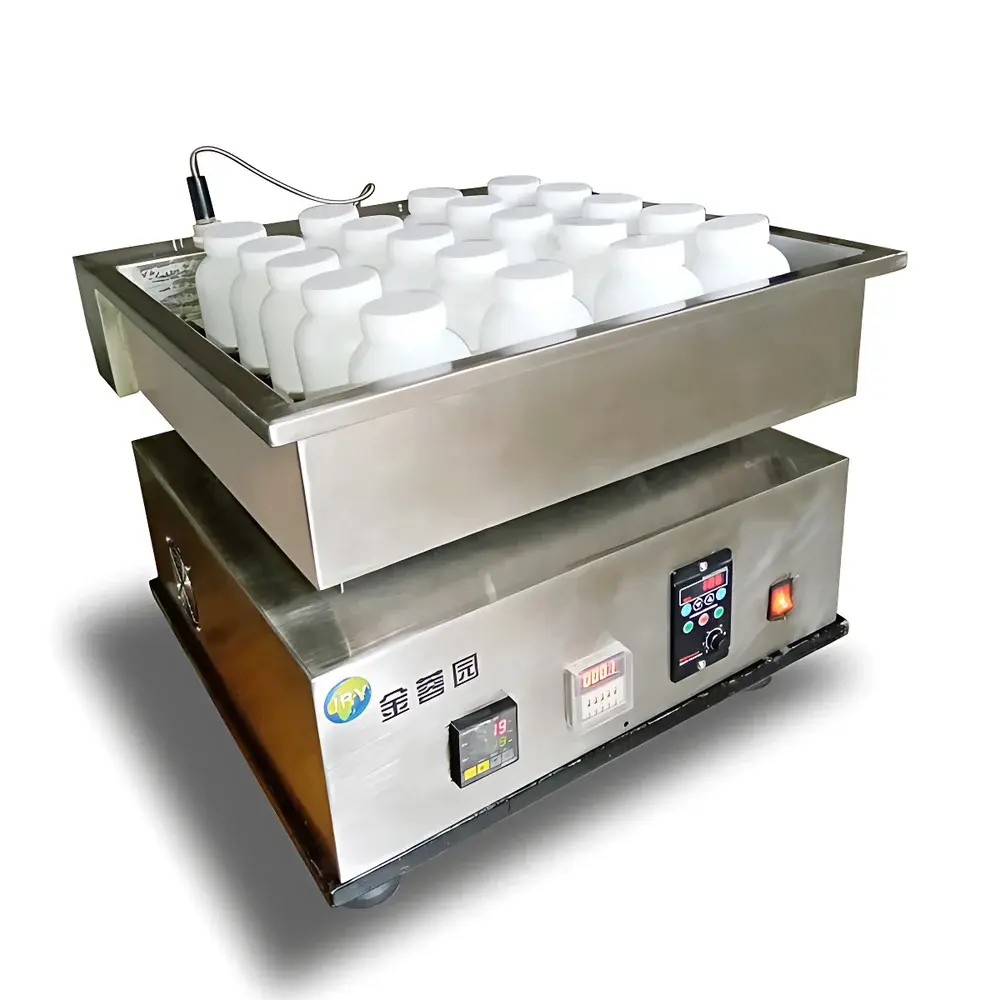
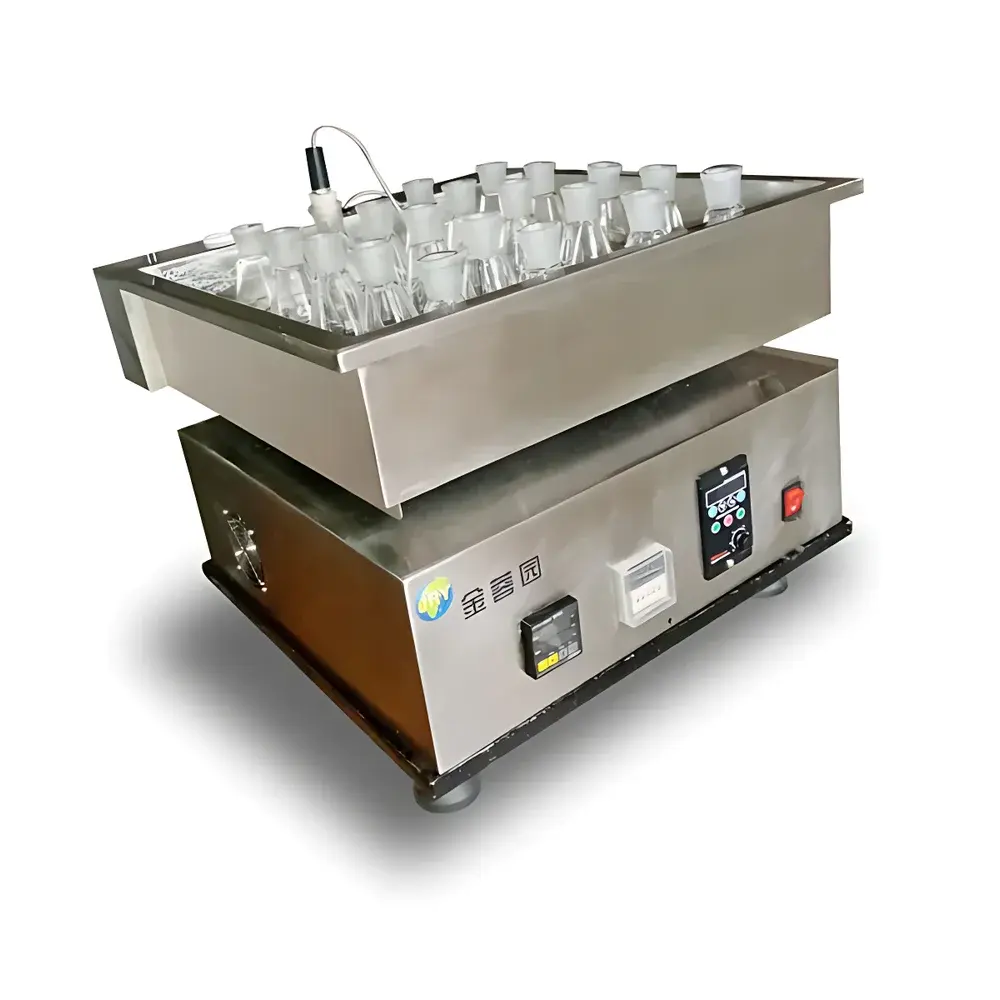
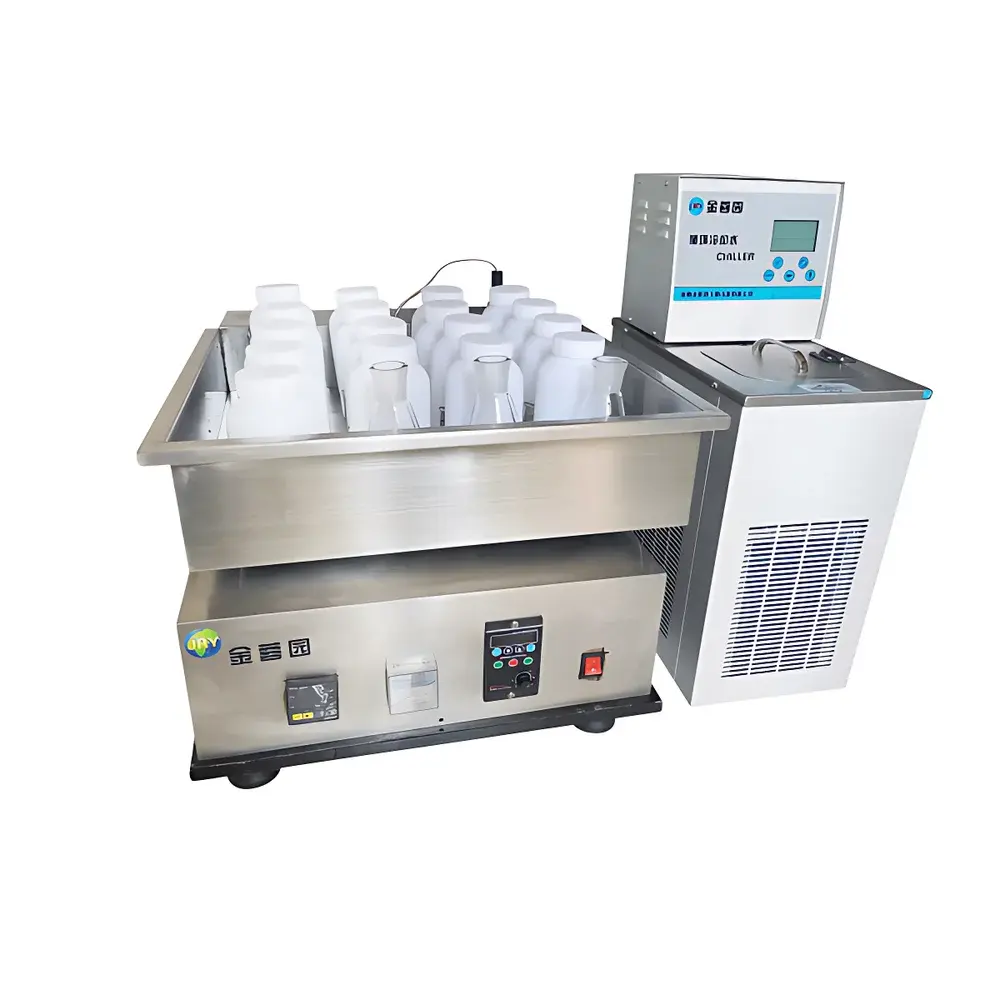
JRY-S20 Water Bath Constant-Temperature Orbital Shaker
| Brand | JRY |
|---|---|
| Origin | Hunan, China |
| Manufacturer Type | Direct Manufacturer |
| Instrument Category | Domestic |
| Model | JRY-S20 |
| Pricing | USD 3,650 (FOB) |
| Instrument Type | Water Bath Constant-Temperature Shaker / Orbital Shaker |
| Timer Range | 0–999 min |
| Oscillation Frequency | 0–200 rpm |
| Oscillation Amplitude | 40 mm |
| Temperature Control Range | 4–45 °C |
| Platform Capacity | 20 × 250 mL Erlenmeyer flasks (or equivalent configurations) |
| Construction Material | 304 Stainless Steel |
| Temperature Accuracy | ±0.5 °C |
| Temperature Uniformity (Water Bath) | ±1.0 °C |
| Operating Mode | Continuous operation ≥24 h |
| Cooling Option | External recirculating chiller compatible |
| Oscillation Mode | Horizontal reciprocating motion |
| Heating Method | Immersion water bath heating |
| Safety Features | Dry-run protection, over-temperature cutoff, auto-shutdown on timer expiry |
Overview
The JRY-S20 Water Bath Constant-Temperature Orbital Shaker is an engineered platform for precise, reproducible sample agitation under controlled thermal conditions. Designed around a fully immersed water bath system, it delivers uniform temperature distribution across the entire oscillation surface—critical for applications requiring strict thermal stability during extended extraction or solubilization protocols. Its horizontal reciprocating motion follows standardized mechanical agitation profiles defined in environmental regulatory methods, including HJ 557–2010 (Solid Waste Leaching Toxicity — Horizontal Oscillation Method), HJ 802–2016 (Soil Electrical Conductivity — Electrode Method), and HJ 634–2012 (Soil Ammonium, Nitrite, and Nitrate Nitrogen — KCl Extraction and Spectrophotometry). Unlike air-cooled shakers, the water bath architecture ensures minimal thermal gradient (<±1.0 °C) and eliminates convective air currents that may disturb sensitive suspensions or low-volume extractions.
Key Features
- 304 stainless steel construction throughout the chassis, bath chamber, and platform—resistant to corrosion from aqueous reagents, organic solvents, and acidic/basic leachates.
- Precision PID-controlled heating and optional external chiller integration enable stable operation from 4 °C (with cooling support) to 45 °C—fully compliant with ambient-avoidance requirements in soil and waste testing protocols.
- Adjustable oscillation frequency (0–200 rpm) and fixed 40 mm stroke amplitude ensure consistent shear input across heterogeneous solid–liquid matrices, meeting the mechanical energy specifications of HJ 557–2010.
- Dual safety architecture: dry-run detection prevents heater activation without sufficient water level; independent over-temperature cutoff interrupts power if bath temperature exceeds setpoint by >3 °C.
- Programmable timer (0–999 minutes) supports unattended operation, including overnight extractions; auto-shutdown preserves sample integrity and instrument longevity.
- Modular platform design accommodates diverse vessel configurations: up to 20 × 250 mL borosilicate or polypropylene Erlenmeyer flasks, 8 × 2 L PE bottles, or 20 × 500 mL HDPE containers—optimized for EPA-equivalent batch processing throughput.
Sample Compatibility & Compliance
The JRY-S20 is validated for use with standard laboratory containers used in environmental, pharmaceutical, and agricultural testing—including glass, polyethylene (PE), polypropylene (PP), and fluorinated ethylene propylene (FEP) vessels. Its mechanical and thermal performance aligns with method-defined parameters in Chinese national standards (HJ-series), and its operational envelope overlaps with ASTM D3987 (Standard Test Method for Shake Extraction of Solid Waste with Water) and ISO 11269-1 (Soil Quality — Determination of Effects on Plants — Part 1: Determination of Phytotoxicity Using Higher Plants). The unit’s stainless steel wetted parts meet USP Class VI biocompatibility criteria for non-invasive contact with aqueous extracts. No lubricants or elastomers contact the bath medium, eliminating leachable interference in trace-level analyses.
Software & Data Management
The JRY-S20 operates via an integrated digital controller with LED display and tactile membrane keypad—designed for GLP-compliant manual operation in regulated labs. While no embedded software or PC interface is included, all critical operating parameters (set temperature, actual bath temperature, elapsed time, remaining time, rpm) are continuously logged to non-volatile memory with timestamping. Audit-trail-ready records can be manually transcribed or captured via external data loggers compliant with FDA 21 CFR Part 11 requirements when paired with validated third-party acquisition systems. Firmware supports firmware version identification and factory calibration lockout to maintain measurement traceability.
Applications
- Environmental testing: Solid waste leaching (HJ 557–2010), soil nutrient extraction (HJ 634–2012), heavy metal mobilization studies, and conductivity profiling (HJ 802–2016).
- Pharmaceutical R&D: Dissolution profile development for poorly soluble APIs, excipient compatibility screening under thermal stress, and buffer equilibration kinetics.
- Food & agriculture: Pesticide residue extraction from plant matrices, mycotoxin recovery optimization, and fertilizer solubility assessment.
- Materials science: Nanoparticle dispersion stability testing, polymer swelling kinetics in aqueous media, and catalyst slurry homogenization.
- Quality control laboratories: Routine verification of extraction efficiency, inter-laboratory method transfer, and equipment qualification (IQ/OQ) per ISO/IEC 17025 Annex A.2.
FAQ
Is the JRY-S20 certified to any international quality standards?
The unit is manufactured under ISO 9001-certified processes; CE marking is not applicable as it is designed for domestic-market compliance (CCC not required for lab shakers). Calibration certificates traceable to NIM (National Institute of Metrology, China) are available upon request.
Can the shaker operate at 4 °C without external cooling?
No—4 °C operation requires connection to a recirculating chiller capable of delivering ≤10 °C coolant at ≥2 L/min flow rate. The internal heater-only architecture does not support active refrigeration.
What is the maximum load capacity per flask position?
Each 250 mL flask position supports up to 300 g total mass (including vessel, cap, and liquid); exceeding this may reduce oscillation uniformity and accelerate bearing wear.
Does the device support RS-232 or USB connectivity?
No—this is a stand-alone analog/digital hybrid controller without serial or network interfaces. Remote monitoring requires external temperature and tachometer sensors with compatible DAQ hardware.
How often does the water bath require maintenance?
Deionized water should be replaced weekly in continuous-use settings; stainless steel bath surfaces require monthly inspection for scale accumulation. Descaling with 5% citric acid solution is recommended every 3 months under hard-water conditions.