
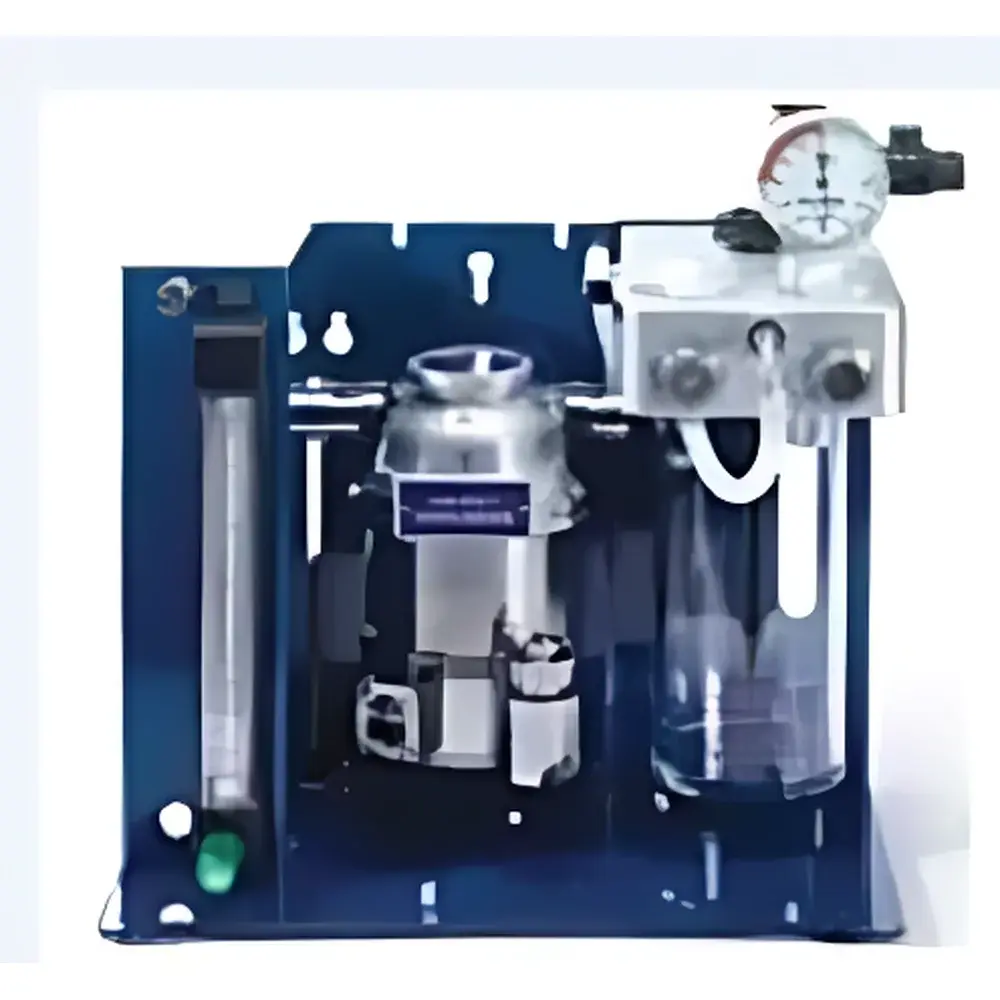
Harvard Apparatus CDS2000 Series Animal Anesthesia Systems
| Brand | Harvard Apparatus |
|---|---|
| Origin | USA |
| Model Range | CDS2000, CDS9000, Vaporstick Plus Desktop, Table Top Series |
| Flow Rate Range | 0.2–4 L/min (O₂), 0–1000 mL/min (auxiliary gases) |
| CO₂ Absorber Capacity | ≥900 mL (CDS9000) |
| Vaporizer Compatibility | ISO-standard 100-series isoflurane/sevoflurane vaporizers (e.g., Harvard 100 Series, Tech3/Tech4, Ohio) |
| Dimensions (CDS2000) | 133.35 cm H × 66.04 cm W (base diameter) |
| Dimensions (Desktop Models) | 30.48 cm W × 20.32 cm D × 38.1 cm H (Vaporstick Plus) |
| Regulatory Compliance | FDA-cleared materials, CE-marked, ISO 13485-manufactured, GLP-ready architecture |
Overview
The Harvard Apparatus CDS2000 Series Animal Anesthesia Systems are precision-engineered gas delivery platforms designed for controlled, reproducible anesthetic administration in preclinical research settings. These systems operate on the principles of calibrated fresh-gas flow control and physiologically appropriate circuit configuration—supporting both non-rebreathing (Jackson-Rees, Mapleson D) and rebreathing (F-circuit, circle) modalities. The core architecture integrates a high-stability oxygen flowmeter (0.2–4 L/min range), a rapid-flush oxygen bypass valve, and a modular vaporizer mounting interface compliant with ISO 80601-2-13 and ASTM F2797 standards. All models utilize FDA-approved, biocompatible polymers and aerospace-grade aluminum alloys—ensuring long-term structural integrity, chemical resistance to halogenated anesthetics, and compatibility with routine decontamination protocols (e.g., 70% ethanol, hydrogen peroxide vapor). The CDS2000 platform is engineered for benchtop or mobile deployment via its five-point locking caster base; MRI-compatible variants (e.g., CDS2000MRI) employ non-ferromagnetic components and RF-shielded electronics to meet IEC 60601-2-33 requirements.
Key Features
- Modular circuit architecture: Native support for non-rebreathing (Jackson-Rees, F-loop) and rebreathing configurations—enabling seamless transition between low-flow and high-flow anesthesia protocols.
- Precision flow control: Dual-scale flowmeters (L/min and mL/min) with ±2% full-scale accuracy; calibrated for O₂, N₂O, air, and other medical gases per ISO 8573-1 Class 2 purity specifications.
- Leak-minimized gas pathway: Patented conical inlet ports, dome-style inhalation/exhalation valves, and O-ring-sealed absorber housings eliminate dead space and reduce risk of inadvertent gas leakage.
- CO₂ absorption optimization: Proprietary soda lime delivery geometry maximizes contact time between exhaled gas and absorbent—achieving >95% CO₂ removal efficiency at flow rates up to 1.5 L/min with ≤900 mL absorbent volume (CDS9000).
- Dedicated waste-gas management: Pop-off pressure relief valve (set at 2 cm H₂O) interfaces directly with active scavenging systems per ANSI Z79.11 and ISO 10993-1 biological safety guidelines.
- Robust mechanical design: Powder-coated steel frame (CDS2000) or anodized aluminum chassis (desktop models); all surfaces resistant to autoclaving, alcohol wipe-down, and enzymatic cleaners.
- Integrated monitoring readiness: Pre-drilled monitor-mounting bracket (1.34 m height from floor) compatible with standard veterinary physiological recorders and multi-parameter displays.
Sample Compatibility & Compliance
The CDS2000 Series accommodates a broad spectrum of laboratory species—from rodents (≥20 g) to rabbits and non-human primates—via interchangeable face masks (polycarbonate, multiple sizes), nasal cones, and custom endotracheal adapters. All breathing circuits—including Jackson-Rees (Part #72-3073), F-loop (Part #72-3071), and rodent-specific C-Pram tubing (152.4 cm length)—are manufactured to ISO 5356-1 connector standards. The system meets essential regulatory requirements for GLP-compliant studies: traceable calibration documentation, audit-ready component serialization, and vaporizer output stability validated per USP and EP 2.2.27. Optional 21 CFR Part 11-compliant software modules (available via Harvard’s AcqKnowledge platform) support electronic signature, user access control, and immutable audit trails for FDA-submission-ready data packages.
Software & Data Management
While the CDS2000 operates as a hardware-controlled analog system, it integrates natively with Harvard Apparatus’ AcqKnowledge 5.0+ software suite via optional analog/digital I/O modules. This enables real-time logging of flowmeter outputs, pressure transducer signals (0–60 cm H₂O range), and external physiological inputs (ECG, SpO₂, temperature). Data export formats include CSV, MATLAB (.mat), and EDF+—facilitating downstream analysis in MATLAB, Python (SciPy/Pandas), or commercial PK/PD modeling tools (e.g., Phoenix WinNonlin). Firmware updates are delivered via secure USB protocol; all configuration changes are timestamped and logged with operator ID for GxP traceability.
Applications
These systems are routinely deployed in academic neuroscience labs for stereotaxic surgery under isoflurane, in cardiovascular physiology studies requiring stable hemodynamic control during echocardiography or MRI, and in toxicology programs where precise anesthetic depth modulation is critical for metabolic phenotyping. The CDS9000’s dual-pathway design supports concurrent open- and closed-circuit experiments—ideal for comparative pharmacokinetic studies of volatile anesthetics. Desktop variants (Vaporstick Plus, Table Top) are optimized for high-throughput behavioral assays, longitudinal imaging workflows, and BSL-2/3 containment environments where space constraints and mobility are primary operational considerations.
FAQ
What anesthesia vaporizers are compatible with the CDS2000 platform?
Harvard 100 Series, Tech3, Tech4, and Ohio brand ISO-standard 100-series vaporizers are fully supported. All units must comply with ISO 80601-2-13 mechanical interface specifications.
Can the CDS2000 be used in MRI suites?
Yes—CDS2000MRI and Vaporstick Plus MRI-compatible models feature non-magnetic actuators, RF-filtered solenoids, and copper-shielded cabling certified to 3T and 7T field strengths per IEC 60601-2-33 Annex BB.
Is CO₂ absorption efficiency validated per ISO 8835-2?
Yes—absorber performance testing follows ISO 8835-2 Clause 6.3 protocols using calibrated capnography and synthetic exhalate gas mixtures (5% CO₂, 21% O₂, balance N₂) at 1.0–1.5 L/min flow.
What maintenance intervals are recommended for the soda lime canister?
Absorbent replacement is required after 6 hours of continuous use or upon colorimetric indicator exhaustion (blue → white). Harvard recommends using only 8–12 mesh granular soda lime (Part #72-3010-01) to maintain specified dwell time and CO₂ removal kinetics.
Does the system support regulatory audit requirements for pharmaceutical preclinical studies?
Yes—the platform’s mechanical design, material certifications (FDA 510(k) K122974), and optional AcqKnowledge 21 CFR Part 11 module satisfy ICH S5(R3), OECD 407, and FDA Guidance for Industry on Nonclinical Safety Studies.



