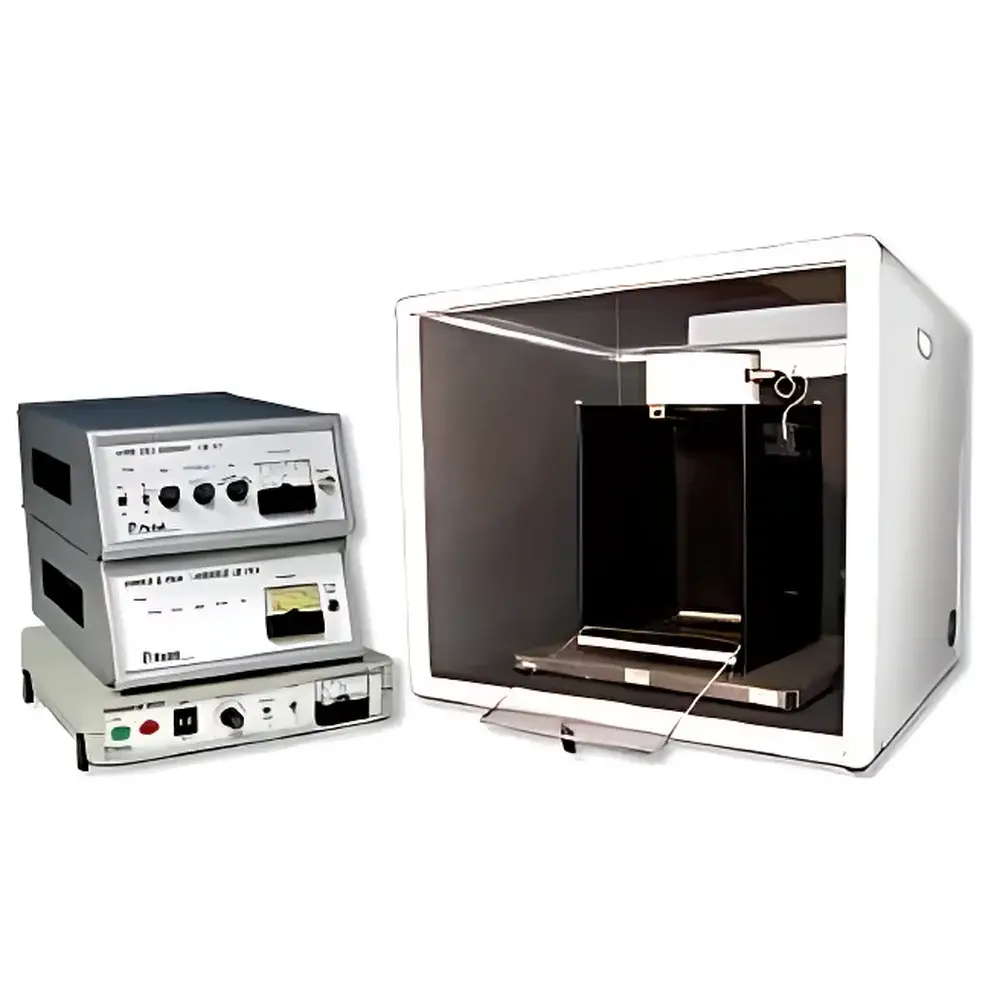
Panlab LE116 Combined Fear Conditioning and Startle Reflex Chamber System
| Brand | Harvard Apparatus |
|---|---|
| Origin | USA |
| Manufacturer Type | Authorized Distributor |
| Origin Category | Imported |
| Model | LE116 |
| Price Range | USD 1,400 – 7,000 |
| Dimensions | 250 × 250 × 250 mm (L×W×H) |
| Animal Weight Range | 15–500 g |
| Acoustic Stimulus Range | 200–10,000 Hz, 60–120 dB |
| Sensor Technology | Precision Load Cell-Based Gravimetric Detection |
| Stimuli Control | Programmable Light, Tone, Foot Shock, Air Puff |
| Max Simultaneous Units | 8 per PC |
| Software Modules | PACKWINCS-FR (Fear Conditioning), PACKWINCS-ST (Startle Reflex) |
| Environmental Configurability | Interchangeable Floor/Wall Panels, Modular Chamber Geometry (Square, Circular, Triangular) |
| Compliance | Designed for GLP-compliant behavioral phenotyping workflows |
Overview
The Panlab LE116 Combined Fear Conditioning and Startle Reflex Chamber System is an integrated, modular behavioral phenotyping platform engineered for rigorous preclinical neuroscience research. It enables concurrent implementation of two foundational paradigms—classical fear conditioning (FC) and startle reflex modulation (including prepulse inhibition, PPI; and fear-potentiated startle, FPS)—within a single, standardized enclosure. Unlike legacy systems requiring separate hardware for each assay, the LE116 leverages Panlab’s proprietary high-sensitivity load cell technology to detect minute postural and locomotor changes—including freezing, rearing, grooming, and orientation shifts—with sub-millisecond temporal resolution. This gravimetric sensing architecture eliminates optical occlusion artifacts and provides continuous, contactless quantification of behavioral state transitions without reliance on video tracking or infrared beam interruption. The chamber operates under fully programmable stimulus control logic, supporting multi-phase experimental protocols with conditional branching, randomized trial sequencing, nested loops, and real-time event-triggered stimulus delivery—essential for modeling associative learning, sensorimotor gating deficits, and anxiety-related phenotypes in rodent models.
Key Features
- Unified chamber design supporting FC, PPI, and FPS within identical environmental parameters—enabling direct cross-paradigm comparison and longitudinal within-subject assessment.
- High-fidelity load cell transducer system calibrated for 15–500 g animal mass range; detects dynamic weight redistribution associated with freezing onset/offset, startle magnitude, and exploratory micro-movements.
- Modular environmental configuration: Interchangeable floor and wall panels (textured, smooth, colored, or patterned); reversible chamber geometry (square, cylindrical, triangular) to serve as spatial contextual cues—eliminating reliance on auditory stimuli alone for context discrimination.
- Programmable multimodal stimulus delivery: Precise control over visual (LED intensity/duration), acoustic (200–10,000 Hz, 60–120 dB SPL), aversive (foot shock, adjustable voltage/current), and non-aversive (air puff, calibrated pressure) modalities via PackWin software.
- Scalable architecture: Up to eight LE116 chambers synchronized and controlled from a single host PC, enabling high-throughput cohort studies with time-aligned data acquisition and stimulus coordination.
- Stimulus protocol editor supporting conditional logic (e.g., “if freezing duration > 3 s, deliver tone + shock”; “randomize prepulse interval between 30–120 ms”)—critical for modeling cognitive flexibility and attentional filtering.
Sample Compatibility & Compliance
The LE116 is validated for use with laboratory rodents including C57BL/6, BALB/c, Sprague-Dawley, and Wistar strains across developmental stages—from adolescent (≥25 g) to adult (up to 500 g). Its non-invasive gravimetric detection method ensures consistent performance regardless of fur pigmentation, coat density, or ambient lighting conditions—addressing key limitations of video-based systems. The chamber meets ASTM E2573-22 guidelines for behavioral apparatus validation and supports audit-ready data integrity through PackWin’s built-in timestamping, user authentication, and electronic signature capabilities. Experimental protocols comply with NIH Guide for the Care and Use of Laboratory Animals and are compatible with institutional IACUC documentation requirements. Optional air puff modules provide an ethically aligned alternative to foot shock for startle potentiation studies, facilitating adherence to the 3Rs principles.
Software & Data Management
Data acquisition and analysis are managed through PackWin v4.x, a Windows-based platform compliant with FDA 21 CFR Part 11 for electronic records and signatures. Two dedicated modules drive paradigm-specific workflows: PACKWINCS-FR for fear conditioning (contextual/cued discrimination, extinction, renewal) and PACKWINCS-ST for startle reflex analysis (baseline startle amplitude, %PPI, FPS magnitude, habituation curves). All raw load cell voltage traces are stored in HDF5 format with metadata embedding (animal ID, protocol version, operator, date/time, stimulus log). Batch processing tools enable automated freezing detection using adaptive thresholding algorithms, while export functions support CSV, MATLAB (.mat), and NeuroML-compatible formats for integration into custom statistical pipelines (e.g., R, Python SciPy, GraphPad Prism). Audit trails record every parameter modification, file export, or analysis rerun—ensuring full traceability for GLP/GMP-regulated studies.
Applications
The LE116 serves as a core platform for translational neuroscience investigations spanning psychiatric disorder modeling (e.g., PTSD, schizophrenia, OCD), neuropharmacology (anxiolytic, antipsychotic, nootropic screening), genetic phenotyping (knockout/knockin validation), and neurodevelopmental studies. Its capacity to decouple contextual vs. cued fear expression—combined with PPI sensitivity to dopaminergic and glutamatergic modulation—makes it particularly valuable for evaluating circuit-level dysfunction in amygdala-hippocampal-prefrontal networks. In drug discovery, the system supports dose-response characterization of compounds targeting NMDA receptors, GABAA subtypes, or CRF signaling pathways. Its standardized output metrics (freezing %, startle latency, PPI %, FPS ratio) align with endpoints used in major consortia including the NIH Psychoactive Drug Screening Program (PDSP) and the International Behavioral Neuroscience Society (IBNS) recommended protocols.
FAQ
Can the LE116 be used for both mice and rats?
Yes—the load cell system is factory-calibrated across the 15–500 g mass range and includes auto-zero compensation to maintain sensitivity during interspecies comparisons.
Is video recording supported?
Video integration is optional and external; the LE116 does not include built-in cameras but provides GPIO triggers and TTL sync outputs to synchronize third-party HD video systems with behavioral events.
How is freezing behavior objectively defined in PackWin?
Freezing is calculated as the cumulative duration during which load cell signal variance falls below a user-adjustable RMS threshold (default: ≤0.001 V over 200 ms windows), validated against manual scoring with >95% inter-rater concordance.
Does the system support automated extinction training?
Yes—PackWin’s protocol editor allows definition of extinction schedules (e.g., 10 tone-only trials/day for 3 days) with automatic session progression, inter-trial interval randomization, and real-time freezing summary reporting.
Are firmware updates provided post-purchase?
Harvard Apparatus offers lifetime firmware updates at no additional cost, distributed via secure portal with version-controlled release notes and backward-compatible binary deployment.