
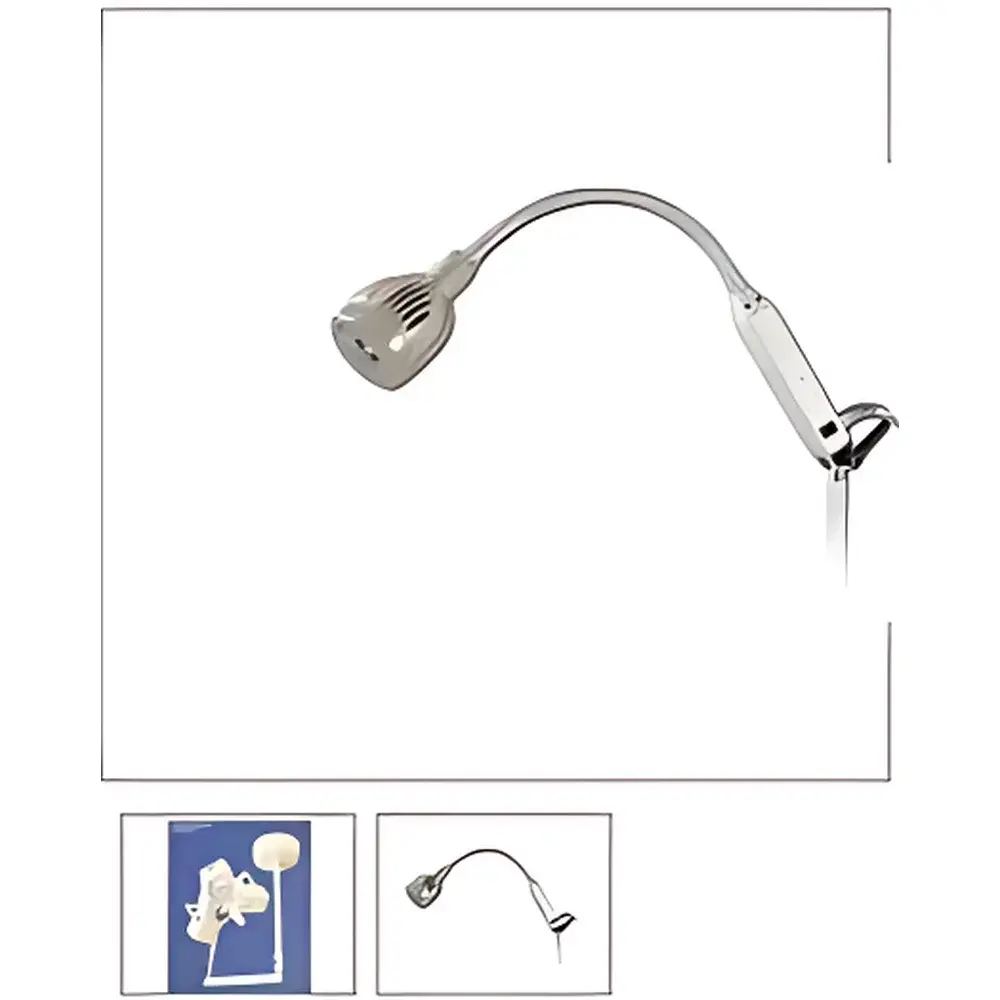
Harvard Apparatus Surgical Lights for Small Animal Surgery
| Brand | Harvard Apparatus |
|---|---|
| Origin | USA |
| Manufacturer Type | Authorized Distributor |
| Origin Category | Imported |
| Model | Surgical Lights |
| Pricing | Contact for Quotation |
Overview
Harvard Apparatus Surgical Lights are precision-engineered illumination systems designed specifically for small animal surgical procedures in academic research laboratories, preclinical CROs, and institutional vivariums. These lights employ high-CRI (Color Rendering Index ≥95) LED arrays with adjustable color temperature (4,500–6,000 K) and stepless intensity control (10–100% output), ensuring optimal tissue visualization without thermal load or spectral distortion. Unlike general-purpose surgical lighting, Harvard’s animal-specific designs integrate ergonomic articulation, compact footprint, and sterilizable housing to accommodate confined surgical fields—such as murine thoracotomies, rat craniotomies, or zebrafish microinjection setups—while maintaining ISO 13485-aligned optical stability and photometric repeatability.
Key Features
- High-intensity, cool-white LED source with uniform beam profile (Illuminance: up to 120,000 lux at 30 cm; depth of field ≥15 cm)
- Multi-axis articulated arm with gas-spring counterbalance and lockable joints for precise positioning and vibration-dampened stability
- IP54-rated enclosure with autoclavable handle and detachable lens cover compliant with IEC 60601-1 and IEC 60601-2-41 safety standards
- Integrated shadow-reduction optics via dual-reflector collimation and peripheral light diffusion rings
- Optional accessories including sterile drapable shrouds, fiber-optic coupling adapters, and camera-mounting brackets for intraoperative documentation
- EMC-compliant power supply with surge protection and low electromagnetic emission (<2.5 V/m @ 3 m, per CISPR 11 Class B)
Sample Compatibility & Compliance
The Harvard Apparatus Surgical Lights support a broad range of in vivo models—including mice, rats, rabbits, guinea pigs, and avian embryos—without requiring reconfiguration. The lamp head’s minimum working distance (15 cm) and narrow beam angle (Ø12–18 cm at target plane) enable focused illumination during minimally invasive procedures such as intravital microscopy-guided surgery or endotracheal intubation. All units comply with FDA 21 CFR Part 820 (Quality System Regulation), EU MDR 2017/745, and are CE-marked under the Medical Device Directive (93/42/EEC). Documentation packages include Declaration of Conformity, Risk Management File (per ISO 14971), and biocompatibility reports (ISO 10993-1, -5, -10).
Software & Data Management
While the base Surgical Lights operate as standalone hardware, optional integration with Harvard Apparatus’ AcqKnowledge® platform enables synchronized timestamping of illumination events with physiological data streams (e.g., ECG, respiration, laser Doppler flowmetry). This interoperability supports GLP-compliant experimental records, where light-on/light-off triggers can be logged alongside annotated surgical milestones. Audit trails meet FDA 21 CFR Part 11 requirements for electronic signatures and data integrity, including immutable event logs, user access controls, and encrypted database backups. Firmware updates are delivered via secure HTTPS portal with version-controlled release notes and validation summaries.
Applications
- Neurosurgical interventions: stereotaxic implantation, cortical window preparation, optic nerve crush models
- Cardiovascular procedures: Langendorff perfusion setup illumination, murine coronary ligation, echocardiography-assisted surgery
- Oncology research: orthotopic tumor resection, fluorescent-guided surgery using GFP/RFP-expressing xenografts
- Developmental biology: chick embryo windowing, zebrafish yolk sac injection, Xenopus laevis microdissection
- Translational pharmacology: PK/PD study surgeries requiring consistent lighting across longitudinal cohorts
FAQ
Is this device classified as a medical device under FDA or EU MDR regulations?
Yes. Harvard Apparatus Surgical Lights are registered Class IIa medical devices (EU MDR) and listed as Class II devices with FDA (510(k) exempt per 21 CFR 878.4720).
Can the light intensity be calibrated traceably to NIST standards?
Yes. Each unit ships with a factory calibration certificate traceable to NIST via A2LA-accredited photometry lab; annual recalibration services are available through Harvard’s global service network.
Are replacement LEDs user-serviceable?
No. LED modules are sealed and thermally managed as a single optical assembly; replacements must be performed by authorized service centers to maintain photometric certification and IP rating.
Does the system support integration with third-party imaging systems (e.g., Zeiss Axio, Olympus SZX series)?
Yes. Standard C-mount and M42 threading options allow mechanical coupling; electrical triggering via TTL input is supported for synchronized exposure control.




