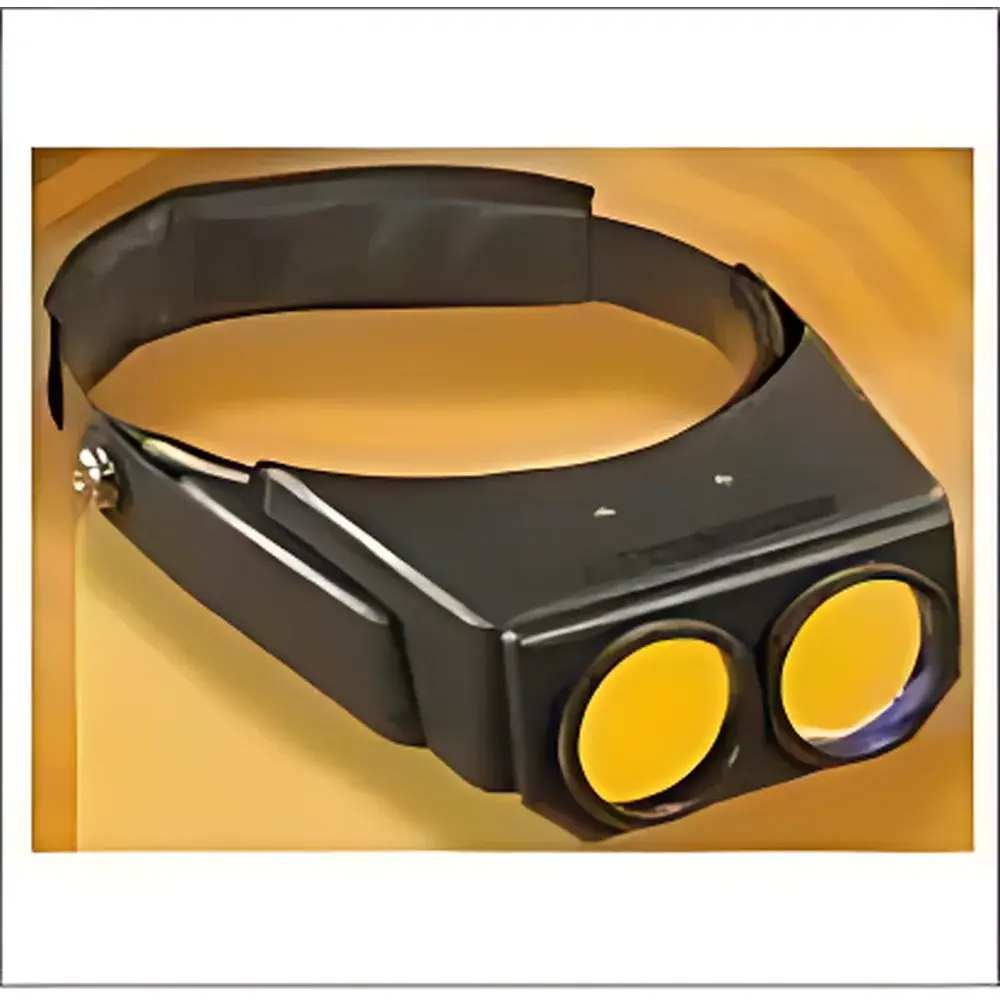
BLS FHS/T00 Fluorescent Protein Observation Goggles (Excitation-Free Design)
| Brand | BLS |
|---|---|
| Origin | Imported |
| Manufacturer Type | Authorized Distributor |
| Model | FHS/T00 |
| Excitation Source | External (e.g., FBL/Basic-B&N-01 benchtop unit) |
| Emission Filter Compatibility | ECFP, EGFP, EYFP, DsRed |
| Filter Options | FS/TEF-1C2 (470–500 nm), FS/TEF-2G2 (500–515 nm), FS/TEF-3GY1 (500–650 nm), FS/TEF-3GY2 (500–550 nm), FS/TEF-4Y1 & FS/TEF-4Y2 (520–650 nm), FS/TEF-4R2-A/B/C (590–660 nm) |
| Compatible Excitation Sources | FS/ULS-02RB, FS/ULS-02B2, FS/ULS-02G2N/W |
Overview
The BLS FHS/T00 Fluorescent Protein Observation Goggles represent a purpose-engineered optical interface for real-time, hands-free visualization of fluorescent protein (FP) expression in live-cell imaging, tissue dissection, and preclinical surgical workflows. Unlike integrated fluorescence microscopes or handheld LED-based viewers, the FHS/T00 operates on an excitation-free principle: it contains no built-in light source and instead relies on external, spectrally matched benchtop excitation units—such as the FBL/Basic-B&N-01—to deliver controlled irradiance. The goggle’s optical architecture is based on high-transmission dichroic emission filtering, enabling selective transmission of FP-specific emission bands while rejecting ambient and excitation bleed-through. This design minimizes phototoxicity, eliminates thermal load on samples during prolonged observation, and supports compliance with low-light biological imaging best practices outlined in ISO 10993-5 and ASTM E2912 for optical safety in biomedical applications.
Key Features
- Modular emission filter system compatible with major fluorescent proteins including ECFP (470–500 nm), EGFP (500–515 nm), EYFP (520–550 nm), and DsRed variants (590–660 nm)
- Interchangeable filter cartridges mounted directly onto the ocular housing—no tools required for field replacement
- Ergonomic head-mounted frame with adjustable strap and balanced weight distribution for extended wear during multi-hour procedures
- Optical-grade polycarbonate lenses with anti-reflective and scratch-resistant coatings meeting ANSI Z87.1 impact standards
- Integrated mounting interface for optional MG-2.5 magnifier (1.8×, 2.3×, or 3.7× magnification), attachable to both FHS/T00 and FHS/T001 variants
- No internal electronics or batteries—ensures electromagnetic compatibility (EMC) in MRI-adjacent or electrophysiology environments
Sample Compatibility & Compliance
The FHS/T00 is validated for use across diverse biological specimen types, including cultured mammalian cells expressing FP-tagged constructs, zebrafish embryos, mouse brain slices, and ex vivo organ explants. Its passive optical design avoids spectral interference with concurrent instrumentation such as confocal microscopes, patch-clamp rigs, or stereotactic surgery platforms. All emission filters are certified to ISO 9001 manufacturing protocols and undergo batch-level spectral verification using calibrated spectroradiometry (NIST-traceable). The system complies with IEC 62471 Photobiological Safety classification for Group 1 (exempt) under normal operating conditions when paired with recommended excitation sources. It supports GLP-aligned documentation workflows through traceable filter lot numbers and excitation source calibration logs.
Software & Data Management
As a purely optical viewing device, the FHS/T00 requires no firmware, drivers, or proprietary software. However, its modular design enables seamless integration into regulated laboratory informatics ecosystems: filter selection history and excitation source settings can be logged manually or via LIMS-compatible templates aligned with 21 CFR Part 11 requirements for audit trails. When used alongside digital imaging systems (e.g., sCMOS cameras coupled to the same excitation platform), spectral metadata from the selected FS/TEF-series filter is directly embeddable in TIFF or OME-TIFF headers per the Open Microscopy Environment standard.
Applications
- Real-time monitoring of FP-labeled tumor xenografts during orthotopic resection
- Intraoperative guidance for fluorescence-guided surgery (FGS) in preclinical oncology models
- High-fidelity screening of transgenic animal lines prior to genotyping
- Quality control of lentiviral transduction efficiency in primary cell cultures
- Teaching laboratories requiring safe, battery-free FP visualization without UV exposure risks
- Field-deployable diagnostics in resource-limited settings where portability and maintenance simplicity are critical
FAQ
Does the FHS/T00 include an integrated light source?
No. The FHS/T00 is designed exclusively for use with external excitation sources such as the FBL/Basic-B&N-01 benchtop unit. This preserves optical isolation and reduces heat-induced sample artifact.
Can multiple emission filters be used simultaneously?
No. Each FHS/T00 unit accepts one emission filter cartridge at a time. Multi-spectral observation requires sequential filter swaps and corresponding excitation source reconfiguration.
Is the MG-2.5 magnifier compatible with third-party goggles?
No. The MG-2.5 is mechanically engineered for precise alignment with the FHS/T00 and FHS/T001 ocular geometry and is not cross-compatible with non-BLS head-worn optics.
Are filter transmission curves available for download?
Yes. Full spectral transmission data (350–800 nm, 1 nm resolution) for all FS/TEF-series filters is provided in CSV and PDF formats upon request, traceable to NIST-calibrated spectrophotometer validation reports.
What is the expected service life of the emission filters?
Under typical laboratory use (≤8 hrs/day, ambient humidity 95% initial peak transmission for ≥5 years, per accelerated aging testing per ISO 11664-3.