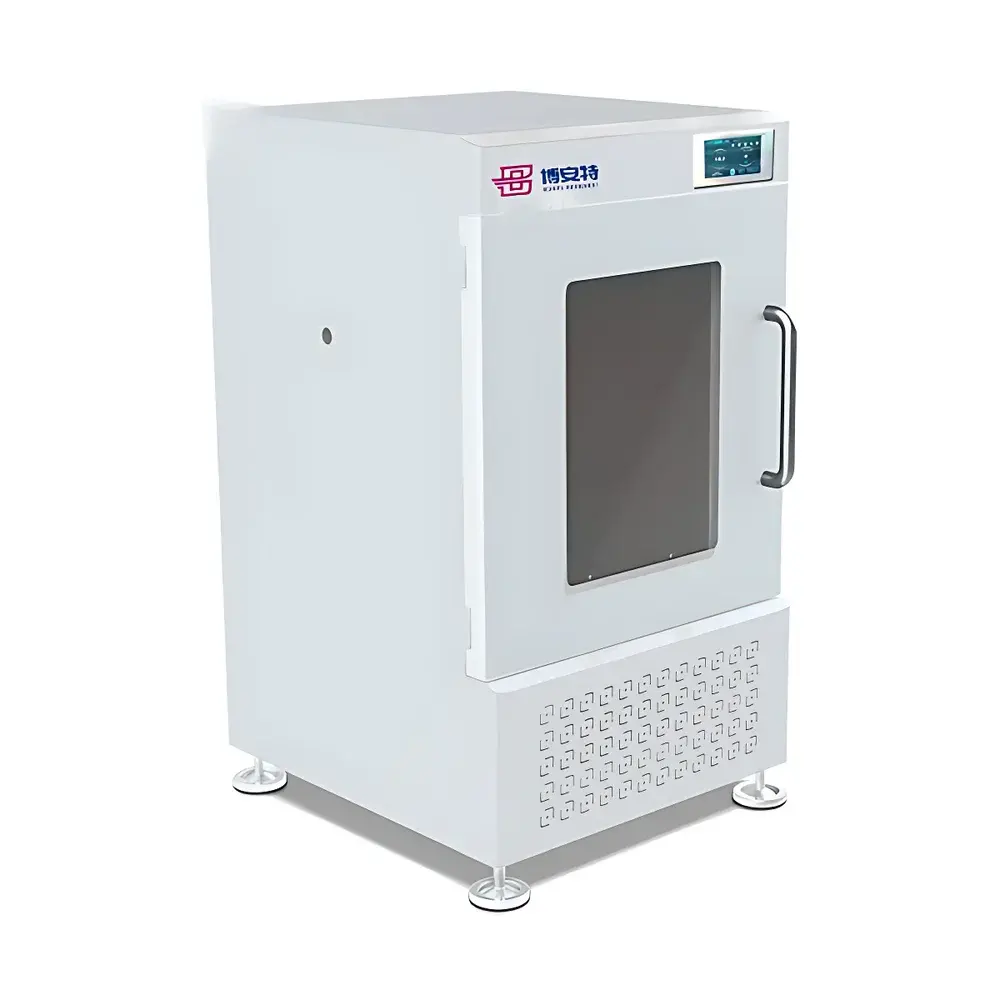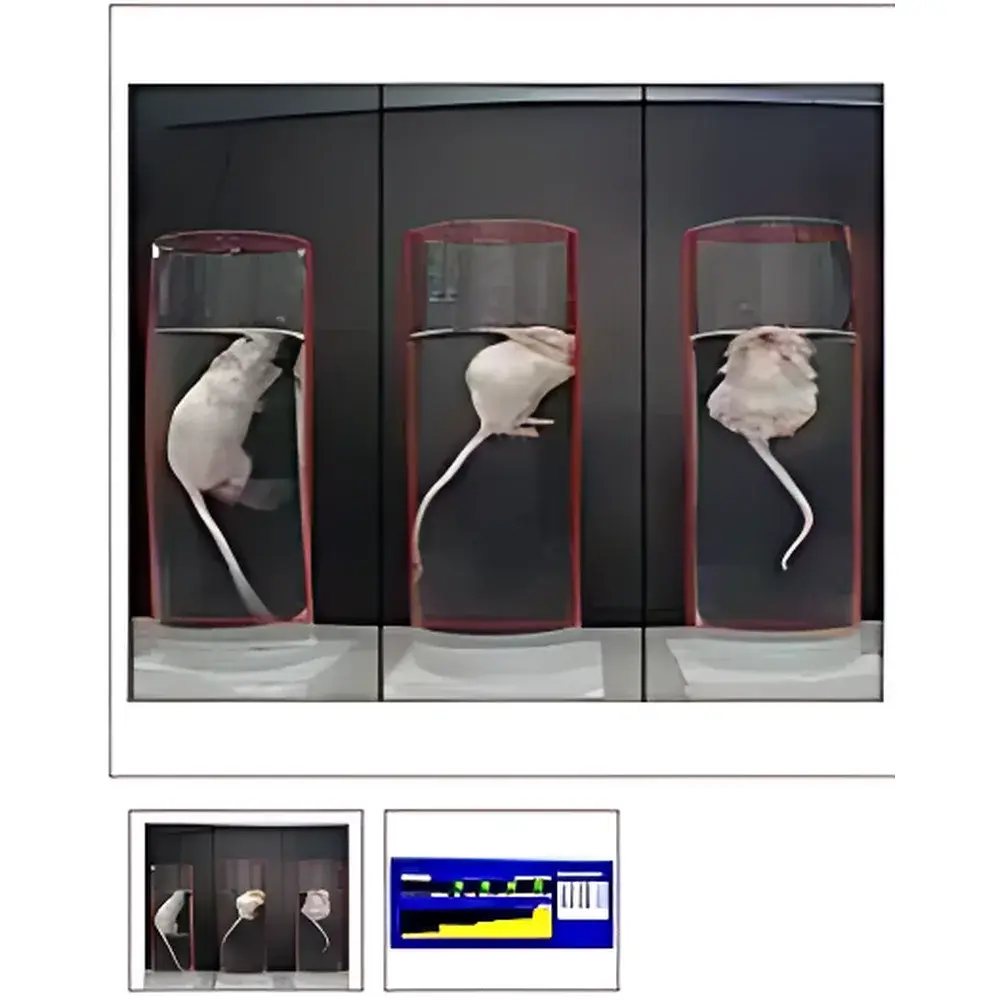
COULBOURN FREEZEFRAME-FW Forced Swim Test (FST) Analysis System
| Brand | COULBOURN |
|---|---|
| Origin | USA |
| Model | FREEZEFRAME-FW |
| Camera Interface | Standard CCD or USB 2.0/3.0 Video Input |
| Operating System | Windows 10/11 (64-bit) |
| Data Output Format | CSV, Excel-compatible, XML |
| Compliance | GLP-supporting audit trail logging (configurable), ISO/IEC 17025-aligned data integrity framework |
| Analytical Output | Immobility duration (s), immobility bouts count, latency to first immobility, total active time (swimming/climbing), motion velocity (px/frame), trajectory heatmaps |
| Software Architecture | Client-server capable, multi-user role-based access control (RBAC) |
Overview
The COULBOURN FREEZEFRAME-FW Forced Swim Test (FST) Analysis System is a validated, video-based behavioral quantification platform engineered for objective, high-reproducibility assessment of depressive-like phenotypes and fatigue-related endpoints in rodent models. It operates on the principle of automated pixel-based motion detection and spatial trajectory mapping within a standardized cylindrical water tank environment. The system captures behavioral output—primarily immobility (defined as minimal limb movement insufficient to support head above water surface), swimming, and climbing—using synchronized video acquisition and frame-difference algorithms calibrated against ethologically defined behavioral criteria. Unlike manual scoring, which introduces inter-observer variability and fatigue-induced bias, the FREEZEFRAME-FW applies consistent detection thresholds across sessions and operators, enabling longitudinal comparisons essential for preclinical antidepressant screening, neuropharmacological dose-response studies, and genetic model validation.
Key Features
- Real-time and post-hoc behavioral analysis with sub-second temporal resolution (30–60 fps configurable)
- Adaptive background subtraction and dynamic thresholding to accommodate variable lighting, water surface reflection, and animal fur coloration (e.g., albino vs. pigmented strains)
- Configurable region-of-interest (ROI) definition: independent segmentation of test chamber, water surface plane, and exclusion zones to eliminate edge artifacts
- Immobility detection logic compliant with Porsolt’s original FST protocol definitions and updated NIH Behavioral Core guidelines (2022)
- Integrated motion vector analysis: calculates instantaneous velocity, acceleration profiles, and directional persistence to differentiate passive floating from low-amplitude struggling
- Hardware-agnostic camera support: validated with industrial-grade monochrome CCD cameras (e.g., Basler acA1300-60gm) and plug-and-play USB3 vision cameras (e.g., FLIR Blackfly S)
- Embedded timestamp synchronization with external physiological monitors (e.g., telemetry ECG, core temperature probes) via TTL pulse input
Sample Compatibility & Compliance
The FREEZEFRAME-FW supports C57BL/6, BALB/c, CD-1, Sprague-Dawley, and Wistar rats and mice (18–35 g body weight). Water temperature is maintained at 25 ± 1 °C per ASTM E1953-21 standard for rodent behavioral assays. System calibration includes daily geometric distortion correction using printed checkerboard patterns and motion sensitivity validation with standardized moving targets. All raw video archives, processed event logs, and configuration metadata are stored with SHA-256 hash integrity verification. Audit trail functionality records user login/logout events, parameter modifications, and export actions—fully traceable for FDA 21 CFR Part 11 and EU Annex 11 compliance when deployed in regulated GLP environments.
Software & Data Management
FREEZEFRAME software (v5.2+) provides a native Windows GUI built on Qt framework, supporting drag-and-drop protocol templates, batch processing of multiple .avi/.mp4 files, and hierarchical project organization (Study → Cohort → Animal ID → Session). Data export modules generate ANSI-compliant CSV files containing per-frame motion metrics and summary statistics aligned with MIAME/FAIR principles. Optional integration with LabArchives ELN enables direct embedding of heatmaps and time-series plots into electronic lab notebooks. Role-based permissions restrict editing rights to Principal Investigators while granting read-only access to technicians—enabling secure collaboration without compromising data provenance.
Applications
- Preclinical evaluation of SSRI, SNRI, ketamine analogs, and novel fast-acting antidepressants
- Characterization of depressive endophenotypes in transgenic lines (e.g., BDNF Val66Met, CRH-overexpressing mice)
- Chronic stress paradigm validation (e.g., CMS, social defeat) and resilience biomarker discovery
- Interaction studies between metabolic dysfunction (e.g., diet-induced obesity) and affective behavior
- Neuroinflammatory models: microglial activation effects on motivational deficits assessed via FST kinetics
- Training and certification of junior researchers in standardized behavioral phenotyping protocols
FAQ
Is the FREEZEFRAME-FW compatible with third-party video acquisition hardware?
Yes—any DirectShow- or GenICam-compliant camera with Windows drivers is supported; COULBOURN provides a validated hardware compatibility list including Basler, FLIR, and Allied Vision models.
Can immobility criteria be customized per experimental protocol?
Yes—users define minimum immobility duration (default: 2 s), motion amplitude threshold (in pixels/frame), and minimum inter-bout interval to align with journal-specific reporting standards (e.g., Nature Protocols vs. Psychopharmacology).
Does the system meet regulatory requirements for IND-enabling toxicology studies?
When deployed with full audit trail enabled, electronic signatures, and validated installation/operation/performance qualification (IQ/OQ/PQ) documentation packages, it satisfies ICH M3(R2) and OECD 426 guidelines for behavioral endpoints in safety pharmacology.
How is inter-laboratory reproducibility ensured?
COULBOURN provides NIST-traceable calibration kits and cross-site benchmark datasets with ground-truth annotations, enabling labs to verify analytical consistency prior to multi-center studies.