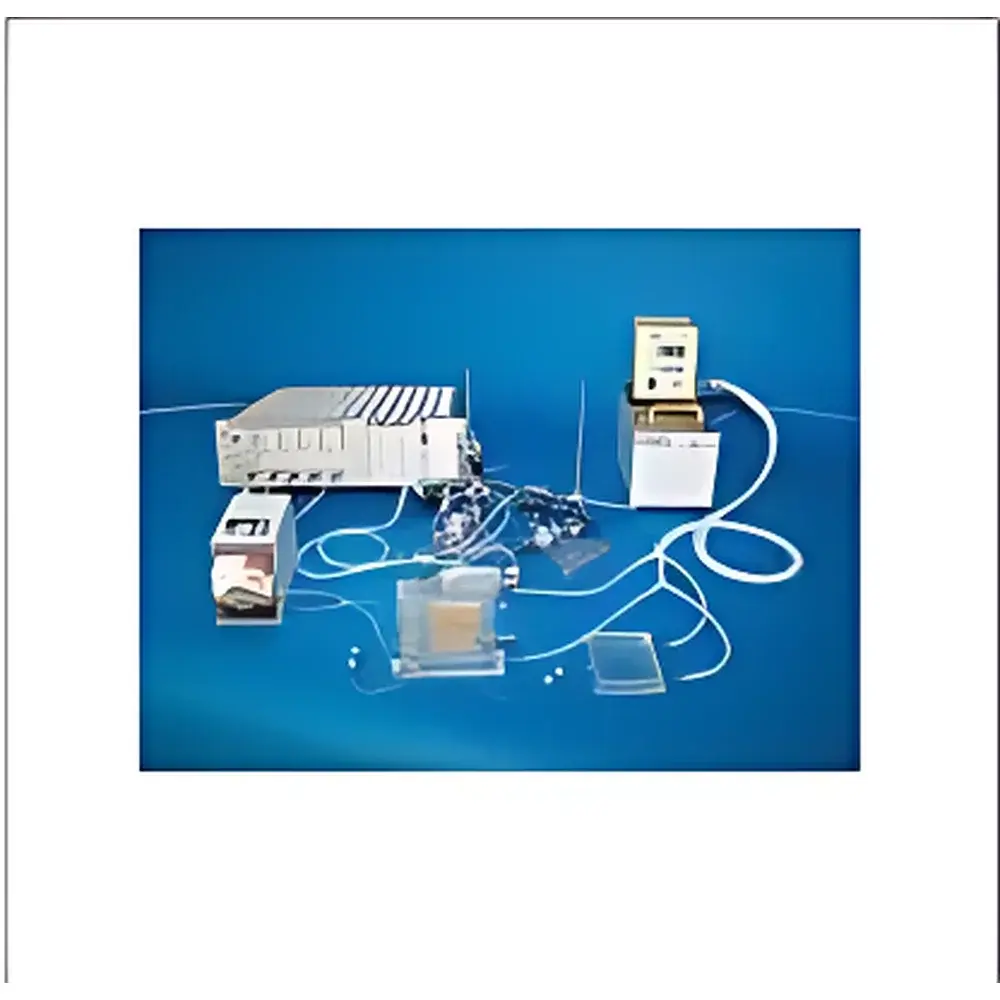
Isolated Lung & Lung Slice Perfusion System IL-1 and IL-2
| Origin | USA |
|---|---|
| Manufacturer Type | Authorized Distributor |
| Origin Category | Imported |
| Model | IL-1, IL-2 |
| Pricing | Available Upon Request |
Overview
The HSE–HA Isolated Lung & Lung Slice Perfusion System (Models IL-1 and IL-2) is a rigorously engineered platform for ex vivo respiratory physiology research. Designed around the principles of controlled hydrodynamic perfusion and physiological ventilation, the system enables real-time investigation of pulmonary structure–function relationships under tightly regulated hemodynamic and ventilatory conditions. It supports both whole-organ isolated mouse lung preparations and precision-cut lung slice (PCLS) assays—two complementary models widely adopted in mechanistic studies of airway reactivity, vascular permeability, inflammatory signaling (e.g., IL-1β, IL-2 pathway modulation), drug-induced pulmonary toxicity, and gas exchange kinetics. The system implements negative-pressure ventilation to replicate native thoracic mechanics, minimizing barotrauma while preserving alveolar architecture and epithelial–endothelial barrier integrity. Integrated pneumotachometry, low-dead-volume humidification, and dual-channel pressure–flow monitoring allow concurrent quantification of dynamic compliance, airway resistance, tidal volume, pulmonary vascular resistance, perfusate pO₂, and pH—critical endpoints for translational respiratory pharmacology and toxicology.
Key Features
- Modular architecture supporting both whole-organ isolated lung and precision-cut lung slice (PCLS) configurations
- Negative-pressure ventilator with programmable sigh breaths (augmented inspiratory cycles) to simulate physiological deep inspiration
- Low-dead-volume humidifier and calibrated pneumotachometer for accurate airflow measurement and conditioning
- Dual independent pressure transducers for simultaneous monitoring of pulmonary arterial pressure and left atrial pressure
- Integrated perfusate sampling port compatible with inline blood gas analyzers (pO₂, pCO₂, pH, electrolytes)
- Pre-wired, plug-and-play DAQ interface compatible with HSE-DAQ family platforms (BDAS, ACAD, PULMODYN, ISOHEART)
- Standardized mounting fixtures and fluidic manifolds compliant with ASTM F2903-22 (Standard Guide for In Vitro Pulmonary Toxicity Testing)
Sample Compatibility & Compliance
The IL-1 and IL-2 systems accommodate murine (C57BL/6, BALB/c), rat, and guinea pig lungs across developmental stages (neonatal to adult). PCLS modules support tissue thicknesses from 100–300 µm, compatible with enzymatic or vibratome-based sectioning protocols. All wetted components are constructed from USP Class VI-certified biocompatible polymers and medical-grade stainless steel. The system meets ISO 13485 design control requirements for research-use-only (RUO) instrumentation and supports GLP-compliant data acquisition when paired with HSE-DAQ systems configured for FDA 21 CFR Part 11 audit trails, electronic signatures, and secure user access tiers.
Software & Data Management
Data acquisition is managed via the HSE-DAQ software suite, which provides real-time signal visualization, automated parameter derivation (e.g., dynamic compliance = ΔVT/ΔPplat, pulmonary vascular resistance = ΔPPA-LA/Q̇), and timestamped annotation of experimental interventions (e.g., agonist bolus, hypoxic challenge). Raw analog inputs (pressure, flow, O₂, pH) are sampled at ≥1 kHz with 16-bit resolution. Export formats include CSV, MATLAB (.mat), and HDF5 for downstream analysis in Python (SciPy, Pandas) or commercial tools (MATLAB, GraphPad Prism). Optional modules include automated bronchoconstriction scoring, spectral analysis of respiratory oscillations, and batch-processing pipelines for longitudinal PCLS viability metrics.
Applications
- Assessment of IL-1β–mediated neutrophil recruitment and endothelial activation in acute lung injury models
- Pharmacological profiling of IL-2 receptor antagonists on pulmonary vascular tone and capillary leak
- In vitro evaluation of inhaled therapeutics (e.g., corticosteroids, β₂-agonists) on airway smooth muscle contractility in PCLS
- Mechanistic studies of SARS-CoV-2 spike protein–induced endothelial dysfunction using humanized perfusate systems
- Respiratory DMPK: Quantifying pulmonary first-pass metabolism and metabolite formation kinetics
- Toxicology screening per OECD TG 492 (Reconstructed Human Respiratory Tissue Models) and ICH S7B (hERG-independent cardiopulmonary safety)
FAQ
What species and lung sizes are supported by the IL-1 and IL-2 systems?
The IL-1 is optimized for mouse and small rodent lungs (up to 0.5 g wet weight); the IL-2 accommodates rat, guinea pig, and larger murine strains (up to 1.2 g), with adjustable chamber volumes and perfusion flow ranges.
Can the system be integrated with third-party oxygenators or metabolic monitors?
Yes—standard Luer-lock and 1/16″ Swagelok ports enable seamless integration with commercial membrane oxygenators, inline lactate sensors, and fluorescence-based Ca²⁺ or ROS detection modules.
Is regulatory documentation available for GLP audits?
Full IQ/OQ/PQ protocols, calibration certificates traceable to NIST standards, and 21 CFR Part 11–compliant software validation packages are provided upon request for qualified laboratories.
Does the system support normothermic or hypothermic perfusion?
Both modes are supported: temperature-controlled water-jacketed chambers maintain 37 °C ± 0.2 °C for normothermic studies; optional cryo-perfusion kits enable sub-physiological (20–25 °C) stabilization for ischemia–reperfusion modeling.