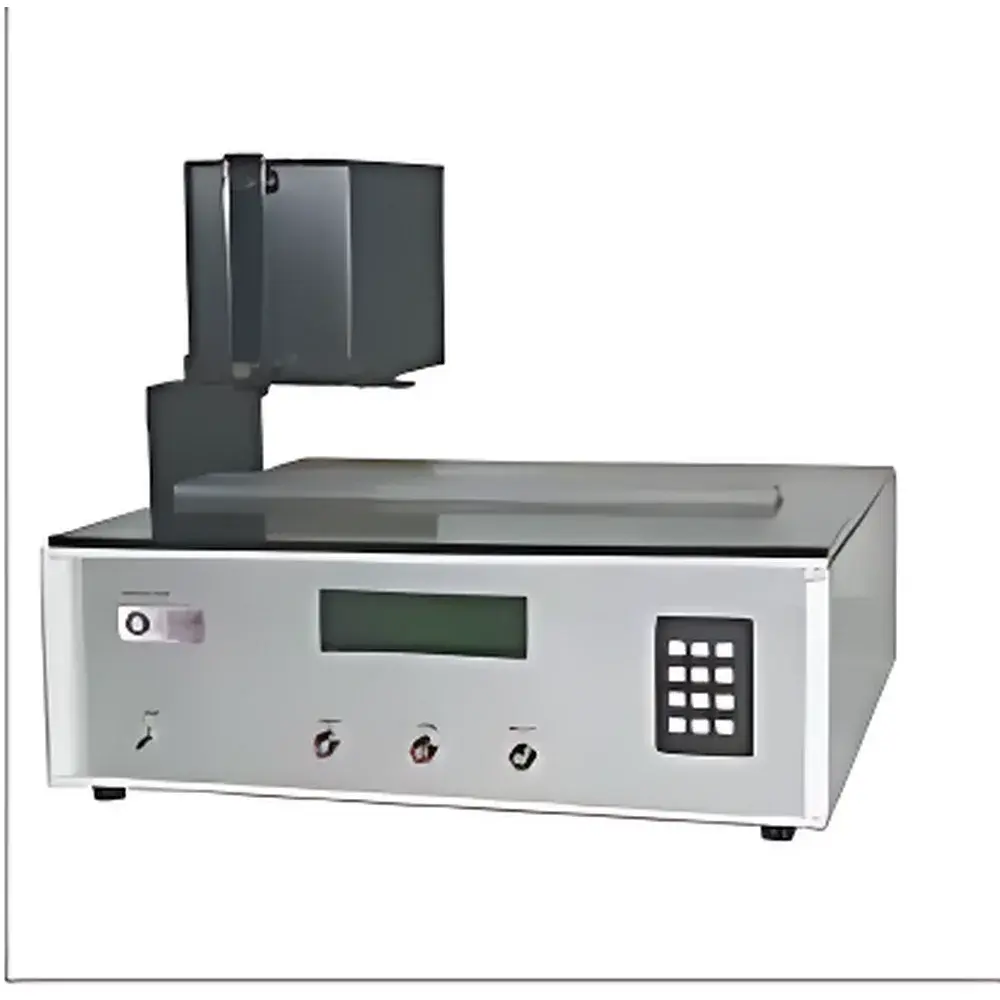
Ugo Basile Model 33 or 33T Tail-Flick Analgesiometer
| Brand | Ugo Basile |
|---|---|
| Origin | Italy |
| Model | 33 or 33T |
| Light Source Intensity Range | 0–250 (arbitrary units, ±1% accuracy) |
| Focal Spot Size | 4 × 6 mm |
| Reaction Time Resolution | 0.01 s |
| Preheating Temperature Range | 0–75 °C |
| Automatic Cut-off Timer | User-configurable |
| Data Output | RS-232 serial interface + thermal printer support |
| Compliance | Designed for GLP-compliant preclinical analgesia studies |
Overview
The Ugo Basile Model 33 and 33T Tail-Flick Analgesiometers are precision-engineered instruments for objective, quantitative assessment of thermal nociception in rodents—primarily mice and rats. Based on the classical tail-flick reflex paradigm, these devices apply a focused, controllable radiant heat stimulus to the dorsal surface of the tail and automatically detect the latency to withdrawal (flick) response. This latency serves as a validated behavioral endpoint reflecting central and peripheral modulation of pain transmission, making the system indispensable in pharmacological screening of analgesic compounds, mechanistic studies of nociceptive pathways, and translational research into genetic or pathological alterations in pain sensitivity. The instrument operates on the principle of radiant heat-induced nocifensive behavior, where thermal energy is delivered via a calibrated halogen lamp or LED-based source, and reaction onset is detected optically or mechanically—ensuring high reproducibility across repeated trials and inter-operator conditions.
Key Features
- Automated, operator-independent detection of tail-flick latency with 0.01-second temporal resolution—eliminating observer bias and improving intra- and inter-laboratory data consistency.
- Digitally adjustable radiant heat intensity (0–250 arbitrary units) with ±1% linearity and stability, enabling precise titration of stimulus strength across dose-response or time-course experiments.
- Optimized optical focus geometry: 4 × 6 mm rectangular spot ensures uniform thermal delivery while minimizing lateral heat diffusion and avoiding non-specific tissue activation.
- User-programmable automatic cut-off timer prevents tissue damage by terminating stimulus exposure after a pre-set maximum duration—critical for animal welfare compliance and regulatory adherence (e.g., EU Directive 2010/63/EU, NIH OLAW guidelines).
- Integrated tail preheating module (0–75 °C) allows thermal equilibration of tail skin prior to testing—reducing baseline variability caused by ambient temperature fluctuations or circadian thermoregulatory shifts.
- Full alphanumeric keypad interface supports entry of subject ID, session date/time, cut-off threshold, and experimental metadata—enabling traceable, audit-ready data capture.
Sample Compatibility & Compliance
The Model 33/33T is validated for use with adult mice (C57BL/6, CD-1, BALB/c) and rats (Sprague-Dawley, Wistar), accommodating tail diameters from 1.8 to 3.5 mm. Its design conforms to internationally recognized standards for preclinical pain research, including IASP (International Association for the Study of Pain) ethical guidelines and the principles of the 3Rs (Replacement, Reduction, Refinement). All hardware and firmware configurations support Good Laboratory Practice (GLP) requirements: full audit trails of parameter settings, timestamped event logs, and non-modifiable raw reaction time records. When connected to compliant laboratory information management systems (LIMS), the device meets FDA 21 CFR Part 11 criteria for electronic records and signatures when paired with appropriate validation protocols.
Software & Data Management
Data acquisition is handled via built-in microcontroller logic; no external PC is required for core operation. Reaction latencies, stimulus intensities, cut-off times, and subject identifiers are stored in non-volatile memory and can be exported in ASCII format via RS-232 serial interface (standard DB9 connector). Optional Ugo Basile TailFlick Software (v5.x) provides real-time visualization, batch analysis, statistical grouping (e.g., ANOVA, post-hoc Tukey), and export to CSV, Excel, or GraphPad Prism-compatible formats. All software modules include electronic signature capability, change control logs, and user access levels—facilitating regulatory submissions under ISO/IEC 17025 or OECD GLP frameworks.
Applications
- Primary and secondary screening of opioid and non-opioid analgesics (e.g., morphine, gabapentin, NSAIDs) in acute thermal pain models.
- Characterization of hyperalgesia or hypoalgesia in transgenic, knockout, or disease-model rodents (e.g., diabetic neuropathy, inflammatory arthritis, chemotherapy-induced peripheral neuropathy).
- Evaluation of spinal vs. supraspinal mechanisms via intrathecal or intracerebroventricular drug administration combined with tail-flick testing.
- Pharmacokinetic–pharmacodynamic (PK–PD) correlation studies requiring high-temporal-resolution behavioral endpoints.
- Standardized training and certification of animal technicians in reflex-based nociception assays per institutional animal care and use committee (IACUC) requirements.
FAQ
What is the difference between Model 33 and Model 33T?
Model 33 is the base configuration with manual tail positioning and fixed-height lamp alignment. Model 33T includes a motorized, height-adjustable stage and integrated tail-positioning clamp—enhancing repeatability across operators and reducing inter-animal variability in tail curvature and distance-to-source.
Can the device be used for chronic pain models?
Yes—when combined with longitudinal testing protocols and appropriate controls, it supports repeated measures over days or weeks. Preheating and auto-cut-off functions ensure consistent thermal dosing and minimize cumulative tissue stress.
Is calibration traceable to national standards?
Ugo Basile provides factory calibration certificates traceable to NIST (National Institute of Standards and Technology) for optical output intensity and timing circuitry. Annual recalibration services are available through authorized service centers in EMEA and North America.
Does the system comply with FDA 21 CFR Part 11?
The hardware itself is Part 11–capable when deployed with validated software (TailFlick v5.2+), electronic signature workflows, and documented system suitability tests—though final compliance depends on site-specific validation and procedural controls.
How is animal welfare safeguarded during operation?
Three independent safety layers: (1) programmable cut-off timer, (2) real-time thermal feedback monitoring (optional infrared sensor add-on), and (3) visual/audible alert upon stimulus initiation—ensuring immediate operator intervention if required.
Related Products