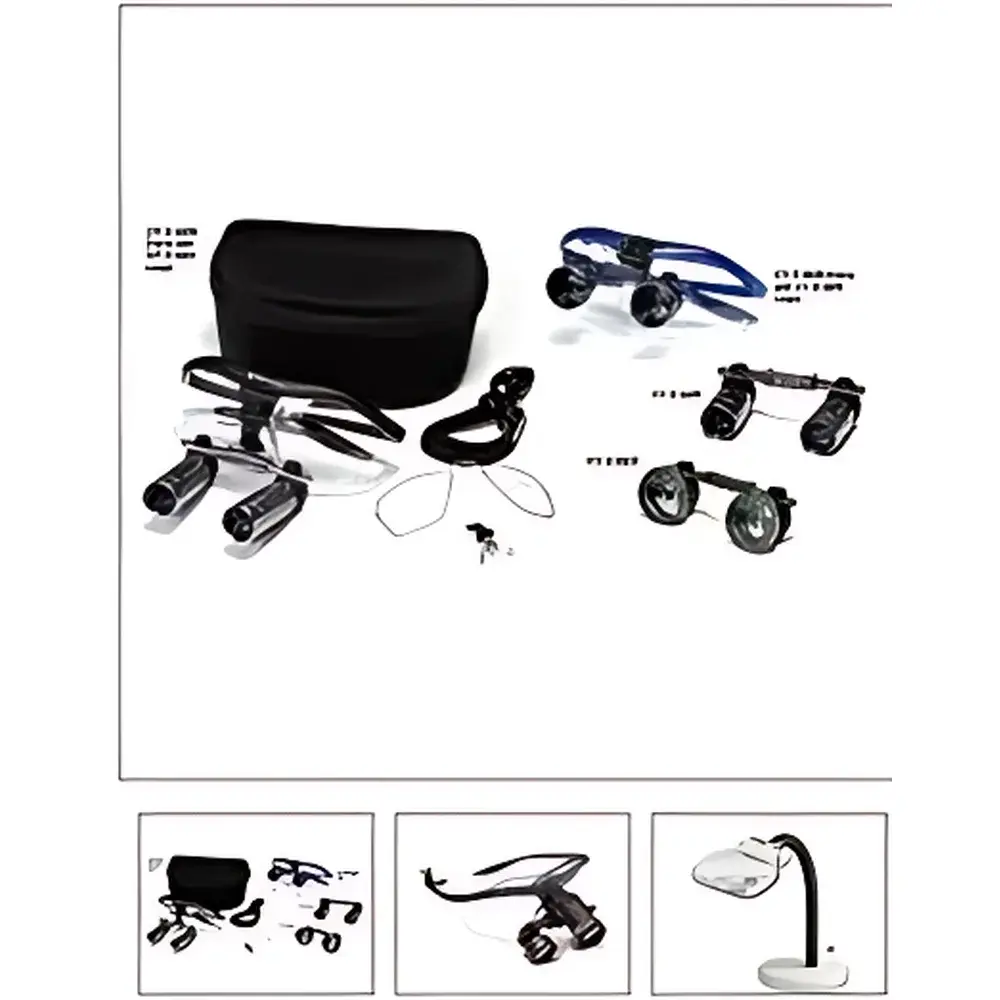
Harvard Apparatus Precision Optical Magnifier
| Brand | Harvard Apparatus |
|---|---|
| Origin | USA |
| Manufacturer Type | Authorized Distributor |
| Origin Category | Imported |
| Model | Not Specified |
| Pricing | Upon Request |
Overview
The Harvard Apparatus Precision Optical Magnifier is a high-fidelity, ergonomically engineered visual aid designed for laboratory, biomedical research, and precision inspection applications where consistent, distortion-free magnification is essential. Unlike digital or LED-assisted magnifiers, this instrument operates on classical optical principles—utilizing a single-element or compound achromatic lens system to deliver true-to-scale, parallax-minimized image enlargement without electronic dependency. Its design prioritizes optical fidelity over digital enhancement, making it particularly suitable for tasks requiring color accuracy, long-duration visual assessment (e.g., histological slide screening, microsurgical preparation, or calibration target verification), and environments where electromagnetic interference must be avoided.
Key Features
- Optically optimized lens assembly fabricated from high-transmission, low-dispersion optical crown glass—minimizing chromatic aberration and spherical distortion across the field of view.
- Lightweight, corrosion-resistant housing constructed from aerospace-grade aluminum alloy, anodized for durability and tactile stability during extended use.
- Ergonomic contouring with non-slip rubberized grip zones and adjustable focal distance via integrated knurled focus ring—enabling rapid adaptation to varying working distances (typical range: 100–300 mm).
- Anti-reflective (AR) multi-coating applied to all air-glass interfaces to enhance light transmission (>98% per surface) and reduce glare under standard laboratory illumination (300–700 nm spectral range).
- No power supply, batteries, or firmware required—ensuring operational continuity in GMP cleanrooms, ISO Class 5–7 environments, and regulated analytical workflows where device validation complexity must be minimized.
Sample Compatibility & Compliance
This magnifier is compatible with a broad range of static and semi-static specimens, including glass microscope slides, Petri dishes, printed calibration charts (e.g., NIST-traceable resolution targets), polymer films, and metallic reference standards. It imposes no thermal, electrical, or chemical load on samples—making it ideal for pre- and post-analysis visual verification in QC/QA protocols. While not a measurement instrument per se, its optical performance supports adherence to ASTM E2926-21 (Standard Guide for Visual Inspection Using Optical Aids) and complements ISO/IEC 17025:2017 requirements for documented visual examination procedures. The unit itself carries CE marking for general laboratory equipment and conforms to RoHS Directive 2011/65/EU for hazardous substance restrictions.
Software & Data Management
The Harvard Apparatus Precision Optical Magnifier is a purely analog optical device and does not incorporate embedded electronics, sensors, or connectivity interfaces. As such, it generates no raw data files, requires no software installation, and introduces zero cybersecurity or audit trail obligations. This absence of digital components simplifies qualification (IQ/OQ/PQ) in regulated environments—including FDA-regulated laboratories operating under 21 CFR Part 11, where electronic record integrity controls would otherwise apply. Documentation packages include optical performance test reports (MTF measurements at specified spatial frequencies), material certification for housing alloys, and coating spectral transmittance curves—available upon request for GLP/GMP documentation archives.
Applications
- Pre-use verification of pipette tip integrity and filter sterility in aseptic processing suites.
- Visual assessment of crystallization patterns in pharmaceutical polymorph screening studies.
- Manual alignment verification of microfluidic channel features prior to bonding or sealing.
- Non-destructive evaluation of solder joint quality in prototype PCB assemblies during R&D prototyping.
- Supporting role in USP and compliance workflows—where direct visual confirmation of vial stopper seating or syringe plunger position is required without contact.
- Teaching tool in undergraduate biophysics and materials science labs for introducing fundamental concepts of angular magnification, depth of field, and resolution limits governed by Rayleigh criterion.
FAQ
Is this magnifier calibrated or supplied with a calibration certificate?
No—this is a passive optical device without quantifiable output metrics (e.g., diopter deviation or magnification error). Calibration is neither defined nor required per ISO 10110-5; however, factory verification reports confirming nominal magnification (±2%) and centering tolerance (<0.1 mm) are available upon order specification.
Can it be mounted on a stereo microscope’s auxiliary port?
Not natively—the unit is handheld and lacks standardized C-mount or SM1 threading. Third-party mechanical adapters may be used, but optical coupling is not guaranteed and may introduce vignetting or focus shift.
Does Harvard Apparatus provide replacement lenses or custom focal lengths?
Yes—standard models support optional interchangeable lens modules (1.5×, 2.0×, 3.5×, 5.0× magnification) with matched housing inserts. Custom focal lengths and aspheric variants are available under OEM agreement with minimum order quantities.
Related Products