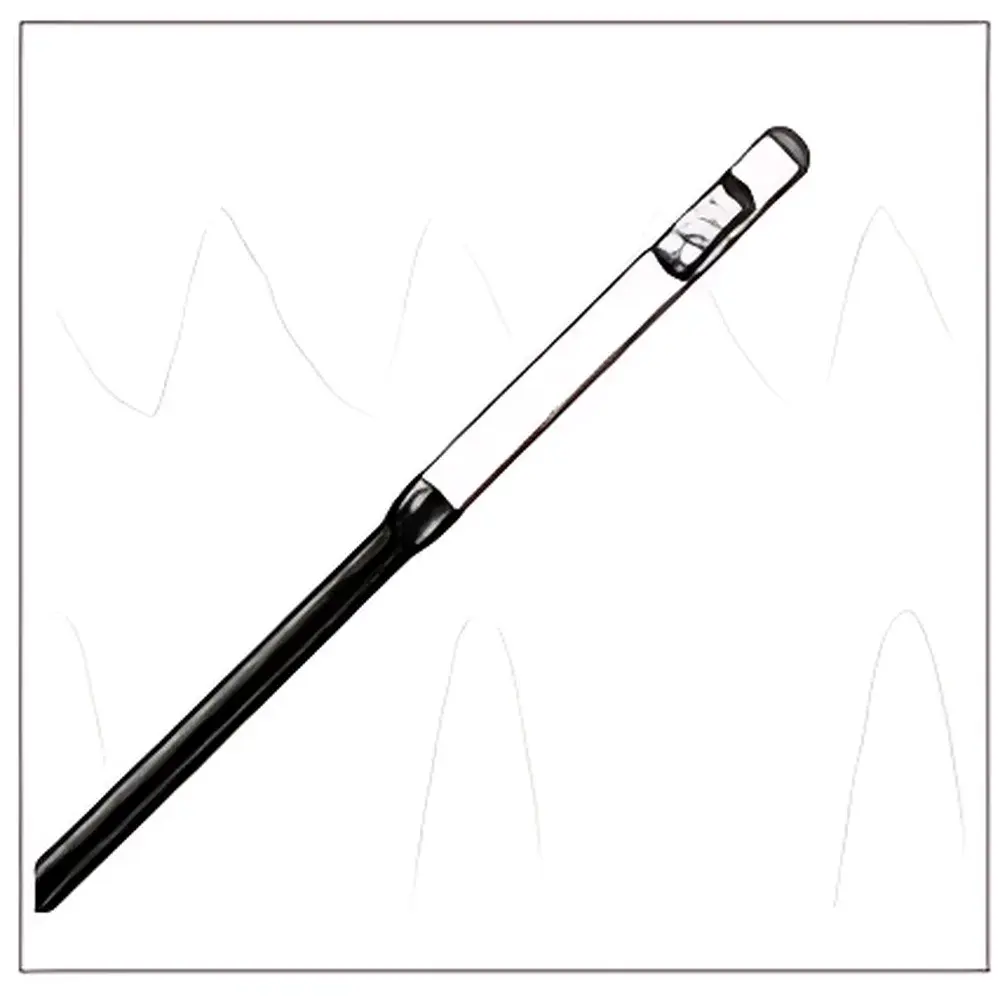
Scisense FT111B / FT211B Rodent Pressure Catheter System
| Origin | USA |
|---|---|
| Manufacturer Type | Authorized Distributor |
| Origin Category | Imported |
| Model | FT111B (Mouse), FT211B (Rat) |
| Price | Upon Request |
Overview
The Scisense FT111B and FT211B Rodent Pressure Catheter Systems are high-fidelity, micro-miniature intravascular pressure sensing platforms engineered specifically for in vivo hemodynamic assessment in small animal models. Based on piezoresistive MEMS sensor technology embedded at the catheter tip, these systems operate on the principle of Wheatstone bridge transduction under constant-current excitation—delivering real-time, high-bandwidth arterial and ventricular pressure waveforms with minimal vascular perturbation. As validated in peer-reviewed cardiovascular physiology literature (Woldbaek et al., AJP-Heart Circ Physiol 285:H2233–H2239, 2003), the 1.2 French (0.40 mm outer diameter) FT111B catheter represents the optimal balance between mechanical invasiveness and signal fidelity in murine studies; larger-diameter catheters (e.g., 1.4F) introduce measurable flow disturbance and compliance artifacts, while sub-1.2F designs compromise sensor robustness and long-term operational stability.
Key Features
- Ultra-low-profile sensor tip: 0.39 mm diameter (FT111B) or 0.63 mm (FT211B), side-mounted at distal extremity with 0.5 mm offset from tip apex for precise anatomical placement
- Micro-bore polyimide shaft: 0.9F (0.29 mm OD) for mice, 1.6F (0.53 mm OD) for rats—maximizing flexibility while minimizing lumen occlusion and endothelial trauma
- Full reusability: Sterilizable via ethylene oxide or gamma irradiation; validated for ≥5 in vivo implantations per catheter under GLP-compliant handling protocols
- Broad dynamic range: –50 to +300 mmHg, calibrated across physiological temperature range (32–42°C)
- High-frequency response: DC to >10 kHz (–3 dB), enabling accurate capture of dP/dtmax, pulse wave velocity, and high-frequency spectral components
- Dual-sensor configuration available (e.g., FT112D): Simultaneous aortic and left ventricular pressure acquisition with matched gain and phase response
Sample Compatibility & Compliance
The FT-series catheters are validated for use in genetically modified mouse strains—including Cre-loxP, CRISPR/Cas9-edited, and humanized transgenic models—where minimal surgical footprint and repeatable sensor positioning are critical. The 0.9F polyimide shaft provides torsional rigidity sufficient for retrograde carotid or femoral artery cannulation yet compliant enough to navigate tortuous microvasculature without vessel wall damage. All catheters comply with ISO 10993-1 (biological evaluation of medical devices) for cytotoxicity, sensitization, and intracutaneous reactivity. When paired with the FP891A Pressure Control Unit, the full system supports audit-ready data acquisition workflows aligned with FDA 21 CFR Part 11 requirements—including electronic signatures, calibration traceability (NIST-traceable reference standards), and immutable audit logs for GLP/GCP studies.
Software & Data Management
Scisense catheters interface natively with third-party acquisition systems (e.g., ADInstruments LabChart, National Instruments DAQmx, Spike2) via standard BNC analog output. The FP891A control unit integrates a 300 Hz low-pass anti-aliasing filter, zero and +100 mmHg two-point calibration circuitry, and ±12 Vdc regulated excitation. Output sensitivity is 2.2 V/100 mmHg (adjustable upon request), with total system noise floor < 2 mmHg RMS. Raw voltage signals retain full bandwidth for post-hoc derivative analysis (e.g., dP/dt, elastance, impedance spectra). Calibration certificates—including temperature-compensated gain coefficients and zero-drift profiles (<6 mmHg/24 h)—are supplied with each catheter batch and archived digitally for regulatory submission.
Applications
- Chronic and acute hemodynamic phenotyping in transgenic mouse models of hypertension, heart failure, and arrhythmia
- Pharmacodynamic evaluation of vasoactive compounds (e.g., PDE5 inhibitors, ET-1 antagonists) with beat-to-beat pressure resolution
- Validation of non-invasive imaging modalities (e.g., Doppler echocardiography, MRI-derived stroke volume) against gold-standard invasive pressure-volume loops
- Neurovascular coupling studies requiring simultaneous cortical perfusion pressure and systemic arterial pressure monitoring
- Preclinical safety pharmacology (ICH S7B) assessing QT interval prolongation via arterial pressure waveform morphology analysis
FAQ
What is the recommended sterilization method for repeated catheter use?
Ethylene oxide gas sterilization (2–3 hours, 55°C) or gamma irradiation (25 kGy) is validated; autoclaving is not permitted due to polyimide thermal limits.
Can the FT111B be used in rat models?
No—the FT111B is optimized for mice (≤25 g); use FT211B (1.6F) or FT212A (1.9F) for rats (200–500 g) to maintain signal-to-noise ratio and mechanical stability.
Is real-time pressure-volume loop acquisition supported?
Yes—when coupled with a compatible volume conductance catheter (e.g., Scisense FT-CD series) and synchronized sampling at ≥1 kHz, full PV loop construction is achievable using vendor-agnostic software.
How is sensor drift compensated during long-term recordings?
Zero-drift is mitigated by periodic in situ recalibration using the FP891A’s dual-point circuitry; automated drift-correction algorithms are embedded in Scisense’s optional AcqKnowledge plugin.
Are custom lengths or curvatures available beyond standard configurations?
Yes—custom shaft lengths (30–150 cm), tip curvature radii (5–20 mm), and hybrid material constructions (e.g., polyimide–nylon co-extrusions) are available under NRE agreement with 8-week lead time.