
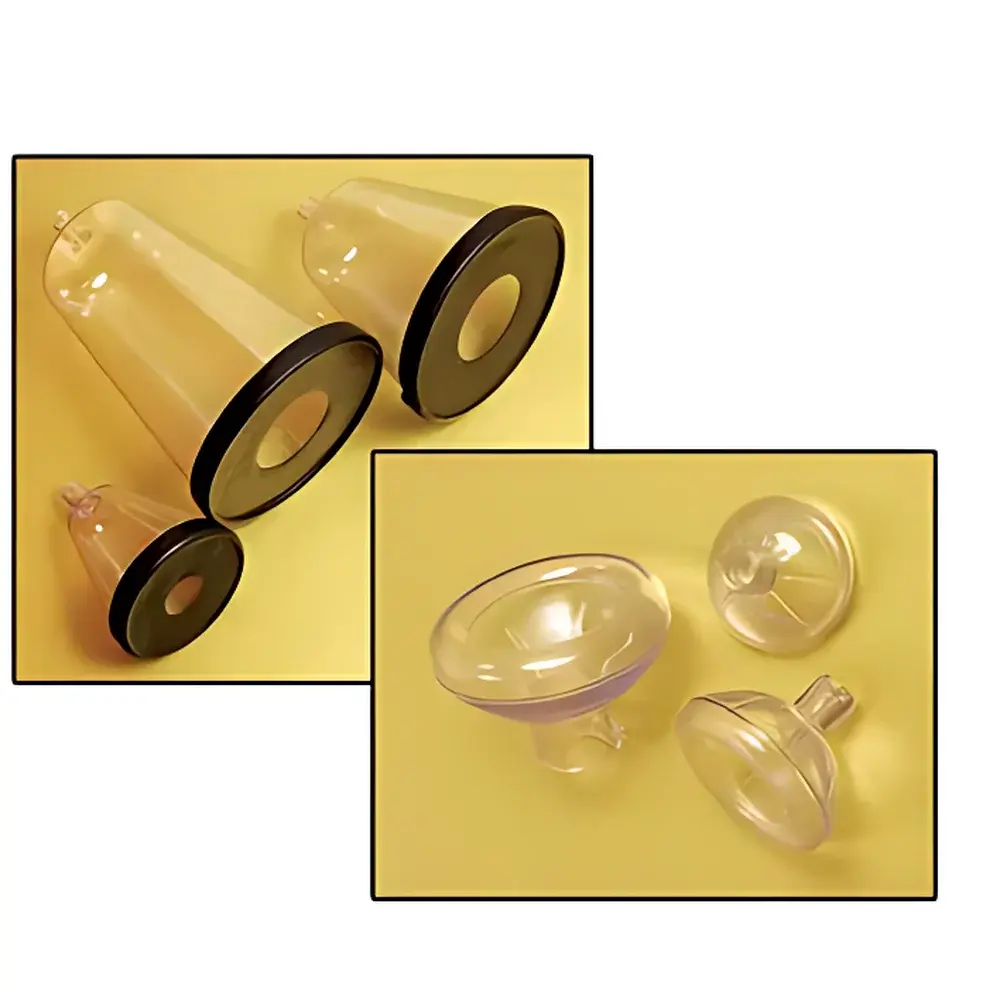
Harvard Apparatus Animal Anesthesia Mask Set
| Brand | Harvard Apparatus |
|---|---|
| Origin | USA |
| Manufacturer Type | Authorized Distributor |
| Origin Category | Imported |
| Model | Mask Series (Canine, Feline, Rodent/Avian) |
| Pricing | Available Upon Request |
| Diaphragm Opening Diameter | 25 mm / 38 mm / 44 mm / 50 mm (varies by size) |
| Port ID | 11.9 mm / 15 mm |
| Material | Polycarbonate (mask body), Medical-Grade Rubber (diaphragm) |
| Sizes | Small, Medium, Large, Multi-Pack Kits |
Overview
The Harvard Apparatus Animal Anesthesia Mask Set is a precision-engineered suite of non-invasive inhalation delivery interfaces designed for controlled administration of volatile anesthetic agents—including isoflurane, sevoflurane, and halothane—to laboratory animals across standardized preclinical research workflows. These masks operate on the principle of passive rebreathing or semi-closed circuit delivery, where inspired gas flow is directed through a compliant diaphragm-sealed chamber that conforms dynamically to the animal’s facial contours, minimizing dead space and ensuring consistent tidal volume delivery. Engineered for compatibility with standard small-animal anesthesia machines (e.g., VetEquip, SomnoSuite, and Harvard Apparatus vaporizer-integrated systems), each mask integrates a calibrated port interface aligned with ISO 5356-1 tapered conical connectors (15 mm internal diameter), enabling secure, leak-free attachment to breathing circuits and flow sensors. The design prioritizes physiological fidelity: low-resistance airflow paths, minimal CO2 rebreathing, and rapid wash-in/wash-out kinetics support stable anesthetic depth during longitudinal procedures such as functional imaging, electrophysiology, or surgical intervention.
Key Features
- Modular sizing system covering species-specific anatomical ranges: canine (small/large), feline (small/medium/large), and rodent/avian (mouse, guinea pig, songbird) models
- Optimized diaphragm geometry—25 mm to 50 mm opening diameters—with medical-grade silicone-rubber or thermoplastic elastomer diaphragms for elastic recoil and pressure-responsive sealing
- Rigid polycarbonate mask bodies (canine/feline variants) offering optical clarity, chemical resistance to anesthetic vapors, and autoclavability (up to 121°C, 15 psi, 20 min)
- Consistent 15 mm (ID) conical ports compliant with ISO 5356-1, enabling direct coupling to flow meters, capnographs, and scavenging systems
- Low-dead-space configuration (< 5 mL in small rodent masks) validated per ASTM F2745-22 for small-animal inhalation device performance testing
- Non-sterile, single-user reusable design supporting GLP-compliant cleaning protocols (70% ethanol immersion, detergent-based ultrasonic cleaning)
Sample Compatibility & Compliance
This mask set supports routine use in IACUC-approved rodent, lagomorph, and companion animal studies. Canine masks accommodate animals ≥ 5 kg; feline masks are validated for cats 2–7 kg; rodent/avian masks are suitable for mice (18–35 g), guinea pigs (250–700 g), and passerine birds (15–60 g). All components meet USP Class VI biocompatibility requirements for short-term mucosal contact. The polycarbonate housing complies with UL 94 V-0 flammability rating for laboratory safety. While not individually CE-marked as a medical device, the system aligns with ISO 13485-aligned manufacturing controls applied by Harvard Apparatus’ FDA-registered contract manufacturers. Documentation packages include material certifications (RoHS, REACH), extractables testing reports, and traceable lot-level QC data—supporting audit readiness under AAALAC International standards and NIH OLAW compliance frameworks.
Software & Data Management
These masks are hardware-only interfaces and do not incorporate embedded electronics or firmware. However, they are fully interoperable with third-party anesthesia monitoring platforms—including DSI Ponemah, ADInstruments LabChart, and Kent Scientific PhysioSuite—that record real-time parameters such as respiratory rate, tidal volume (via inline pneumotachography), end-tidal CO2, and inspired O2/anesthetic concentration. When paired with calibrated flow sensors (e.g., Honeywell AW series) and analog-to-digital acquisition systems, the masks enable quantitative assessment of ventilation efficiency and anesthetic uptake kinetics. Audit-trail functionality is maintained at the host software level, satisfying 21 CFR Part 11 requirements when used within validated GxP environments—provided the full acquisition chain (sensor → DAQ → software) undergoes IQ/OQ/PQ verification.
Applications
- Induction and maintenance of surgical anesthesia in chronic implantation studies (e.g., cranial window, catheterization, telemetry transmitter placement)
- Functional MRI and PET imaging sessions requiring stable, motion-free immobilization without injectable sedatives
- Longitudinal neurophysiological recording (EEG, LFP, single-unit) where hemodynamic stability and precise anesthetic titration are critical
- Toxicology and pharmacokinetic studies evaluating respiratory depression or airway reactivity to novel compounds
- Development and validation of closed-loop anesthetic delivery algorithms using real-time feedback from capnographic or pulse oximetry signals
FAQ
Are these masks compatible with isoflurane vaporizers from non-Harvard manufacturers?
Yes—provided the vaporizer output line terminates in a standard 15 mm conical connector (ISO 5356-1), mechanical and gas-path compatibility is assured.
Can the rubber diaphragms be replaced independently?
Yes—replacement diaphragms (P/N HA-MD-RUB-SET) are available as consumable kits, with shelf life validated for 36 months under ambient storage.
Is sterilization via ethylene oxide (EtO) recommended?
No—EtO exposure may degrade diaphragm elasticity and compromise seal integrity; autoclaving or liquid disinfection is preferred.
Do mask sizes correlate directly with animal weight bands?
Size selection must be based on snout-to-orbital distance and mandibular width—not weight alone; dimensional reference charts are provided in the technical manual (Rev. 4.2, Section 3.1).
What leakage rate specifications apply under 1 L/min flow conditions?
Measured leakage is ≤ 30 mL/min at 1 kPa backpressure (tested per ASTM F2745 Annex B), well within acceptable thresholds for rodent and rabbit protocols.





