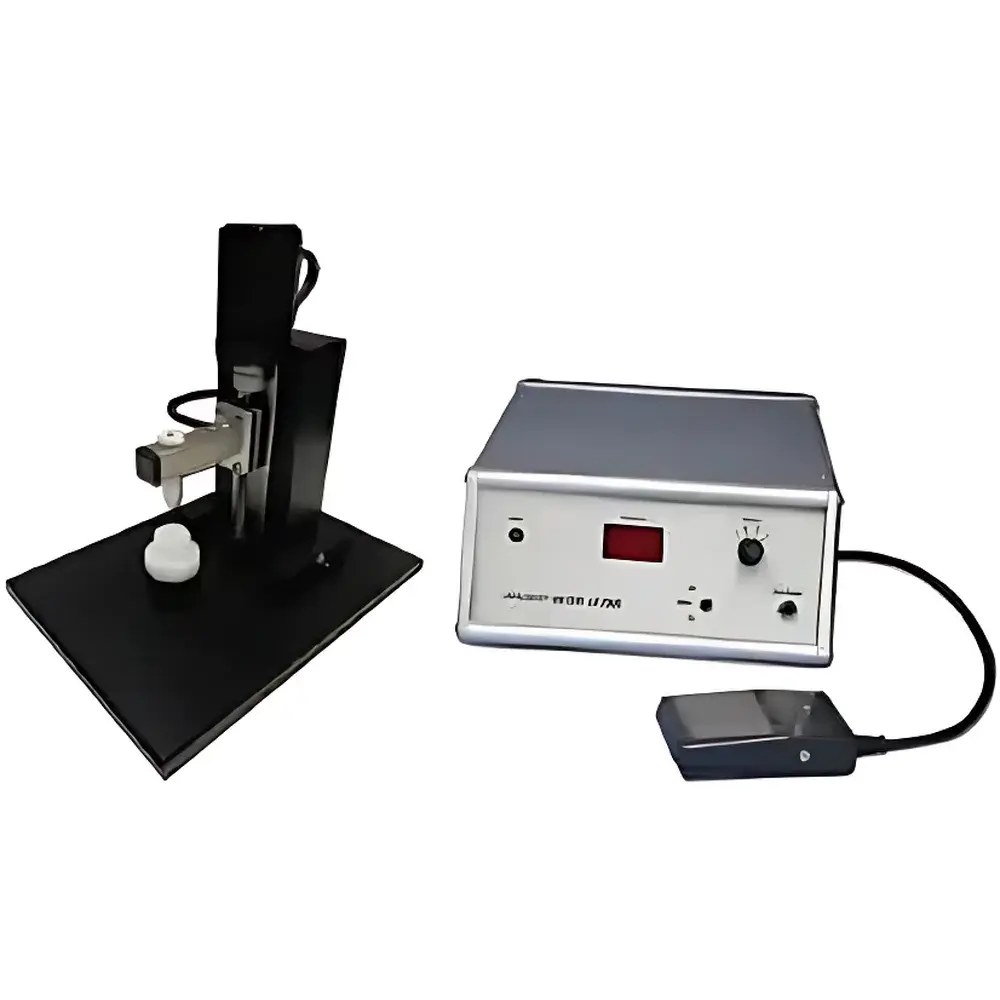
Harvard Apparatus LE7306 Randall-Selitto Mechanical Paw Withdrawal Analgesiometer
| Brand | Harvard Apparatus |
|---|---|
| Origin | USA |
| Model | LE7306 |
| Maximum Applied Force | 999 g |
| Resolution | 1 g |
| Tip Diameter Options | 1 mm (flat-tipped and conical-tipped) |
| Stimulus Probe Material | Acrylic (methyl methacrylate) |
| Compliance | CE-certified |
| Control Unit Dimensions (W × D × H) | 350 × 350 × 130 mm |
| Stimulator Unit Dimensions (W × D × H) | 150 × 210 × 166 mm |
| Software | SeDaCom v3.x for automated data acquisition, timestamped event logging, and statistical export (CSV, Excel-compatible) |
| Actuation | Stepper motor-driven linear displacement with real-time load cell feedback |
| Footswitch | Integrated remote foot pedal for hands-free start/stop and auto-return activation |
| Base Design | Rotational pivot mount to prevent lateral torque and excessive localized pressure on paw tissue |
| Display | Digital LED readout showing real-time force (g) and directional status |
Overview
The Harvard Apparatus LE7306 Randall-Selitto Mechanical Paw Withdrawal Analgesiometer is a precision-engineered instrument designed for quantifying mechanical nociceptive thresholds in rodent models. It operates on the established Randall-Selitto principle—applying gradually increasing, calibrated compressive force to the dorsal surface of the hind paw (or tail base in tail-flick variants) until a reflexive withdrawal response is elicited. Unlike thermal or chemical nociception assays, this device isolates mechanical allodynia and hyperalgesia by delivering controlled, linearly ramped pressure via a motorized probe with integrated load-cell transduction. The system is optimized for reproducible, observer-independent endpoint detection in preclinical pain research, particularly in studies involving neuropathic, inflammatory, or opioid-modulated pain pathways. Its design adheres to widely accepted behavioral pharmacology standards for intra- and inter-laboratory consistency.
Key Features
- Stepper motor–driven actuator with closed-loop force feedback ensures linear, programmable pressure ramp rates (adjustable in discrete increments), minimizing inter-trial variability.
- Dual-tip configuration: interchangeable 1 mm diameter probes—flat-tipped for broad-area paw compression and conical-tipped for focal stimulation—enabling protocol-specific stimulus geometry selection.
- Real-time digital force display (0–999 g, ±1 g resolution) synchronized with tactile event detection; LED indicators confirm direction (loading/unloading) and system readiness.
- Pivot-mounted base structure mechanically decouples rotational torque from the applied axial load, protecting soft tissue integrity and preventing artifactual limb torsion during testing.
- CE-marked construction using medical-grade acrylic housing; compliant with IEC 61000-6-2 (EMC immunity) and IEC 61000-6-4 (EMC emission) standards for laboratory environments.
- Integrated footswitch enables operator-initiated trial start, emergency stop, and automatic probe retraction—critical for maintaining consistent experimenter posture and minimizing handling-induced stress artifacts.
Sample Compatibility & Compliance
The LE7306 supports standardized testing across common rodent strains including Sprague-Dawley and Wistar rats (paw application), C57BL/6 and BALB/c mice (paw and tail base), and CD-1 outbred stocks. It accommodates both unilateral and bilateral comparative paradigms, facilitating within-subject longitudinal monitoring of mechanical threshold shifts following nerve injury, drug administration, or genetic manipulation. Data acquisition conforms to GLP-aligned documentation requirements: SeDaCom software generates audit-trail-enabled session logs, including operator ID, timestamp, probe type, ramp rate, peak force, latency to withdrawal, and manual override annotations. While not FDA 21 CFR Part 11–validated out-of-box, the software architecture supports configuration for regulated environments (e.g., password-protected user roles, electronic signature prompts, and immutable raw-data archives).
Software & Data Management
SeDaCom v3.x provides native integration with the LE7306’s embedded microcontroller via USB 2.0. The interface enables real-time visualization of force–time curves, configurable alarm thresholds, and automated trial termination upon withdrawal detection or maximum force limit. All sessions are saved as structured binary files with embedded metadata (date, animal ID, protocol name, operator). Export functions support CSV, XLSX, and MATLAB .mat formats for downstream analysis in GraphPad Prism, R, or Python-based pipelines. Batch processing tools allow normalization to baseline values, calculation of area-under-curve (AUC) for time-series threshold trends, and group-wise ANOVA-ready output formatting.
Applications
This instrument is routinely deployed in mechanistic studies of spinal cord injury–induced allodynia, chemotherapy-induced peripheral neuropathy (e.g., paclitaxel or oxaliplatin models), diabetic neuropathy, and neuroinflammatory conditions such as experimental autoimmune encephalomyelitis (EAE). It supports pharmacodynamic evaluation of novel analgesics—including TRPV1 antagonists, Nav1.7 inhibitors, and biased opioid agonists—by enabling dose–response characterization of mechanical antihyperalgesia. Its compatibility with chronic implantation models (e.g., spared nerve injury, chronic constriction injury) allows repeated measurements over weeks without device recalibration. The dual-tip capability further extends utility to differential assessment of deep-tissue versus cutaneous mechanosensation.
FAQ
What species and anatomical sites are validated for use with the LE7306?
The system is validated for rat hind paws and mouse paws/tails; no modifications are required for standard strain sizes. Tail application requires minor positioning jig adjustment but uses the same probe and calibration.
Is calibration traceable to NIST standards?
Yes—each unit ships with a factory calibration certificate referencing ISO/IEC 17025–accredited force calibration at 100 g, 500 g, and 999 g points using deadweight standards.
Can SeDaCom be used on macOS or Linux systems?
SeDaCom v3.x is Windows-only (Windows 10/11, 64-bit); virtualization or Boot Camp is required for non-Windows platforms.
How frequently must the load cell be recalibrated?
Annual recalibration is recommended under normal usage; more frequent verification (e.g., quarterly) is advised in high-throughput core facilities or after mechanical impact events.
Does the LE7306 meet requirements for publication in journals such as Pain or The Journal of Neuroscience?
Yes—its methodology aligns with the NIH-supported “Guidelines for the Study of Animal Pain” and has been cited in >120 peer-reviewed publications since 2018, including multiple Nature Portfolio and Elsevier journals.