
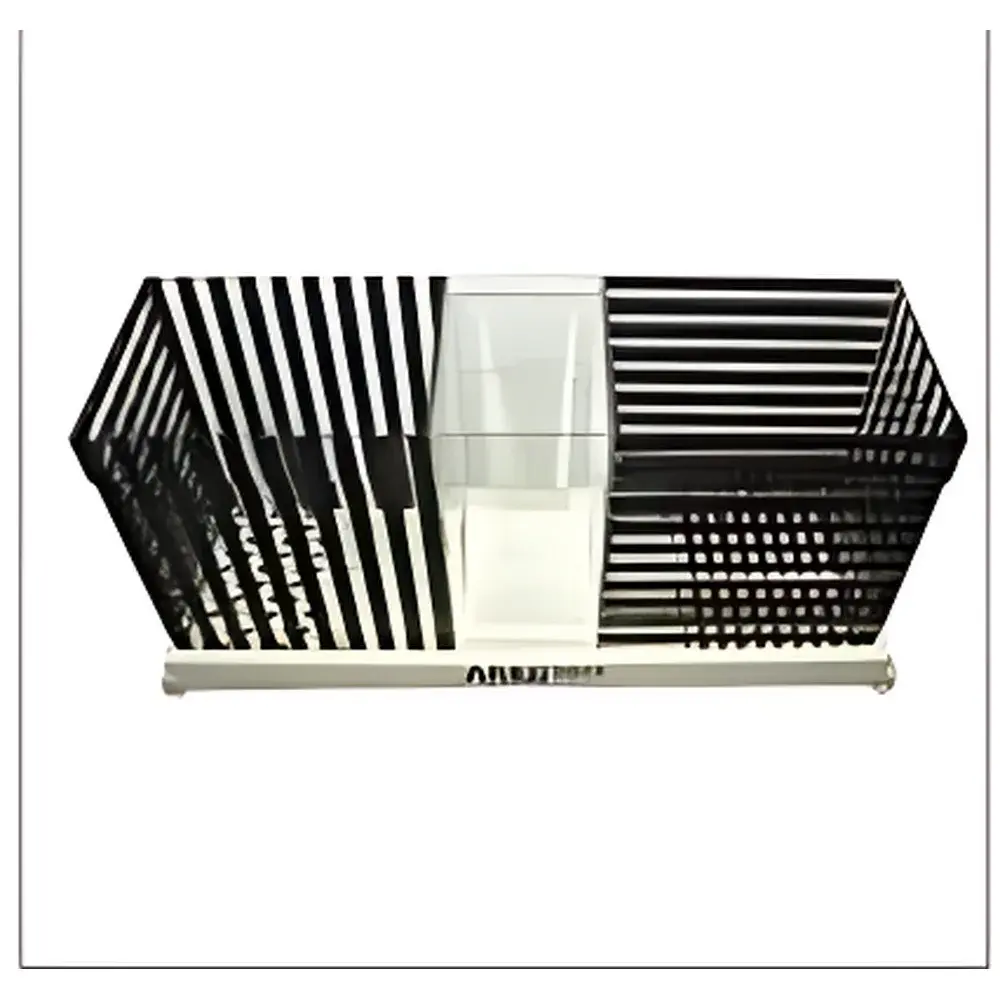
Conditioned Place Preference (CPP) System by COULBOURN
| Brand | COULBOURN |
|---|---|
| Origin | USA |
| Manufacturer Type | Authorized Distributor |
| Origin Category | Imported |
| Model | Place Reference |
| Pricing | Upon Request |
Overview
The COULBOURN Conditioned Place Preference (CPP) System is a rigorously engineered behavioral neuroscience platform designed for objective, reproducible assessment of drug-induced motivational states in rodent models. Grounded in classical Pavlovian conditioning principles, the CPP paradigm leverages spatial context–drug association to quantify preference or aversion—a behavioral readout directly linked to mesolimbic dopamine circuitry activation. The system implements a two- or three-compartment apparatus where distinct environmental cues (e.g., textured floors, contrasting wall patterns, olfactory stimuli) are systematically paired with pharmacological agents or vehicle control across conditioning sessions. During the unbiased post-conditioning test phase, animals are allowed free access to all compartments; time spent in the drug-paired chamber versus neutral or vehicle-paired chambers serves as the primary dependent variable. This measurement reflects the net incentive salience conferred by the drug, making the CPP assay a gold-standard preclinical tool for evaluating abuse liability, reward enhancement, and anti-relapse compound efficacy per FDA and NIH guidelines.
Key Features
- Modular, scalable chamber architecture supporting simultaneous operation of up to 8 independent test units via a single host PC—expandable to 16+ units with optional I/O expansion modules.
- Configurable compartment design accommodating both mice (20–35 g) and rats (200–500 g), with adjustable partition doors, removable cue inserts (visual, tactile, olfactory), and IR beam-based activity monitoring per chamber.
- Real-time, timestamped behavioral tracking synchronized with precise stimulus delivery (IV/SC injection triggers, automated drug dispensing integration available).
- Digital stimulus control interface compliant with TTL and analog signal standards for seamless integration with external equipment (e.g., optogenetics rigs, microdialysis systems, EEG acquisition).
- Rugged, non-reflective acrylic construction with UV-stabilized surfaces and autoclavable components to ensure long-term durability and compliance with AAALAC-accredited facility hygiene protocols.
Sample Compatibility & Compliance
The system supports standard laboratory rodent strains including C57BL/6J, BALB/c, Sprague-Dawley, and Wistar rats. Chamber dimensions and cue configurations adhere to NIH Office of Laboratory Animal Welfare (OLAW) and European Directive 2010/63/EU requirements for environmental enrichment and minimization of stress confounds. All hardware and firmware comply with IEC 61000-6-3 (EMC emissions) and UL 61010-1 safety standards. Experimental protocols generated using this system meet reporting criteria outlined in ARRIVE 2.0 guidelines and support audit readiness for GLP-compliant toxicology studies under OECD Test Guideline 426.
Software & Data Management
The proprietary COULBOURN Graphic State Notation (GSN) software provides intuitive protocol scripting, real-time visualization of beam breaks and zone occupancy, and automated calculation of preference scores (e.g., % time in drug-paired zone, latency to first entry, total transitions). Raw data export is supported in CSV, MATLAB (.mat), and HDF5 formats. Audit trail functionality logs user actions, parameter changes, and session metadata in accordance with FDA 21 CFR Part 11 requirements when configured with electronic signature modules. Data integrity is reinforced via automatic checksum validation and version-controlled protocol templates.
Applications
- Preclinical evaluation of opioid, stimulant, and cannabinoid abuse potential per FDA Guidance for Industry on Assessment of Abuse Liability.
- Screening of novel pharmacotherapies targeting relapse prevention (e.g., CRF antagonists, mGluR modulators, kappa opioid receptor agonists).
- Neurobehavioral phenotyping of genetically modified mouse lines related to reward processing and addiction vulnerability.
- Investigation of contextual memory reconsolidation blockade using post-reactivation interventions.
- Quantitative assessment of conditioned aversion induced by aversive agents (e.g., lithium chloride, naloxone-precipitated withdrawal).
FAQ
What species and weight ranges are validated for use with this system?
The standard configuration supports C57BL/6 and CD-1 mice (18–35 g) and Sprague-Dawley or Wistar rats (200–500 g); custom chamber sizing is available upon request.
Is the software compatible with Windows 10/11 and MATLAB R2020a or later?
Yes—GSN software runs natively on 64-bit Windows 10/11 and includes bidirectional MATLAB API support for custom analysis pipeline development.
Can the system be integrated with optogenetic or chemogenetic stimulation hardware?
Absolutely—the GSN controller provides programmable TTL output channels and accepts external trigger inputs, enabling precise temporal alignment of light/ligand delivery with behavioral epochs.
Does the system support automated dose administration during conditioning sessions?
When paired with COULBOURN’s IV/SC infusion pump modules and programmable syringe drivers, fully automated, time-locked drug delivery is achievable within defined behavioral windows.
Are calibration certificates and IQ/OQ documentation provided?
Yes—factory calibration reports and customizable Installation Qualification (IQ) / Operational Qualification (OQ) templates are included to support regulated laboratory validation processes.
Related Products




