
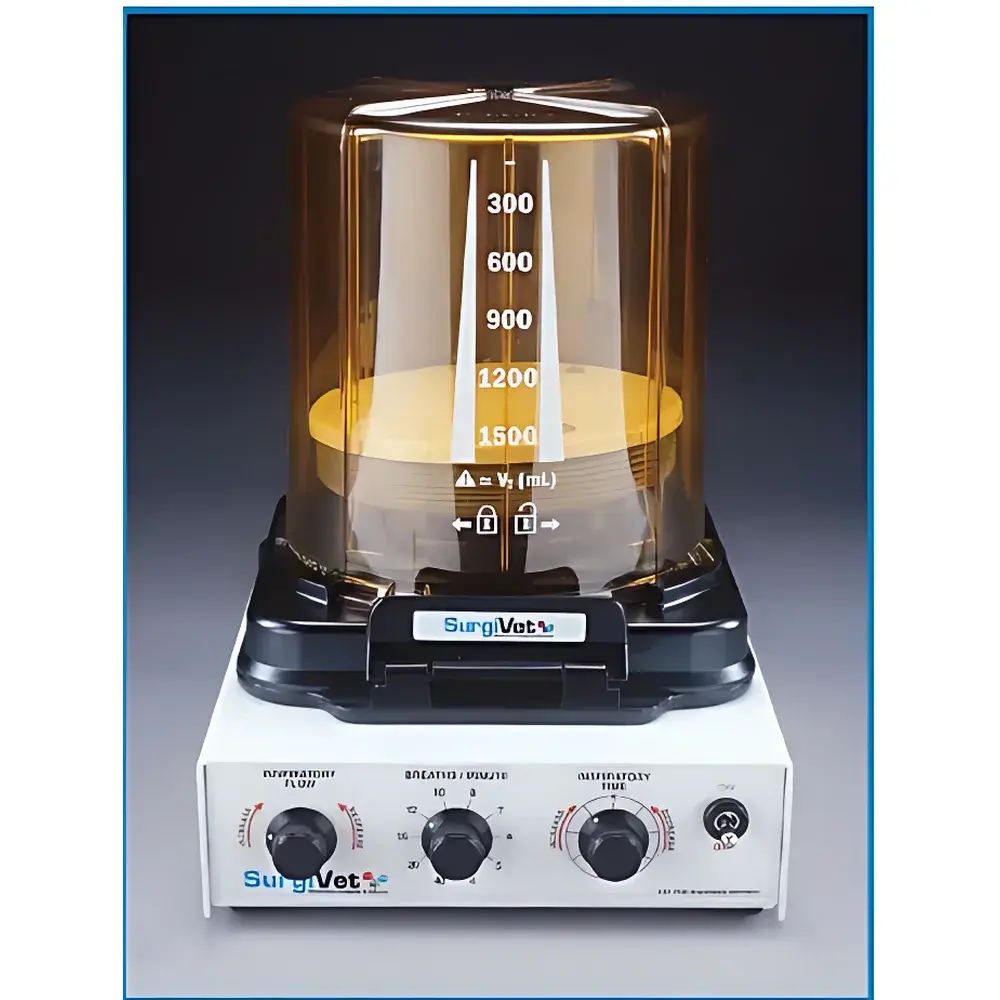
Harvard Apparatus SAV 2500 Small Animal Ventilator
| Brand | Harvard Apparatus |
|---|---|
| Origin | USA |
| Manufacturer Type | Authorized Distributor |
| Product Origin | Imported |
| Model | SAV 2500 |
| Pricing | Available Upon Request |
Overview
The Harvard Apparatus SAV 2500 is a precision-engineered, microprocessor-controlled small animal ventilator designed for reliable, repeatable mechanical ventilation across a broad weight range—from neonatal rodents (e.g., 10 g mice) up to large juvenile equines (e.g., foals). It operates on the principle of intermittent positive pressure ventilation (IPPV), delivering controlled gas flow via a continuous air/oxygen supply and a high-fidelity spiral solenoid valve system. Unlike active exhalation systems, the SAV 2500 employs passive exhalation: exhaled gas exits directly into ambient atmosphere without pump assistance—enabling real-time analysis of expiratory CO₂, O₂, volatile anesthetics, or aerosolized compounds via inline gas analyzers or sampling lines. The device supports both pressure-controlled and volume-controlled ventilation modes, with integrated airway pressure monitoring, adjustable end-expiratory pressure (PEEP), and dynamic leak detection—all critical for longitudinal in vivo studies requiring physiological fidelity and regulatory compliance.
Key Features
- Two independent ventilation modes: Pressure-Controlled Ventilation (PCV) and Volume-Controlled Ventilation (VCV), each configurable via front-panel rotary dials without software dependency.
- Adjustable inspiratory flow rate, respiratory rate (RR), inspiratory time (Ti), and pause time (Tp) — all manually set and continuously displayed on analog meters for immediate operator feedback.
- Real-time airway pressure monitoring: Peak Inspiratory Pressure (PIP), End-Inspiratory Pressure (EIP), End-Expiratory Pressure (EEP), and PEEP — with user-defined upper pressure limit and automatic inspiratory valve cutoff to prevent barotrauma.
- Passive exhalation architecture with optional PEEP generation via water-column or spring-loaded valve — essential for maintaining alveolar recruitment during prolonged ventilation.
- Integrated leak detection system with configurable alarm threshold (mmH₂O), continuously comparing set vs. delivered pressure to identify circuit disconnections or tracheal tube leaks.
- Gas source flexibility: compatible with room air (via built-in diaphragm pump), external compressed gas cylinders (O₂, medical air, N₂O), anesthesia vaporizers, and ultrasonic nebulizers for aerosol delivery pre- or post-tracheal intubation.
Sample Compatibility & Compliance
The SAV 2500 accommodates animals from 10 g (e.g., C57BL/6 mice) to ≥150 kg (foals), with tubing, endotracheal adapters, and flow sensors selected per species-specific dead space and resistance requirements. All pressure transducers are calibrated traceable to NIST standards; airflow measurement adheres to ISO 8596:2018 for biomedical gas delivery systems. The ventilator meets IEC 60601-1:2012 (3rd ed.) for basic safety and essential performance of medical electrical equipment and is validated for use in GLP-compliant toxicology studies and FDA-regulated preclinical research. Its analog control interface ensures deterministic timing behavior—critical for electrophysiology, fMRI, or PET studies where software latency must be excluded.
Software & Data Management
While the SAV 2500 operates fully standalone via its front-panel interface, optional analog output ports (0–10 V DC) enable synchronized recording of pressure, flow, and timing signals into third-party acquisition systems (e.g., ADInstruments PowerLab, National Instruments DAQ). No proprietary software is required for operation, eliminating cybersecurity vulnerabilities and licensing dependencies. All parameter settings are retained after power cycling. For audit-trail requirements under 21 CFR Part 11, users may integrate the device into validated LabVantage or Benchling workflows via timestamped analog signal logging — ensuring full traceability of ventilation parameters throughout study duration.
Applications
- Preclinical respiratory pharmacology: dose-response evaluation of bronchodilators, surfactants, or anti-fibrotic agents in murine, porcine, or equine models of ARDS, COPD, or pulmonary fibrosis.
- Neurorespiratory coupling studies: combined with EEG, EMG, or optogenetic stimulation to investigate central pattern generator function under controlled ventilation.
- Inhalation toxicology: precise delivery of nanoparticles, allergens, or chemical vapors via inline nebulizers with concurrent expiratory gas capture for mass balance analysis.
- Surgical support: intraoperative ventilation during thoracic, neurosurgical, or orthopedic procedures in rats, rabbits, dogs, and foals — with PEEP optimization to reduce atelectasis.
- Training platform: used in AALAS-accredited veterinary and biomedical graduate programs for hands-on instruction in ventilator mechanics, gas exchange physiology, and emergency airway management.
FAQ
What animal weight ranges does the SAV 2500 support?
The SAV 2500 is validated for use from 10 g rodents to juvenile horses (up to ~150 kg), with appropriate circuit configurations and flow sensor selection.
Can the SAV 2500 deliver inhaled anesthetics?
Yes — it integrates seamlessly with standard calibrated vaporizers (e.g., Datex-Ohmeda, Dräger) upstream of the inspiratory limb, supporting balanced anesthesia protocols in chronic studies.
Is PEEP adjustable, and how is it generated?
PEEP is mechanically adjustable via a calibrated water-seal column or spring-loaded valve; no electronic feedback loop is required, ensuring stability during long-term ventilation.
Does the device comply with FDA or ISO standards for preclinical instrumentation?
It conforms to IEC 60601-1:2012, ISO 8596:2018, and supports GLP/GCP documentation requirements through analog signal logging and NIST-traceable calibration.
How is airway pressure limited to prevent lung injury?
A hardware-based pressure cutoff circuit monitors airway pressure in real time and closes the inspiratory valve if the user-defined maximum (up to 300 mmH₂O) is exceeded — independent of microprocessor response time.





