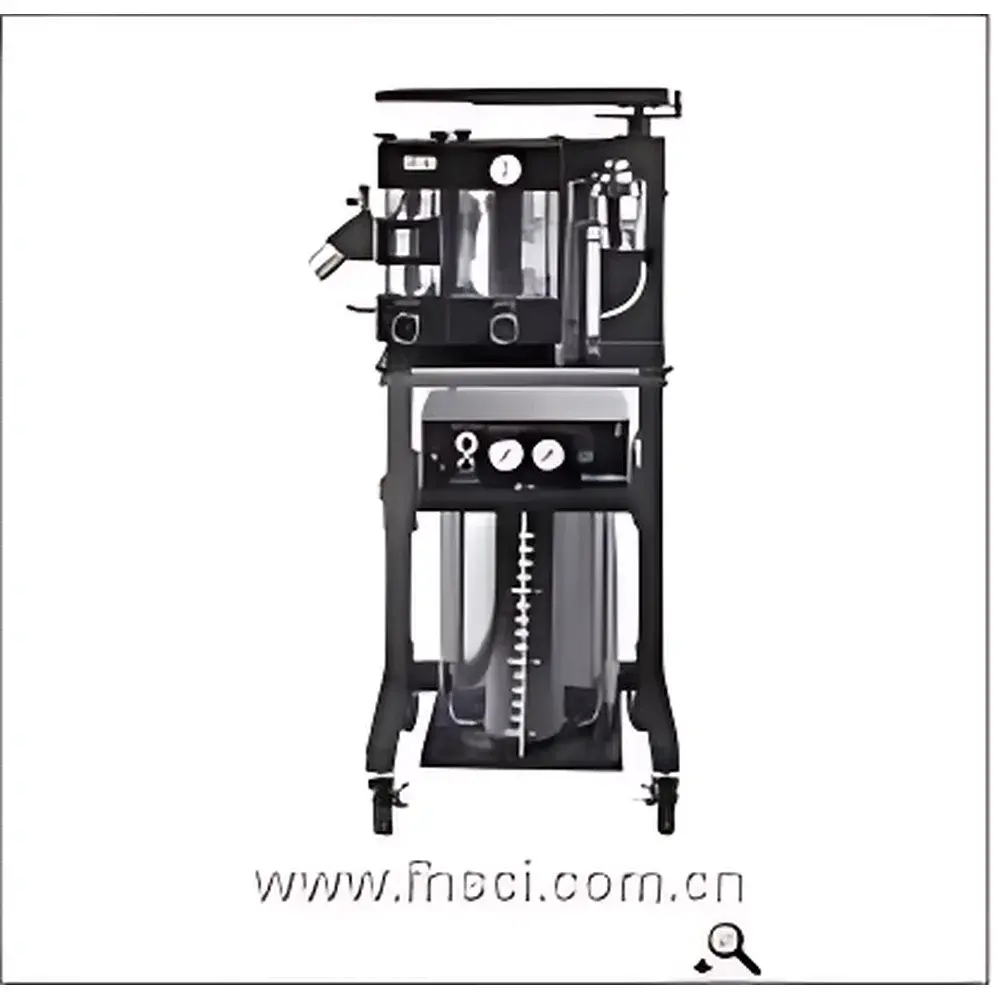
Harvard Apparatus LDS 3000 Large-Animal Ventilator
| Brand | Harvard Apparatus |
|---|---|
| Origin | USA |
| Model | LDS 3000 |
| Dimensions | 134.6 cm H × 61.0 cm W (base diameter with casters) |
| Enclosure | Powder-coated, dust-resistant finish |
| Mobility | Five swivel casters (two with brakes) |
| Gas Exhaust Interface | Multi-port exhaust manifold for non-rebreathing circuit configuration |
| Included Accessories | (1) Two 64" black hoses (5.08 cm ID) |
| Vendor Type | Authorized distributor |
| Origin Category | Imported |
Overview
The Harvard Apparatus LDS 3000 is a dedicated large-animal ventilator engineered for controlled mechanical ventilation in acute and chronic in vivo studies involving dogs, pigs, sheep, non-human primates, and other species weighing ≥25 kg. It operates on pressure-controlled and pressure-support modes, delivering precise tidal volumes and respiratory rates while maintaining airway pressure limits compatible with physiological compliance and resistance ranges observed in large mammals. Designed for integration into surgical suites, intensive care research environments, and GLP-compliant pharmacology labs, the LDS 3000 adheres to fundamental principles of pulmonary mechanics—applying time-cycled, flow-limited inspiration with adjustable rise time, expiratory time, and PEEP (positive end-expiratory pressure) to replicate clinical ventilation strategies. Its architecture prioritizes operational robustness, gas pathway integrity, and compatibility with standard anesthesia delivery systems—including vaporizer-coupled circuits and sidestream capnography.
Key Features
- Powder-coated steel enclosure with sealed seams and smooth, non-porous surfaces—designed for rapid decontamination between procedures and resistant to common disinfectants used in vivarium and surgical settings.
- Height-adjustable base (134.6 cm total height) with five dual-swivel casters—two equipped with locking brakes—to ensure stable positioning during high-fidelity physiological monitoring and ease of repositioning across multi-station lab configurations.
- Integrated multi-port exhaust manifold enabling straightforward configuration of non-rebreathing circuits (e.g., Mapleson D, Bain coaxial), minimizing dead space and CO₂ rebreathing without requiring external adapters or custom tubing assemblies.
- Front-panel tactile controls and LED status indicators provide intuitive operation under gloved-hand conditions; all critical parameters—including peak inspiratory pressure (PIP), PEEP, respiratory rate, and I:E ratio—are manually adjustable without software dependency.
- Gas pathway constructed from medical-grade stainless steel and USP Class VI-certified elastomers, compliant with ISO 8536-4 for infusion and respiratory equipment biocompatibility requirements.
Sample Compatibility & Compliance
The LDS 3000 supports intubated and tracheostomized large-animal models across diverse experimental paradigms, including cardiovascular stress testing, ARDS modeling, neurorespiratory coupling studies, and post-operative recovery monitoring. It interfaces seamlessly with Harvard Apparatus anesthesia vaporizers (e.g., Vapor 1000), mainstream and sidestream capnographs, and analog/digital data acquisition systems via 0–10 V and TTL-compatible outputs. Device design conforms to IEC 60601-1 (Edition 3.1) for medical electrical equipment safety and IEC 60601-2-12 for ventilatory equipment particular requirements. While not FDA-cleared for human use, it meets ASTM F2796 standards for laboratory animal ventilators and supports audit readiness for AAALAC-accredited facilities and NIH-funded protocols requiring documented equipment qualification.
Software & Data Management
The LDS 3000 is a standalone hardware platform with no embedded firmware or proprietary software interface. All parameter adjustments are performed mechanically or via front-panel potentiometers, eliminating cybersecurity vulnerabilities and ensuring deterministic response timing—critical for real-time closed-loop experiments. Analog output signals (e.g., airflow, airway pressure) are routed to external DAQ systems (e.g., PowerLab, Spike2, LabChart) for synchronized acquisition with ECG, blood pressure, and neural recordings. For laboratories implementing 21 CFR Part 11-compliant workflows, validation documentation—including IQ/OQ templates, calibration logs, and traceable pressure transducer certificates—is available upon request through authorized Harvard Apparatus distributors.
Applications
- Acute respiratory failure modeling in porcine sepsis or smoke inhalation studies.
- Long-term ventilatory support during chronic implant telemetry experiments in conscious, instrumented sheep.
- Pharmacodynamic assessment of novel neuromuscular blocking agents using controlled minute ventilation endpoints.
- Validation of lung-protective ventilation strategies (low tidal volume, moderate PEEP) in translational ARDS models.
- Integration with whole-body plethysmography or forced oscillation technique (FOT) platforms for dynamic compliance and resistance profiling.
FAQ
Is the LDS 3000 suitable for use with small animals such as rats or rabbits?
No—the LDS 3000 is specifically calibrated and validated for large-animal applications (≥25 kg). For rodents and lagomorphs, Harvard Apparatus recommends the model 683 or 7026 Small Animal Ventilator series.
Does the device include built-in oxygen concentration monitoring or blending capabilities?
No—oxygen concentration control requires external gas blending modules (e.g., Harvard Apparatus GMS-2) or pre-mixed gas supply; the LDS 3000 accepts inlet gases at 30–50 psi and delivers them per configured pressure/time profiles.
Can the included CO₂ absorbent bags be replaced with alternative brands?
Yes—provided the substitute material meets USP specifications for granular soda lime or Baralyme®, and packaging ensures moisture barrier integrity consistent with 24-month shelf-life claims under ambient storage.
What maintenance intervals are recommended for the internal pressure transducers and valves?
Annual verification against NIST-traceable pressure standards is advised; full functional calibration and leak testing should be performed prior to each major study protocol, following manufacturer-specified procedures outlined in the LDS 3000 Service Manual Rev. D.
Is technical support available outside North America?
Yes—Harvard Apparatus maintains certified service partners in EMEA, APAC, and LATAM regions; remote diagnostics and on-site engineering support are coordinated through local authorized distributors under global warranty terms.
Related Products