Forced Swimming Test System – EthoVision XT-Compatible Automated Behavioral Analysis Platform
| Origin | USA |
|---|---|
| Manufacturer Type | Authorized Distributor |
| Origin Category | Imported |
| Model | FST-00 |
| Pricing | Available Upon Request |
Overview
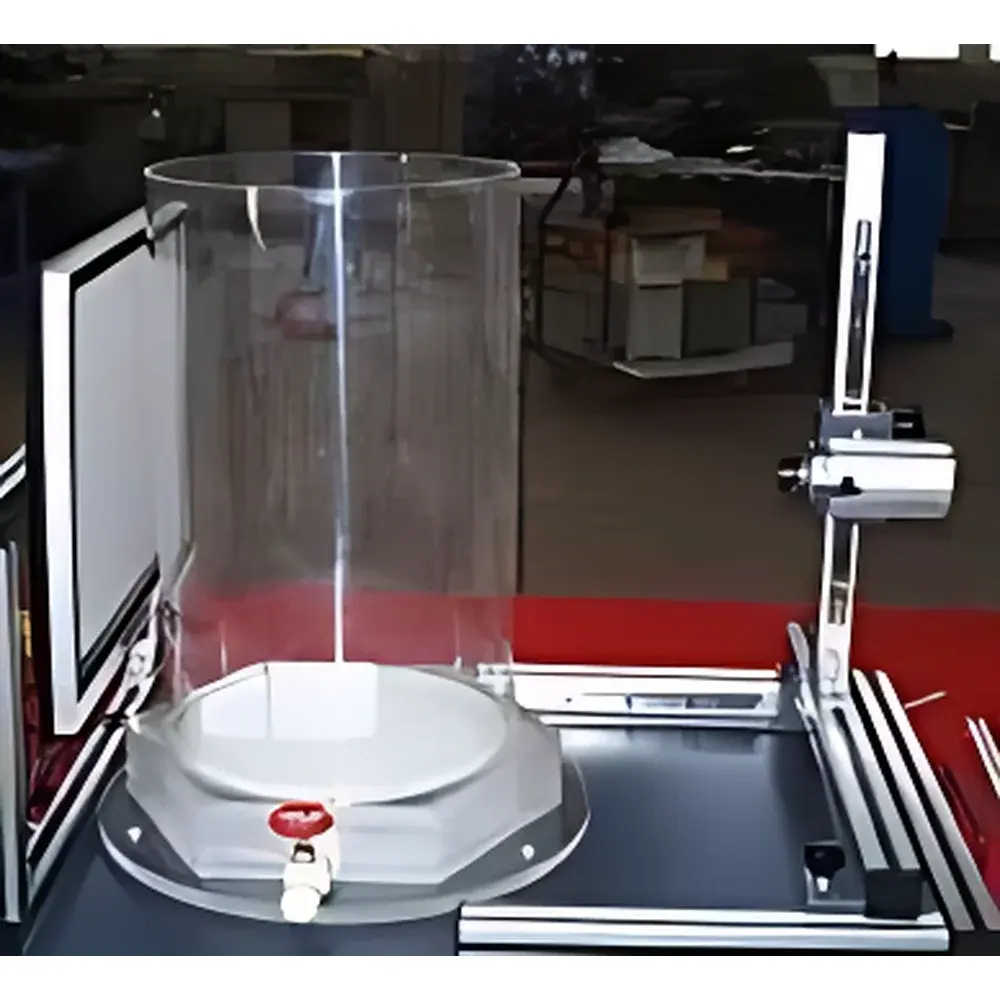
The Forced Swimming Test (FST) System is a fully automated, video-based behavioral phenotyping platform engineered for objective quantification of immobility, swimming, and climbing behaviors in rodent models during the standardized forced swim paradigm. Grounded in validated ethological principles, the system employs high-sensitivity near-infrared (NIR) imaging under low-illumination (“starlight”) conditions—mimicking natural nocturnal activity patterns of mice and rats—to minimize stress-induced artifacts and preserve ecological validity. Unlike manual scoring methods, this system implements side-view image tracking algorithms optimized for water surface contrast and limb motion segmentation, enabling precise temporal resolution of behavioral states without physical contact or restraint interference. The architecture adheres to GLP-aligned data integrity standards, supporting audit-ready experimental records essential for preclinical antidepressant screening, neuropharmacology studies, and translational behavioral neuroscience.
Key Features
- Starlight-mode NIR video acquisition (0.001 lux sensitivity), eliminating visible-light disturbance while maintaining optimal contrast for limb and body contour detection
- Proprietary side-angle motion tracking algorithm trained on >10,000 annotated rodent FST frames, minimizing false positives in immobility classification
- Real-time behavioral state classification: Immobility, Swimming, Climbing—with configurable thresholds per protocol (e.g., USP , OECD 425)
- Integrated thermal-regulated water tank (±0.3°C stability, 25 ± 1°C default) with overflow drainage and corrosion-resistant 316 stainless steel construction
- Modular acoustic isolation chamber (STC 45 dB attenuation) compliant with ISO 15663:2020 guidelines for low-noise behavioral testing environments
- Configurable frame rate (15–25 fps) and spatial resolution (up to 640 × 480 pixels), balancing data fidelity with storage efficiency
- AVI-encoded video compression (MS-MPEG4 v2 codec) with user-adjustable bitrates; typical 90-min session occupies ≤1.2 GB storage
Sample Compatibility & Compliance
The system supports standard FST protocols for C57BL/6, BALB/c, Sprague-Dawley, and Wistar strains (20–30 g mice; 250–350 g rats). Water depth, temperature, session duration, and pre-habituation parameters are programmable per ICH S5(R3) and NIH OLAW-approved animal use protocols. All raw video, timestamped event logs, coordinate trajectories (X/Y in mm, referenced to tank center), and derived metrics (e.g., % immobility time, latency to first immobility, total active time) are stored in HDF5 format with embedded metadata (experimenter ID, date/time, cage ID, drug dose). Data export complies with FDA 21 CFR Part 11 requirements via optional electronic signature module and immutable audit trail generation.
Software & Data Management
The embedded analysis suite exports trajectory point sequences (.csv), behavioral state timelines (.txt), and summary statistics directly to Excel-compatible formats. Coordinate data retain millimeter-scale spatial calibration (validated against NIST-traceable grid targets). Integration with EthoVision XT (Noldus), MATLAB, Python (via Pandas/HDF5 libraries), SPSS, and SAS is supported through documented APIs and schema-mapped import filters. All video archives include embedded SMPTE timecode and synchronized TTL pulse markers for cross-device synchronization (e.g., EEG, optogenetics rigs). Backup policies enforce daily encrypted offsite replication per institutional IT security policies.
Applications
- Preclinical evaluation of novel antidepressants, anxiolytics, and psychostimulants per CONSORT-behavioral reporting standards
- Genetic phenotype screening in transgenic/knockout lines assessing serotonergic, noradrenergic, and dopaminergic pathway function
- Chronic stress model validation (e.g., CMS, social defeat) with longitudinal FST repeatability assessment (ICC >0.92 across 3 sessions)
- Neuroinflammatory intervention studies linking cytokine profiles (IL-6, TNF-α) to behavioral despair endpoints
- Teaching laboratories: CAI modules include annotated video libraries, protocol templates, and student-scored vs. algorithm-scored discrepancy analytics
FAQ
Is the system compatible with existing EthoVision XT licenses?
Yes—the FST System outputs native .evt and .pos files fully ingestible by EthoVision XT v15+, including support for custom arena definitions and multi-animal batch processing.
How is water temperature stability verified during long-term deployments?
Each unit ships with a NIST-calibrated PT100 probe log file (sampled at 1 Hz) and a thermal validation report per ASTM E2251-22 Annex A1.
Can immobility thresholds be redefined post-acquisition?
Yes—behavioral state classification rules are non-destructively editable in the analysis module; all recalculations regenerate full audit logs with version timestamps.
Does the system meet AAALAC International facility inspection requirements?
The hardware design, calibration documentation, and data retention architecture align with AAALAC Standard 3.2.1 (data integrity) and 4.3.5 (environmental control verification).