
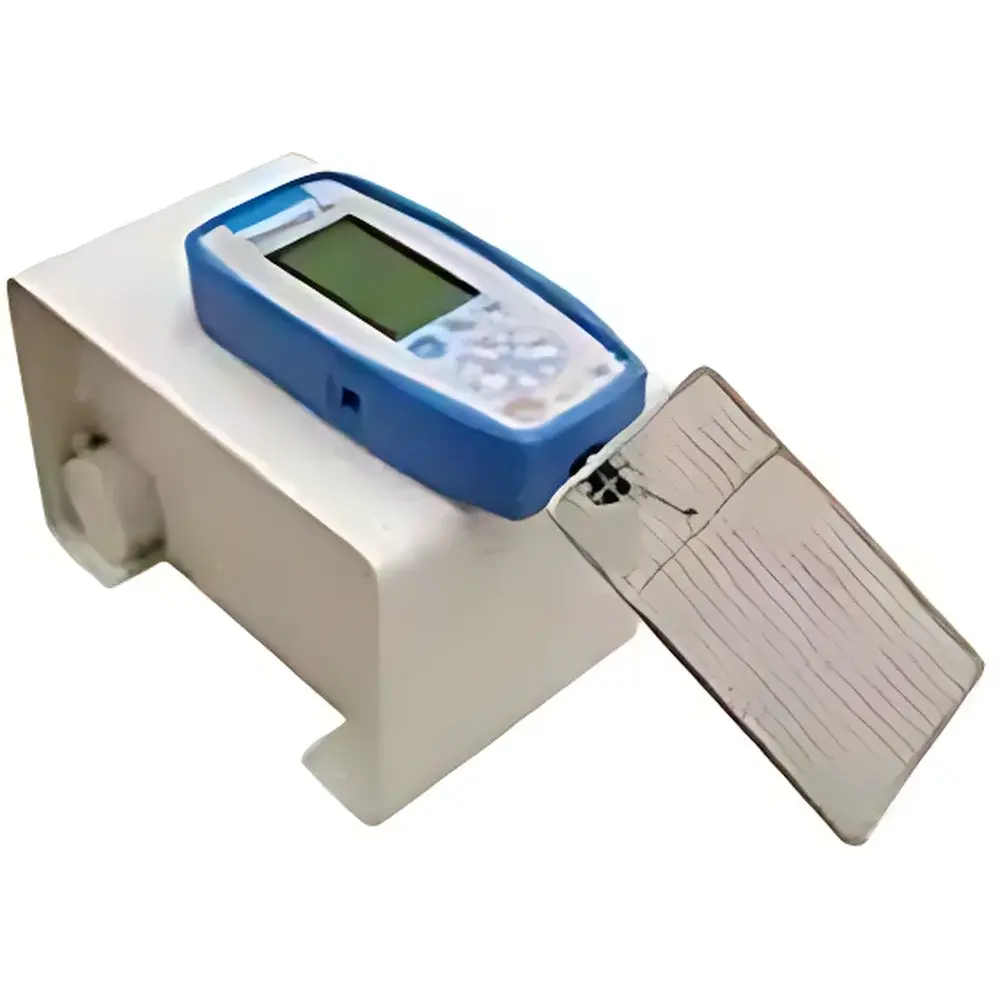
Panlab LE902 Grip Strength Meter
| Brand | Harvard Apparatus |
|---|---|
| Origin | USA |
| Manufacturer Type | Authorized Distributor |
| Country of Origin | Imported |
| Model | LE902 |
| Price Range | USD 1,400 – 7,000 |
| Sensor Range | 0–20 N (0–2000 g) |
| Accuracy | ±0.1% FS |
| Resolution | 0.1 g |
| Sampling Rate | 1000 Hz |
| Display | LED with dual-mode readout (peak force or release time) |
| Data Storage | Internal memory for 100 measurements |
| Interface | RS-232 |
| Grid Material | Stainless steel |
| Power | AC adapter or optional rechargeable battery |
Overview
The Panlab LE902 Grip Strength Meter is a precision-engineered instrument designed for quantitative assessment of forelimb and hindlimb neuromuscular function in rodent models. It operates on the principle of isometric force transduction: when a subject (typically a mouse or rat) grasps a standardized stainless-steel grid or horizontal bar, and is gently withdrawn by the experimenter via the tail, the device captures the peak tensile force exerted prior to grip release. This measurement reflects integrated motor unit recruitment, neuromuscular junction integrity, and skeletal muscle contractility—making it a well-validated endpoint in preclinical studies of neurodegeneration (e.g., ALS, spinal cord injury), myopathies, toxicology, pharmacological intervention (e.g., neuromuscular blockers, anabolic agents), aging, and metabolic disease. The LE902 implements a high-fidelity load cell calibrated to 0–20 N (0–2000 g) full scale, with a guaranteed accuracy of ±0.1% FS and 0.1 g resolution—enabling detection of subtle longitudinal changes across treatment cohorts.
Key Features
- High-speed 1000 Hz analog-to-digital sampling ensures precise capture of transient peak force events, critical for reproducible detection of maximum grip strength.
- Dual-display mode: real-time LED readout supports immediate evaluation either as absolute peak force (g or N) or as grip release latency (ms), facilitating behavioral timing analysis.
- Integrated non-volatile memory stores up to 100 complete trial records—including peak value, standard deviation, and timestamp—without requiring external hardware.
- Stainless-steel grip grid meets ASTM F2100 biocompatibility guidelines and resists corrosion from repeated cleaning with ethanol or quaternary disinfectants.
- RS-232 serial interface enables direct communication with Windows-based PCs; compatible with Panlab’s proprietary acquisition software for automated data logging, statistical summary, and export to CSV or Excel-compatible formats.
- Compliant with GLP-aligned data integrity requirements: software supports user authentication, electronic signatures, and audit-trail-enabled session logs per FDA 21 CFR Part 11 when used with validated configurations.
Sample Compatibility & Compliance
The LE902 is optimized for C57BL/6, BALB/c, CD-1, and Sprague-Dawley rodents (18–35 g mice; 200–350 g rats). Its ergonomic grip geometry conforms to NIH Office of Laboratory Animal Welfare (OLAW) and AAALAC International recommendations for minimizing handling stress and ensuring consistent limb engagement. All mechanical components are CE-marked and RoHS-compliant. Device firmware and accompanying software comply with ISO/IEC 17025 traceability standards for measurement equipment; calibration certificates are provided with NIST-traceable documentation upon request.
Software & Data Management
The optional LE902 Acquisition Software (v3.2+) provides a validated platform for protocol-driven testing, including configurable trial counts, inter-trial delays, and automatic outlier flagging based on coefficient-of-variation thresholds. Raw time-series data (force vs. time) is archived at full 1000 Hz resolution, supporting post-hoc analysis of force rise time, decay kinetics, and fatigue indices. Export modules generate ANSI X12-compliant reports suitable for inclusion in IND-enabling toxicology study reports. Audit trails record operator ID, calibration status, session start/end timestamps, and all parameter modifications—meeting ICH E6(R3) and OECD 425 guideline expectations for regulatory submissions.
Applications
- Neuropharmacology: Dose-response characterization of acetylcholinesterase inhibitors, botulinum toxin analogs, or GABAergic modulators.
- Neuromuscular disease modeling: Longitudinal tracking of functional decline in SOD1-G93A mice or mdx dystrophic models.
- Toxicology screening: Detection of peripheral neurotoxicity induced by organophosphates, heavy metals, or chemotherapeutics.
- Aging research: Quantification of sarcopenia progression across 3-, 12-, and 24-month murine cohorts.
- Rehabilitation science: Evaluation of functional recovery following sciatic nerve crush or spinal hemisection.
FAQ
Is the LE902 compliant with FDA 21 CFR Part 11 for regulated studies?
Yes—when deployed with validated software configuration, electronic signature controls, and documented calibration history, the system supports Part 11 compliance for GLP and GCP environments.
Can the device measure both forelimb and hindlimb grip separately?
Yes—by repositioning the animal and using the grid orientation specified in the user manual, independent forelimb and hindlimb assessments are achievable with protocol standardization.
What is the recommended recalibration interval?
Annual recalibration against NIST-traceable deadweight standards is advised; field verification using certified test weights is supported via built-in zero/balance functions.
Does the system support integration with third-party behavioral suites (e.g., EthoVision, ANY-maze)?
Not natively—but timestamp-synchronized data export (via RS-232 TTL triggers) allows post-acquisition alignment with video-tracking metadata in custom pipelines.
Is battery operation available for portable use?
An optional rechargeable Li-ion battery pack (sold separately) provides >8 hours of continuous operation without AC power—ideal for multi-cage testing in vivarium corridors.




