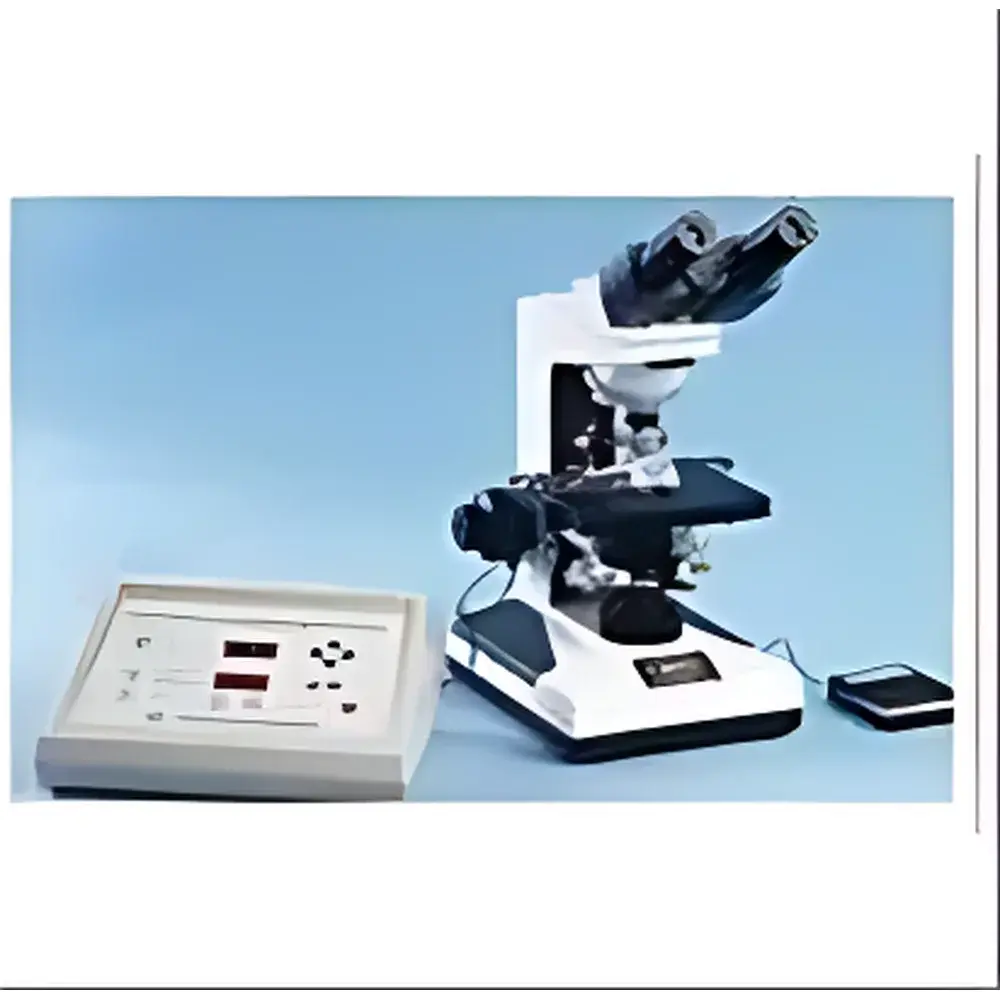
Brookfield DMF-1000 Horizontal Microelectrode Polishing System
| Origin | USA |
|---|---|
| Manufacturer Type | Authorized Distributor |
| Origin Category | Imported Instrument |
| Model | DMF-1000 |
| Pricing | Available Upon Request |
Overview
The Brookfield DMF-1000 Horizontal Microelectrode Polishing System is a precision-engineered instrument designed for the reproducible fabrication and refinement of glass microelectrodes used in electrophysiological research. Built upon the proven architecture of the MF-200 platform, the DMF-1000 implements a horizontal polishing geometry—distinct from vertical or angled configurations—to minimize mechanical stress on fragile electrode shanks while ensuring consistent tip geometry and minimal diameter variation across batches. Its core operational principle relies on controlled resistive heating (via Pt wire) combined with regulated pneumatic pressure applied internally through the electrode lumen, enabling precise tip shaping under direct microscopic observation. This system is optimized for applications demanding sub-micron tip consistency, including patch-clamp recordings (whole-cell, cell-attached, outside-out), intracellular and extracellular neuronal recordings, and microinjection protocols where electrode impedance, capacitance, and mechanical stability are critical performance determinants.
Key Features
- Horizontal polishing orientation ensures uniform thermal distribution and eliminates gravitational sag during heating, preserving taper symmetry and reducing tip clogging risk.
- Digital Signal Processing (DSP)-based timing control delivers ±0.1 s resolution for heating duration, enabling repeatable tip formation across users and experimental sessions.
- Programmable memory stores up to 10 independent polishing protocols, each configurable with custom heating voltage (0–12 V DC), heating time (0.1–9.9 s), and pneumatic pressure setpoint (0–100 kPa).
- Dual-mode operation: fully automated sequence execution or manual step-by-step control for protocol development and troubleshooting.
- Integrated optical alignment: H602 long-working-distance objective (40×, WD = 3 mm) paired with 10× or 15× wide-field eyepieces provides high-resolution real-time visualization of electrode tip morphology without refocusing during polishing.
- Pneumatic tip-pressure delivery system channels compressed air through the electrode interior directly to the tip region, counteracting surface tension-induced necking and preventing unintended reduction of tip aperture during rod repositioning.
- Rigid mechanical coupling between Pt heating filament and microscope objective eliminates parallax error and eliminates the need for repeated filament relocalization—a common source of setup variability in legacy systems.
Sample Compatibility & Compliance
The DMF-1000 accommodates standard borosilicate (e.g., BF150-86-10, Sutter Instrument) and quartz capillaries (1.0–1.5 mm OD) pulled to final outer diameters ranging from 0.5 µm to 5 µm. It supports both single-barrel and concentric double-barrel configurations. The system complies with IEC 61010-1:2010 safety standards for laboratory electrical equipment and meets electromagnetic compatibility requirements per EN 61326-1:2013. All firmware and control logic adhere to GLP documentation practices, supporting audit-ready operation logs (timestamped protocol execution, parameter settings, operator ID) when integrated with compliant laboratory information management systems (LIMS). While not FDA-cleared as a medical device, its design aligns with ISO 13485 principles for instruments used in preclinical neuropharmacology and translational physiology studies.
Software & Data Management
The DMF-1000 operates via an embedded ARM-based controller with a tactile LCD interface; no external PC is required for routine operation. All protocol parameters, execution timestamps, and operator identifiers are logged internally in non-volatile memory and exportable via USB-C to CSV format for traceability. Optional RS-232 or Ethernet interfaces support integration into centralized lab automation frameworks. Data export files conform to ASTM E1482-22 standards for electrophysiology metadata, facilitating interoperability with analysis platforms such as Clampex (Molecular Devices), Spike2 (CED), or custom Python/MATLAB pipelines. Audit trails include digital signatures for protocol modification events and are compatible with 21 CFR Part 11-compliant validation packages when deployed in regulated environments.
Applications
- Preparation of low-resistance (<5 MΩ), low-capacitance patch pipettes for high-fidelity voltage-clamp and current-clamp experiments in acute brain slices and cultured neurons.
- Fabrication of sharp intracellular electrodes with stable tip geometry for long-duration recordings in invertebrate preparations (e.g., Aplysia, Drosophila) and amphibian oocytes.
- Refinement of microinjection electrodes for targeted cytoplasmic or nuclear delivery of dyes, peptides, CRISPR components, or optogenetic constructs without tip fracture.
- Standardization of electrode fabrication workflows across multi-investigator labs, supporting reproducibility initiatives endorsed by the Society for Neuroscience (SfN) and International Brain Research Organization (IBRO).
- Calibration and validation of impedance analyzers and patch-clamp amplifier test fixtures using geometrically defined electrode standards.
FAQ
What types of glass capillaries are compatible with the DMF-1000?
Standard borosilicate (e.g., Harvard Apparatus GC150TF-10) and fused quartz (e.g., Sutter QF100-75-10) capillaries with outer diameters of 1.0–1.5 mm and wall thicknesses of 0.1–0.2 mm.
Does the system require calibration before first use?
No factory calibration is needed; however, users must perform initial tip geometry verification using scanning electron microscopy (SEM) or calibrated optical micrometry to validate protocol settings against target tip diameters.
Can the DMF-1000 be integrated into automated patch-clamp platforms?
Yes—via optional TTL trigger input and analog output signals, it synchronizes with robotic micromanipulator systems (e.g., Sutter MP-285, Scientifica PatchStar) for unattended electrode preparation cycles.
Is technical support available for protocol optimization?
Brookfield-certified application scientists provide remote consultation and on-site training for electrode-specific parameter tuning, including impedance vs. tip diameter correlation modeling.
What maintenance is required for long-term reliability?
Annual inspection of Pt filament integrity, pneumatic line integrity checks, and optical path cleaning with lens-grade solvents—documented in the included maintenance logbook per ISO/IEC 17025 guidelines.