
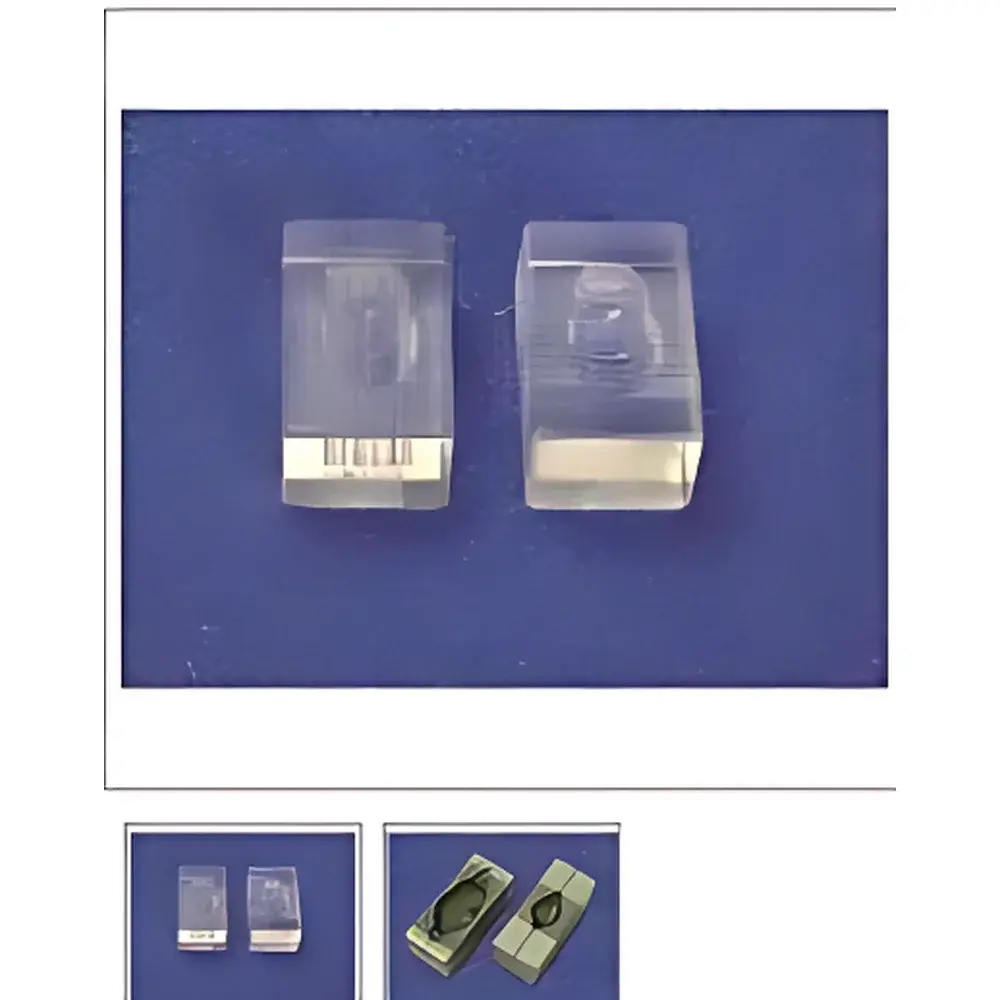
Small Animal Brain Slicing Mold (Model 51392)
| Origin | USA |
|---|---|
| Manufacturer Type | Authorized Distributor |
| Origin Category | Imported |
| Model | 51392 |
| Pricing | Upon Request |
Overview
The Small Animal Brain Slicing Mold (Model 51392) is a precision-engineered stainless steel stereotactic brain slicing device designed for consistent, reproducible coronal, sagittal, and horizontal sectioning of fixed or fresh murine brain tissue. Developed for neurophysiological and histological applications, this mold operates on the principle of mechanical constraint and anatomical alignment—leveraging standardized bregma-lambda coordinates to ensure repeatable slice orientation across experimental cohorts. Unlike freehand sectioning, the mold incorporates calibrated depth stops, adjustable blade guides, and integrated specimen-holding slots that maintain tissue integrity during manual microtome or razor-blade sectioning. It is compatible with both perfusion-fixed brains (e.g., after paraformaldehyde fixation) and freshly dissected tissue embedded in low-melting-point agarose or gelatin. Its design conforms to widely adopted rodent neuroanatomical atlases—including the Paxinos & Watson reference framework—enabling direct correlation between physical sections and digital stereotaxic coordinate systems.
Key Features
- High-precision stainless steel construction with corrosion-resistant finish for long-term durability and easy decontamination between uses.
- Modular blade guide system supporting standard #10, #11, and #15 surgical blades, as well as disposable microtome knives (20–40 mm width).
- Adjustable anterior-posterior and dorsal-ventral positioning via engraved millimeter-scale rulers and locking thumbscrews.
- Dual-species compatibility: optimized cavity dimensions accommodate both adult mouse (C57BL/6, BALB/c) and rat (Sprague-Dawley, Wistar) brains without repositioning.
- Integrated cryo-compatible base plate with anti-slip rubber feet for stable operation on cold stages (-20°C to +4°C) during chilled-sectioning protocols.
- Optional accessory ports for vacuum-assisted tissue stabilization and microinjection alignment verification using stereotaxic fiducial markers.
Sample Compatibility & Compliance
The Model 51392 supports brain tissue from male and female mice (8–12 weeks) and rats (12–16 weeks), including transgenic, knockout, and disease-model strains. It is validated for use with formalin-fixed paraffin-embedded (FFPE) blocks, OCT-embedded frozen sections, and agarose-embedded live-tissue preparations. The mold meets ISO 13485-compliant manufacturing standards for laboratory instrumentation and is routinely employed in GLP-regulated preclinical neuroscience studies. While not an active medical device, its geometric fidelity aligns with NIH-funded behavioral and electrophysiology study reporting guidelines (e.g., ARRIVE 2.0) and supports traceability in IACUC-approved animal protocols.
Software & Data Management
This is a manual, non-electronic instrument; no embedded firmware or proprietary software is included. However, it is fully interoperable with common digital workflow platforms: slice coordinates can be directly imported into StereoInvestigator (MBF Bioscience), Neurolucida (MicroBrightField), or open-source tools such as BrainRender and QuickNII for 3D reconstruction and atlas registration. Users may log slice position metadata (bregma level, thickness, orientation) in LIMS-compatible CSV templates, enabling audit-ready documentation per FDA 21 CFR Part 11 requirements when paired with electronic lab notebooks (e.g., LabArchives, Benchling).
Applications
- Preparation of acute brain slices for patch-clamp electrophysiology and field potential recording.
- Generation of serial sections for immunohistochemistry (IHC), in situ hybridization (ISH), and Nissl staining.
- Alignment of tissue sections with MRI-based rodent brain templates for multimodal imaging correlation.
- Standardized dissection of subregions—including hippocampus, prefrontal cortex, amygdala, and substantia nigra—for biochemical assays (e.g., Western blot, ELISA, qPCR).
- Training tool for graduate students and technicians in stereotaxic surgery fundamentals and reproducible histology practices.
FAQ
Is the mold compatible with vibratome sectioning?
Yes—when used with a Leica VT1000S, Campden 7000smz-2, or similar vibratome, the mold’s base plate provides stable mounting via M4 threaded holes (included adapter kit optional).
Can it be sterilized for repeated use in sterile surgery protocols?
Autoclavable at 121°C for 20 minutes; ethanol wipe-down and UV irradiation (254 nm, 30 min) are also validated decontamination methods.
Does the model include calibration documentation?
Each unit ships with a NIST-traceable dimensional certificate verifying slot tolerances (±0.05 mm) and angular alignment (±0.3° deviation from true coronal plane).
What is the recommended section thickness range?
Optimized for 20–300 µm sections; thinner slices (≤50 µm) require agarose embedding and chilled operation; thicker sections (≥100 µm) are suitable for macrodissection and tissue punch harvesting.





