
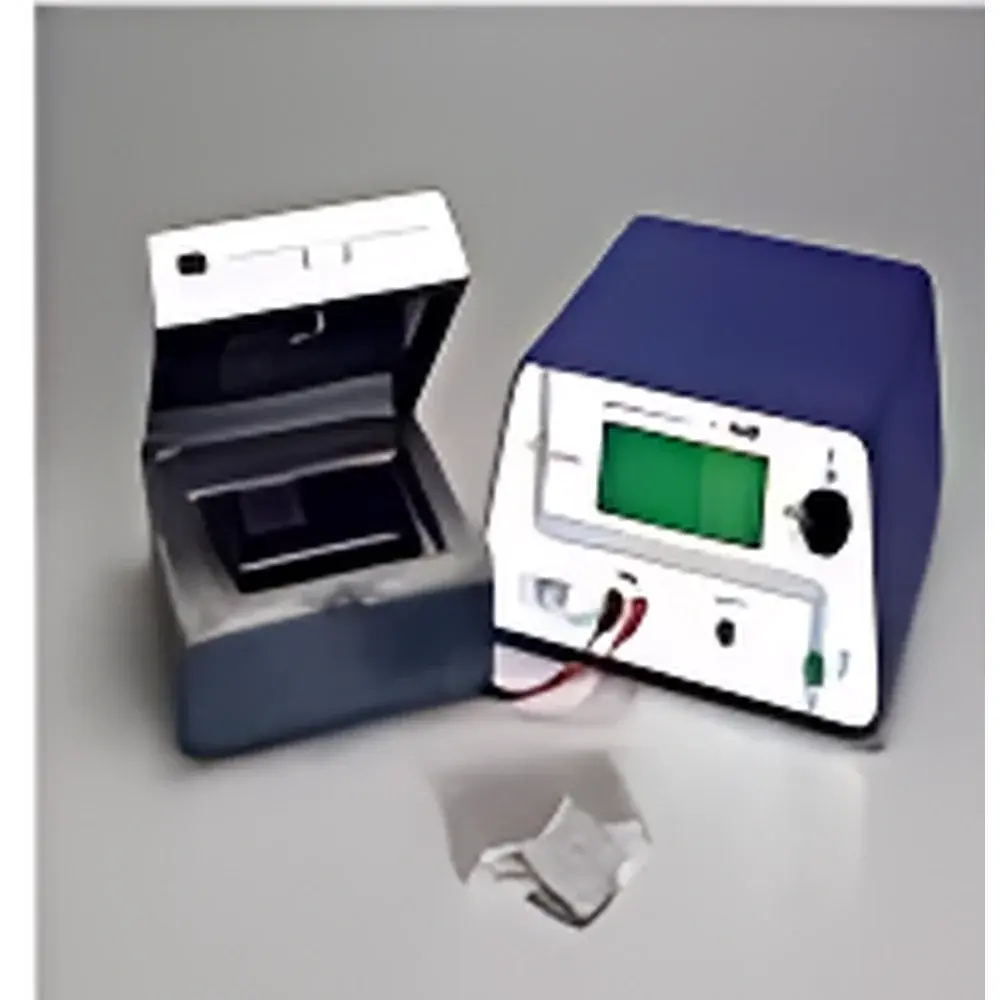
BTX Harvard Apparatus High-Throughput Multiwell Electroporation System MOS Platform
| Brand | Harvard Apparatus |
|---|---|
| Origin | USA |
| Manufacturer Type | Authorized Distributor |
| Origin Category | Imported |
| Model | MOS High-Throughput Multiwell Electroporation System |
| Quotation | Available Upon Request |
| Pulse Generator Compatibility | ECM630 & ECM830 |
| MOS Plate Formats | 25-well & 96-well |
| MOS Plate Processor Models | HT-100 (manual column-by-column pulsing) & HT-200 (automated sequential column pulsing) |
| Voltage Range | 0–3000 V DC |
| Pulse Duration | 10 µs – 10 s |
| Number of Pulses | 1–99 |
| Electrode Architecture | Patented composite electrode array with cross-contamination mitigation design |
| Included Accessories | Sterile plate lid for contamination control |
Overview
The BTX Harvard Apparatus High-Throughput Multiwell Electroporation System (MOS Platform) is an engineered solution for scalable, reproducible nucleic acid or macromolecule delivery into mammalian, bacterial, and primary cells. Based on controlled electroporation—transient membrane permeabilization via precisely delivered electric field pulses—the system replaces conventional cuvette-based electroporation with standardized multiwell plates, enabling parallel processing under independently programmable conditions per column. This architecture supports both high-throughput screening (HTS) and systematic parameter optimization without hardware reconfiguration. Designed for integration into regulated laboratory environments, the MOS platform operates within defined electrical safety standards (IEC 61010-1) and maintains traceability through synchronized pulse logging when paired with compatible BTX pulse generators (ECM630/ECM830).
Key Features
- Multiwell format compatibility: Supports both 25-well and 96-well MOS plates, enabling up to 96 independent transfection conditions in a single run.
- Column-wise parameter control: Each vertical column on the MOS plate accepts unique voltage, pulse duration, and pulse number settings—critical for empirical optimization of electroporation efficiency across cell types or payloads.
- Two processor configurations: The HT-100 MOS Plate Processor requires manual advancement between columns; the HT-200 enables fully automated, sequential column pulsing with timing precision ≤ ±100 µs between pulses.
- Patented composite electrode array: Engineered to minimize inter-well current leakage and eliminate carryover contamination between adjacent wells—validated by post-electroporation viability assays and qPCR-based residual DNA detection.
- Integrated sterility management: Each MOS plate ships with a certified sterile, low-binding polypropylene lid that maintains laminar airflow integrity during handling and prevents aerosol-mediated cross-contamination.
- Generator interoperability: Fully compatible with BTX ECM630 and ECM830 electroporators, leveraging their calibrated high-voltage output (0–3000 V DC), adjustable pulse width (10 µs – 10 s), and programmable pulse count (1–99).
Sample Compatibility & Compliance
The MOS system accommodates suspension and adherent cell types—including difficult-to-transfect primary T cells, iPSCs, and hard-shell bacterial strains—without requiring specialized buffers or pre-conditioning steps. Cell viability post-electroporation consistently exceeds 70% across validated protocols (e.g., Jurkat transfection with GFP plasmid at 250 V, 10 ms, 1 pulse). All components comply with ISO 13485:2016 (medical device quality management) and are CE-marked for in vitro diagnostic use. The MOS plate housing meets USP Class VI biocompatibility requirements, and the entire workflow supports GLP-compliant documentation when used with BTX’s optional audit-trail-enabled software modules.
Software & Data Management
While the MOS hardware operates standalone, integration with BTX’s Electroporation Control Suite (v4.2+) enables full experimental metadata capture—including timestamped pulse logs, operator ID, plate barcode, and environmental sensor readings (ambient temperature/humidity). Export formats include CSV and XML for LIMS ingestion. For FDA-regulated workflows, optional 21 CFR Part 11 compliance packages provide electronic signatures, role-based access control, and immutable audit trails—validated per IQ/OQ protocols supplied with system commissioning.
Applications
- CRISPR-Cas9 RNP delivery screening across guide RNA libraries in primary hematopoietic cells.
- Optimization of mRNA transfection efficiency in dendritic cell vaccines under GMP-aligned conditions.
- High-content functional genomics: Parallel siRNA knockdown across 96 gene targets in organoid monolayers.
- Bacterial transformation throughput scaling for synthetic biology strain libraries (E. coli DH5α, B. subtilis 168).
- Toxicity profiling of novel electroporation buffers using real-time impedance monitoring (via optional xCELLigence integration).
FAQ
Can the MOS system be used with non-BTX electroporators?
No. The MOS Plate Processors require proprietary trigger signaling and impedance-matched pulse delivery only supported by BTX ECM630 and ECM830 units.
Is sterilization of MOS plates permitted between uses?
MOS plates are single-use, gamma-irradiated devices. Reuse invalidates sterility claims and compromises electrode integrity.
What is the maximum recommended cell density per well in 96-well MOS plates?
For optimal field homogeneity and viability, ≤ 2 × 10⁵ cells/well is recommended for suspension lines; adherent cells require confluence ≤ 80% at time of pulsing.
Does the HT-200 support simultaneous multi-column pulsing?
No. HT-200 delivers pulses sequentially per column to maintain precise energy dosing; true parallel pulsing is not supported due to generator power constraints.
Are MOS plates compatible with downstream automation (e.g., liquid handlers or plate readers)?
Yes. Standard ANSI/SLAS footprint ensures compatibility with robotic arms, centrifuges, and fluorescence microplate readers without adapter modification.





