
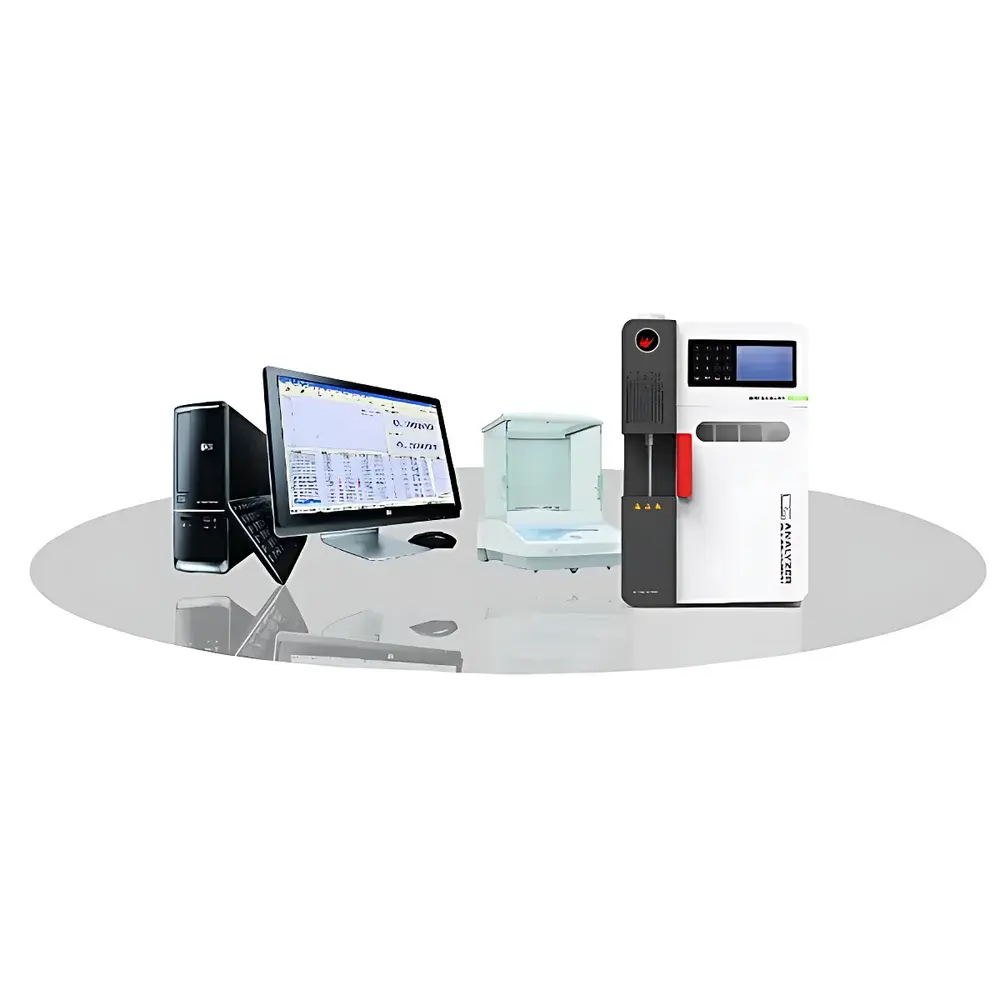
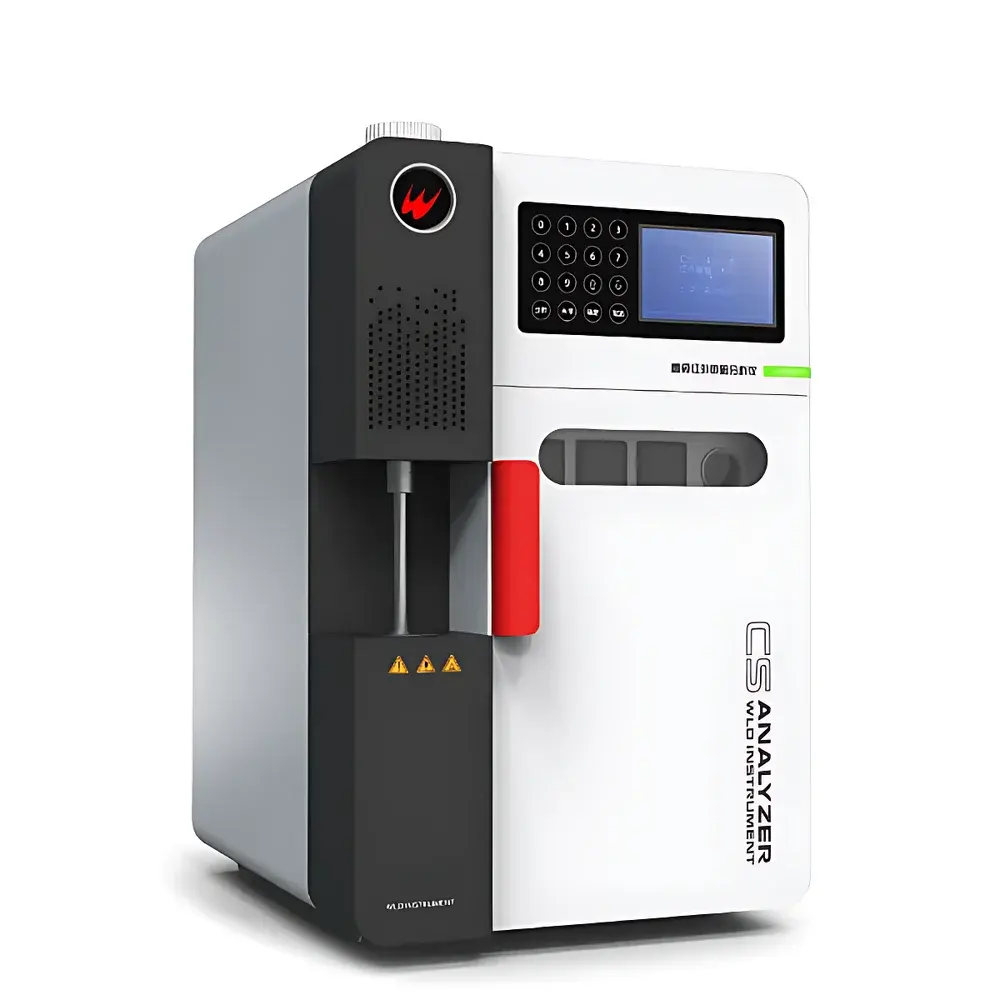
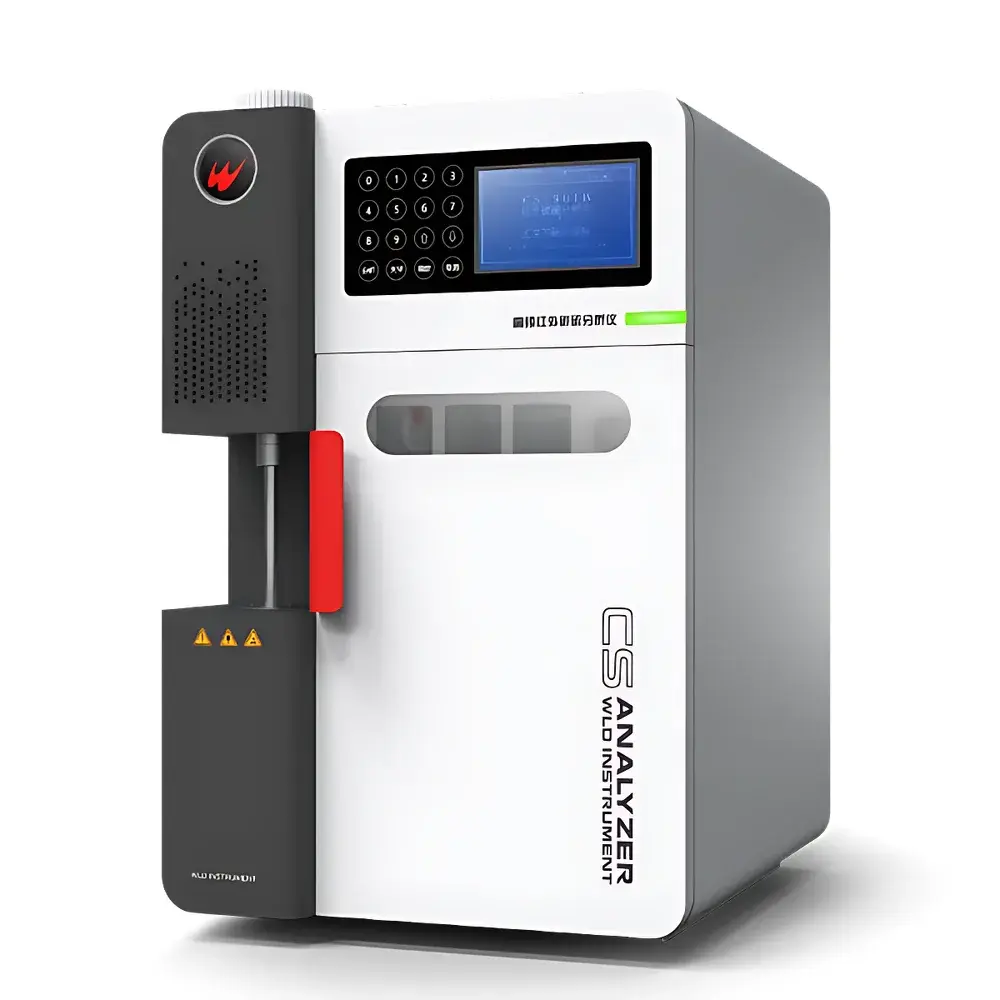
Wanlianda CS-901K High-Frequency Infrared Carbon-Sulfur Analyzer
| Brand | Wanlianda |
|---|---|
| Origin | Beijing, China |
| Model | CS-901K |
| Measurement Principle | Infrared Absorption Spectroscopy |
| Heating System | High-Frequency Induction Furnace (2.5 kW Output Power) |
| Carbon Range | C1: 0.00002–0.5%, C2: 0.05–100% |
| Sulfur Range | S1: 0.00002–0.5%, S2: 0.1–60% (extendable to 100%) |
| Sensitivity | 0.1 ppm |
| Precision | Carbon RSD ≤ 0.4%, Sulfur RSD ≤ 1.0% |
| Analysis Time | 40 s |
| Compliance | ISO 9556 (Carbon), ISO 4935 (Sulfur) |
Overview
The Wanlianda CS-901K High-Frequency Infrared Carbon-Sulfur Analyzer is a fully integrated elemental combustion analyzer engineered for precise, rapid quantification of total carbon and sulfur in solid inorganic and metallurgical samples. It operates on the principle of high-frequency induction combustion followed by non-dispersive infrared (NDIR) absorption spectroscopy. During analysis, a weighed sample is combusted quantitatively in a pure oxygen atmosphere within a high-frequency induction furnace (2.5 kW nominal output), converting all carbon and sulfur into CO2 and SO2, respectively. These gaseous oxides are swept through a dust- and moisture-removal system before entering dual-channel NDIR cells—each optimized for specific concentration ranges. The instrument implements five independent optical detection paths: low-carbon (C1), high-carbon (C2), low-sulfur (S1), high-sulfur (S2), and CO compensation—enabling seamless range switching and minimizing cross-interference. Designed for laboratory environments requiring routine QC/QA in foundries, steel mills, and raw material testing labs, the CS-901K delivers trace-level sensitivity (0.1 ppm) and robust reproducibility under daily operational conditions.
Key Features
- Monolithic integrated design: Combustion furnace and infrared detection module share a rigid mechanical platform, reducing thermal drift and alignment sensitivity.
- Dual-range infrared detection architecture: Independent optical paths for C1/C2 and S1/S2 ensure optimal signal-to-noise ratio across ultra-trace (e.g., low-alloy steels) and high-concentration (e.g., ferromanganese, coke) matrices.
- High-frequency induction furnace with closed-loop power regulation: Delivers stable 2.5 kW output across varying sample masses (0.1–1.0 g), ensuring complete oxidation even for refractory alloys and carbide-rich materials.
- Automatic baseline correction and CO compensation channel: Mitigates interference from incomplete combustion products and enhances accuracy in sulfur measurement, particularly for sulfide-rich ores and slags.
- Modular gas purification train: Includes ceramic filter, desiccant trap, and CO2/SO2-selective chemical scrubbers to protect optical cells and extend maintenance intervals.
- Pre-calibrated calibration curve library: Supports up to 32 user-defined reference materials per element, with linear and polynomial fitting options compliant with ISO/IEC 17025 documentation requirements.
Sample Compatibility & Compliance
The CS-901K is validated for direct analysis of solid, non-volatile samples including carbon steels, stainless steels, cast irons, ferroalloys (e.g., FeSi, FeMn), non-ferrous metals (Cu, Al, Ni base alloys), mineral ores (hematite, magnetite, pyrite), coke and coal char, metallurgical slags, fluxes, and rare-earth compounds. Sample preparation requires only grinding to ≤80 mesh and homogenization; no acid digestion or fusion is needed. Analytical performance meets or exceeds the precision and accuracy criteria specified in ISO 9556 (Steel and Iron — Determination of Total Carbon Content — Infrared Absorption Method) and ISO 4935 (Steel and Iron — Determination of Total Sulfur Content — Infrared Absorption Method). Instrument operation supports GLP-compliant workflows, with optional audit trail logging and electronic signature capability aligned with FDA 21 CFR Part 11 readiness protocols.
Software & Data Management
Controlled via Windows-based CS-Analyzer software, the system provides real-time combustion profile monitoring (O2 flow, furnace temperature, pressure differential), automatic peak integration, and dynamic range selection based on preliminary signal amplitude. All raw absorbance data, calibration parameters, and operator annotations are stored in encrypted SQLite databases with time-stamped records. Export formats include CSV, XML, and PDF reports compliant with LIMS integration standards (ASTM E1482, ASTM E1578). Software supports multi-level user permissions, method locking, and periodic verification checks against certified reference materials (CRMs) such as NIST SRM 662a (low-C steel) and BCS CRM 329 (high-S cast iron).
Applications
- Quality control of incoming raw materials (scrap, pig iron, ferroalloys) in primary steel production.
- Routine certification of finished product chemistry per ASTM A29/A29M, EN 10027, or JIS G 0320 specifications.
- Process optimization in sinter plants and blast furnaces via slag and coke carbon/sulfur profiling.
- Environmental compliance testing of sulfur content in metallurgical by-products subject to EU Industrial Emissions Directive limits.
- Research-grade analysis of interstitial impurities in high-purity nickel alloys and superconducting precursor powders.
FAQ
What types of calibration standards are recommended for daily verification?
Certified reference materials (CRMs) with matrix-matched composition and certified carbon/sulfur values—such as BCS, NIST, or IRMM standards—are required. At minimum, one low-level and one mid-level CRM should be analyzed per shift.
Can the instrument analyze powdered samples directly without pelletizing?
Yes—provided particle size is ≤80 mesh and sample mass is accurately weighed (0.2–0.5 g typical). No binder or pressing is required due to the high-energy combustion environment.
Is the CO compensation channel mandatory for sulfur analysis?
It is strongly recommended for sulfur quantification in samples prone to incomplete combustion (e.g., high-carbon cast irons, graphitic materials), as CO absorption overlaps with SO2 bands in standard NDIR cells.
What maintenance intervals are specified for the infrared detector and furnace components?
Optical cell windows require cleaning every 200–300 analyses; furnace crucibles are replaced after ~500 runs; desiccant and scrubber cartridges are renewed every 100 analyses or when moisture breakthrough is detected.
Does the system support remote diagnostics or service access?
Yes—the embedded industrial controller supports secure VPN-based remote connection for firmware updates, log retrieval, and guided troubleshooting by authorized service engineers.







