TRB3 Integrated Temperature, Humidity & Barometric Pressure Sensor
| Origin | Beijing, China |
|---|---|
| Manufacturer Type | Authorized Distributor |
| Origin Category | Domestic (China) |
| Model | TRB3 |
| Pricing | Available Upon Request |
| Output Interface | SDI-12 Digital |
| Enclosure Rating | IP67 |
| Supply Voltage | 7–28 VDC |
| Operating Temperature | −40 °C to +70 °C |
| Operating Humidity Range | 0–100 %RH |
| Temp. Accuracy | ±0.2–±0.3 °C (−40 to +70 °C) |
| RH Accuracy | ±1.5–±2 % (0–80 %RH) |
| Pressure Range | 300–1200 mbar |
| Pressure Accuracy | ±2 mbar (typ.) |
| Long-Term Drift | < 0.03 °C/yr, < 0.15 mbar/yr, ±0.5 %RH/yr |
| Resolution | 0.001 °C / 0.001 %RH / 0.001 mbar |
| Response Time | <130 s (Temp), 8 s (RH), N/A (Pressure) |
| Calibration Traceability | NIST and NPL |
Overview
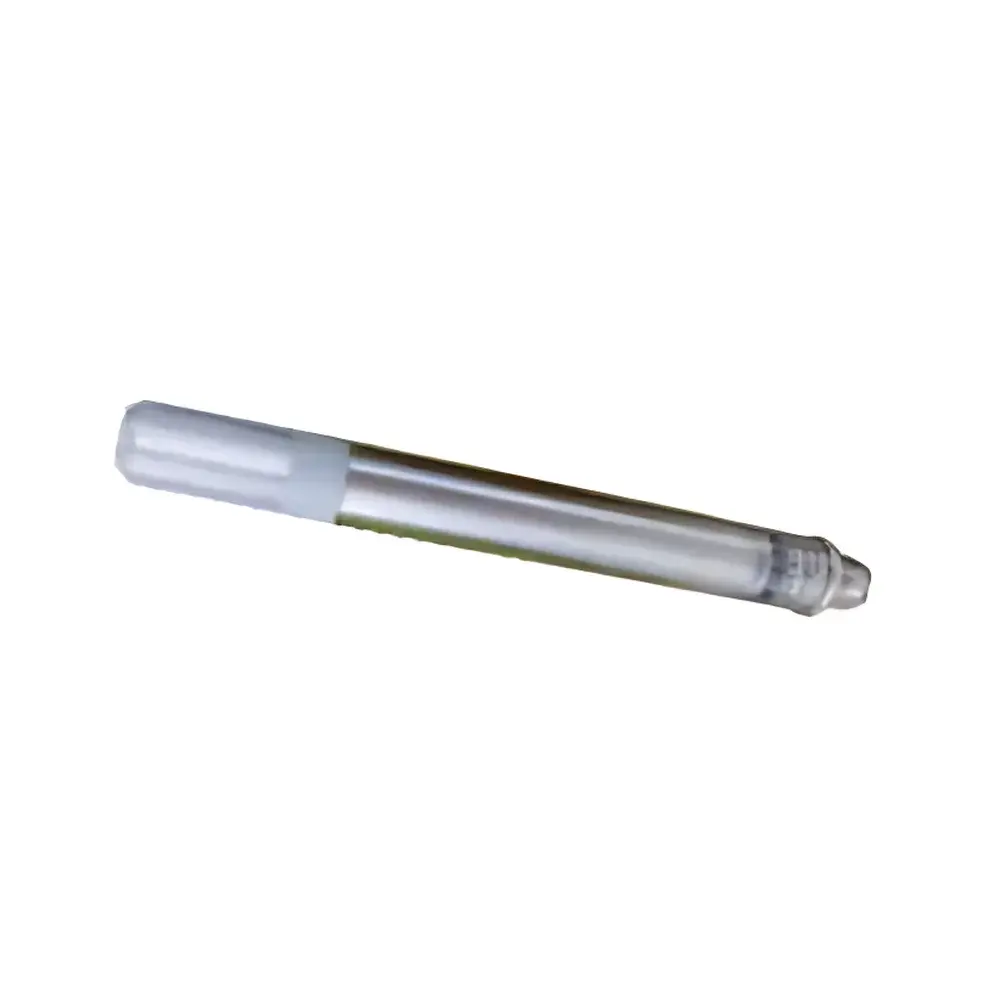
The TRB3 Integrated Temperature, Humidity & Barometric Pressure Sensor is an industrial-grade environmental monitoring instrument engineered for long-term, high-reliability deployment in unattended outdoor and semi-outdoor applications. It employs a tri-sensor architecture—combining a precision thermistor-based temperature element, a capacitive polymer humidity sensing chip, and a piezoresistive MEMS barometric pressure transducer—within a single compact housing. All measurements are digitized at the sensor head using on-board signal conditioning and analog-to-digital conversion, eliminating analog voltage degradation over cable runs. The device communicates exclusively via the SDI-12 (Serial Data Interface at 1200 baud) protocol—a widely adopted standard in hydrological, agricultural, meteorological, and environmental research networks. Its design prioritizes metrological integrity, low power consumption, and resilience across extreme ambient conditions, making it suitable for integration into automated weather stations (AWS), ecological monitoring nodes, smart irrigation controllers, and climate-controlled infrastructure management systems.
Key Features
- Triple-parameter digital output: simultaneous air temperature, relative humidity, and atmospheric pressure readings via a single SDI-12 interface
- True digital sensor architecture—no analog signal transmission, eliminating voltage drop, EMI susceptibility, and calibration drift due to cable resistance
- IP67-rated M12 stainless-steel locking connector ensures dust-tight and water-immersion-resistant connectivity for field-deployed installations
- Ultra-low power operation: 100 µA quiescent current; 1.5 mA peak during measurement cycles—enabling multi-year battery life in solar-powered or energy-harvesting configurations
- Wide operating envelope: functional from −40 °C to +70 °C and 0–100 %RH, with UV-stabilized polyphthalamide (PPA) housing resistant to photodegradation and thermal cycling fatigue
- NIST- and NPL-traceable calibration certificates available per unit, supporting ISO/IEC 17025-compliant quality assurance workflows
Sample Compatibility & Compliance
The TRB3 is designed for direct exposure to ambient atmospheric air without protective enclosures or aspiration. Its open-structure humidity element allows rapid equilibration with ambient vapor content, while the pressure port features a hydrophobic membrane to prevent condensation ingress without impeding barometric response. The sensor complies with IEC 60529 (IP67), RoHS Directive 2011/65/EU, and EN 61326-1:2013 (EMC requirements for laboratory and industrial measurement equipment). Although not certified for explosion-proof or intrinsically safe environments, its low-voltage DC operation (7–28 VDC) and absence of internal batteries or hazardous materials render it compatible with Class I, Division 2 and ATEX Zone 2 installation practices when integrated into appropriately rated system housings. For regulated data acquisition (e.g., EPA Method 21, ASTM D6347/D6347M), the TRB3 supports time-stamped, audit-ready data logging when paired with SDI-12-compatible dataloggers featuring GLP/GMP-compliant firmware (e.g., Campbell Scientific CR1000X, Onset HOBO RX3000).
Software & Data Management
As an SDI-12 slave device, the TRB3 requires no proprietary drivers or configuration utilities. It responds to standardized SDI-12 commands (e.g., “aM!” for measurement initiation, “aD0!” for data readout), enabling seamless integration with open-source and commercial datalogging platforms—including Python-based PySDI12 libraries, R’s sdi12 package, and LabVIEW SDI-12 VIs. Each measurement cycle returns ASCII-encoded values in fixed-field format (e.g., “+23.456,+45.789,+1013.245”), facilitating direct ingestion into SQL databases, time-series platforms (InfluxDB, TimescaleDB), or cloud analytics pipelines (AWS IoT Core, Azure IoT Hub). Optional firmware updates—delivered via UART bootloading—support future enhancements such as configurable sampling intervals, burst-mode averaging, and enhanced diagnostics reporting. All raw outputs are compatible with ISO/IEC 17025 traceability documentation frameworks, including full calibration history retention and uncertainty budgeting per ISO/IEC GUIDE 98-3.
Applications
- Automated weather station (AWS) networks for mesoscale meteorological modeling and real-time forecasting validation
- Long-term ecological research (LTER) sites requiring continuous microclimate profiling across forest canopies, alpine zones, and coastal margins
- Smart agriculture deployments: irrigation scheduling, frost prediction, and post-harvest storage condition monitoring
- Building envelope performance assessment under ASHRAE Standard 160 and ISO 13788 for hygrothermal analysis
- Environmental compliance monitoring for landfill gas collection systems, wastewater treatment lagoons, and remediation sites
- Calibration reference nodes in distributed sensor arrays where cross-sensor consistency and temporal stability are critical
FAQ
Does the TRB3 require periodic recalibration?
Yes. While long-term drift is specified at < 0.03 °C/yr, < 0.15 mbar/yr, and ±0.5 %RH/yr, annual recalibration against NIST-traceable standards is recommended for applications requiring ISO/IEC 17025 compliance or regulatory submission.
Can the TRB3 be used underwater or in submerged enclosures?
No. Although rated IP67 (1 m for 30 min), the sensor is designed for atmospheric exposure only. Submersion will compromise humidity and pressure measurement integrity due to hydrostatic pressure effects and membrane saturation.
Is the SDI-12 address configurable?
Yes. The default address is ‘0’, but users may assign any valid SDI-12 address (0–9, a–z) using the ‘aA’ command sequence per the SDI-12 v1.4 specification.
What is the maximum recommended cable length for SDI-12 communication?
For reliable operation at 1200 baud, total loop resistance should remain below 1 kΩ. With standard 22 AWG twisted-pair shielded cable, lengths up to 200 m are routinely deployed; beyond 100 m, termination resistors (120 Ω) and active line drivers are advised.
Does the TRB3 support temperature compensation of humidity and pressure readings?
Yes. All onboard compensation algorithms are applied in real time. Relative humidity output is automatically corrected for temperature-induced capacitance shift, and pressure readings include thermal zero and sensitivity drift compensation across the full operating range.