
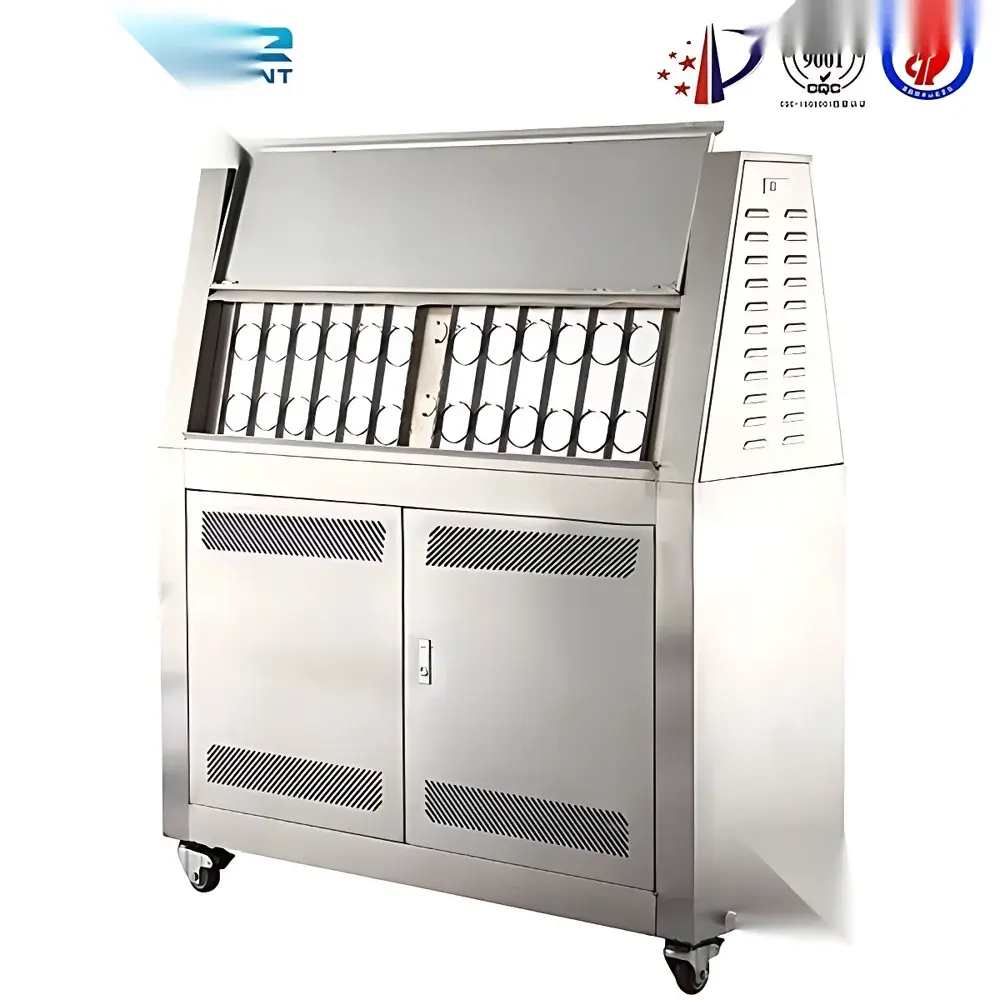
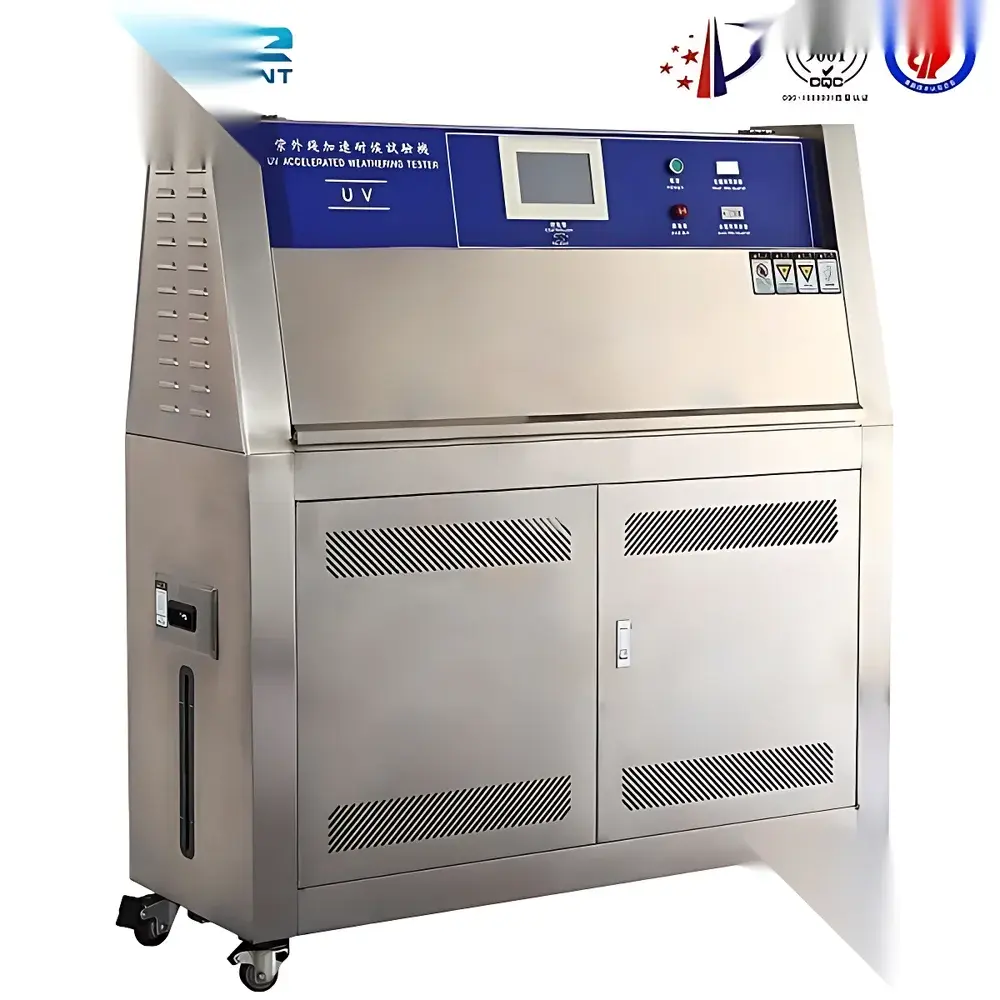
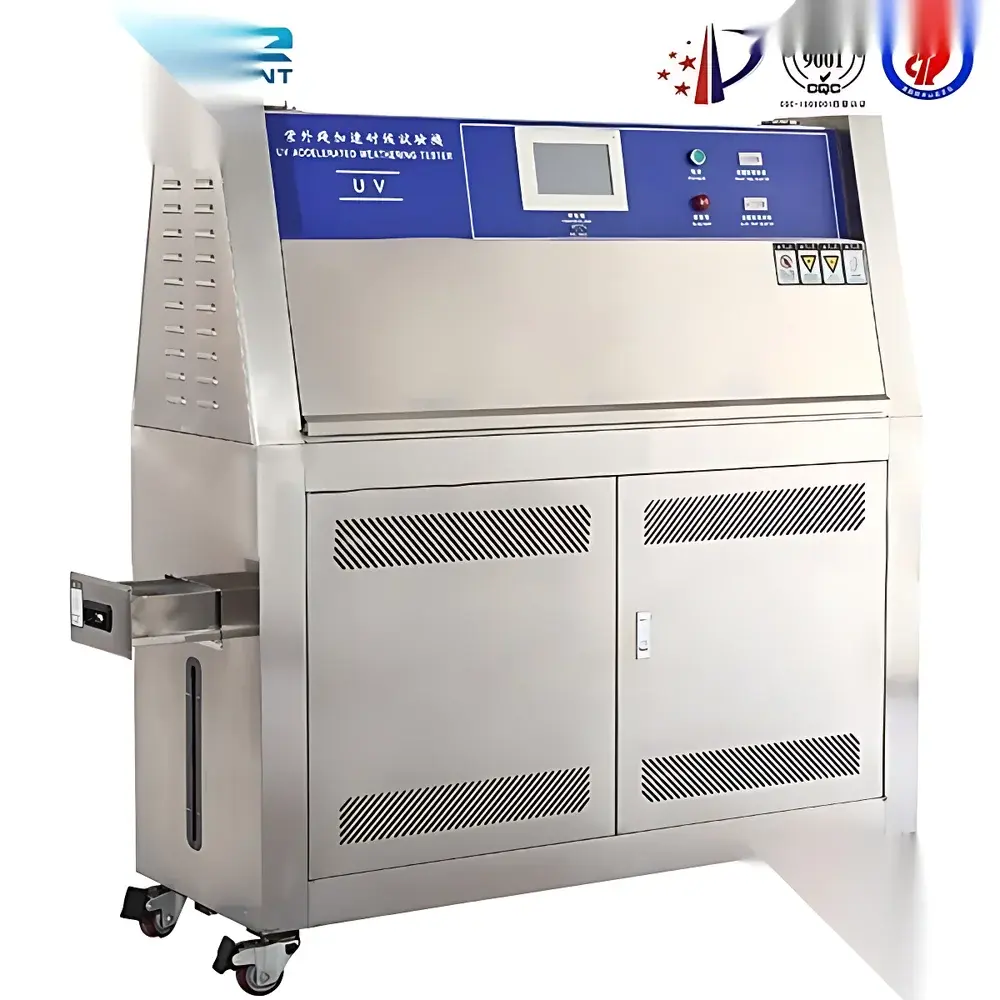
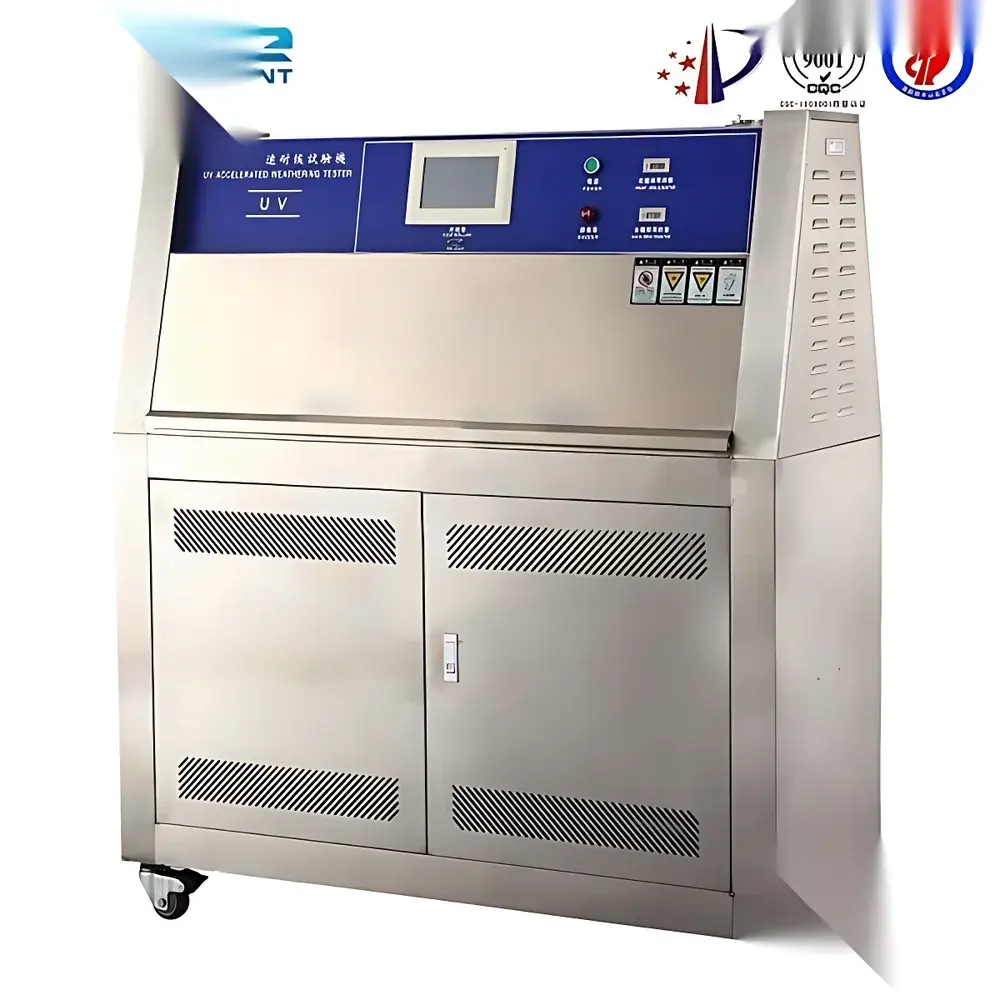
UV Aging Test Chamber with Fluorescent UV Lamps
| Brand | Other Brands |
|---|---|
| Origin | Imported |
| Manufacturer Type | Authorized Distributor |
| Price | USD 2,650 (Reference Only) |
| UV Lamp Type | UVA-340 / UVB-313 Fluorescent Lamps |
| Temperature Range | 30–70 °C (Controlled) |
| Humidity Control | Condensation Cycle (Humidification via Water Reservoir) |
| Irradiance Control | Yes (Calibrated Sensor) |
| Sample Exposure Area | Standard 450 mm × 1200 mm |
| Spray Function | Integrated Frontal Water Spray Nozzles |
| Compliance | ASTM G154, ISO 4892-3, JIS D0205, GB/T 14522 |
Overview
The UV Aging Test Chamber with Fluorescent UV Lamps is an engineered environmental test system designed to accelerate photodegradation and moisture-induced degradation of polymeric, coating, automotive, and architectural materials under controlled ultraviolet radiation and condensation cycling. It operates on the principle of xenon-free accelerated weathering—utilizing calibrated fluorescent UV lamps (UVA-340 for solar-simulated UV-A or UVB-313 for aggressive UV-B exposure) to replicate the most damaging spectral region (290–400 nm) of terrestrial sunlight. Simultaneously, a temperature-controlled condensation cycle generates dew-like moisture on specimen surfaces, mimicking nocturnal humidity exposure. This dual-stress methodology enables rapid evaluation of material stability—reproducing months or years of outdoor exposure in days or weeks. The chamber’s robust stainless-steel interior, precision irradiance feedback control, and integrated water spray function support reproducible, standards-compliant testing per ASTM G154 Class I/II cycles and ISO 4892-3 Method A.
Key Features
- Fluorescent UV lamp array with interchangeable UVA-340 (sunlight simulation) and UVB-313 (harsh UV acceleration) lamp options
- Microprocessor-based controller with real-time irradiance monitoring and automatic lamp output compensation
- Condensation cycle generated by heated water reservoir and controlled chamber wall cooling—no external humidifier required
- Front-mounted water spray system with adjustable duration and frequency, compliant with ASTM G154 Cycle 4
- Stainless-steel (304 grade) interior chamber and sample holder rack resistant to UV-induced corrosion and thermal stress
- Over-temperature protection, lamp overheat cutoff, and door interlock safety circuitry
- Integrated black-panel thermometer (BPT) and optional white-panel thermometer (WPT) for surface temperature validation
- Modular design supporting future calibration traceability to NIST-traceable UV radiometers
Sample Compatibility & Compliance
The chamber accommodates flat sheet specimens up to 1200 mm × 450 mm × 25 mm (L × W × H), including paints, plastics, elastomers, textiles, adhesives, and composite laminates. Specimens are mounted vertically on non-reflective aluminum racks to ensure uniform irradiance distribution and avoid shadowing. All operational protocols align with internationally recognized weathering standards: ASTM G154 (Standard Practice for Operating Fluorescent Ultraviolet (UV) Lamp Apparatus for Exposure of Non-Metallic Materials), ISO 4892-3 (Plastics — Methods of Exposure to Laboratory Light Sources — Part 3: Fluorescent UV Lamps), JIS D0205 (Automotive exterior parts), and GB/T 14522 (Chinese national standard for mechanical properties after UV exposure). Data generated supports GLP-compliant reporting when paired with validated software and audit-trail-enabled controllers.
Software & Data Management
The embedded controller logs time-stamped records of chamber temperature, black-panel temperature, irradiance (W/m² at 340 nm), cycle phase (UV, condensation, spray), and runtime. Optional Ethernet or RS-485 interface enables integration with laboratory information management systems (LIMS) and centralized data archiving. Export formats include CSV and PDF reports with metadata fields for operator ID, sample ID, test standard reference, and calibration certificate numbers. For regulated environments, firmware versions compliant with FDA 21 CFR Part 11 requirements (electronic signatures, audit trail, user access levels) are available upon configuration.
Applications
This UV aging chamber serves critical roles in R&D, quality assurance, and regulatory submission workflows across industries: polymer formulation labs assessing yellowing index and carbonyl formation; automotive OEMs validating exterior trim durability per SAE J2020; paint manufacturers evaluating gloss retention and chalking resistance; solar panel encapsulant developers screening EVA discoloration; and aerospace suppliers qualifying sealant UV resistance per ASTM D4329. Its reproducibility makes it suitable for comparative benchmarking against reference materials (e.g., NIST SRM 2242) and internal specification pass/fail criteria.
FAQ
What UV lamp types are supported, and how do they differ?
UVA-340 lamps emit spectral output closely matching solar UV radiation down to 295 nm, ideal for realistic outdoor simulation. UVB-313 lamps extend output to 280 nm and induce faster degradation—used for aggressive screening per ASTM G154 Cycle 1.
Is condensation achieved via humidification or surface cooling?
Condensation forms exclusively through controlled surface cooling of the chamber walls and specimen holders—no steam generator or humidifier is used, eliminating mineral deposit risks and ensuring stable dew-point control.
How often must UV lamps be replaced?
Lamp life is rated at 1,600–2,000 hours under continuous operation. Replacement is mandated upon irradiance drop exceeding ±10% from initial calibration, verified using a calibrated UV radiometer.
Can this chamber meet FDA or ISO 13485 requirements for medical device packaging?
Yes—when configured with Part 11-compliant firmware, full audit trail logging, and documented IQ/OQ/PQ protocols, it supports validation for ISO 11607-1 packaging stability testing.
What safety measures protect operators from UV exposure?
The chamber features interlocked door switches that deactivate all UV lamps immediately upon opening, plus a visible “UV ON” indicator and mandatory UV-blocking viewing window (OD 6+ at 280–400 nm). Operator PPE—including ANSI Z87.1-compliant UV-filtering goggles—is required during manual loading/unloading.
Related Products



