
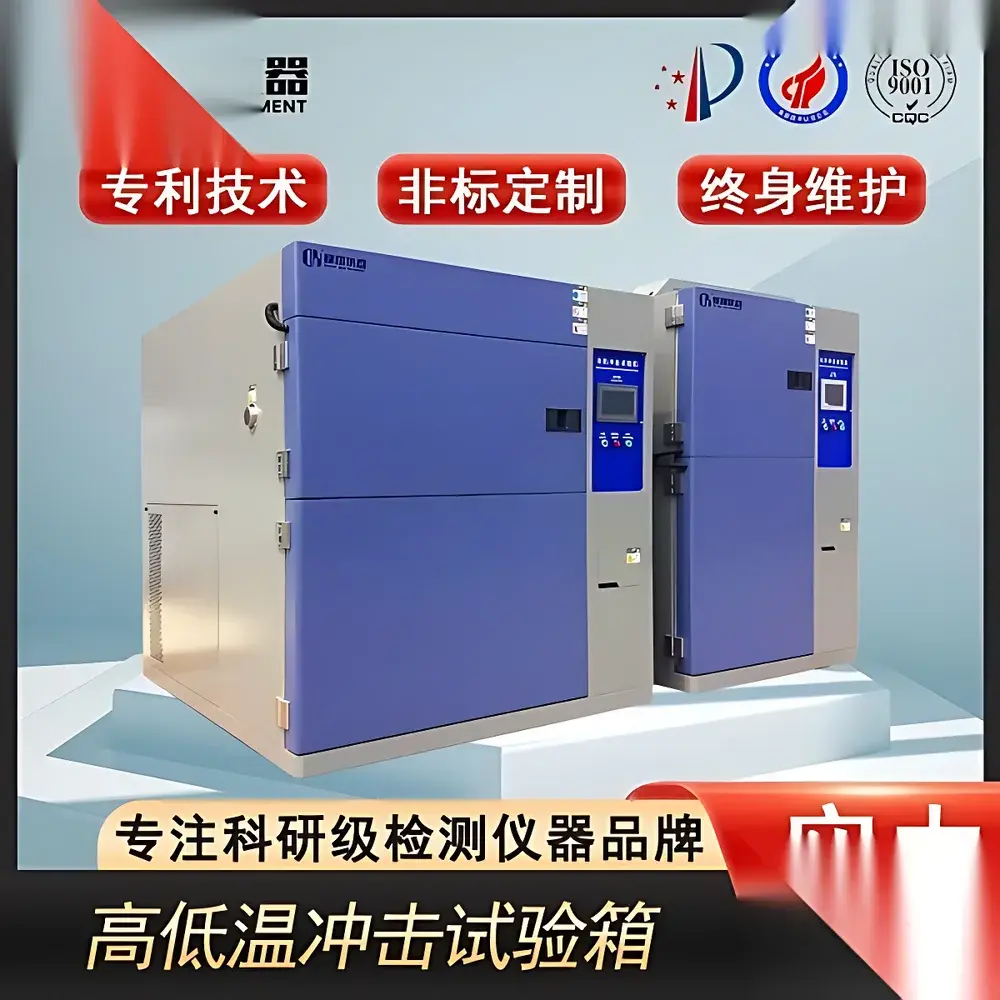
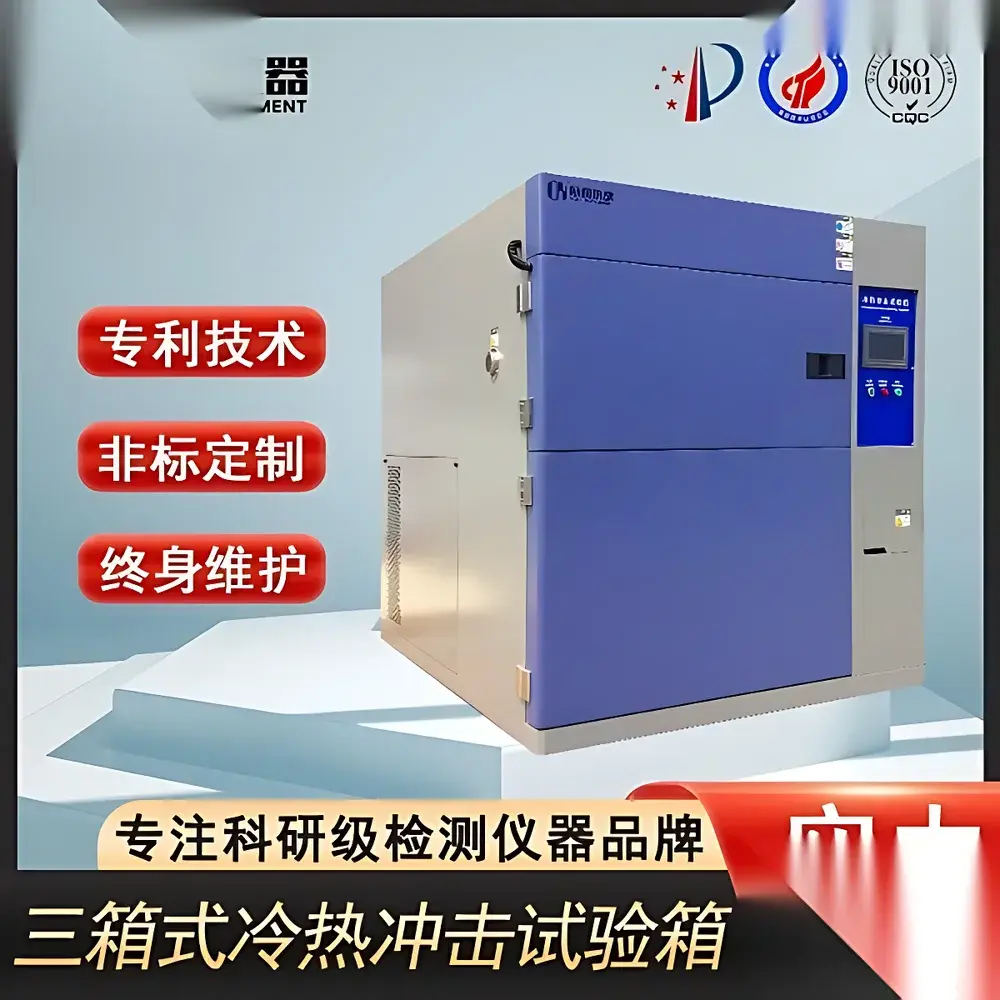
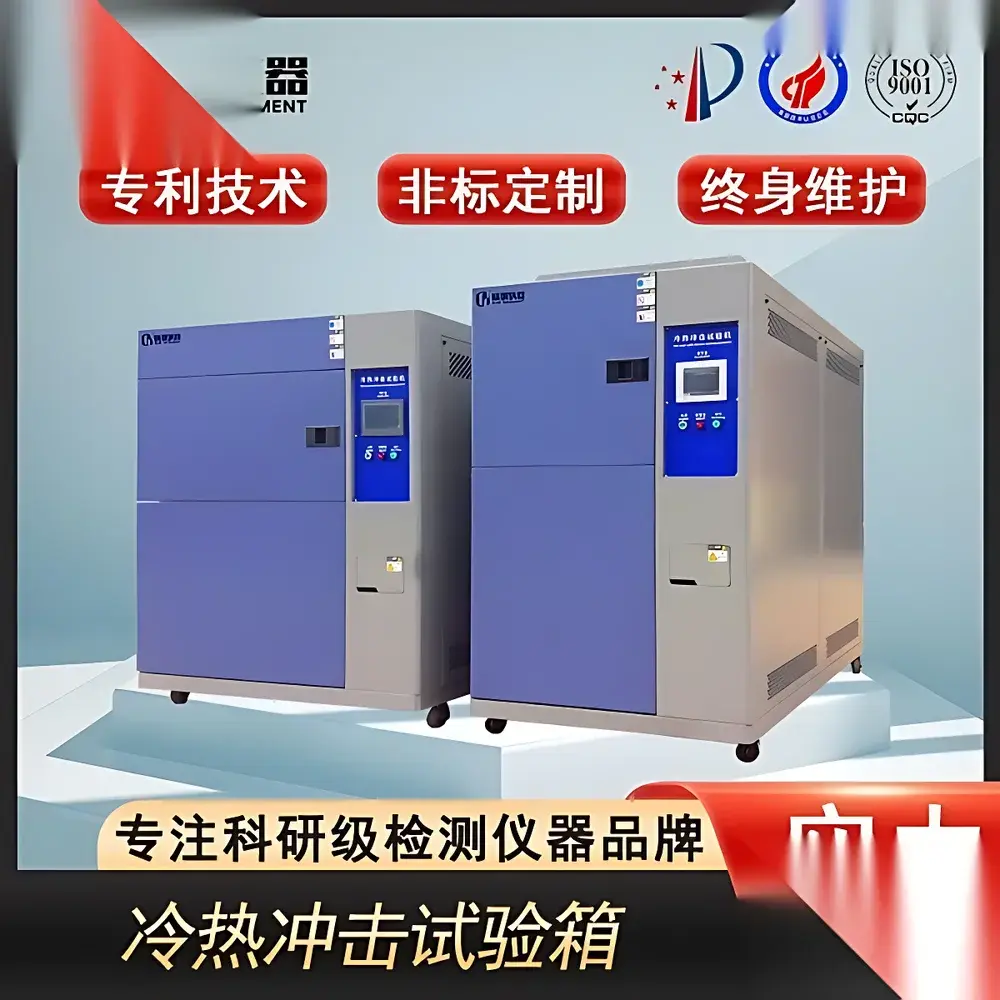
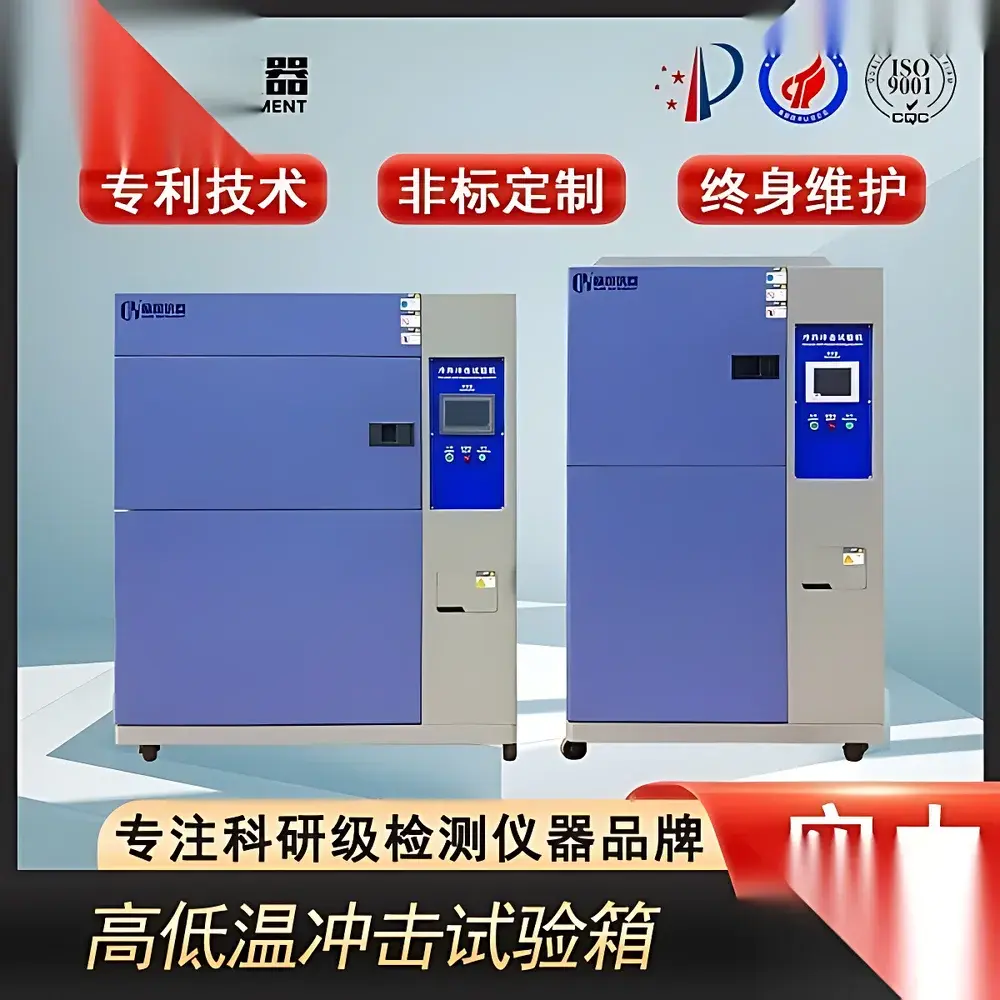
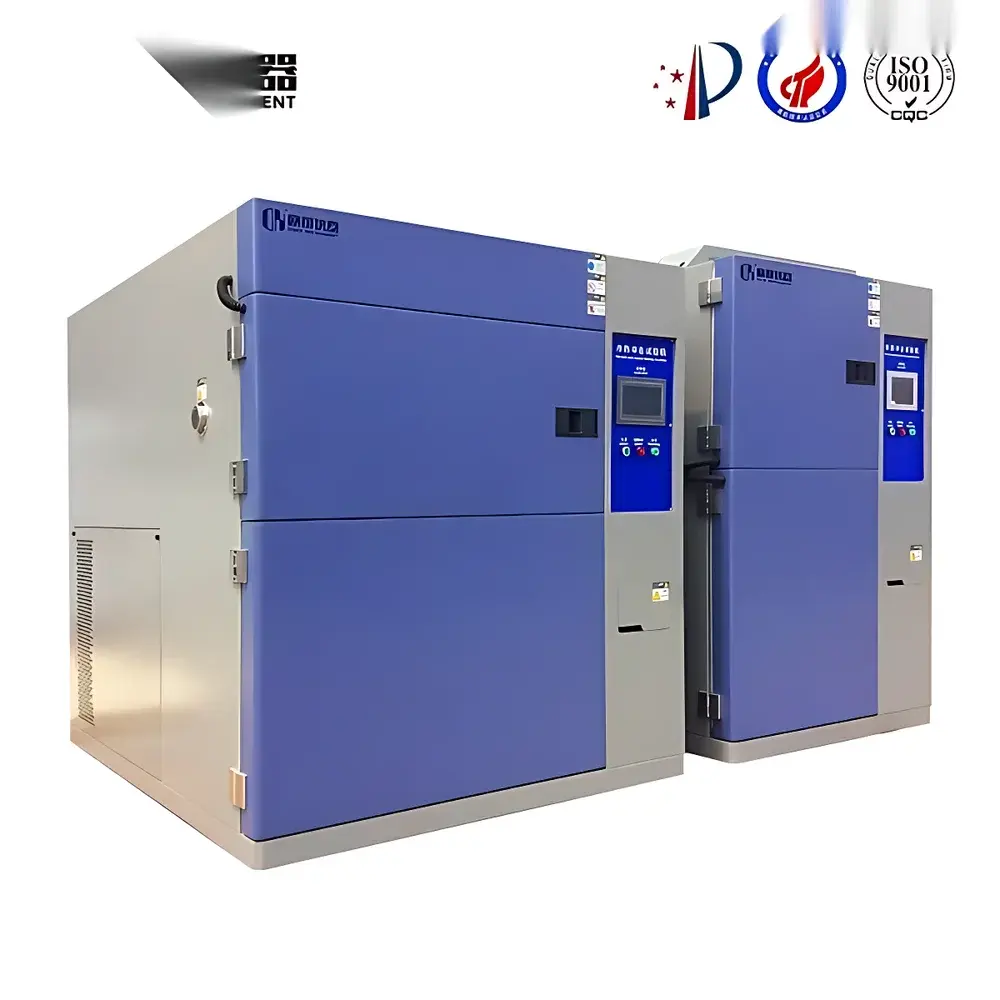
Thermal Shock Test Chamber – Generic Industrial Grade Dual-Chamber or Single-Chamber Configuration
| Brand | Other Brands |
|---|---|
| Origin | Imported |
| Manufacturer Type | Authorized Distributor |
| Pricing | USD 11,200 (FOB) |
| Compliance | GB/T 2423.1–2001, GB/T 2423.2–2001, GB/T 2423.22–1989, GJB 150.3–1986 to GJB 150.5–1986, GJB 360.7–1987, GJB 367.2–1987, SJ/T 10186–1991 & SJ/T 10187–1991, IEC 60068-2-14 (Test N: Change of Temperature) |
Overview
The Thermal Shock Test Chamber is an engineered environmental stress screening (ESS) system designed to evaluate the reliability and structural integrity of materials and assemblies under rapid, extreme temperature transitions. It operates on the principle of accelerated thermal cycling—subjecting test specimens to abrupt shifts between high-temperature and low-temperature exposure zones, thereby inducing controlled thermal strain. This methodology replicates field-service conditions where components experience sudden ambient shifts (e.g., aerospace avionics during ascent/descent, automotive ECUs in desert-to-mountain transit, or sealed electronics deployed across climatic zones). Unlike standard temperature-humidity chambers, thermal shock systems prioritize transition speed over steady-state stability: typical transfer times between extremes range from 5 to 15 seconds, with chamber stabilization times under 5 minutes per phase. The system supports both single-chamber (gas-flush) and dual-chamber (mechanical lift/transfer) configurations—each optimized for distinct throughput, repeatability, and contamination control requirements.
Key Features
- Two-zone architecture: Independent high-temperature zone (up to +150 °C) and low-temperature zone (down to −70 °C), enabling precise, non-overlapping thermal profiles
- Dual-refrigeration circuit: Binary cascade refrigeration system utilizing imported semi-hermetic compressors (Germany-sourced), integrating high-stage R404A and low-stage R23 refrigerants for stable sub-zero operation
- Evaporative condenser interface: Serves as thermal coupling between stages, enabling efficient heat rejection and minimizing cross-contamination between temperature domains
- Energy modulation control: Variable-capacity expansion valves and compressor staging maintain consistent cooling capacity while reducing power consumption and mechanical wear during partial-load operation
- Water-cooled condensing unit: Requires external closed-loop cooling tower (10 m³/h flow rate, 32 °C inlet max); eliminates reliance on ambient air temperature for condenser performance
- Industrial-grade stainless steel interior (SUS304), reinforced insulation (≥150 mm polyurethane foam, λ ≤ 0.022 W/m·K), and leak-tested chamber seals ensure long-term thermal integrity and minimal drift
Sample Compatibility & Compliance
This chamber accommodates rigid and semi-rigid specimens up to 500 mm × 500 mm × 500 mm (W×D×H), including PCBs, molded plastic housings, metal castings, elastomeric gaskets, and hybrid sensor modules. Fixturing options include stainless steel trays, adjustable rack systems, and non-reactive silicone mounting pads to prevent mechanical interference during thermal transients. All operational parameters—including ramp rates, dwell times, cycle counts, and alarm thresholds—are programmable and auditable per GLP/GMP-aligned data governance protocols. The system complies with internationally recognized qualification standards: IEC 60068-2-14 (Test N), MIL-STD-810G Method 503.5, and the full suite of Chinese military and industrial specifications referenced in the technical documentation (GJB 150 series, GB/T 2423 series). Calibration traceability follows ISO/IEC 17025 guidelines, with optional third-party certification available upon request.
Software & Data Management
Equipped with a Windows-based control interface featuring real-time multi-channel monitoring (chamber A/B temperatures, specimen surface thermocouple inputs, compressor discharge pressure, refrigerant saturation points), the system logs timestamped data at configurable intervals (1–30 sec resolution). Export formats include CSV, PDF test reports, and XML-compliant datasets compatible with LIMS integration. Audit trails record all user actions—including profile edits, manual overrides, and calibration events—with immutable timestamps and operator ID tagging. Optional FDA 21 CFR Part 11 compliance package includes electronic signatures, role-based access control, and encrypted database backups. Remote diagnostics via Ethernet or RS485 enable predictive maintenance alerts based on compressor runtime, oil pressure trends, and refrigerant charge deviation analytics.
Applications
- Failure mode analysis of solder joints and wire bonds in high-reliability electronics
- Evaluation of coating adhesion loss, delamination, or microcracking in composite laminates
- Validation of hermetic seal integrity in MEMS devices and medical implants
- Qualification testing for automotive ADAS sensors operating across −40 °C to +85 °C service envelopes
- Accelerated life testing of battery module thermal interface materials (TIMs) and encapsulants
- Process validation support for reflow soldering, conformal coating, and potting material curing cycles
FAQ
What is the typical temperature transition time between extremes?
Standard dual-chamber models achieve ≤10 s transfer time; single-chamber gas-flush variants require 15–25 s depending on specimen mass and airflow configuration.
Does the system support custom thermal profiles beyond standardized test methods?
Yes—up to 99 programmable steps per cycle, including variable ramp rates, asymmetric dwell durations, and conditional branching based on real-time sensor feedback.
Is external cooling water treatment required?
A corrosion-inhibited, pH-stabilized closed-loop coolant is strongly recommended; untreated municipal water may cause scaling in the condenser coil and reduce system MTBF.
Can the chamber be integrated into an automated test cell?
Full Modbus TCP and OPC UA support enables seamless interoperability with PLC-based manufacturing execution systems (MES) and robotic handling platforms.
What maintenance intervals are specified for the refrigeration system?
Compressor oil analysis every 2,000 operating hours; refrigerant purity verification and filter-drier replacement every 12 months or 4,000 hours—whichever occurs first.



