
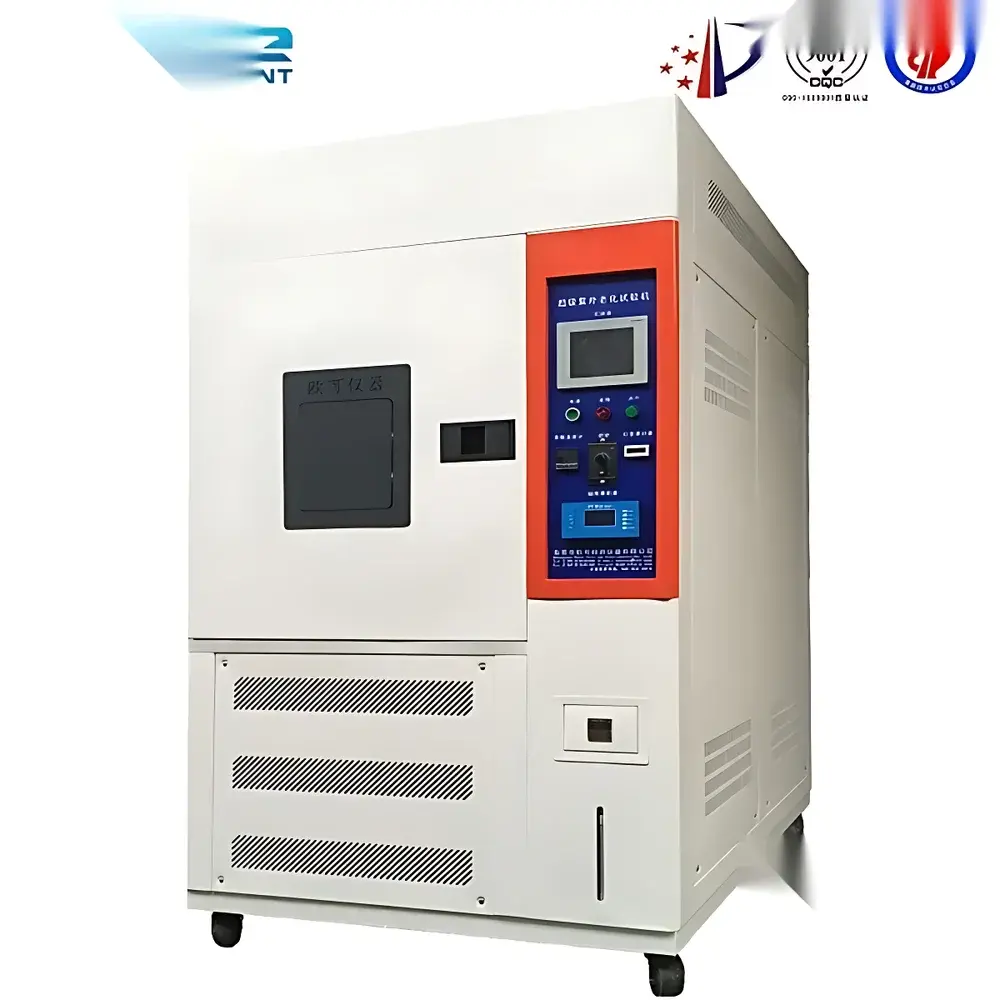
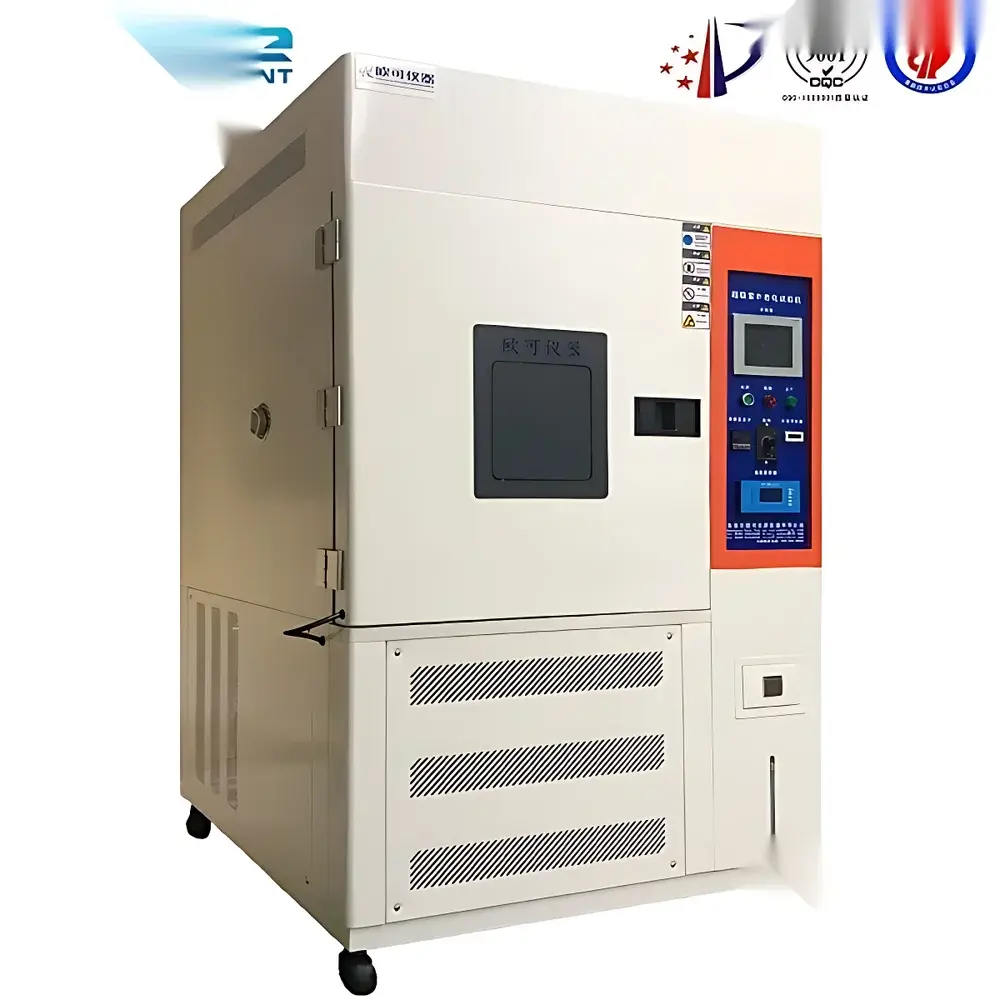
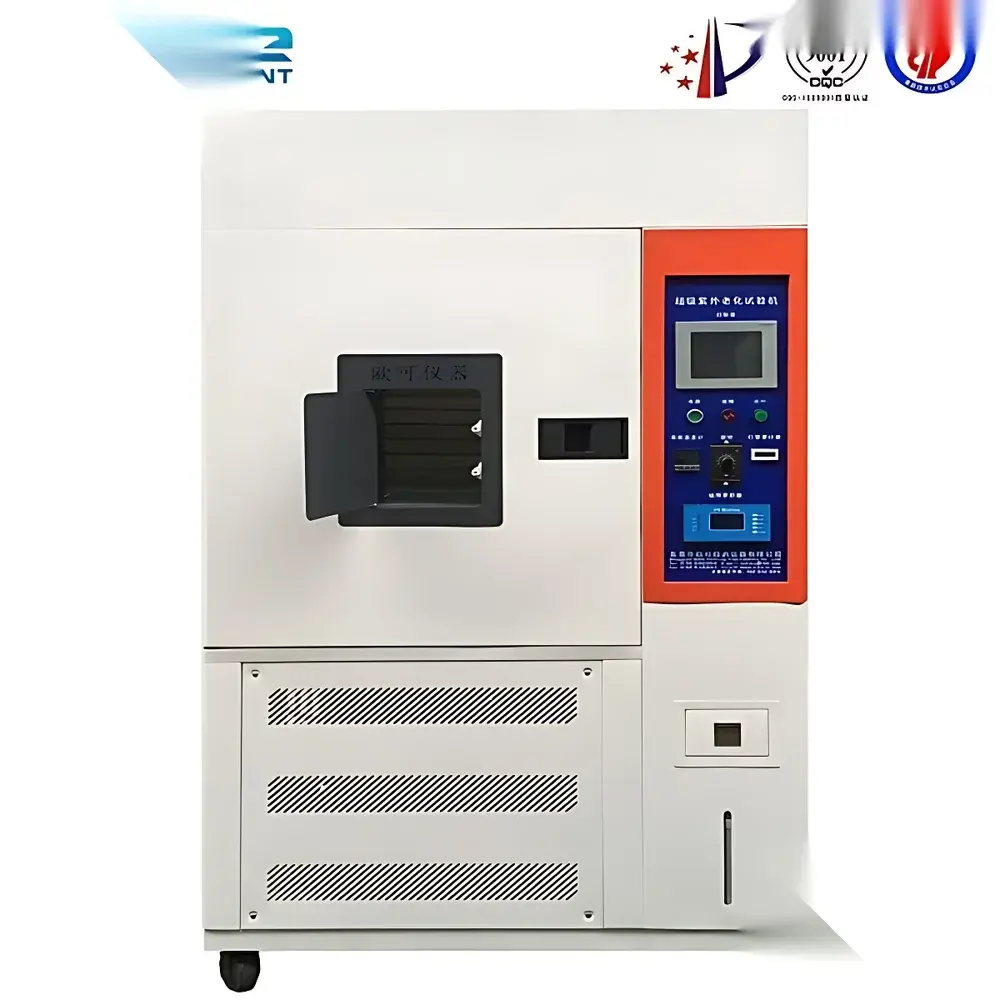
SuperUV Metal Halide Arc UV Aging Test Chamber
| Brand | Other Brands |
|---|---|
| Origin | Imported |
| Manufacturer Type | Authorized Distributor |
| Temperature Range | RT to 85°C (Operating Range: 50°C ±10°C) |
| Humidity Range | 40–70% RH (Illumination), 50–90% RH (Dark Cycle) |
| Temperature Control Accuracy | ±0.5°C |
| Humidity Control Accuracy | ±2.0% RH |
| Temperature Uniformity | ±2.0°C |
| Humidity Uniformity | ±3.0% RH |
| Heating Rate | ≤25 min (RT → 85°C) |
| Light Source | 2.5 kW Air-Cooled Metal Halide Lamp (1 unit) |
| Sample Tray Dimensions | 500 × 400 mm |
| Irradiation Geometry | Top-mounted, Reflector-Assisted Direct Illumination |
| Spectral Range | 295–450 nm |
| Irradiance Uniformity | ≥90% across Exposure Plane |
Overview
The SuperUV Metal Halide Arc UV Aging Test Chamber is an advanced environmental simulation system engineered for accelerated weathering evaluation of polymeric materials, coatings, automotive finishes, architectural glazing, and outdoor signage. Unlike fluorescent UV lamps or xenon arc systems, this chamber employs high-intensity air-cooled metal halide lamps to replicate the spectral power distribution (SPD) of terrestrial solar radiation—particularly within the critical 295–450 nm ultraviolet and near-visible range. This spectral fidelity enables realistic simulation of photochemical degradation mechanisms including chain scission, crosslinking, oxidation, and pigment bleaching under controlled thermal and hygrothermal stress. The chamber integrates simultaneous irradiation, temperature cycling, condensation humidity, and optional water spray—mimicking diurnal cycles of sunlight exposure, dew formation, and rainfall events. Its design complies with core principles outlined in ASTM G154 (Standard Practice for Operating Fluorescent Ultraviolet (UV) Lamp Apparatus for Exposure of Nonmetallic Materials), ISO 4892-2 (Plastics — Methods of Exposure to Laboratory Light Sources — Part 2: Xenon-Arc Method), and relevant sections of SAE J2527 (Surface Vehicle Standard for Accelerated Exposure of Automotive Exterior Materials Using a Controlled Irradiance Xenon-Arc Apparatus), though its metal halide source provides distinct spectral advantages for certain material classes requiring enhanced UV-B and UV-A fidelity.
Key Features
- High-fidelity 2.5 kW metal halide lamp delivering spectral output closely matching extraterrestrial and ground-level solar irradiance between 295 nm and 450 nm—optimized for UV-driven polymer degradation kinetics.
- Top-mounted lamp configuration with precision-engineered reflector optics ensures ≥90% irradiance uniformity across the 500 × 400 mm exposure plane—critical for reproducible inter-laboratory correlation.
- Independent dual-control climate system: programmable temperature range from ambient (RT) to 85°C (±0.5°C accuracy) and dynamic humidity control (40–70% RH during irradiation; 50–90% RH during dark/condensation phases, ±2.0% RH accuracy).
- Robust stainless-steel interior chamber with insulated double-wall construction, corrosion-resistant hardware, and sealed optical viewport compatible with real-time spectral monitoring accessories.
- Integrated condensation cycle capability via controlled cold surface contact—enabling realistic dew formation simulation without external humidification plumbing.
- Optional water spray module compliant with ISO 20671-1 for cyclic wetting protocols, supporting evaluation of erosion resistance, blistering, and adhesion loss under combined UV/moisture stress.
Sample Compatibility & Compliance
The chamber accommodates flat-panel specimens up to 500 × 400 mm and standard thicknesses (≤25 mm), with fixtures supporting ASTM D6675, ISO 11341, and GB/T 1865 test specimen geometries. It supports multi-cycle test protocols—including UV irradiation + condensation, UV + spray, and sequential UV/dark/humidity phases—as required by OEM specifications (e.g., Ford CETP, GMW14124, Volkswagen PV3929). All control logic and data logging conform to GLP-compliant architecture, enabling audit-ready operation under FDA 21 CFR Part 11 when paired with validated software packages. Calibration traceability follows NIST-traceable irradiance standards (e.g., using calibrated spectroradiometers per CIE S 014/E:2006).
Software & Data Management
Equipped with embedded industrial-grade controller featuring intuitive touchscreen HMI, the system supports full protocol programming—including ramp rates, dwell times, irradiance setpoints (in W/m² @ 340 nm), and phase transitions. Optional PC-based software provides remote monitoring, real-time irradiance trending, deviation alarms, and automated report generation (PDF/CSV) with digital signature support. Audit trails record all parameter changes, user logins, calibration events, and alarm histories—fully compliant with ISO/IEC 17025 and GMP documentation requirements. Data export supports integration into LIMS platforms via OPC UA or Modbus TCP protocols.
Applications
- Accelerated durability assessment of automotive clearcoats, plastic fascias, and elastomeric seals under simulated Florida/Mediterranean exposure conditions.
- Qualification testing of aerospace composite matrix resins and protective topcoats per MIL-STD-810H Method 505.6.
- Stability validation of UV-curable inks, architectural sealants, and photovoltaic encapsulant films per IEC 61215-2 MQT03.
- Comparative ranking of pigment systems and stabilizer packages (HALS, UVAs) in thermoplastic substrates exposed to high-irradiance tropical climates.
- Failure analysis of outdoor LED housing materials exhibiting premature yellowing or embrittlement due to synergistic UV/heat/humidity stress.
FAQ
What spectral standard does the metal halide lamp meet?
The lamp’s unfiltered output spans 295–450 nm; after optical filtering, its relative spectral power distribution matches that of 3-mm-thick borosilicate glass-filtered terrestrial sunlight—aligning with the reference spectra defined in ISO 4892-2 Annex A for metal halide-based exposures.
Can the chamber operate without water spray functionality?
Yes—the base configuration includes condensation humidity and irradiation-only modes; the water spray module is field-installable as an optional upgrade.
Is irradiance calibration performed at installation?
Each unit undergoes factory irradiance mapping across the exposure plane using NIST-traceable spectroradiometry; on-site verification kits and calibration services are available upon request.
How is temperature uniformity maintained during high-irradiance operation?
A forced-air convection system with asymmetric airflow distribution compensates for radiant heat asymmetry from the top-mounted lamp, ensuring ±2.0°C uniformity even at 85°C and peak irradiance.
Does the system support custom test profiles beyond standard methods?
Yes—the controller accepts user-defined multi-step profiles with independent setpoints for temperature, humidity, irradiance, and phase duration—enabling proprietary aging simulations aligned with internal R&D requirements.



