
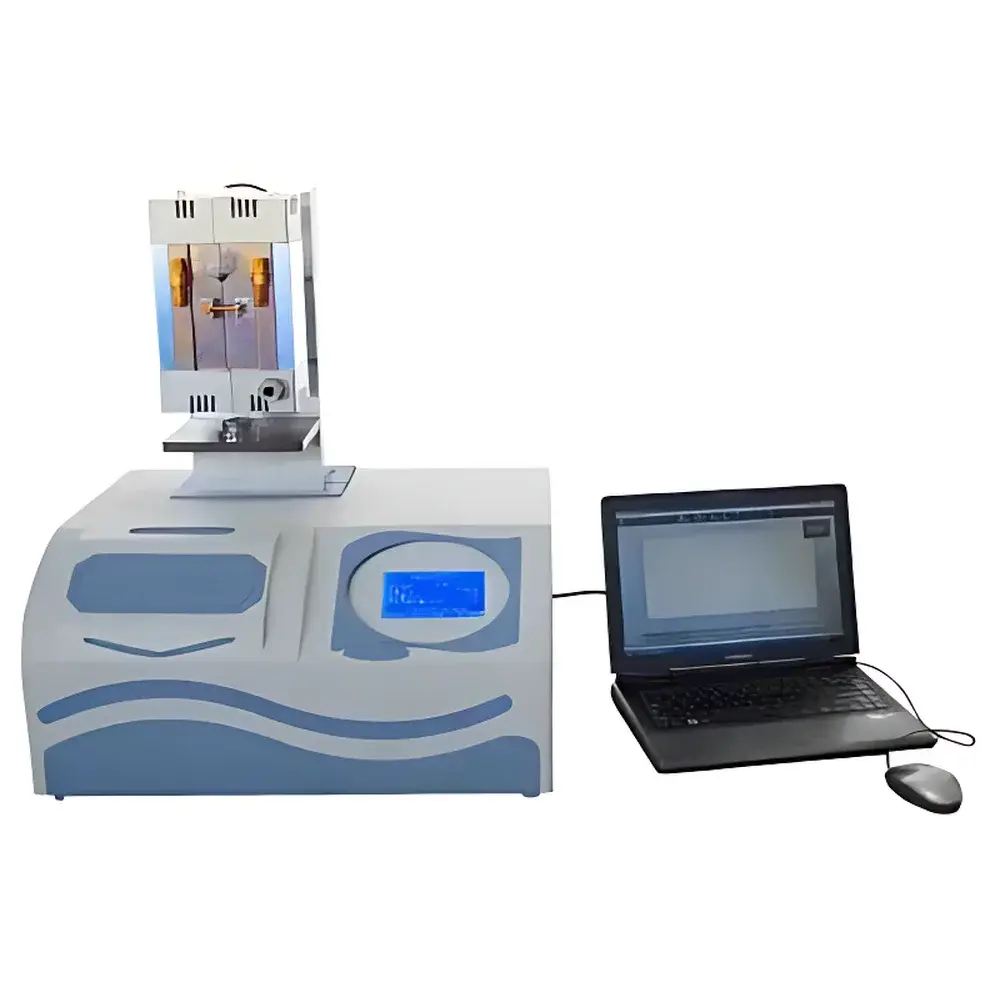
Henven HLC Fluidized Bed Thermogravimetric Analyzer
| Brand | Henven |
|---|---|
| Origin | Beijing, China |
| Manufacturer Type | Direct Manufacturer |
| Instrument Type | General-Purpose |
| Temperature Range | Ambient to 1000 °C |
| Temperature Accuracy | ±0.1 K |
| Balance Sensitivity | 1 µg |
| Heating/Cooling Rate | 0.1–80 K/min |
| Solid Feed Delivery Time | <1.0 s |
| Solid Feed Mass | 10–50 mg |
| System Response Delay | <2.0 s |
| Reactor Inner Diameter | ~20 mm |
| Reactor Height | <150 mm |
| Bed Material | Quartz Sand (d₅₀ = 200–300 µm) |
| Bed Height | 20–50 mm |
| Reproducibility Error | <10% |
| Gas Flow Controllers | 3 × Mass Flow Controllers (Air, H₂, CO, CO₂, CH₄ |
| Temperature Control | 0–1000 °C with Integrated Thermocouples |
| Pressure Monitoring | 0–1 atm |
| Hot-Gas Filtration | Ceramic/Fibrous Filter (Effective for Tar Retention) |
| Gas Analysis | 4-Channel In-Line Sensors (H₂: 0–3%, CO: 0–10%, CO₂: 0–3%, CH₄: 0–3%) |
| Pneumatic Switching | 11-Port Automated Solenoid Valve Bank (Programmable Dwell/Transition Times) |
Overview
The Henven HLC Fluidized Bed Thermogravimetric Analyzer is a purpose-engineered hybrid thermal analysis platform that integrates high-precision thermogravimetry with dynamically controlled fluidized bed reaction kinetics. Unlike conventional static TGA systems, the HLC operates on the principle of rapid, isothermal or programmed-temperature reaction initiation within a well-characterized gas-solid fluidized environment. It enables real-time mass change monitoring—via a microgram-sensitive balance—while simultaneously controlling and quantifying gaseous effluents during heterogeneous reactions such as catalytic regeneration, coal pyrolysis, biomass gasification, desulfurization/denitrification, and thermal cracking. The system maintains strict thermal uniformity across the fluidized zone (±0.1 K accuracy) and ensures minimal transport lag (<2 s system delay), permitting time-resolved correlation between mass loss profiles and transient gas-phase composition.
Key Features
- Integrated fluidized bed reactor with quartz sand support medium (200–300 µm d₅₀) and precise bed height control (20–50 mm)
- Ultra-fast solid dosing mechanism delivering 10–50 mg samples into the hot zone in under 1.0 s
- Triple independent mass flow controllers (MFCs) for air, H₂, CO, CO₂, and CH₄—each calibrated to 0–1.0 L/min with digital setpoint resolution
- Multi-channel online gas analysis suite: electrochemical and infrared sensors for simultaneous detection of H₂ (0–3%), CO (0–10%), CO₂ (0–3%), and CH₄ (0–3%)
- Hermetically sealed reaction train featuring ceramic/fibrous hot-gas filtration optimized for tar retention and particulate removal upstream of GC or FTIR interfaces
- 11-port automated solenoid valve bank enabling sequential or parallel effluent routing with user-defined dwell and switching timing
- Modular furnace design rated to 950 °C, coupled with a high-stability thermocouple-based temperature control loop (0–1000 °C range)
- Dual-pressure monitoring: differential pressure across the bed and absolute reactor outlet pressure (0–1 atm full scale)
Sample Compatibility & Compliance
The HLC accommodates powdered solids, granules, catalyst pellets, and slurry-dried residues—provided particle size distribution permits stable fluidization at target gas velocities. Liquid precursors may be introduced via flash-vaporized injection downstream of the fluidized zone. The system complies with fundamental design principles outlined in ASTM E1131 (standard test method for compositional analysis by thermogravimetry) and supports traceable calibration per ISO/IEC 17025 requirements when operated under documented SOPs. All electronic subsystems—including MFCs, gas sensors, and data acquisition modules—feature factory-traceable calibration certificates. The sealed architecture and programmable purge sequences facilitate operation under inert, reducing, or oxidizing atmospheres while meeting basic safety provisions of IEC 61010-1 for laboratory electrical equipment.
Software & Data Management
Control and acquisition are managed through Henven’s proprietary TGA-FlowSuite software, a Windows-based application compliant with FDA 21 CFR Part 11 Annex 11 guidelines for electronic records and signatures. The interface provides synchronized logging of mass change (µg), temperature (°C), gas flows (mL/min), partial pressures (kPa), and real-time gas concentrations (%v/v) at user-selectable sampling intervals (100 ms–5 s). Advanced features include multi-step temperature ramping with hold segments, conditional triggering of valve switching based on mass-loss thresholds, and automated baseline correction using pre-reaction stabilization periods. Raw data exports to ASCII (.txt) and universal spreadsheet (.csv) formats; processed reports support GLP/GMP audit trails with operator ID, timestamped version control, and immutable event logs for all parameter changes and hardware state transitions.
Applications
- Catalyst deactivation and regeneration kinetics under simulated industrial conditions
- Thermal stability assessment of metal-organic frameworks (MOFs) and porous carbons during CO₂ capture cycling
- Biomass devolatilization and char formation pathways under varying steam/N₂ ratios
- Sulfur and nitrogen retention behavior in fluidized-bed combustion of low-rank coals
- Kinetic modeling of solid-gas reactions (e.g., Fe₂O₃ reduction by H₂/CO mixtures) using combined TGA–gas chromatography workflows
- Quality control of activated carbon iodine number surrogates via controlled oxidative burn-off profiling
- Fundamental studies of ash fusion behavior and slagging propensity in waste-to-energy feedstocks
FAQ
Can the HLC be interfaced with an external gas chromatograph?
Yes—the system includes a dedicated heated transfer line (up to 250 °C) and pressure-regulated effluent port compatible with standard GC inlet configurations. Optional integration kits include septumless direct-coupling adapters and flow-splitting manifolds.
What is the minimum detectable mass change under dynamic fluidization conditions?
With active vibration damping and thermal mass compensation algorithms, the effective resolution remains ≤1 µg over the full 0–1000 °C range, validated using certified nickel oxide decomposition standards (ASTM E2550).
Is remote operation supported?
TGA-FlowSuite supports secure LAN-based remote desktop access and scheduled unattended runs up to 72 hours, provided environmental controls (cooling water, gas supply, exhaust) remain stable and monitored.
How is reactor fouling mitigated during long-duration tests with tarry feeds?
The integrated ceramic/fiber filter captures >95% of condensable organics above 200 °C; optional inline cold trap modules and periodic back-purge cycles (programmable via solenoid valves) further extend operational uptime.
Does the system meet GMP documentation requirements for pharmaceutical excipient characterization?
While not classified as a GMP-certified instrument out-of-the-box, its audit-trail-enabled software, electronic signature support, and calibration traceability enable qualification per ICH Q5C and USP <1225> when deployed within a validated laboratory quality system.
Related Products



